


Victorian Scent Bottle Box
A victorian scent bottle box protects delicate glass containers inside fitted wooden or leather cases designed for dressing tables and travel.
Victorian Scent Bottle Box
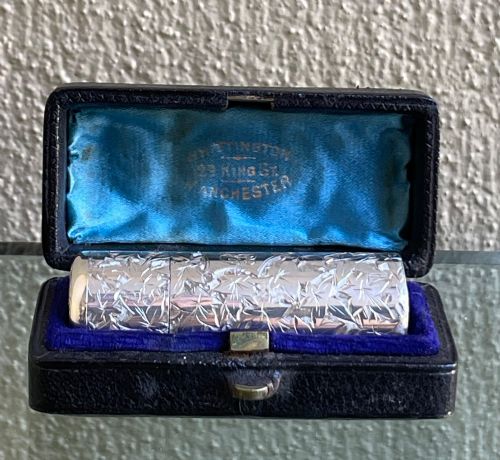
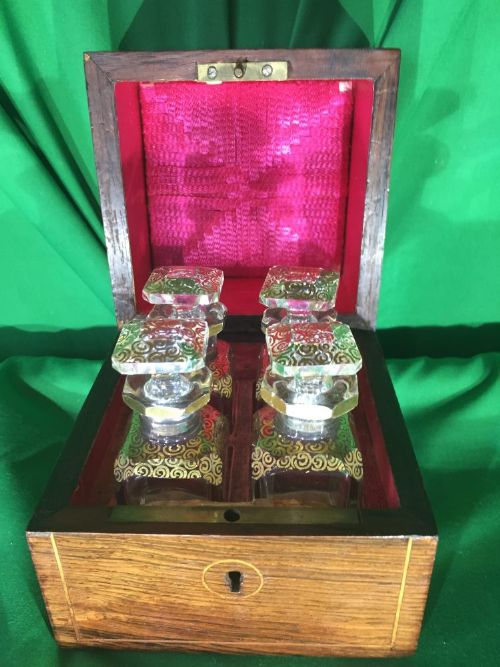
A victorian scent bottle box houses individual perfume flasks in dedicated compartments lined with velvet or silk. These vessels protect fragile glass from damage during the nineteenth century.
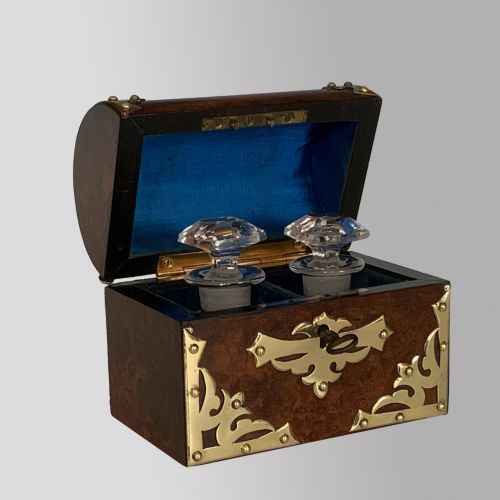
The version most commonly met on this page is the wooden casket, often built from coromandel, rosewood, or walnut. Many examples incorporate brass mounts or interior trays that lift out to reveal additional storage.
Makers also constructed these items from papier mache, tortoiseshell, and leather. Certain pieces combine the scent bottles with jewellery compartments or folding vanity mirrors.
How they were made
Craftsmen built the exterior frames using dense tropical hardwoods or applied decorative veneers over pine carcases. Brass stringing and ormolu mounts frequently accent the exterior lids and corners.
Interiors rely on padded silk and velvet linings shaped precisely to hold cut glass bottles with sterling silver or silver gilt tops. Some containers feature intricate engine turned guilloche designs on their metal components.
The listings show nineteenth century boxes constructed from diverse materials including tortoiseshell, papier mache, brass, and fruitwood alongside standard hardwoods.
What varies in quality
The distinction between tiers rests on the choice of exterior timber and the integrity of the internal fittings. Dense hardwoods like coromandel and tortoiseshell elevate a piece above standard walnut or papier mache.
Completeness dictates much of the standing within this field. Boxes retaining their matching set of original cut glass bottles and functioning brass locks hold greater substance than adapted receptacles.
Horton & Allday·Edward Smith
The Victorian Scent Bottle Box Glossary
- Coromandel
- A heavy, dark decorative timber imported from Asia and frequently utilised for high quality nineteenth century caskets.
- Ormolu
- Gilded bronze mounts fixed to the exterior corners and lids of wooden boxes for ornamentation.
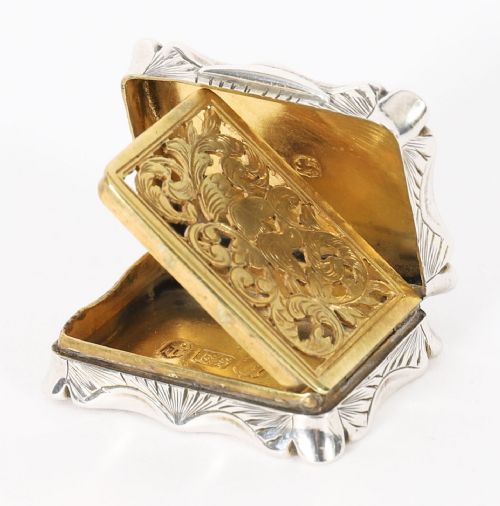
- Vinaigrette
- A small metal container holding a sponge soaked in aromatic vinegar, often found inside these travelling sets.
- Guilloche
- An intricate mechanical engraving technique applied to metal surfaces such as silver gilt box lids.
- Etui
- A small ornamental case used for holding needles, cosmetics, or other small personal items.
Victorian Scent Bottle Box: Frequently Asked Questions
What is inside a victorian scent bottle box?
These boxes contain multiple cut glass perfume bottles fitted neatly into custom velvet or silk lined compartments. Many include small stoppers and silver or silver gilt screw caps.
Some examples also incorporate hidden drawers or upper trays designed to store jewellery and small personal accessories.
How were these boxes used?
Owners kept them upon dressing tables to store daily fragrances or packed them into luggage for travel. The sturdy wooden or leather outer shell protected the fragile glass flasks within.
The matching bottles allowed individuals to carry different scents while visiting or moving between residences during the nineteenth century.
How do I identify a nineteenth century piece?
Examination of the internal construction materials, lining fabrics, and locking mechanisms reveals the period of manufacture. Woods like coromandel and walnut appear frequently in nineteenth century British and French caskets.
Matching the hallmarks on silver bottle tops to known silversmiths provides a precise date of creation.
Are all the bottles usually original?
Many boxes retain their matching set of cut glass bottles shaped specifically for the internal wooden partitions. However, replacement flasks occur due to breakage over the decades.
Close inspection of the fit within the velvet wells helps determine whether the bottles belong to the original casing.