

Antique Brass Campaign Box
When you search for an antique brass campaign box, you find portable containers designed for travel during the Georgian, Regency, and Victorian periods.
Antique Brass Campaign Box
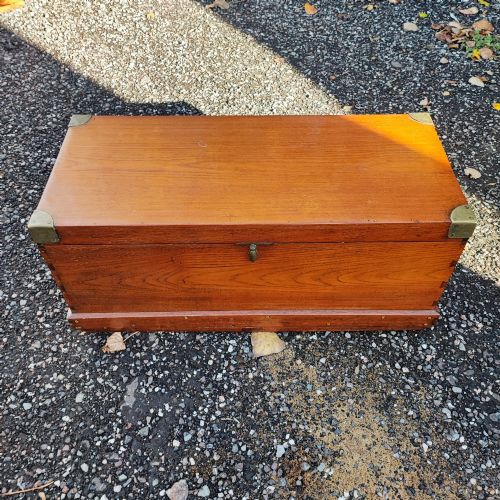
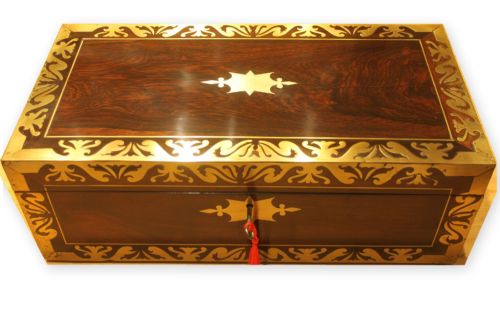
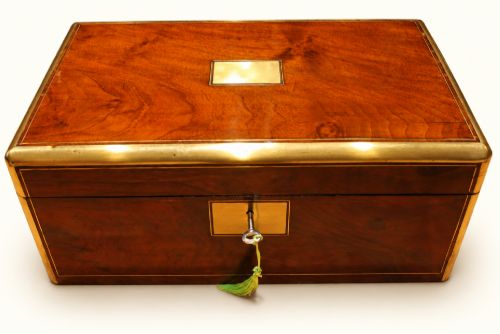
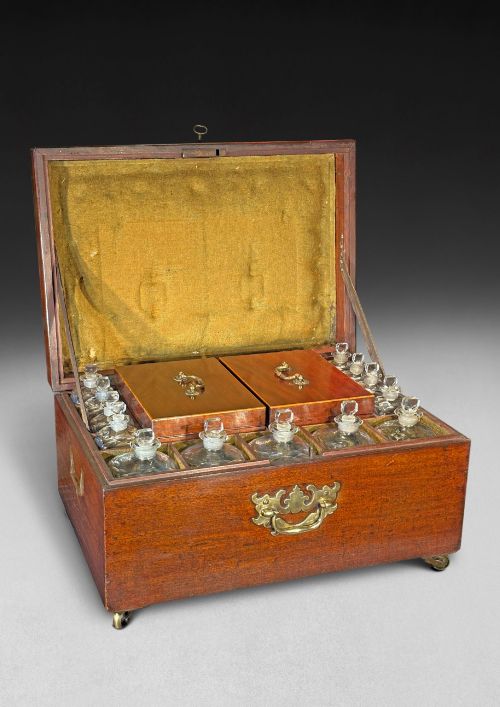
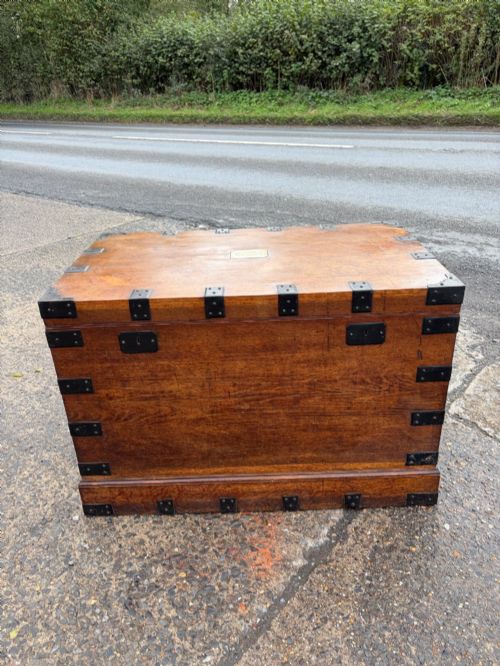
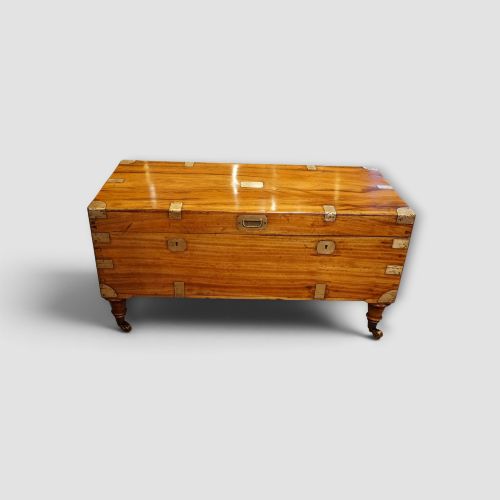
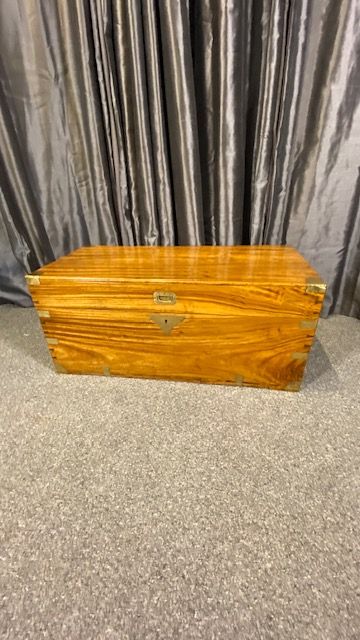
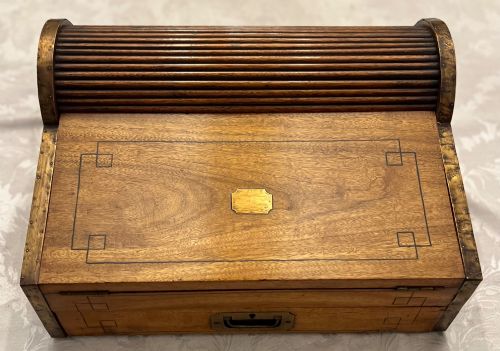
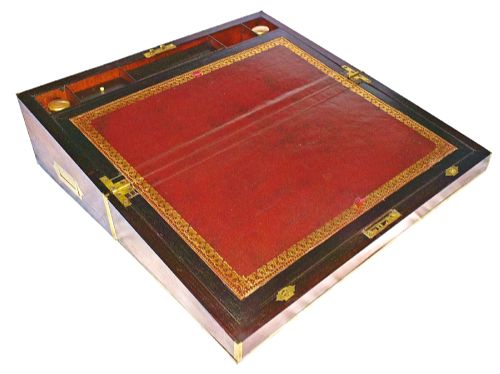
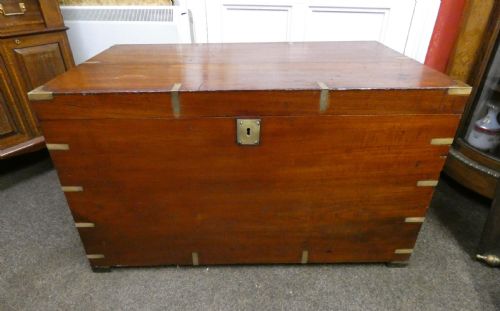
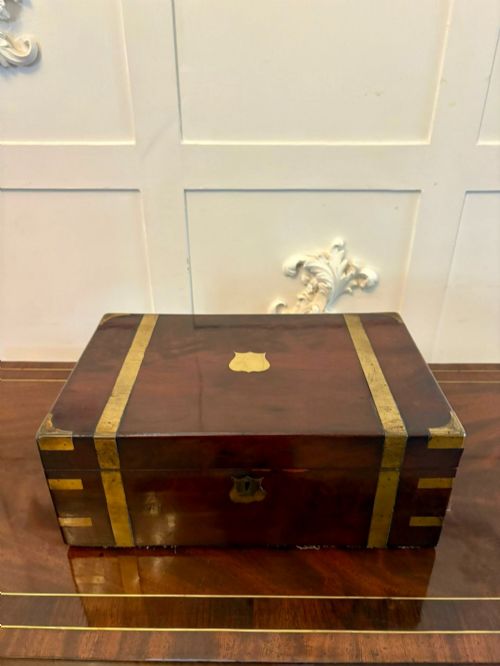
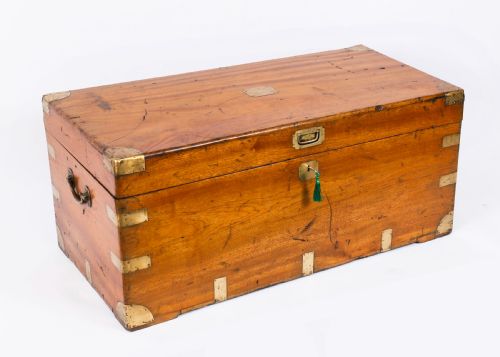
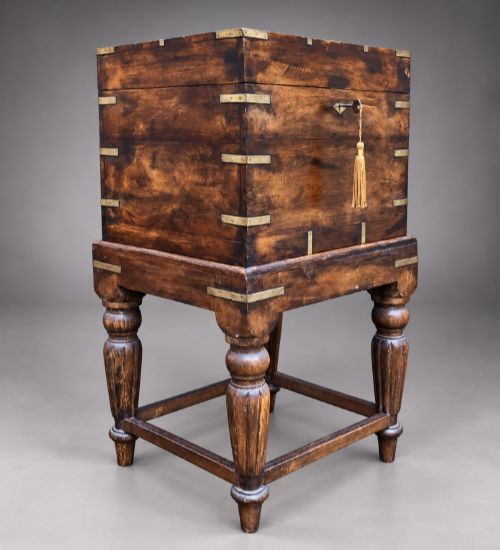
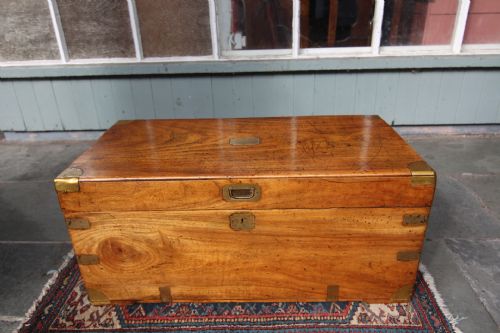
An antique brass campaign box encompasses portable storage, from large trunks and chests designed for military travel to smaller writing slopes and correspondence boxes.
The objects originate primarily from the 18th and 19th centuries, reflecting the travel requirements of officers, officials, and merchants across the British Empire.
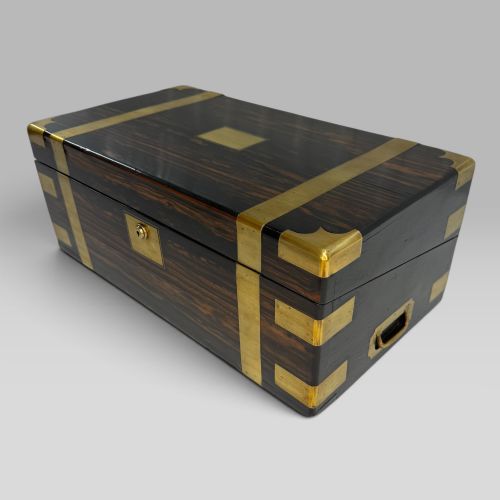
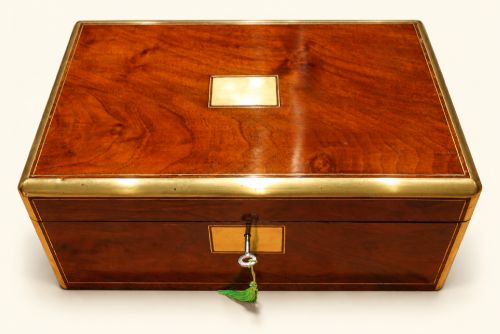
You will frequently encounter camphor wood, teak, and mahogany trunks alongside fitted rosewood and walnut writing boxes, all reinforced with brass corners and straps.
How they were made
Cabinetmakers utilised dense timbers such as camphor wood, mahogany, and teak to withstand long sea voyages and variable climates without warping.
Joints were reinforced with heavy brass corners, straps, and corner plates, screwed into the timber to protect edges from rough handling during transit.
Recessed brass drop handles and flush-fitting escutcheons allowed items to pack tightly into transport wagons or ship holds without snagging.
Antique Brass Campaign Box Retail Price Guide 2026
Typical asking prices for brass campaign box among the pieces listed under this phrase on Sellingantiques today, from the lower quarter to the upper quarter. They describe what is for sale here now, not the wider market.
Materials recorded on this page include brass, camphor wood, mahogany, leather, teak, iron, and rosewood.
What varies in quality
The caliber of construction shows in the thickness of the brass mounts and the precision with which they are flush-fitted into the surrounding timber.
Internal complexity sets certain writing slopes and correspondence boxes apart, revealing secret compartments, fitted pigeonholes, and tooled leather writing surfaces.
The selection of cabinet timbers dictates the finish, with highly figured grains and solid secondary woods marking out superior examples.
Samuel Pratt·Wm. Insall of Bristol
The Antique Brass Campaign Box Glossary
- Brass bound
- Describes a wooden box or trunk reinforced along the edges and corners with flat brass strips to absorb the impacts of travel.
- Writing slope
- A portable desk with a hinged, slanted lid that opens to reveal compartments for stationery, inkwells, and pens.
- Camphor wood
- An aromatic timber native to Asia, prized in campaign furniture for its insect-repelling qualities and resistance to humidity.
- Escutcheon
- A decorative brass plate surrounding a keyhole, designed to protect the surrounding wood from wear.
- Campaign style
- Furniture constructed in sections with folding or recessed elements to facilitate transport by officers on military deployment.
Antique Brass Campaign Box: Frequently Asked Questions
What is an antique brass campaign box?
These are portable containers constructed from timbers like camphor wood or mahogany, reinforced with brass to endure military deployment and long-distance travel during the Georgian and Victorian eras.
They range from large blanket chests and trunks to compact writing slopes and correspondence boxes fitted with internal compartments.
How were campaign boxes used?
Officers and officials utilised them to transport personal documents, uniforms, and valuables securely across land and sea during colonial service.
The sturdy brass bindings and flush handles allowed the containers to be stacked inside ship cabins and transport wagons without catching on surrounding cargo.
How do I identify a Victorian campaign box?
Victorian examples often feature dense hardwoods such as mahogany, walnut, or pitch pine, combined with substantial brass hardware and working locks with keys.
They frequently display specific design cues like recessed brass drop handles and corner brackets that date production to the middle and late nineteenth century.
How do I care for camphor wood?
Camphor wood requires minimal maintenance, benefiting from occasional cleaning with a soft cloth to preserve the natural grain and aromatic properties of the timber.
Keep these pieces away from direct heat sources and strong sunlight to prevent the wood from drying out or splitting.