

Antique Writing Desk Box
These antique writing desk box pieces are portable portable writing desks and stationery cabinets built for travel and study.
What an antique writing desk box is
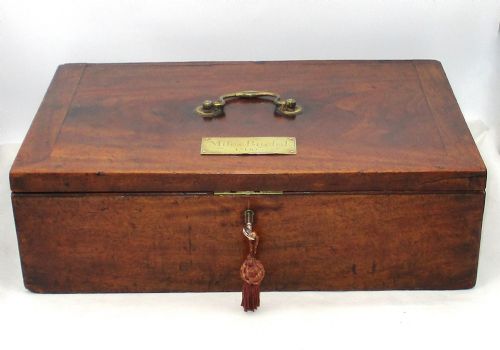
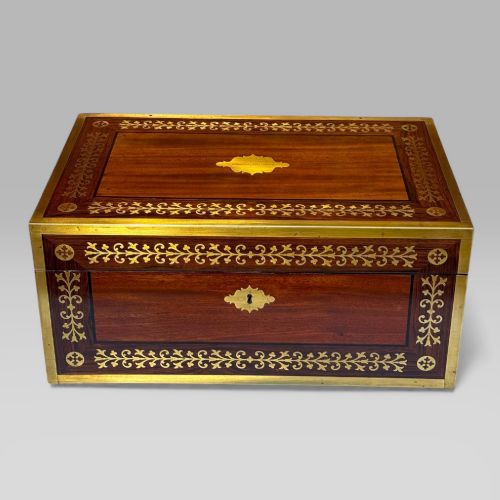
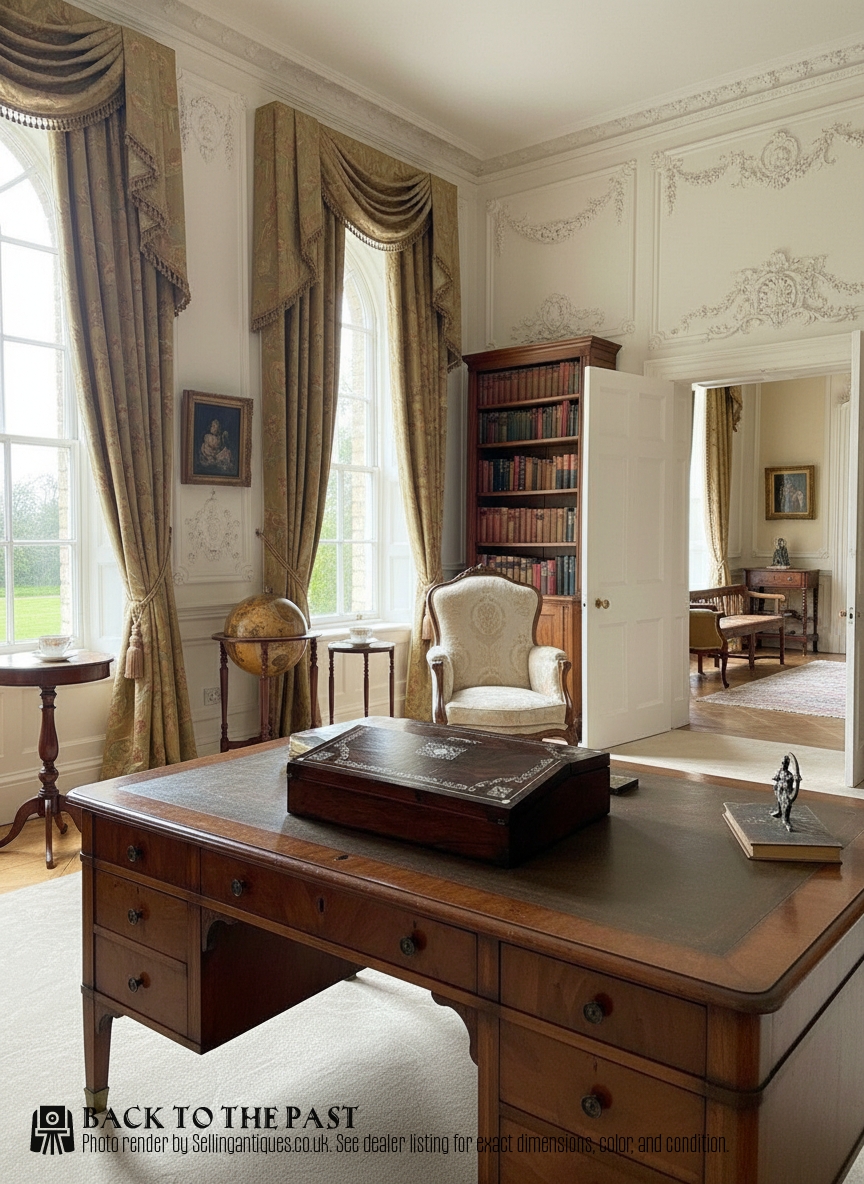
An antique writing desk box provides a portable compartment for correspondence, papers, and writing implements designed for domestic use or travel. The pieces found here span the eighteenth, nineteenth, and early twentieth centuries, encompassing Georgian, William IV, and Victorian periods.
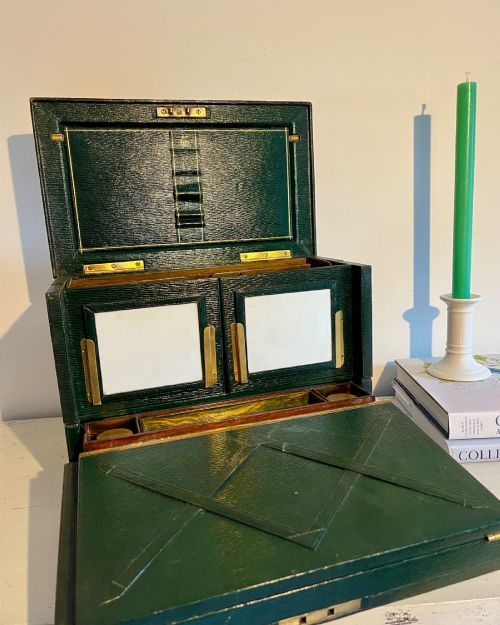
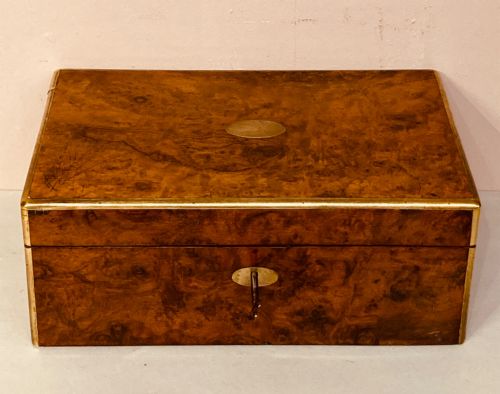
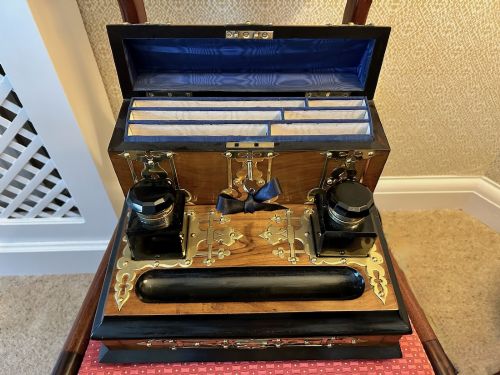
The form appears frequently as a writing slope, campaign box, or lap desk that opens to reveal an angled surface for writing. Many examples include internal compartments for inkwells, pens, and secret drawers concealed beneath stationery partitions.
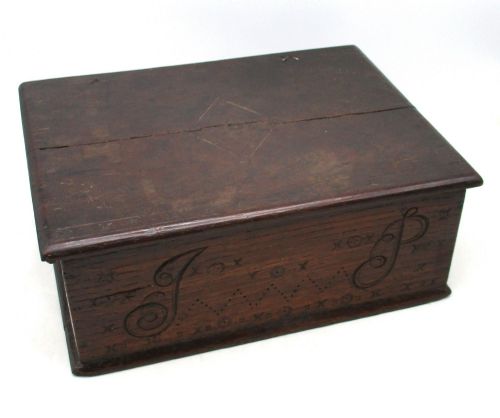
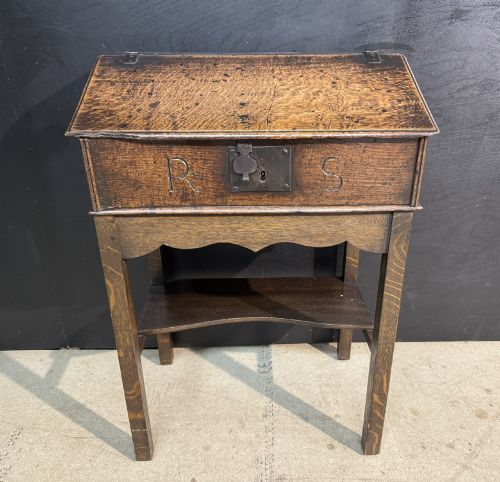
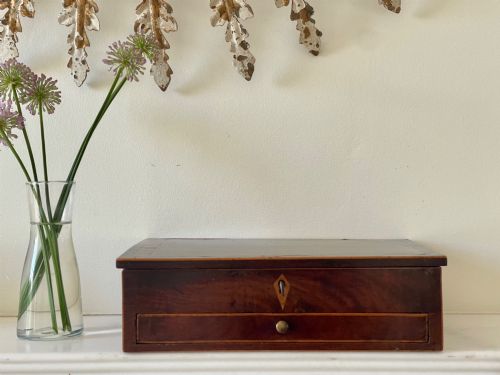
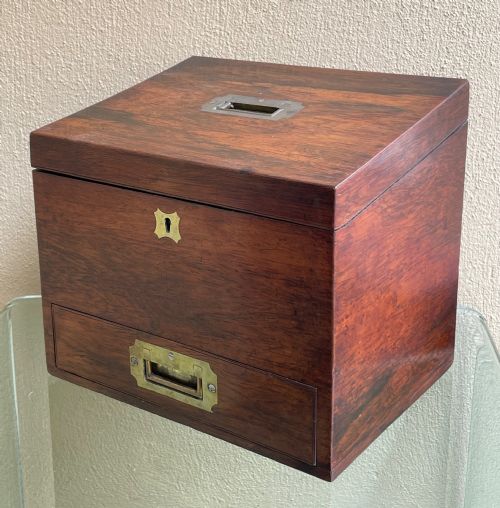
Materials range from dense timbers such as mahogany and rosewood to exotic coromandel and camphor wood, often reinforced with brass corners and strapwork. Simpler clerk boxes and bible boxes also appear, reflecting utilitarian forms alongside decorative inlaid specimens.
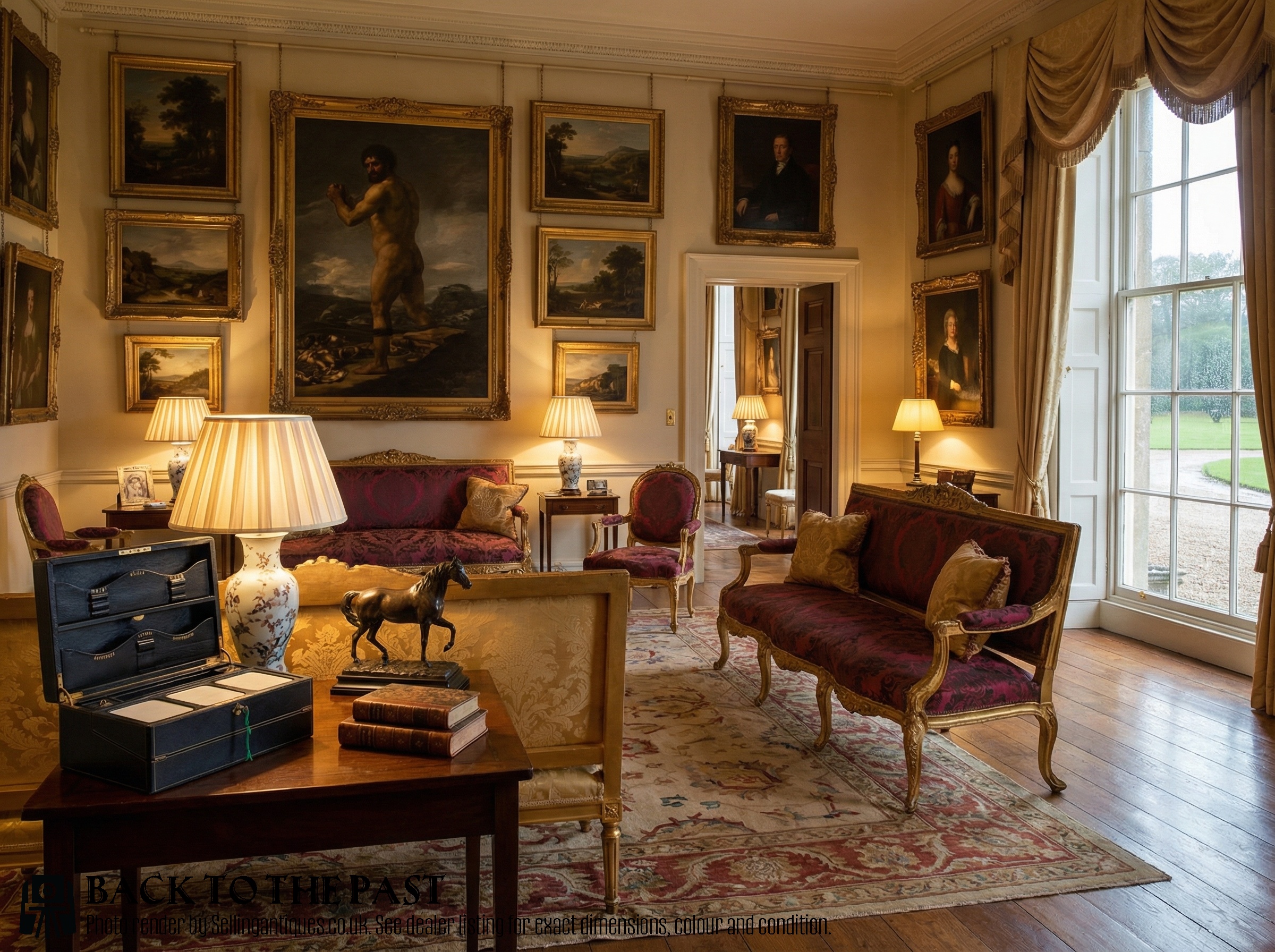
What varies in quality
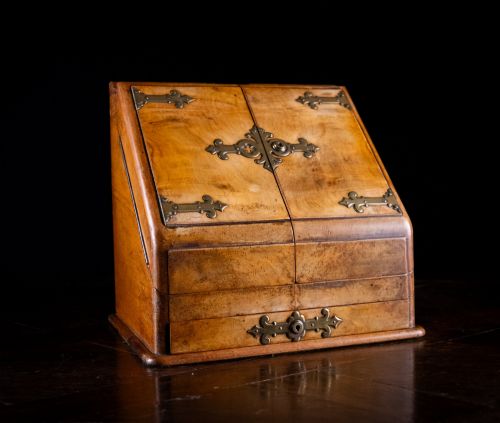
The selection of cabinet timbers and the precision of the veneer work dictate the refinement of a piece. Finer examples utilise dense figured grains such as burr walnut, coromandel, or rosewood paired with intricate brass corner mounts and flush handles.
Interior architecture distinguishes standard models from superior workshop output. Boxes equipped with complete original leather skivers, fitted secret drawers, matched glass inkwells, and working brass lever locks command greater regard.
Retail Price Guide 2026
Typical UK retail prices for writing desk box, calculated from the Sellingantiques database of over a million retail prices indexed since 2003. This retail price guide relies exclusively on Sellingantiques data; no external sources or auction records are used, so the figures do not describe the wider market.
Listings feature mahogany, rosewood, coromandel, and walnut, frequently accented with brass mountings and fitted interiors.
Lund of London
The Antique Writing Desk Box Glossary
- Writing slope
- A portable box with a hinged lid that opens to form an inclined writing surface lined with leather or velvet. Inside, partitioned compartments hold paper, pens, and ink.
- Campaign box
- A sturdy wooden box reinforced with brass corners and strapping, built for military officers and travellers on the move. These boxes often feature recessed carrying handles for tight packing.
- Coromandel
- A heavy, dark brown exotic timber featuring dramatic black stripes, sourced from Southeast Asia. Cabinetmakers used it for high-end Victorian luxury boxes.
- Secret drawers
- Concealed compartments hidden behind false partitions or removable panels within a writing box. Owners used these spaces to store valuables and private letters.
- Tunbridge ware
- Small wooden objects decorated with mosaic patterns created by gluing together tiny coloured wood blocks. This meticulous technique originates from Tunbridge Wells in Kent.
Frequently Asked Questions
How did people use writing boxes?
Owners stored paper, envelopes, inkwells, and nibs inside the compartments before folding the lid down to create a stable writing surface. They placed these boxes on tabletops or held them on their laps while travelling.
Travellers and military officers relied on robust campaign versions to protect their correspondence from moisture and damage during long journeys.
What is a campaign writing slope?
A campaign writing slope is a heavy-duty portable desk reinforced with brass corners and edge banding to withstand rough transport. Recessed brass drop handles on the sides allow the box to be lifted easily.
These utilitarian pieces date primarily from the Georgian and Victorian eras, built specifically for use on military campaigns or ocean voyages.
How do I tell Victorian boxes apart?
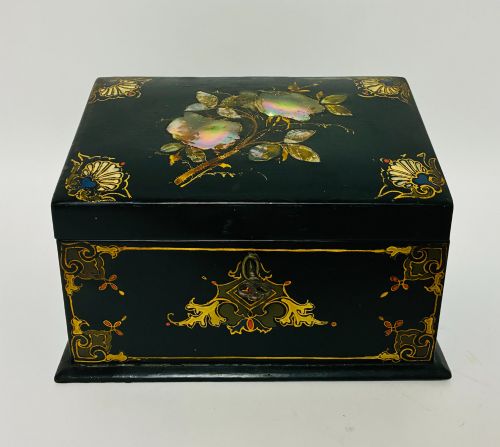
Victorian boxes often display richer exotic woods like coromandel and burr walnut, alongside elaborate mother-of-pearl inlay or brass cartouches. Earlier Georgian and William IV examples tend to rely on simpler mahogany construction with brass strapwork.
Interior layouts also shift over the nineteenth century, moving from plain wooden partitions toward complex stationery racks and spring-loaded secret drawers.
Can I use these for modern writing?
These boxes accommodate modern fountain pens and stationery within their original compartments, though paper sizes have changed over time. The sloping desk surface provides a comfortable angle for handwriting letters.
Care should be taken with antique leather writing surfaces and historic inkwells when placing modern items inside.