
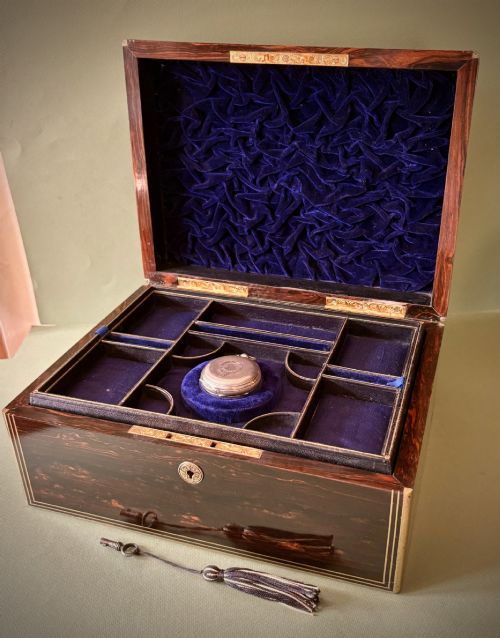
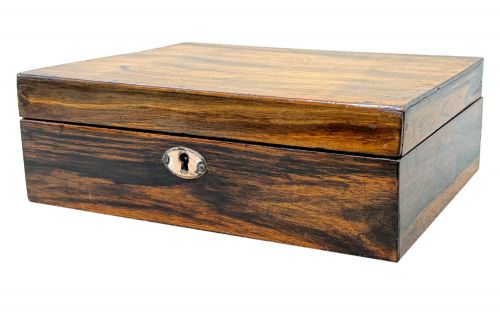


Coromandel Jewellery Casket
A coromandel jewellery casket is a heavy, beautifully figured wooden box designed to hold precious trinkets, built to last generations.
Coromandel Jewellery Casket
A coromandel jewellery casket brings together dense, dark exotic timber and intricate interior fittings designed for the Victorians and Regency collectors who valued personal organisation. These pieces span the nineteenth century, including specific dates such as eighteen eighty, eighteen seventy, eighteen fifty, and eighteen thirty, alongside broader Victorian, Regency, and Aesthetic Movement periods.
The most common formats on this page include fully fitted jewellery boxes, work boxes, vanity boxes, keepsake boxes, and combination scent bottle caskets with tantalus elements. English makers and Anglo-Indian workshops produced rectangular forms and dome top boxes utilising rich materials for discerning clients.
Buyers encounter boxes finished with brass detailing and mother-of-pearl inlay, alongside interior linings of velvet and leather. These caskets functioned as portable luxury items for travel or static display on dressing tables and living room surfaces.
How They Were Made
Craftsmen built these caskets using solid cores or substantial veneers of coromandel wood, celebrated for its dark brown grain and contrasting lighter stripes. They paired this exotic timber with contrasting secondary woods such as rosewood.
Metalworkers applied solid brass for escutcheons, hinges, and stringing lines to protect the edges and secure the lids. Artisans also integrated mother-of-pearl inlay directly into the wooden surfaces for decorative contrast.
Interior compartments required precise woodworking to house lift-out trays, secret drawers, and glass scent bottles. Upholsterers lined these inner spaces with velvet and leather to cushion delicate items.
Some nineteenth-century travellers carried locking boxes with secret compartments so clever that modern owners still need days to find them.
What Varies in Quality
The fidelity of the coromandel grain determines the baseline visual appeal, with highly figured timber commanding greater attention. The complexity of the brass inlay and the precision of mother-of-pearl placement further distinguish finer examples from standard work.
Internal complexity marks the distinction between a simple storage box and a masterwork. Pieces featuring fully fitted interiors with original velvet and leather linings, combined with functioning secret drawers and complete sets of matching scent bottles, represent the higher tier of production.
Toulmin and Gale
The Coromandel Jewellery Casket Glossary
- Coromandel
- A dense, heavy tropical hardwood featuring dark brown heartwood with contrasting light yellow-brown streaks. It was highly prized by nineteenth-century cabinet makers for luxury boxes and caskets.
- Tantalus
- A locking wooden frame holding decanters or scent bottles so that the stoppers cannot be removed while the case remains secured. This mechanism kept valuable contents safe from unauthorized access.
Coromandel Jewellery Casket: Frequently Asked Questions
How were these boxes used?
Owners used these caskets to store, organise, and protect precious jewellery, vanity items, and small keepsakes on dressing tables. Many were robust enough for travel.
Some examples combined jewellery storage with glass scent bottles or writing slopes, serving multiple functions for the Victorian household.
How do I date a coromandel box?
Dating relies on stylistic clues, lock mechanisms, and materials associated with periods like the Regency era or the Victorian and Aesthetic movements. Specific dates or decades often appear in maker marks or provenance.
Simpler forms frequently point towards early Victorian production, while more eclectic decorative motifs suggest later nineteenth-century manufacturing.
How do I care for coromandel wood?
Protect coromandel boxes by keeping them out of direct sunlight and away from rapid temperature changes that can dry out the timber. Dust gently with a dry cloth.
Avoid using modern liquid polishes or silicone sprays, as these can damage the historic polish and discolour the exposed grain.