
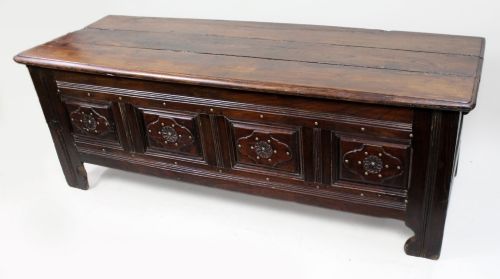
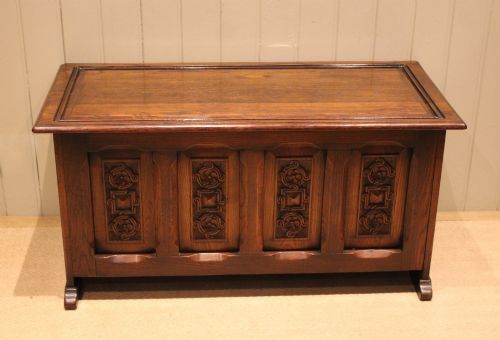
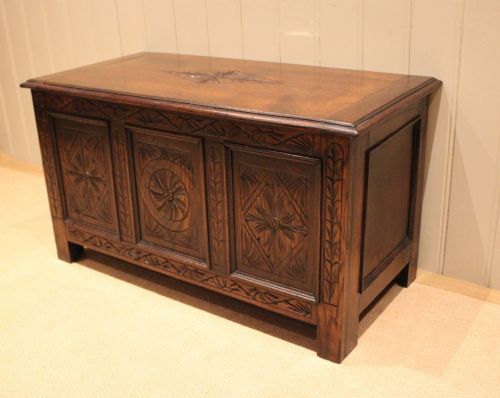
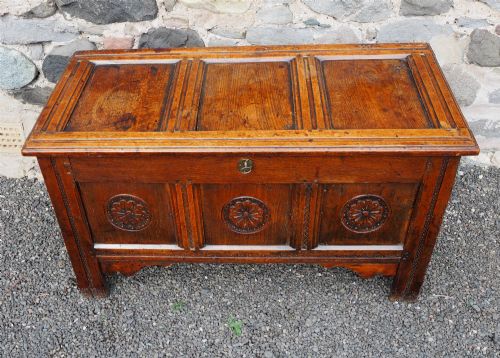


Carved Wooden Trunk Box
These carved wooden trunk box examples offer solid construction and deep storage, prized for both historic character and everyday utility.
Carved Wooden Trunk Box
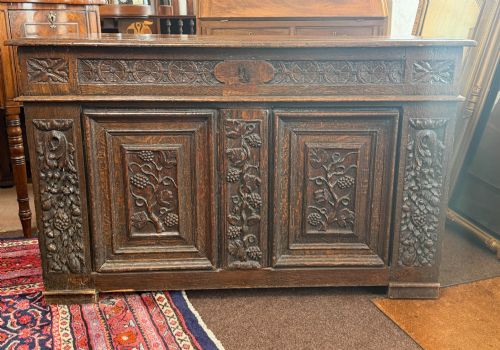
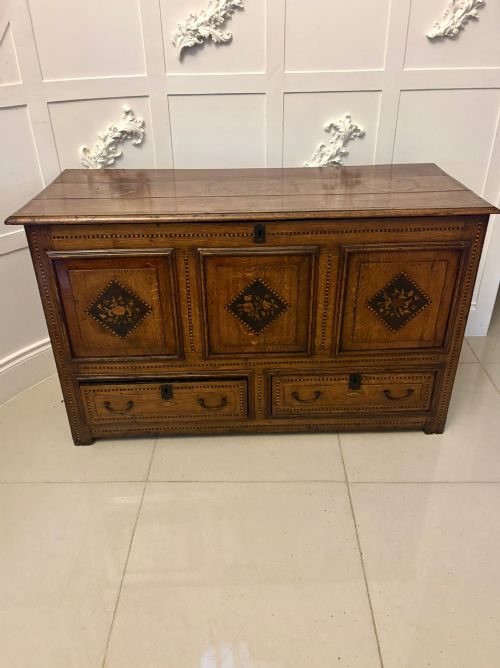
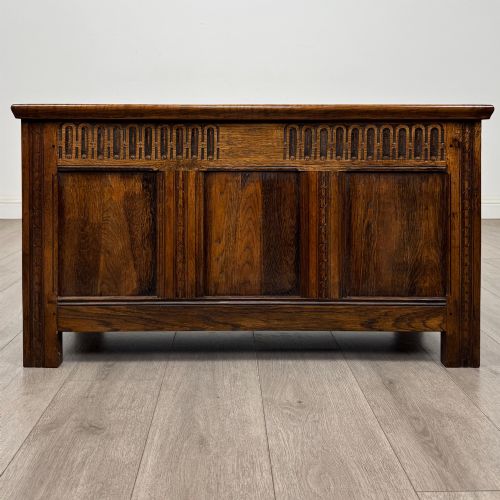
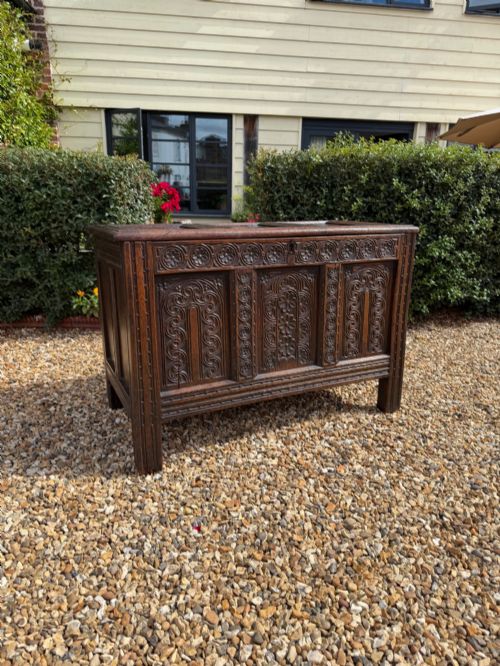
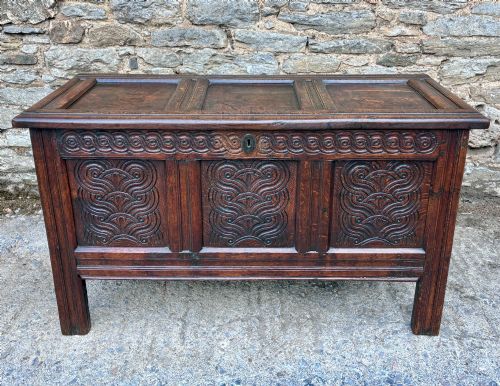
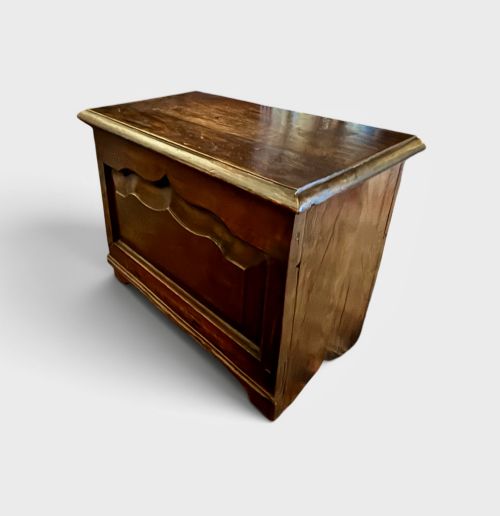
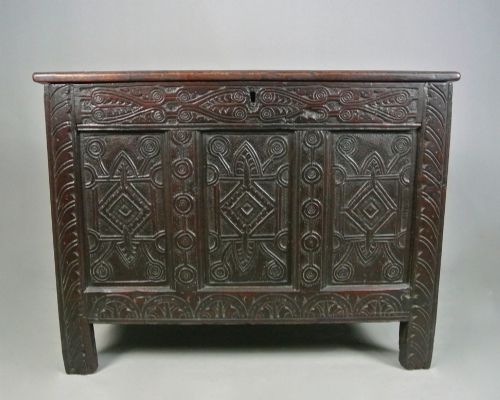
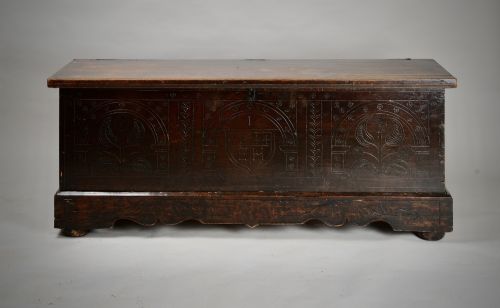
A carved wooden trunk box, appearing across this page in forms such as coffers, mule chests, and blanket boxes, serves primarily as a heavy-duty storage vessel with a hinged lid. Buyers examine pieces originating from periods spanning the sixteenth century through to the twentieth century, reflecting varied regional joinery and domestic customs.
The seventeenth-century examples dominate the selection, showing panelled construction and formal carved motifs characteristic of early English, Welsh, and continental workshops. Alongside these early pieces, eighteenth-century Georgian and French provincial variants emerge, providing domestic utility with softer regional lines.
Later nineteenth and twentieth-century interpretations, including Arts and Crafts iterations and revival pieces, continue the heavy wooden tradition while adapting to different domestic interiors. The forms range from small proportions designed for compact spaces to monumentally large dowry chests.
Materials and Construction
Oak remains the principal material across the selection, utilised in solid and framed configurations alongside regional hardwoods like elm, teak, cypress, and mahogany. Carpenters employed pegged mortise and tenon joints to secure the heavy panels, allowing the wood to move naturally with seasonal humidity changes.
Decorative embellishment relies on surface carving, panel moulding, and occasional marquetry inlay utilising contrasting timbers or mother of pearl. Iron and brass hardware, including strap hinges, lock plates, and carrying handles, provides structural reinforcement and functional security.
Listings span multiple centuries, ranging from sixteenth-century medieval examples to twentieth-century Arts and Crafts revivals in solid oak and exotic hardwoods.
Evaluating the Pieces
The distinction between tiers rests upon the depth and crispness of the hand-carved ornamentation, the integrity of the original joined framing, and the survival of an authentic surface patina. Pieces retaining their primary hardware and uncompromised timber structures command greater attention from collectors.
Regional distinctiveness and documented provenance further differentiate the examples, particularly where specific local carving traditions or dated inscriptions survive on the front panels. Lesser grades show heavier replacement timber or generic later carving applied to simpler domestic boxes.
The Carved Wooden Trunk Box Glossary
- Coffer
- A heavy wooden chest traditionally used for storing valuables, documents, or textiles. These pieces typically feature a hinged flat lid and sturdy panelled construction.
- Mule chest
- A storage chest featuring one or more drawers beneath the main internal compartment. This form bridges the evolution between the simple coffer and the chest of drawers.
- Marquetry
- The decorative technique of applying veneer pieces in varied timbers to form geometric or pictorial patterns on a surface. This method appears on selected seventeenth-century and later revival pieces.
- Joinery
- The method of connecting pieces of wood without relying on excessive metal nails, utilising pegged mortise and tenon joints. This structural approach defines early furniture making.
- Patina
- The surface sheen and colour developed by wood through age, handling, and light exposure over centuries. A desirable surface exhibits depth and original tone without modern chemical stripping.
Carved Wooden Trunk Box: Frequently Asked Questions
What were carved wooden trunk boxes used for?
These large receptacles held domestic valuables, including household silver, important documents, linens, and personal clothing before fitted wardrobes became common.
Their robust construction also allowed them to serve as seating benches or tables within domestic halls and bedchambers.
How do I date an oak coffer?
Dating relies on examining the construction methods, tool marks left by hand planes, and the style of the carved panels.
Early pieces utilise pegged frame-and-panel construction and specific architectural motifs like linenfold or geometric strapwork tied to particular centuries.
How do I care for antique wood furniture?
Maintain a stable room temperature away from direct heat sources and strong sunlight to prevent the timber from splitting or warping.
Apply occasional microcrystalline wax to nourish the surface, avoiding silicone-based polishes that degrade historic finishes.
What is the difference between a coffer and a chest?
The terms often overlap, though a coffer traditionally denotes a more formal, panelled box with architectural carving produced by professional joiners.
Simpler boarded chests utilised plain planks nailed or dovetailed together rather than the sophisticated joined frame construction.