




Nineteenth Century Workbox
A nineteenth century workbox is a fitted container for sewing and needlework that brings tactile warmth and period utility to any surface.
What these pieces are
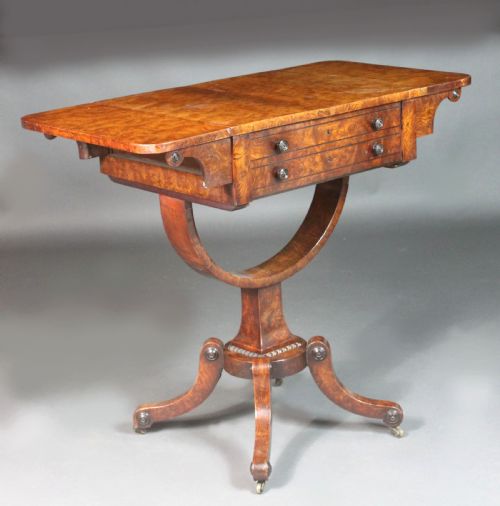
A nineteenth century workbox brings together decorative craftsmanship and domestic utility, taking the form of tabletop boxes, games boxes, and freestanding work tables on stands. These pieces are designed to hold threads, needles, and small tools while making a handsome visual statement in a room.
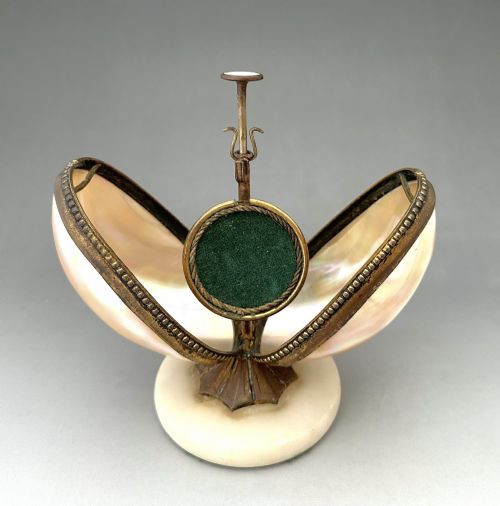
The selections on this page span the Regency, William IV, and Victorian eras, presenting portable tabletop caskets alongside trumpet workboxes and work tables. Walnut, rosewood, mahogany, and satinwood dominate the forms, frequently enhanced with inlay or mother-of-pearl.
Tabletop varieties sit comfortably on chests or desks, whereas workboxes on stands and sewing tables operate as small occasional furniture. Buyers encounter both simple wooden caskets and elaborate pieces featuring penwork or silver stringing.
How they were made
Cabinetmakers utilised dense hardwoods like rosewood, walnut, and flame mahogany, often selecting veneers with striking grain patterns to cover solid wood carcases. Satinwood provides a paler contrast, while specialised treatments like penwork introduce delicate surface illustration.
Many examples incorporate decorative details such as wood inlay, silver stringing, and mother-of-pearl to define lids and edges. Interior compartments were constructed to house cotton reels, thimbles, and implements, lined with fabric to protect delicate tools.
Retail Price Guide 2026
Typical UK retail prices for nineteenth century workbox, calculated from the Sellingantiques database of over a million retail prices indexed since 2003. This retail price guide relies exclusively on Sellingantiques data; no external sources or auction records are used, so the figures do not describe the wider market.
Listings feature wood inlay, silver stringing, and mother-of-pearl across Victorian and Regency periods.
What varies in quality
Quality rests in the choice of timber and the precision of decorative embellishment, distinguishing simple containers from exceptional cabinetwork. Flame mahogany and burr walnut veneers demonstrate superior selection when the grain patterns match seamlessly across the lid and sides.
The refinement of inlay work, silver stringing, and mother-of-pearl placement dictates the overall sophistication of the piece. Well-executed boxes maintain tight joinery and retain structured, clean interiors designed for daily utility.
The Nineteenth Century Workbox Glossary
- Regency
- A style period dating roughly from the early nineteenth century, characterised by classical restraint and elegant proportions. Pieces from this era often feature rich mahogany timbers and refined decorative details.
- Trumpet workbox
- A Victorian form of sewing box featuring an octagonal or flared body resembling a trumpet, usually mounted on a pillar and tripod base. This design provides generous internal storage while maintaining a compact footprint.
- Penwork
- A decorative technique using fine ink drawing on a prepared wooden surface, often producing intricate geometric or pictorial designs. It appears on games boxes and small caskets from the Regency period.
- Burr walnut
- A prized wood veneer harvested from the gnarled growths of walnut trees, displaying swirling, organic patterns. Cabinetmakers utilised it on nineteenth-century boxes to create rich visual depth.
Frequently Asked Questions
What fits inside a workbox?
These boxes were built to organise sewing equipment, including spools of thread, needles, bodkins, and small scissors. Many retain fitted wooden trays and compartments designed specifically for these tools.
Today, owners utilise them to store modern sewing supplies, jewellery, or small desk accessories while keeping surfaces tidy.
How do I identify a Regency workbox?
Regency pieces often display classical proportions, dark mahogany or satinwood surfaces, and restrained decorative elements like penwork. They frequently take the form of freestanding work tables on stands rather than simple tabletop caskets.
Comparing the timber choice and structural silhouette helps distinguish these early nineteenth-century examples from later Victorian designs.
Where should I place a workbox?
Tabletop workboxes sit well on sideboards, dressing tables, or desks where their decorative lids can be appreciated. Freestanding sewing tables and trumpet workboxes function as occasional tables beside chairs.
Keep them away from direct heat sources and strong sunlight to protect the polished wood surfaces and delicate interior fabrics.
Are these boxes durable for daily use?
Constructed from solid hardwoods and stable veneers, these pieces were designed for everyday domestic life and remain robust. Gentle handling preserves the original polish and delicate decorative inlays.
Regular dusting and occasional wax care keep the timber nourished without altering the historic finish.