
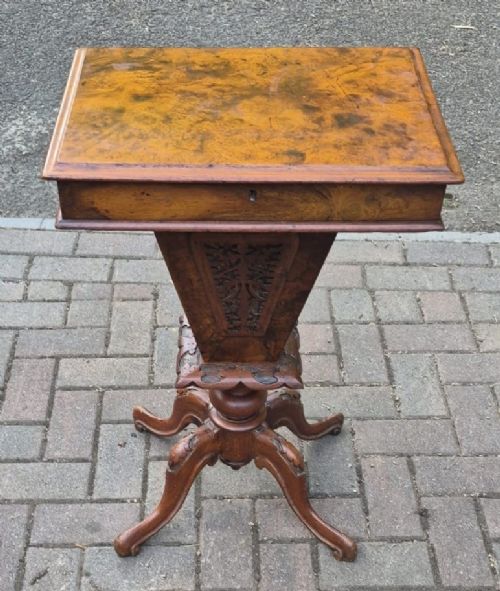


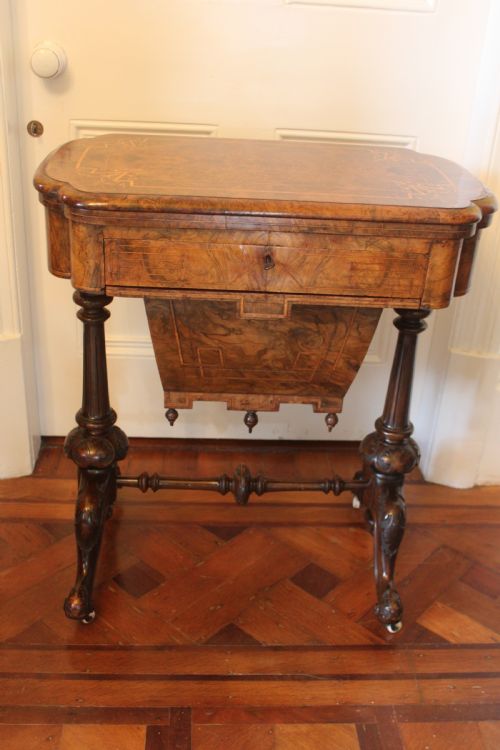


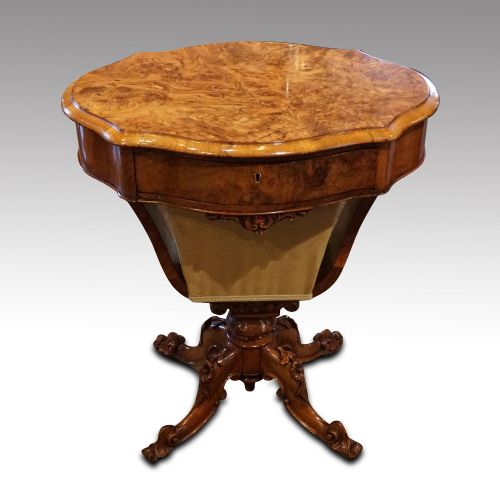


Burr Walnut Worktable
A burr walnut worktable is a fine Victorian piece designed for domestic crafts, prized for rich figured timber and practical storage.
What these pieces are
A burr walnut worktable is an occasional piece dating from the Victorian period, appearing across the nineteenth century around 1850 and 1860. These items function primarily as sewing tables, needlework tables, and sewing boxes, often doubling as games tables.
The forms vary between rectangular tables, trumpet workboxes, and oval worktables. Each variation provides a specialised surface and internal compartment for domestic pursuits.
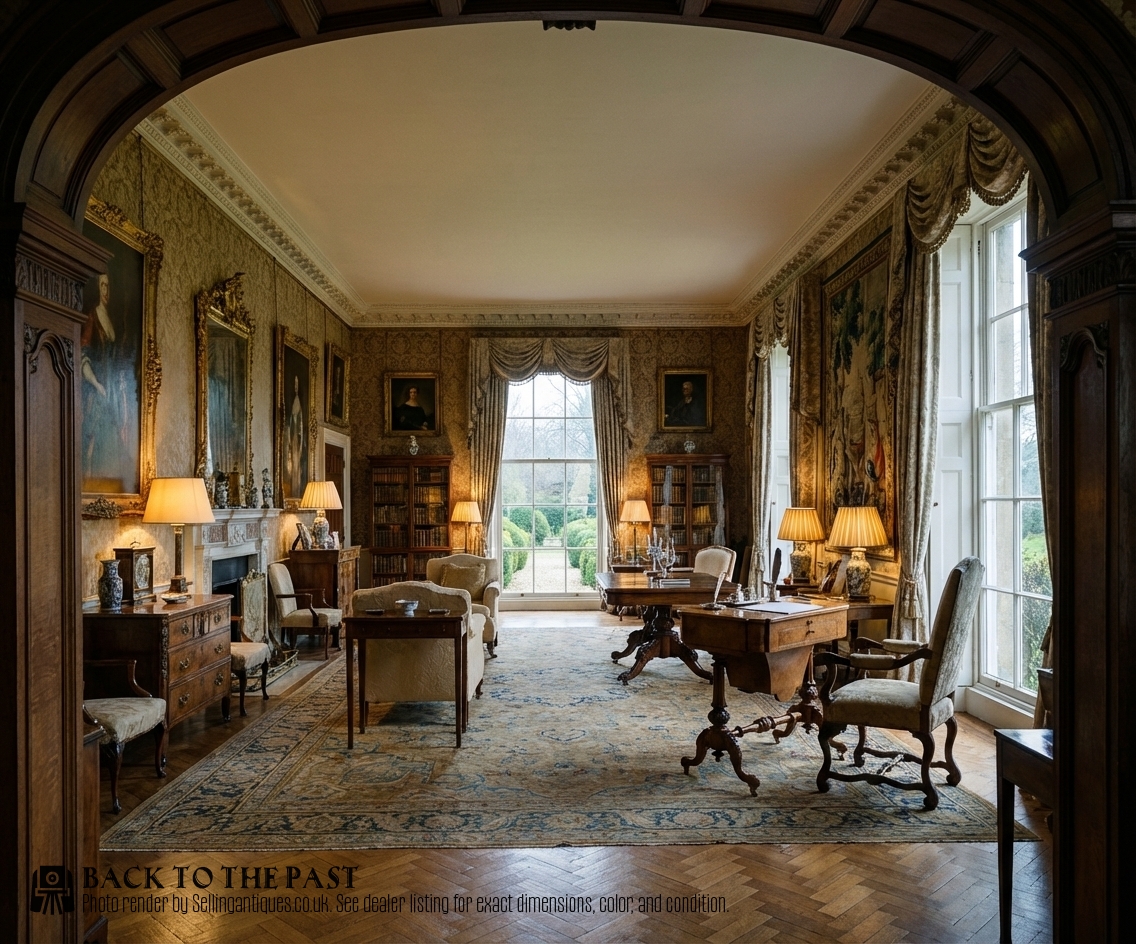
How they were made
Cabinet makers constructed these tables using walnut and burr walnut veneers over solid wood substrates, highlighting the intricate grain patterns of the timber. Surfaces often feature detailed wood inlay utilising boxwood and fruitwood to create contrasting geometric or floral motifs.
Fittings incorporate brass hardware for locks and hinges, ceramic components for internal structures, and fabric linings within the compartments. Sewing boxes frequently integrate fitted interiors designed to organise threads, needles, and small tools.
Retail Price Guide 2026
Typical UK retail prices for burr walnut worktable, calculated from the Sellingantiques database of over a million retail prices indexed since 2003. This retail price guide relies exclusively on Sellingantiques data; no external sources or auction records are used, so the figures do not describe the wider market.
Materials recorded across the inventory include burr walnut, standard walnut, brass, ceramic, fabric, and inlay woods like boxwood and fruitwood.
What varies in quality
The standard of a burr walnut worktable rests upon the selection and matching of the veneer across the top and sides. Superior examples display symmetrical, highly figured grain patterns that wrap cleanly around the edges of the carcase.
Craftsmanship shows in the precision of the fruitwood and boxwood inlay and the integration of combined functions, such as games boards and sewing compartments. The sophistication of the internal fittings and the quality of the turning on the pedestals further distinguish finer workshop output.
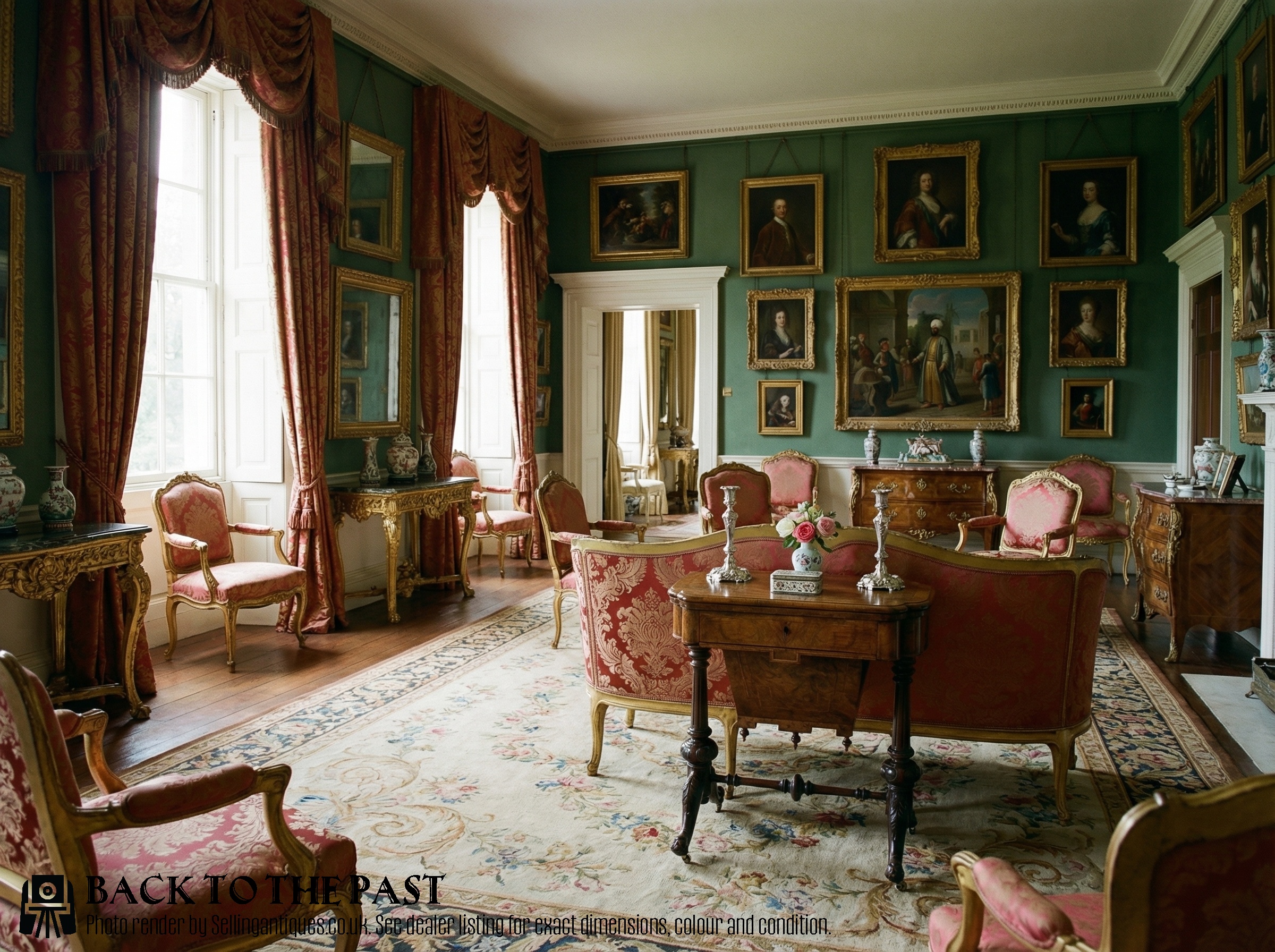
Holland and Son
The Burr Walnut Worktable Glossary
- Burr walnut
- A specialised wood veneer taken from the excrescences of walnut trees, valued for its swirling, highly figured grain patterns. It forms the primary decorative surface on Victorian worktables.
- Trumpet workbox
- A form of sewing table featuring an octagonal or flared body resembling the bell of a musical instrument, supported on a carved pillar and tripod base.
- Inlay
- A technique where contrasting materials such as boxwood and fruitwood are embedded into the wood surface to create decorative patterns and borders.
- Needlework table
- A specialised piece of furniture equipped with compartments, trays, or fabric bags specifically designed to hold sewing implements and textiles.
Frequently Asked Questions
What is a burr walnut worktable?
A burr walnut worktable is a Victorian sewing and occasional table finished with highly figured walnut veneer. These pieces date from the nineteenth century and incorporate specialised storage for needlework.
Many examples also feature integrated chess or backgammon boards, combining practical craft storage with leisure activities.
How were these tables used?
Victorians used these tables for domestic handiwork such as sewing, embroidery, and knitting. The internal compartments kept threads, needles, and small tools neatly organised beneath the work surface.
When closed, the tables served as decorative occasional furniture in the parlour or drawing room for displaying objects or playing games.
What styles are available?
The available pieces belong exclusively to the Victorian style, reflecting nineteenth-century design preferences. Common forms include rectangular sewing boxes, oval worktables, and trumpet-shaped pedestals.
Decoration relies heavily on the natural grain of burr walnut, frequently enhanced with boxwood and fruitwood inlay.
What materials are used?
Construction utilises walnut and burr walnut timber, often combined with secondary woods. Decorative elements include fine wood inlay using boxwood and fruitwood.
Hardware typically incorporates brass fixtures, while internal sections feature fabric linings and ceramic components.