


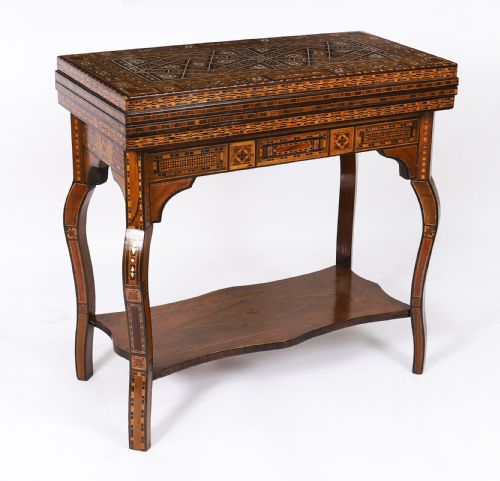
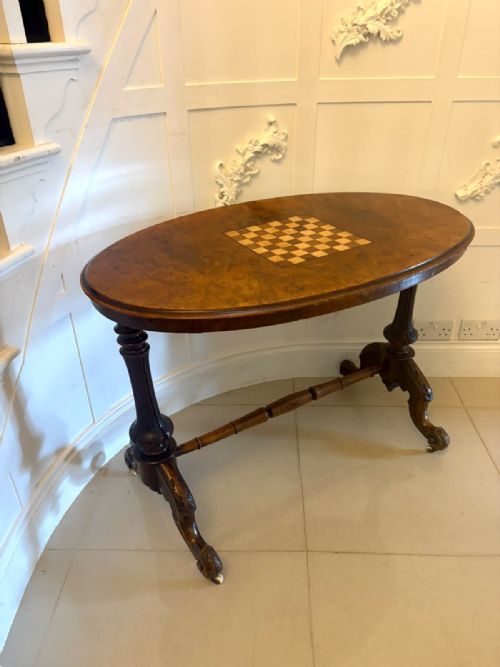
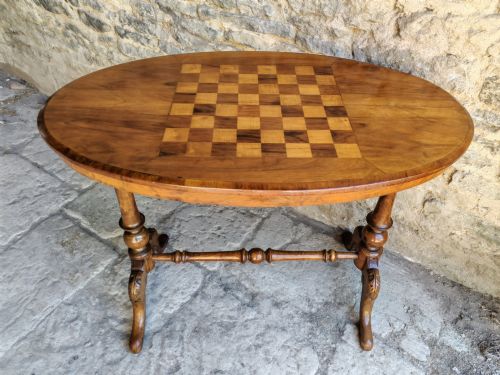
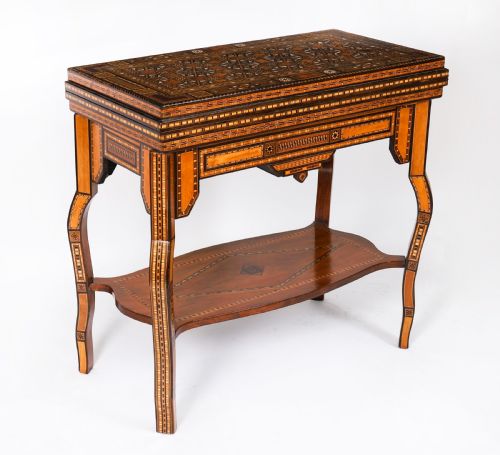
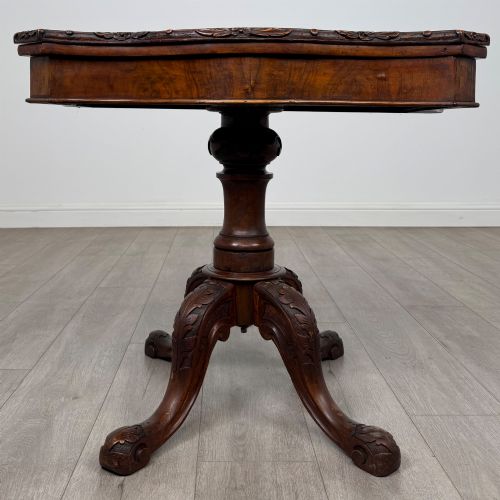
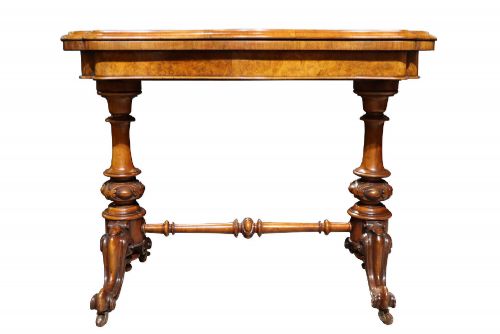
Brown Walnut Games Table
A brown walnut games table brings together rich timber, intricate marquetry and a functional surface designed for pastimes.
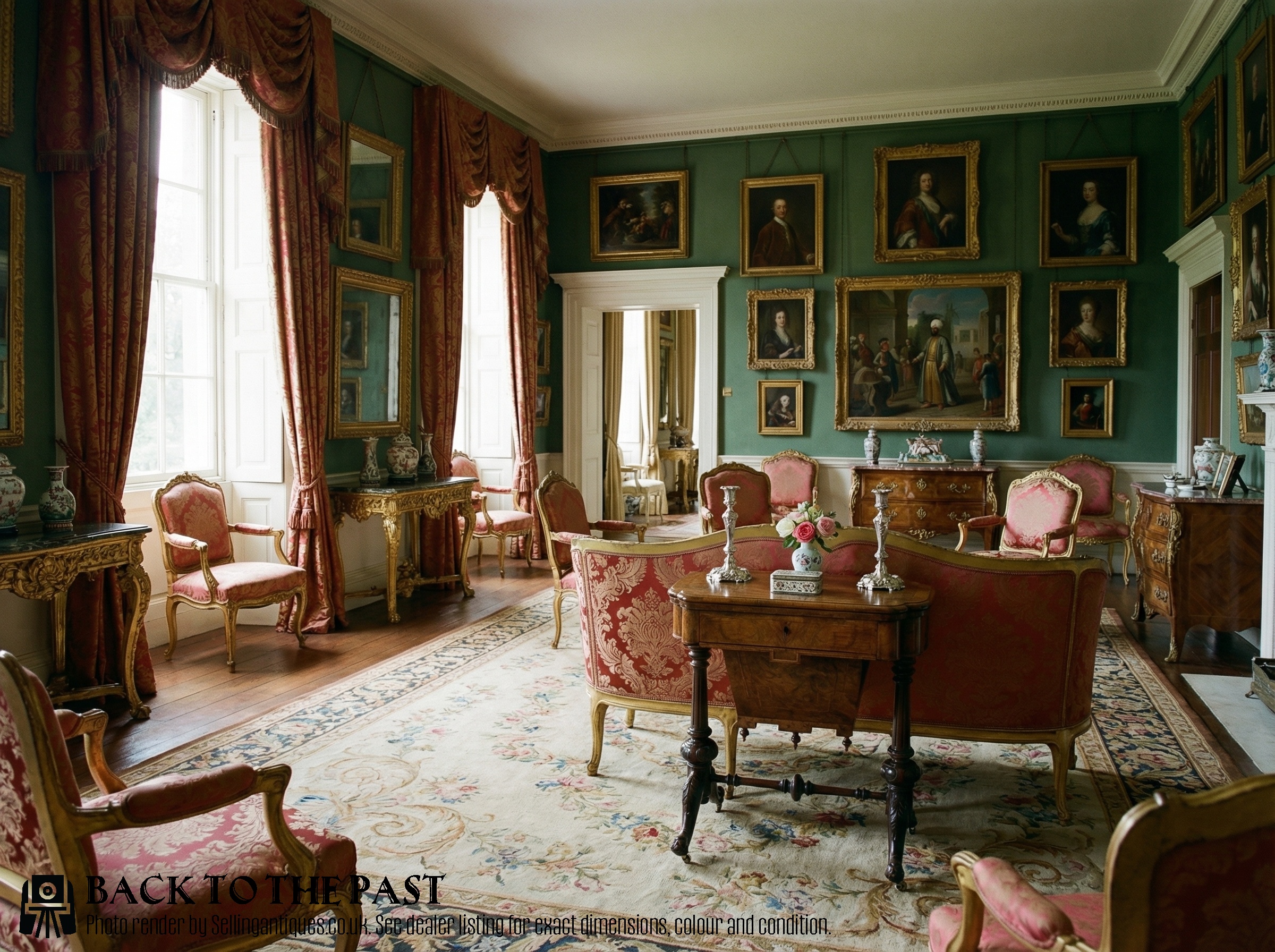
Brown Walnut Games Table
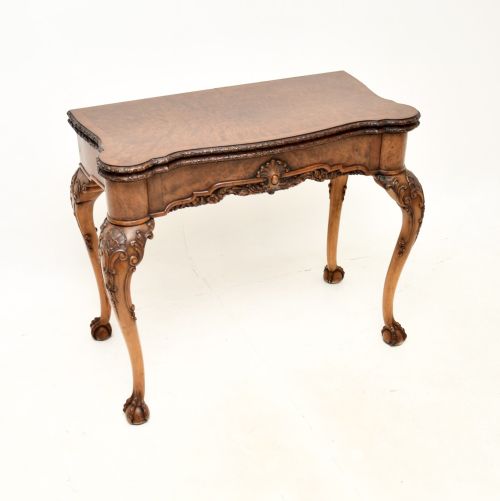
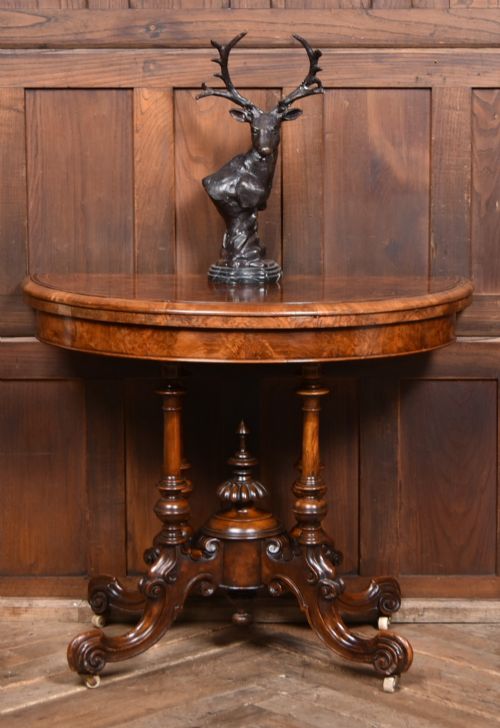
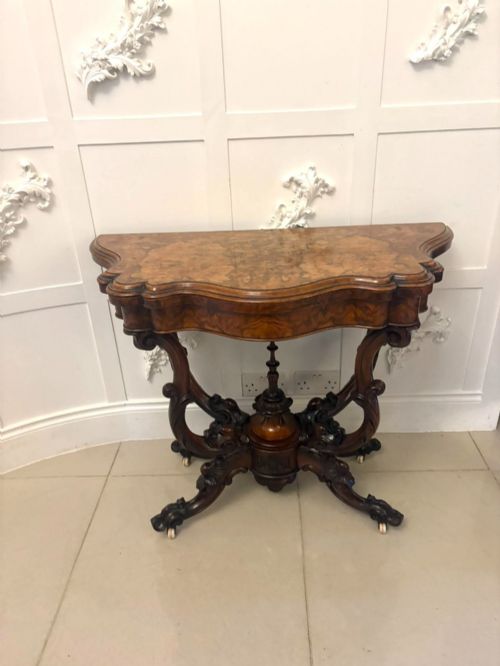
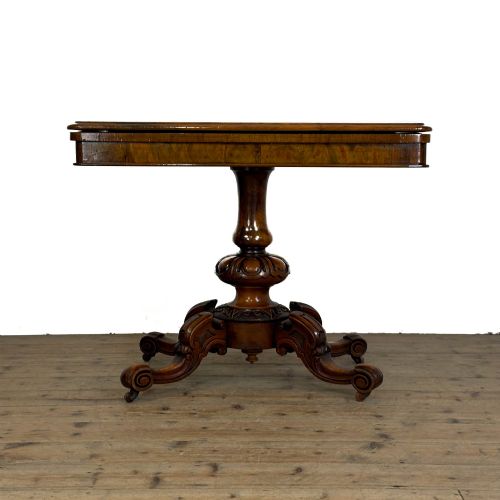
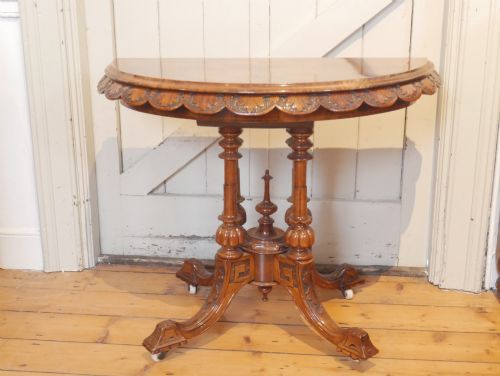
A brown walnut games table serves as a versatile piece of furniture designed for card playing, chess, backgammon and general parlour entertainment. These tables frequently appear from the Victorian era and the nineteenth century, often taking the form of fold-over card tables, occasional tables and multifunctional work tables. Buyers searching for a brown walnut games table encounter pieces that range from simple demilune shapes to elaborately carved and inlaid specimens.
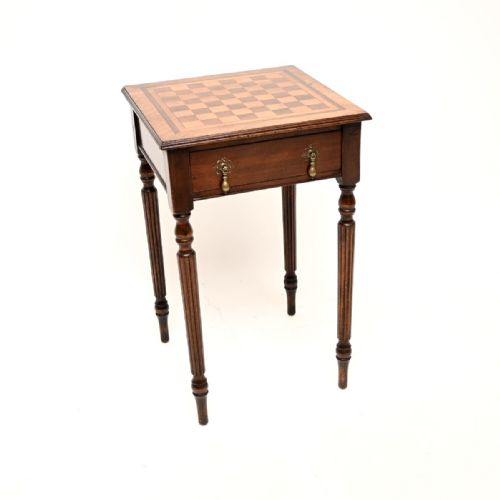
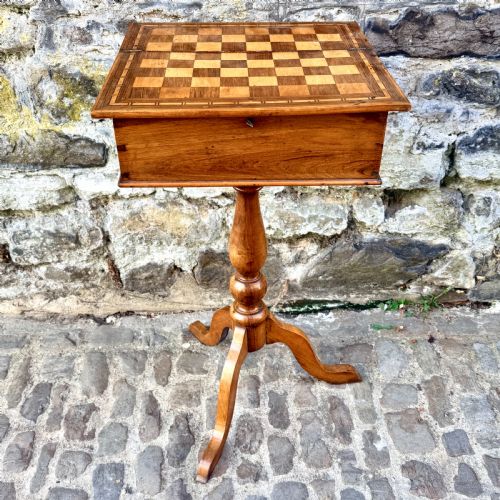
The construction typically involves timber surfaces that swivel, lift or fold to reveal hidden playing boards or storage compartments for counters and pieces. Many examples incorporate chess and draughts boards integrated directly into the top, sometimes combined with backgammon layouts hidden within the interior. French provincial, Levantine, Queen Anne style and Syrian Ottoman influences also appear across the selection, offering diverse aesthetic interpretations of the form.
What distinguishes the quality
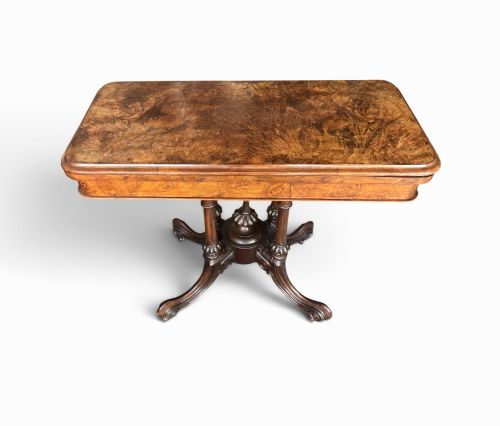
The refinement of the burr walnut veneer and the precision of the wood inlay set superior examples apart from standard workshop production. Finely executed floral marquetry, crisp carving on the column supports and well-fitted internal compartments indicate high craftsmanship.
Stability in the folding and pivoting mechanisms dictates the functional success of the piece. Superior items maintain alignment when closed and provide a level, solid surface when opened for play.
Brown Walnut Games Table Retail Price Guide 2026
Typical asking prices for brown walnut games table among the pieces listed under this phrase on Sellingantiques today, from the lower quarter to the upper quarter. They describe what is for sale here now, not the wider market.
Several tables hide secret compartments beneath the playing surface, originally intended for storing stray counters and tiny ivory dice.
Edwards and Roberts
The Brown Walnut Games Table Glossary
- Burr walnut
- A prized timber harvested from the tree's growth warts, yielding swirling, highly decorative grain patterns. Cabinet makers frequently used burr walnut veneers on the prominent surfaces of Victorian games tables.
- Marquetry
- Decorative patterns formed by fitting small pieces of wood veneer into a design. Artisans utilised fruitwood and various timbers to create floral and geometric motifs across the table tops.
- Demilune
- A half-moon shape characteristic of certain card tables designed to sit flat against a wall when closed. These tables unfold into a full circle or semicircle for use.
- Metamorphic
- Describing furniture designed to transform its function or shape through folding, sliding or pivoting mechanisms. These tables convert from side tables or consoles into active play surfaces.
- Crossbanded
- A border technique where thin strips of veneer are applied around the perimeter of a table top with the grain running perpendicular to the centre panel.
Brown Walnut Games Table: Frequently Asked Questions
How do I use a fold over games table?
The hinged top rotates or swings outward on a pivot to rest upon the extended framework of the base, doubling the surface area for cards or board games.
Once opened, many designs reveal a baize-lined interior or inlaid chess and backgammon boards concealed beneath the closed lid.
What games were played on these tables?
Punters and family members used these surfaces primarily for card games, chess, draughts and backgammon during the nineteenth and early twentieth centuries.
Many tables include multiple boards or reversible tops to accommodate different pastimes within a single piece of furniture.
How do I care for walnut wood?
Keep walnut furniture away from direct sunlight and excessive heat sources to prevent the burr veneer from drying out and cracking.
Apply natural beeswax periodically to nourish the timber and maintain the soft sheen of the brown finish.
How can I date a walnut games table?
Examine the construction methods, secondary timbers used inside the framing, and the specific decorative style such as Victorian carving or marquetry.
Stylistic markers like Queen Anne cabriole legs or mid-nineteenth-century turned columns provide clear indications of the manufacturing period.