
Georgian Style Tea Table
A georgian style tea table brings the architectural proportion and social history of the eighteenth century directly into a modern sitting room.
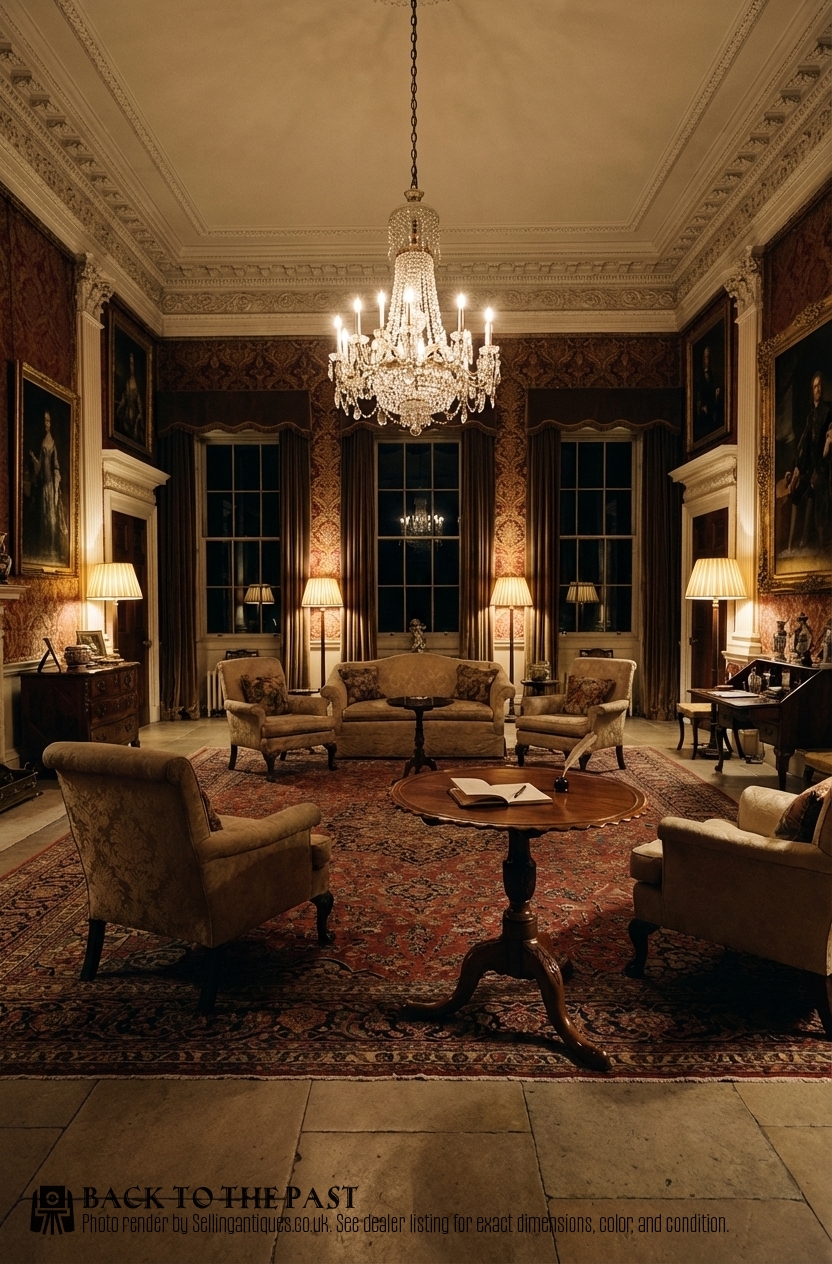
Georgian Style Tea Table
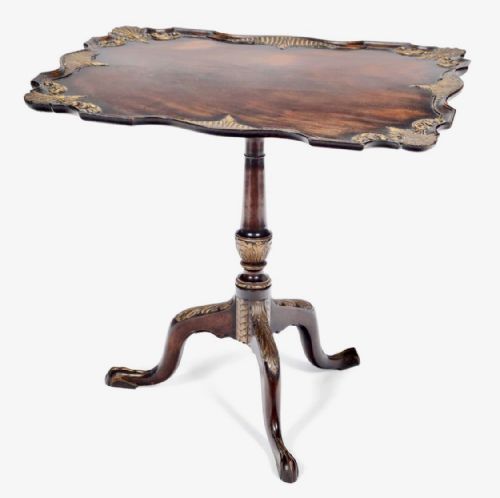
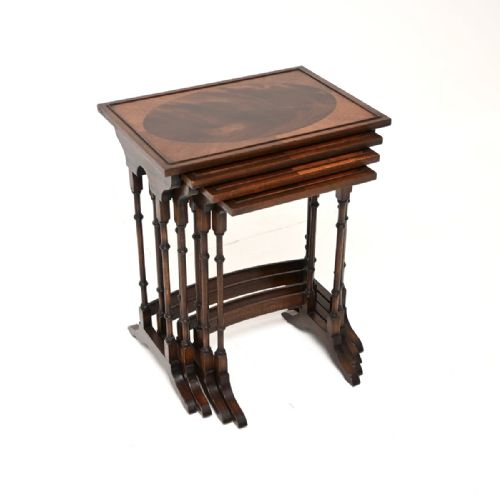
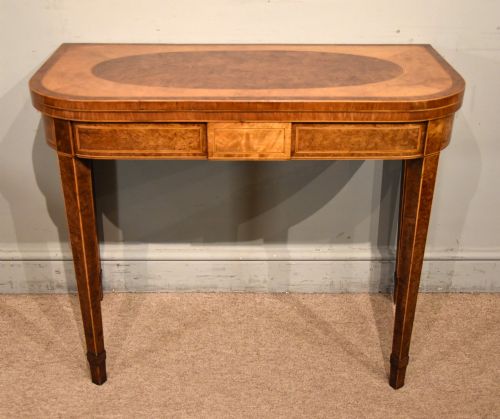
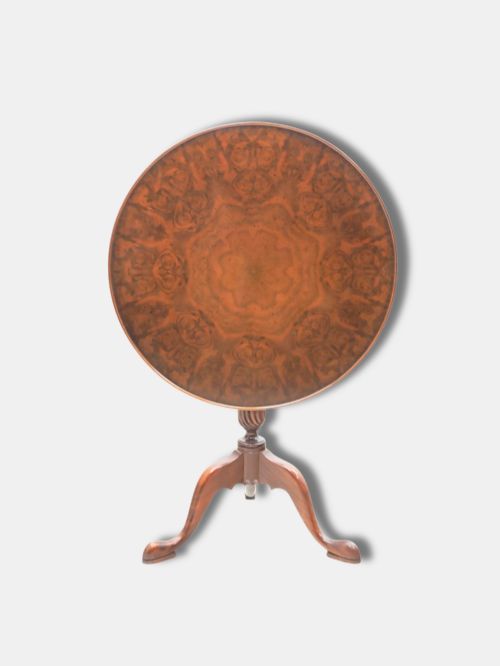
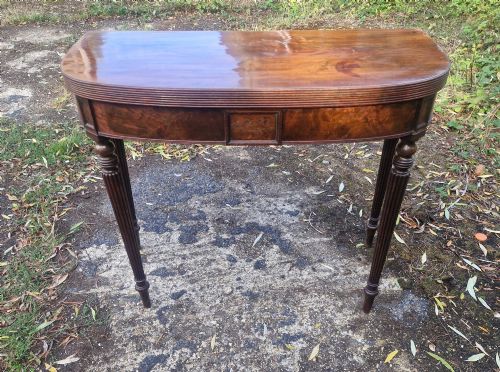
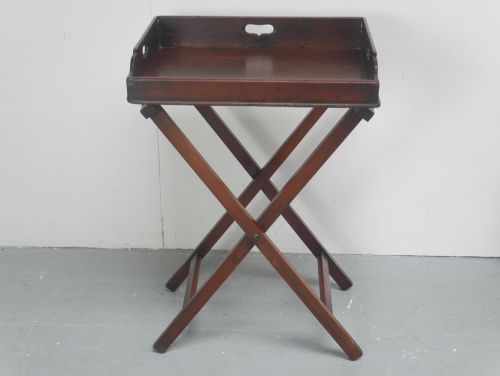
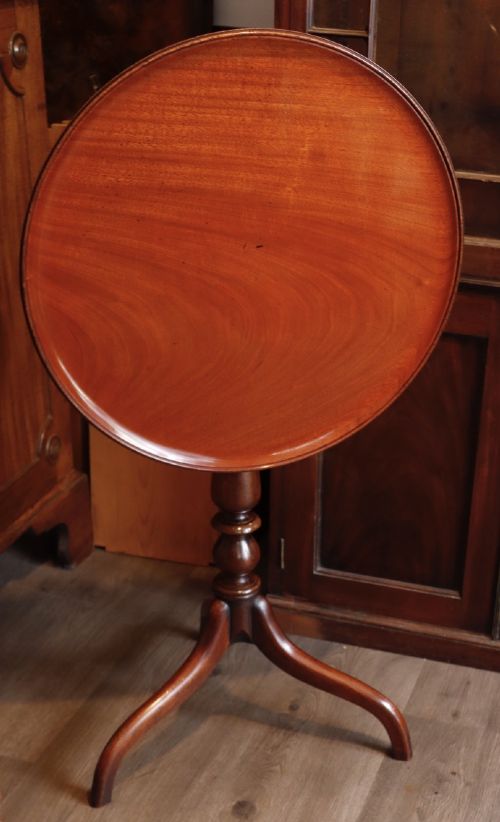
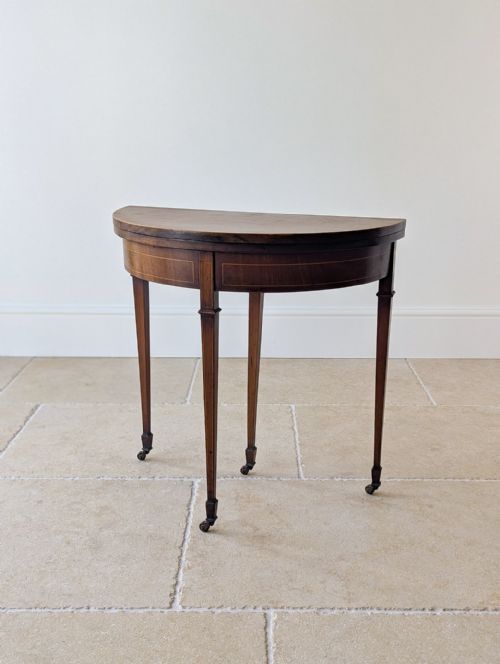
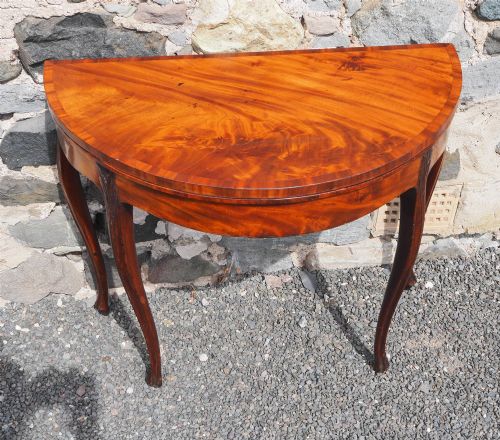
A georgian style tea table encompasses authentic eighteenth-century examples alongside later revivals from the nineteenth and twentieth centuries. These tables frequently take the form of fold-over card and tea tables, tilt-top tripod pieces with birdcage mechanisms, or drop-leaf Pembroke designs.
The selections span several periods, including original George III pieces, Regency iterations, and Edwardian or Georgian Revival reinterpretations. Buyers frequently encounter mahogany and walnut constructions that reflect the social rituals of tea drinking and gaming.
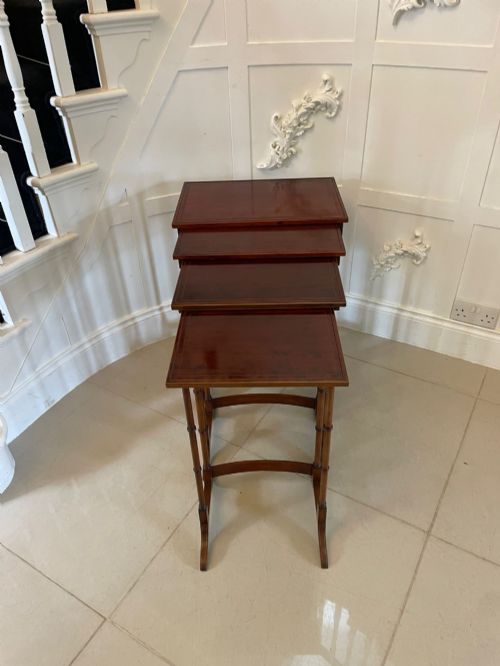
Makers and designers from various decades adapted these classic proportions into occasional tables, side tables, and nests of tables. The resulting variety bridges formal dining rooms and everyday domestic spaces.
Materials and Technique
Cabinetmakers constructed these tables primarily from solid mahogany, walnut, and satinwood, often applying intricate veneers such as burr yew or burr walnut to the primary surfaces. Crossbanding and delicate satinwood inlay provide textural contrast along the borders of the tops.
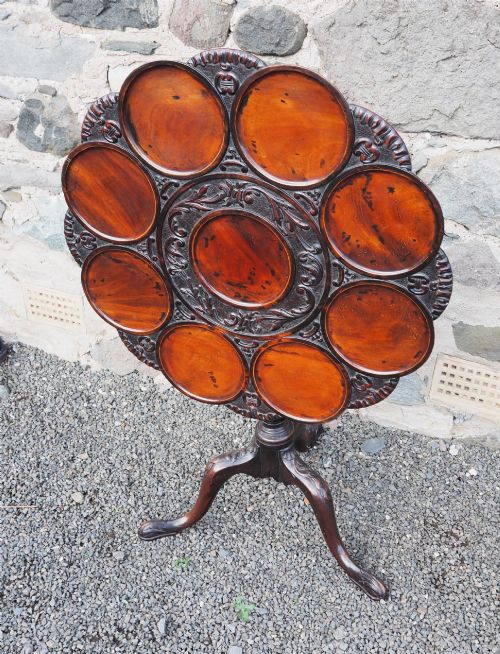
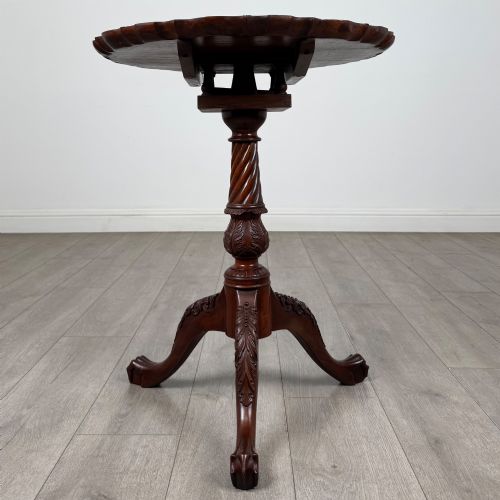
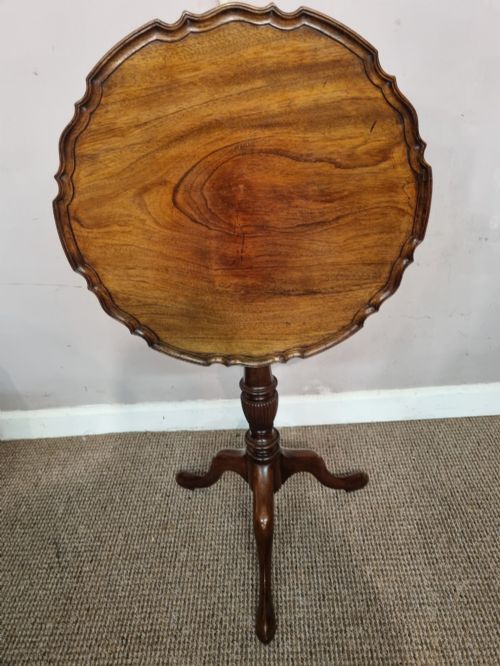
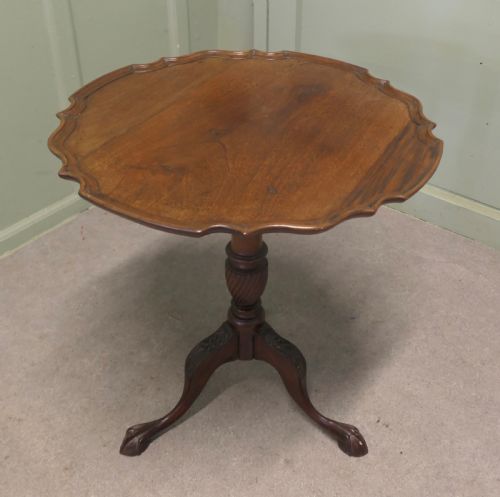
Structural integrity relies on traditional joinery, including concertina actions for expanding frames and birdcage mechanisms that allow circular tops to tilt and rotate. Hand-carved elements such as pie crust edges, parcel gilt details, and tripod pillar supports demonstrate the specialised woodworking techniques of the period.
Georgian Style Tea Table Retail Price Guide 2026
Typical asking prices for georgian style tea table among the pieces listed under this phrase on Sellingantiques today, from the lower quarter to the upper quarter. They describe what is for sale here now, not the wider market.
The Measure of Craft
Quality in a georgian style tea table rests upon the crispness of the carving, the selection of figured timber veneers, and the mechanical precision of folding leaves or tilt-top actions. Superior examples display seamless alignment when closed and balanced weight distribution throughout the support columns.
Gillows·Giles Grendey·Zimmermann
The Georgian Style Tea Table Glossary
- Birdcage
- A timber framework beneath a table top that allows the surface to both rotate and tilt. This mechanism became popular on tripod tables during the eighteenth century.
- Concertina action
- An expanding table frame that opens like a bellows to support folding top leaves. It provides unobstructed legroom beneath card and tea tables.
- Pie crust edge
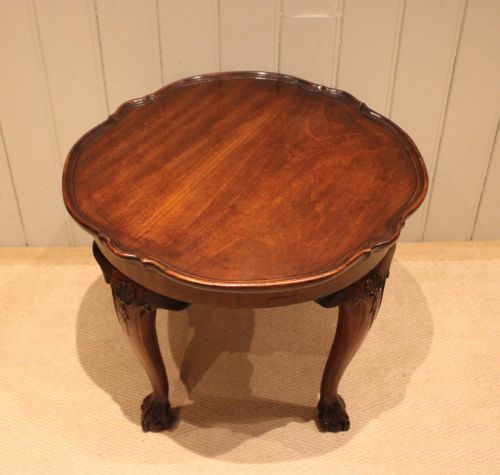
- A raised, scalloped carved rim detail along the circumference of a circular table top. Cabinetmakers shaped this moulding from solid wood blocks.
- Tripod table
- A small freestanding table supported by a central pillar resting on three legs. These pieces offered mobility for tea service and reading.
- Pembroke table
- A rectangular drop-leaf table with hinged flaps on two opposing sides. It typically includes one or more small drawers and tapering legs.
Georgian Style Tea Table: Frequently Asked Questions
What is a georgian style tea table used for today?
These tables function effectively as sofa-side surfaces, display points for decorative objects, or occasional desks in smaller rooms.
Their folding leaves and compact footprints allow them to expand when entertaining and sit flat against a wall during daily use.
How do I distinguish an eighteenth-century table from a revival piece?
Examine the secondary woods, the tool marks on the underside, and the wear patterns around the pivot points and hinges. Eighteenth-century construction methods often feature hand-cut dovetails and timber shrinkage consistent with age.
Revival pieces from the Edwardian era or the 1920s utilise machine-cut elements and standardised fittings while retaining the classic silhouettes.
How do tilt-top mechanisms function?
A vertical catch secures the table top in a horizontal position, releasing to let the surface pivot upright for storage against a wall. The birdcage mechanism beneath allows the top to rotate freely when locked flat.
This design saved valuable floor space in historic drawing rooms when tea service concluded.
Where should I place a fold-over tea table in a room?
Position the piece against a hallway wall or beside a seating arrangement in its closed configuration to display the figured veneer top. Opening the leaves creates a stable surface for games or drinks when hosting guests.
The finished rear timbers allow these tables to stand freely in the centre of a room rather than strictly against a wall.