

Queen Anne Console Table
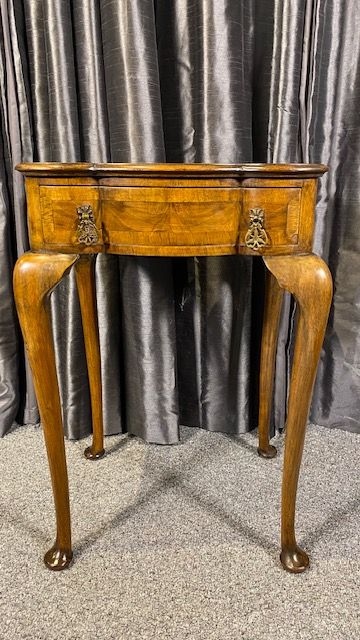
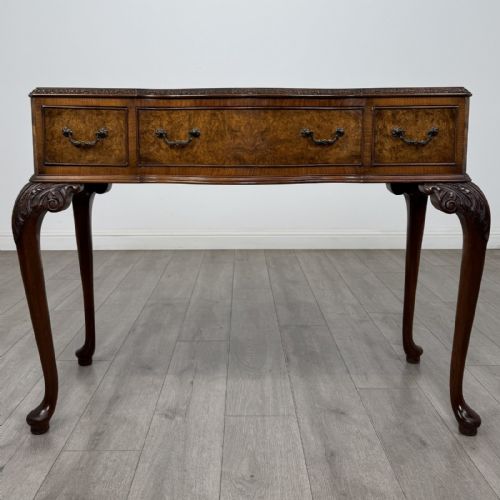
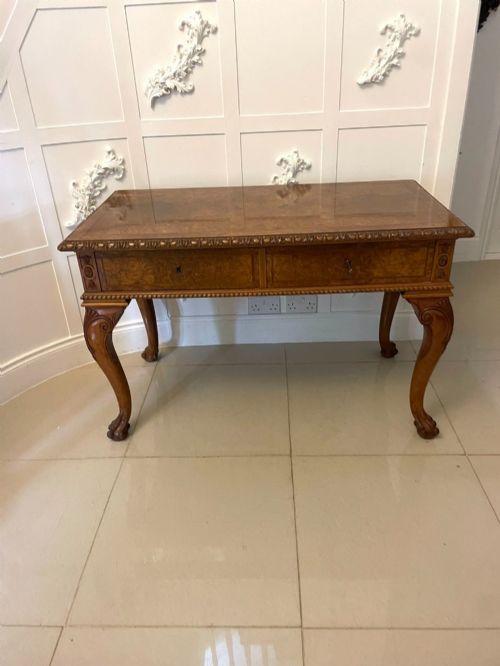
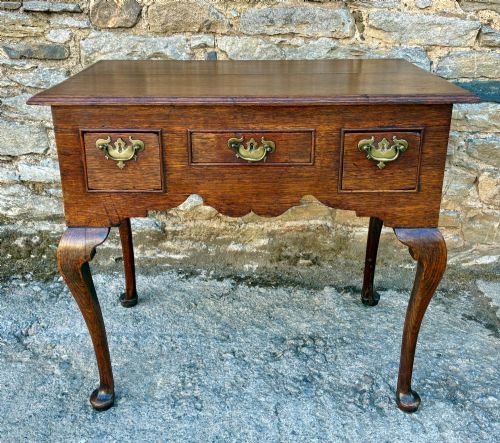
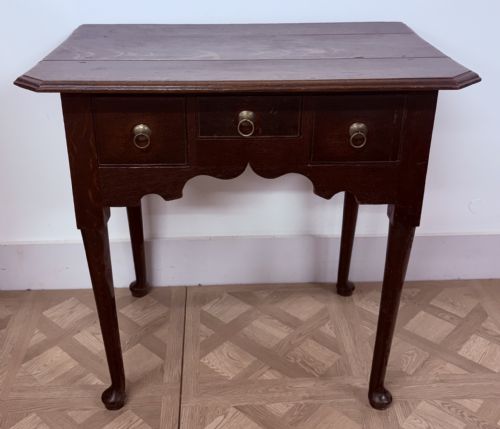
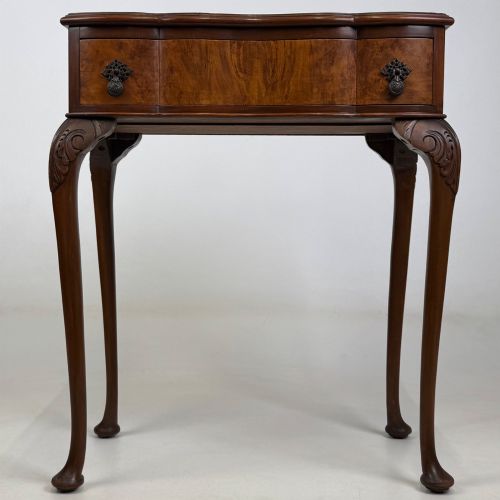
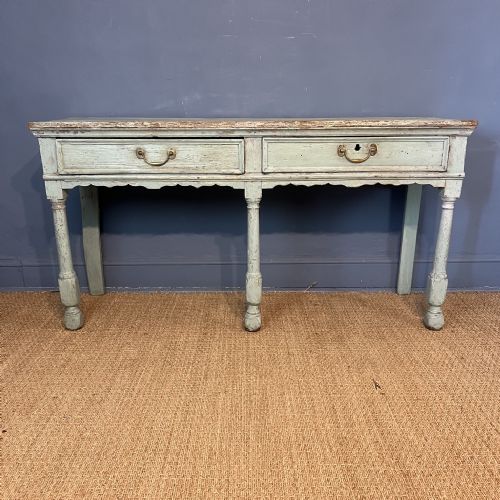
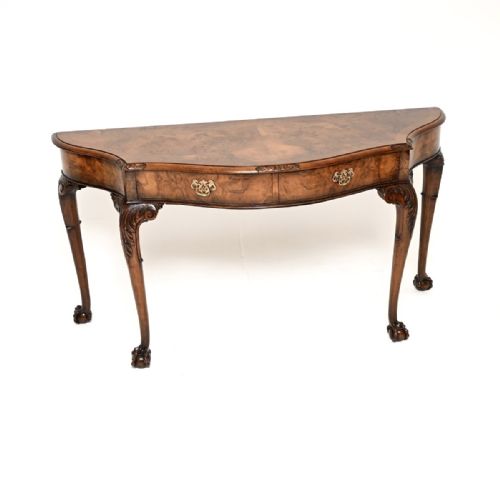
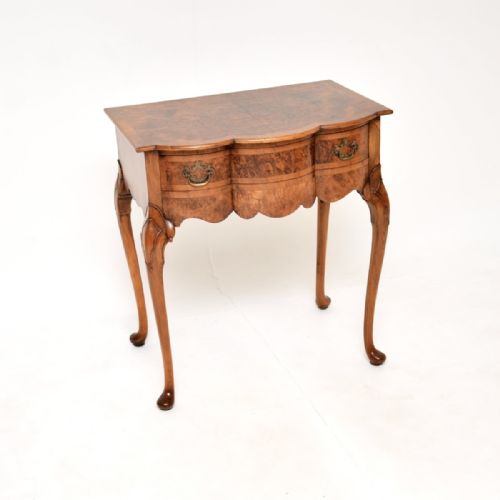
A queen anne console table brings undeniable architectural grace to a hallway, often appearing in figured burr walnut or oak across this selection.
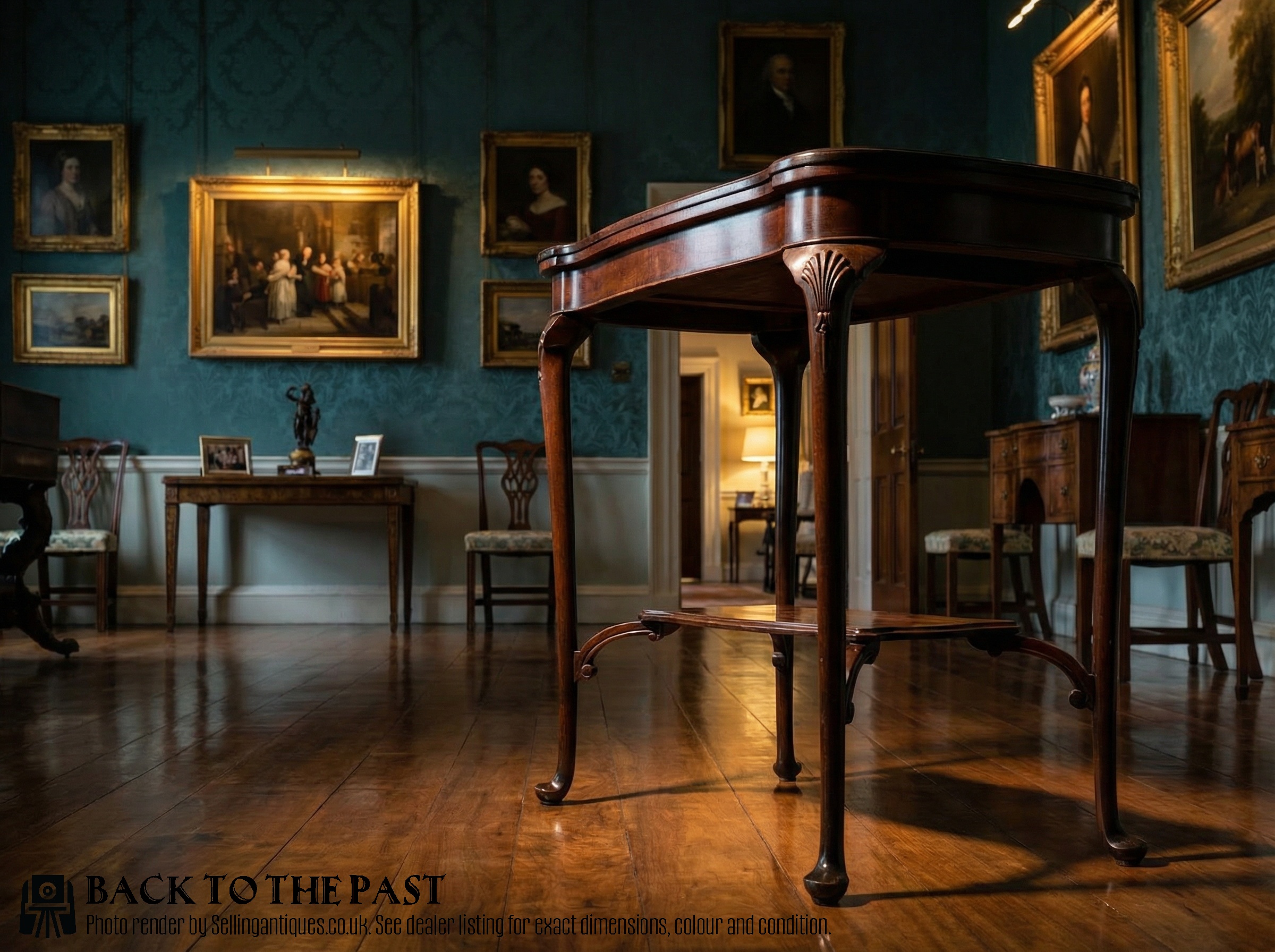
Queen Anne Console Table
A queen anne console table serves as a slender architectural surface for a hallway or reception room, standing flush against a wall or functioning as a freestanding pier table. When exploring this phrase, a buyer encounters both authentic pieces originating in the eighteenth century and revival iterations produced during the early twentieth century.
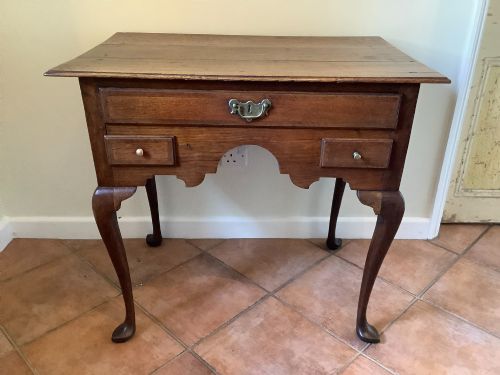
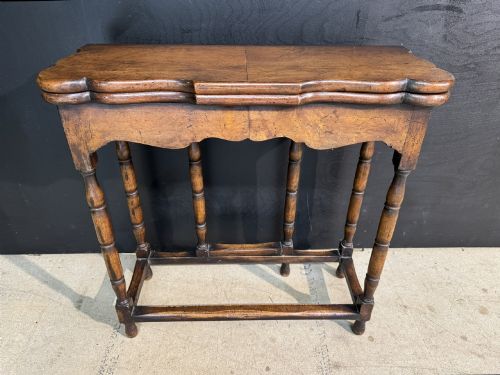
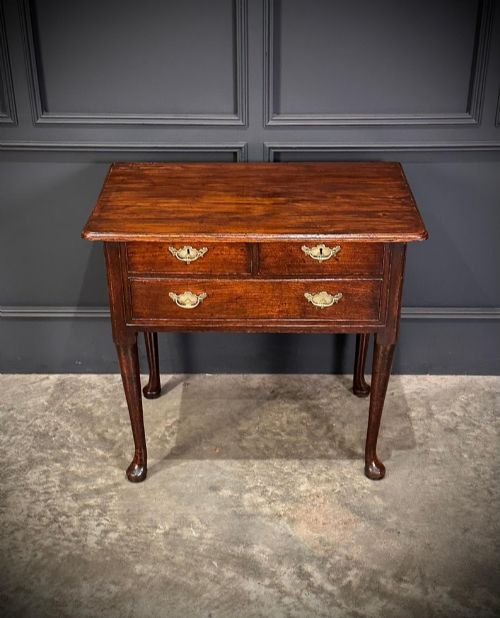
The form frequently overlaps with related low furniture types such as lowboys, serving tables, and fold-over card tables. Walnut and oak dominate the domestic output, supplemented by mahogany, fruitwood, and pine in various states of finish from polished grain to painted or lacquered surfaces.
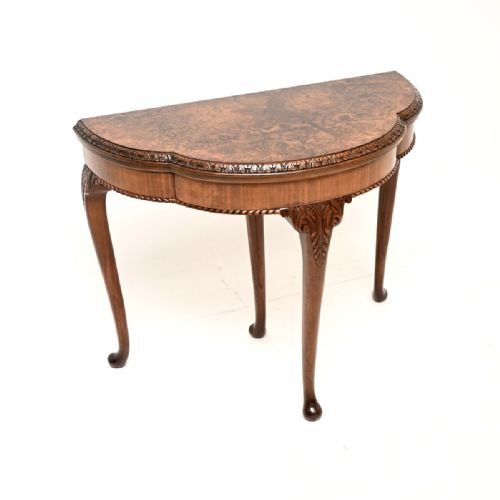
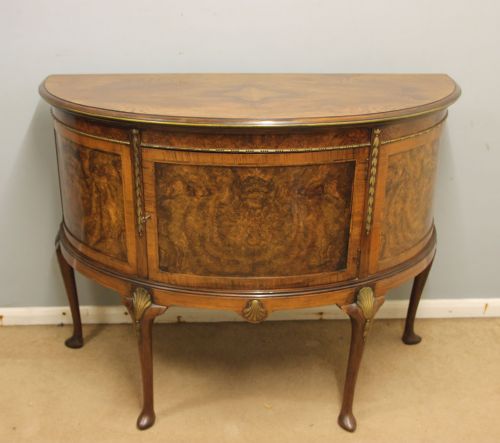
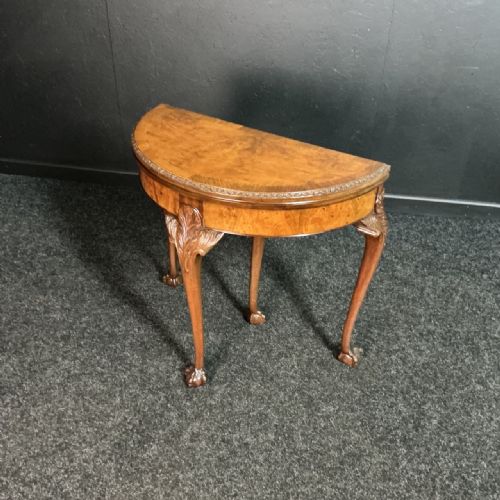
Twentieth-century revival examples heavily populate the market, constructed with the characteristic cabriole leg and pad foot associated with the early eighteenth-century aesthetic. These later interpretations range from simple rectangular servers to demi-lune folding tables designed for compact modern rooms.
Materials and Construction
Makers utilised native and imported timbers, selecting walnut and burr walnut for their rich, variegated figuring, alongside durable oak for structural integrity. Crossbanding and veneering techniques were applied to tabletops to create geometric borders that highlighted the natural grain of the wood.
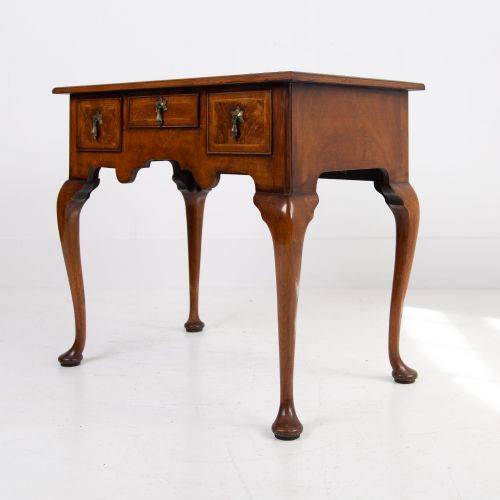
Joinery methods relied on traditional drawer construction and frame assemblies, supported by shaped aprons beneath the surface. Legs were shaped into pronounced cabriole curves that terminated in pad or trifid feet, requiring considerable skill from the cabinetmaker to maintain weight distribution.
Queen Anne Console Table Retail Price Guide 2026
Typical asking prices for queen anne console table among the pieces listed under this phrase on Sellingantiques today, from the lower quarter to the upper quarter. They describe what is for sale here now, not the wider market.
A bird and flower motif hides quietly in the marquetry of an eighteenth-century Dutch silver-top table.
Judging Quality and Execution
The distinction between ordinary and superior pieces rests on the choice of timber veneer and the crispness of the carved detail. Highly figured burr walnut surfaces command greater attention than plain boards, while hand-cut dovetails and well-proportioned cabriole legs separate fine cabinet work from basic production.
Proportion and line dictate the visual success of the piece, particularly in the sweep of the leg and the profile of the apron. Original patination and untouched surface finishes contribute significantly to the standing of an example within its period.
Epstein and Co
The Queen Anne Console Table Glossary
- Cabriole leg
- A furniture leg that bends outward in a convex curve and tapers inward in a concave curve, mimicking animal limbs. This form is fundamental to the aesthetic of the period.
- Lowboy
- A small dressing or side table featuring one or more rows of drawers beneath a flat top, standing on tall cabriole legs. These tables date primarily from the eighteenth century.
- Crossbanding
- A narrow strip of veneer laid around the border of a tabletop with the grain running perpendicular to the centre panel. It creates a defined visual frame.
- Demi-lune
- Half-moon shaped furniture designed to sit flat against a wall, frequently utilised for console and card tables during various revival periods.
- Burr walnut
- A prized wood harvested from walnut tree growths, yielding intricate, swirling patterns used for decorative veneering on elite tables.
Queen Anne Console Table: Frequently Asked Questions
What distinguishes an original eighteenth-century table from a revival piece?
Original pieces display authentic timber shrinkage, hand-cut joinery marks, and historic surface wear accumulated over centuries of domestic use. Revival pieces, largely constructed around nineteen twenty, adopt the earlier aesthetic while utilising twentieth-century manufacturing tolerances and uniform timber stocks.
Examination of the secondary woods inside drawer linings often reveals the true age of the construction. Eighteenth-century examples rely on native oak or pine boards sawn by hand rather than modern machinery.
Where should a console table be placed in a home?
These tables fit naturally into narrow hallways, entrance foyers, or behind sofas where floor space is limited. Their shallow depth allows them to provide a functional surface without obstructing foot traffic.
Certain versions feature fold-over tops that expand to function as games or card tables when entertaining. Placing them against a blank wall anchors the surrounding interior space effectively.
How do you care for a walnut console surface?
Walnut timber benefits from periodic applications of traditional beeswax to nourish the grain and protect the finish from drying out. Avoid placing these tables in direct sunlight or near heat sources, which can cause wood to warp and veneers to lift.
Gentle dusting with a soft, dry cloth preserves the historic patina without abrading the polished surface. Moisture should be wiped away immediately to prevent water rings.