
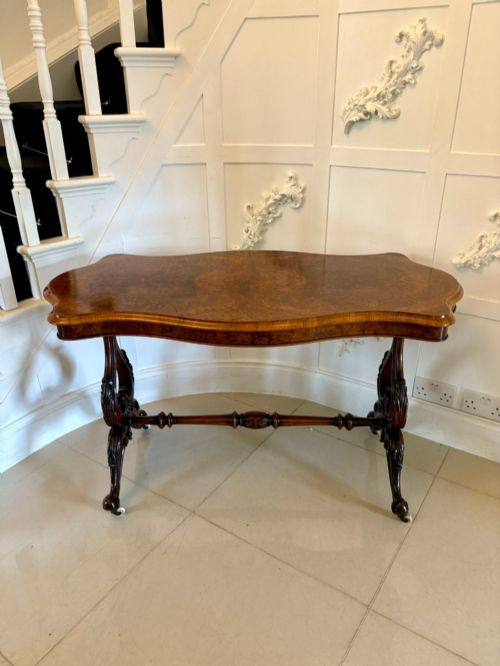
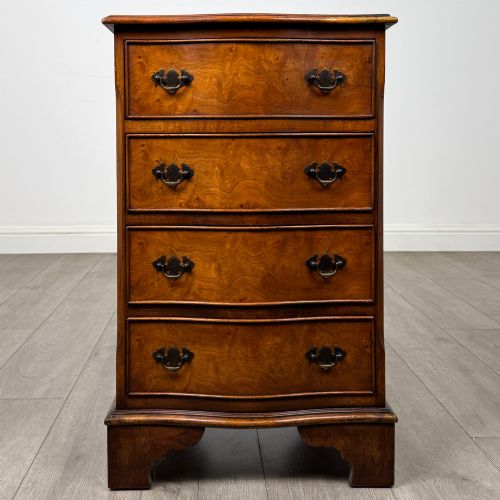
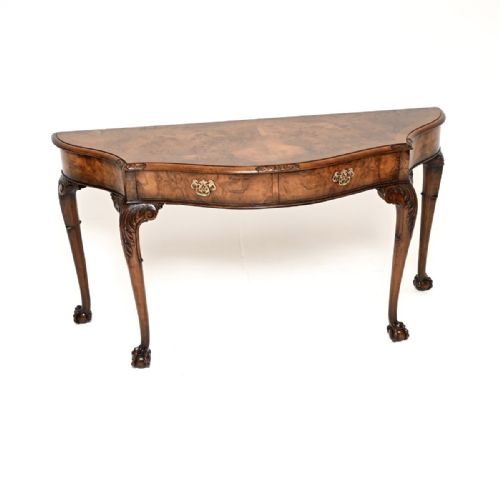
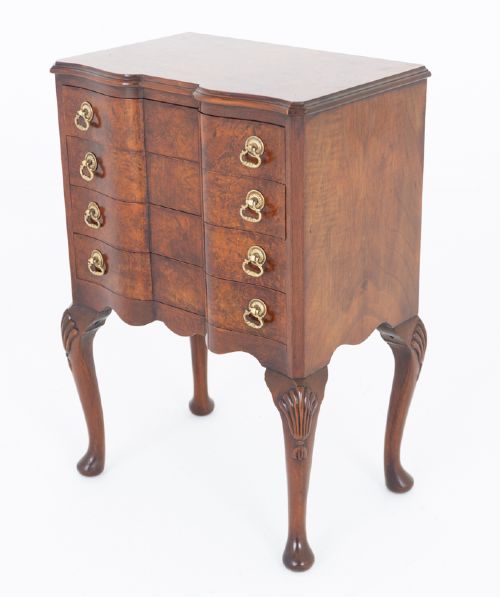
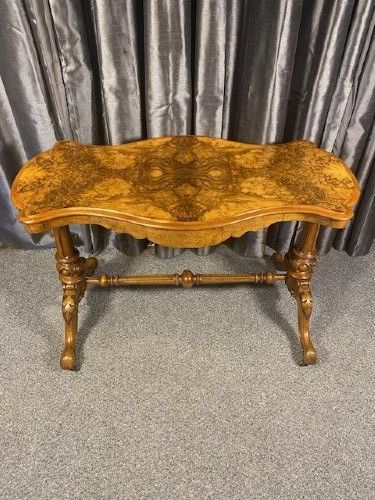
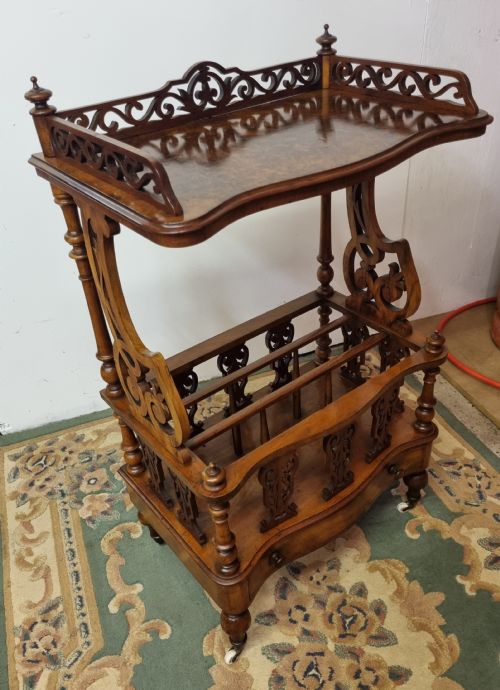
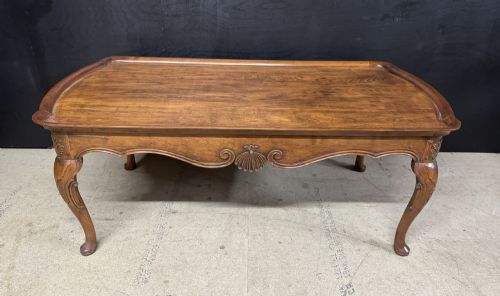
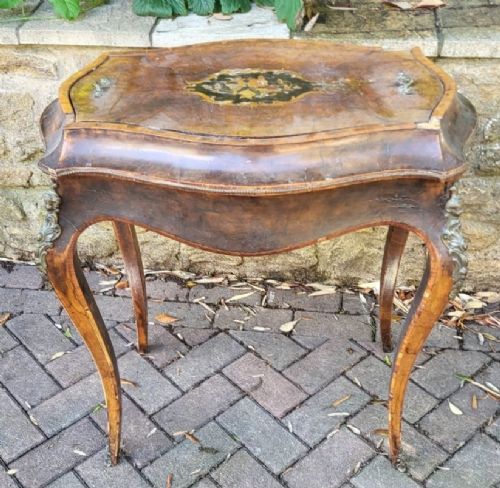
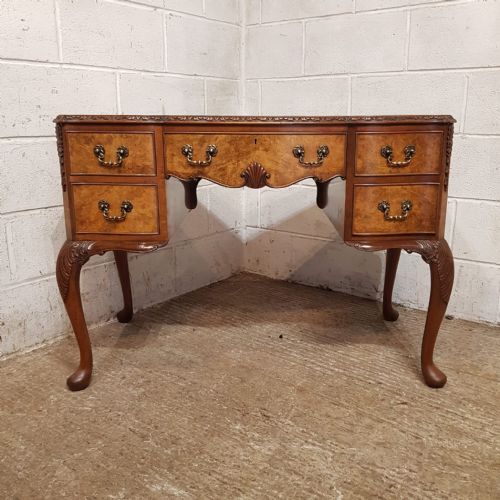

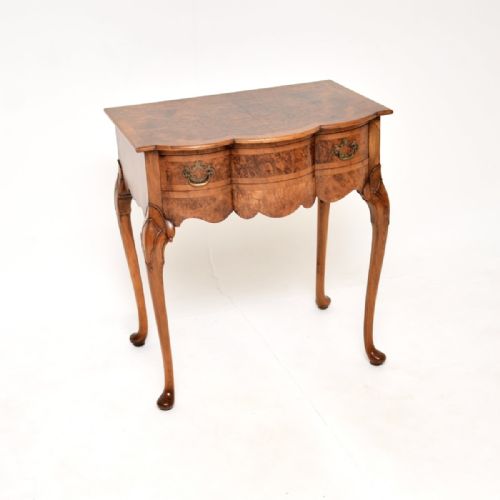
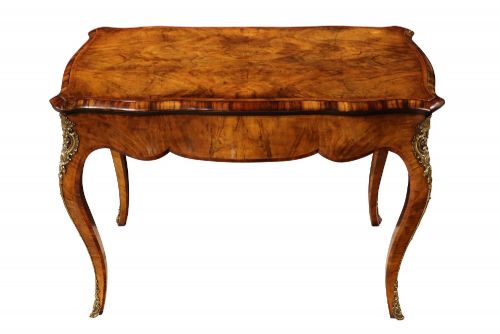
Serpentine Burr Walnut Table
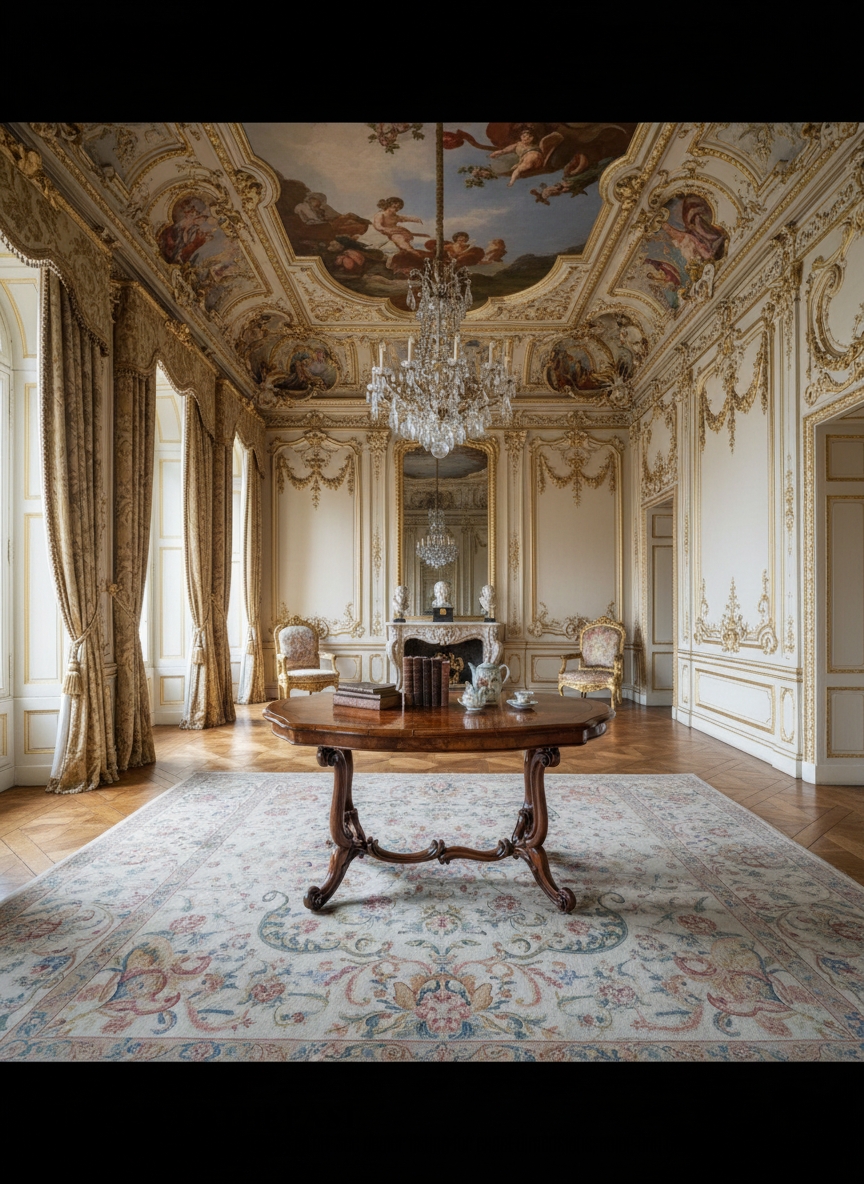
A serpentine burr walnut table brings the distinctive, undulating curves and rich grain patterns of Victorian and later furniture directly into a room.
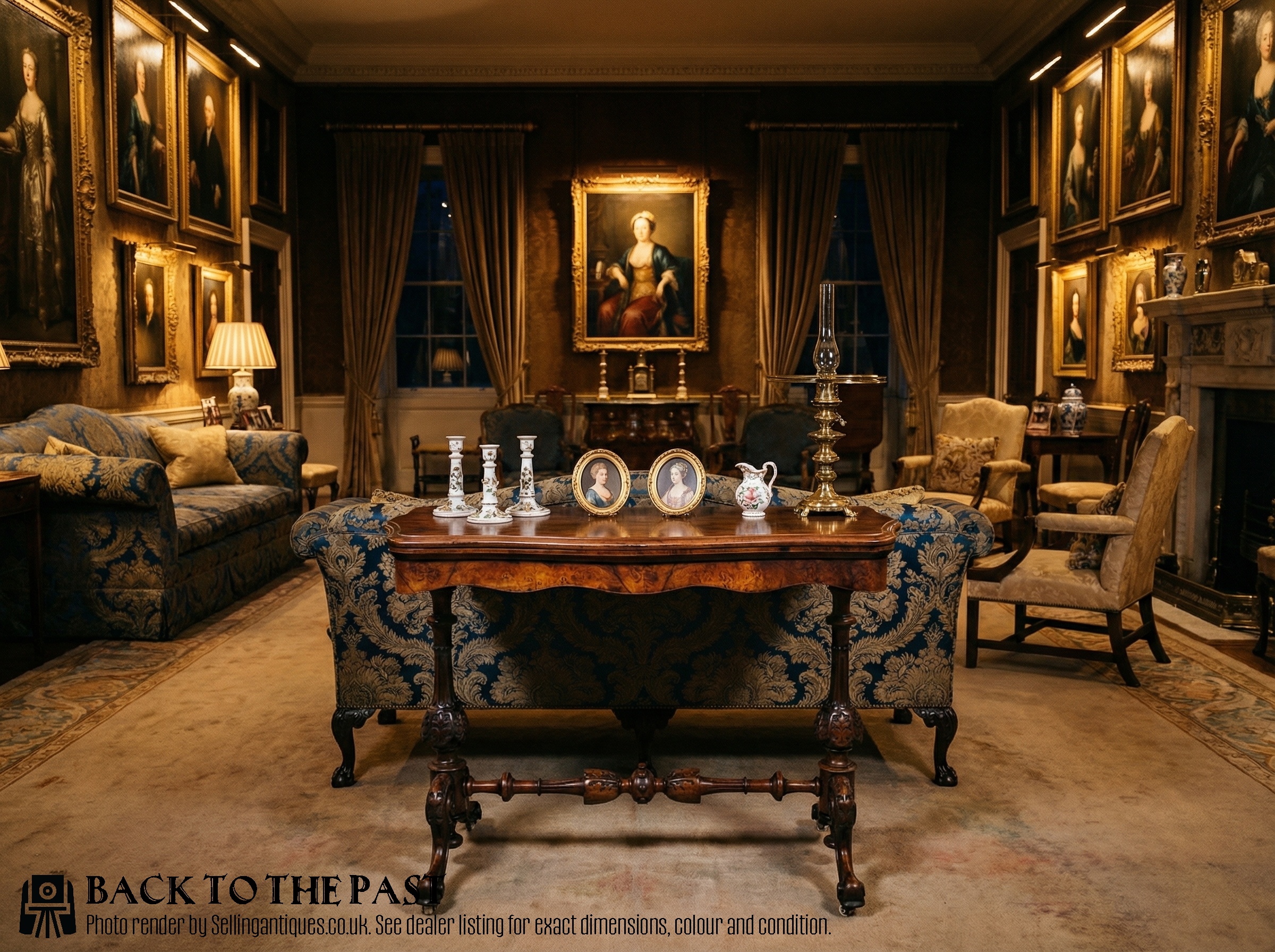
Serpentine Burr Walnut Table
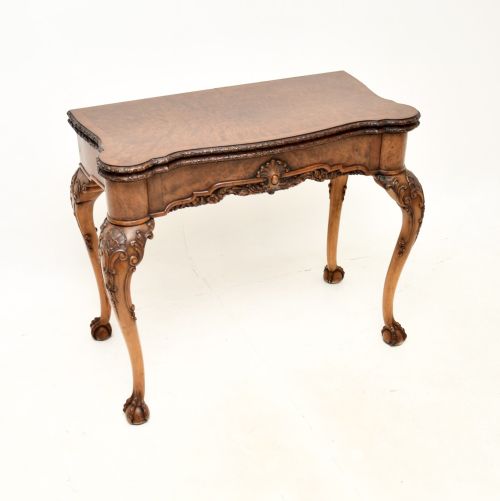
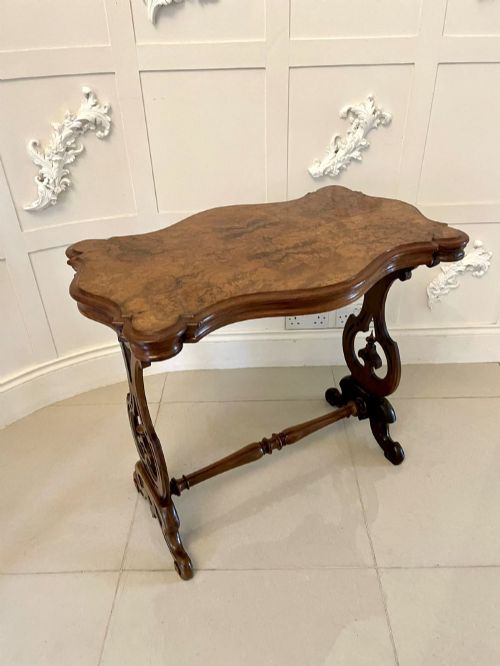
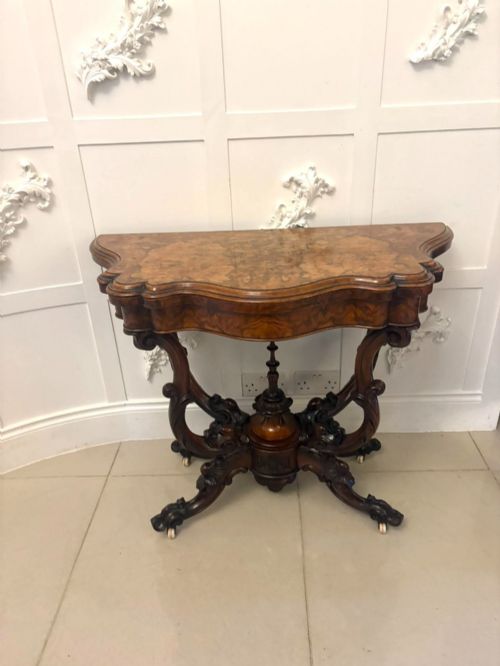
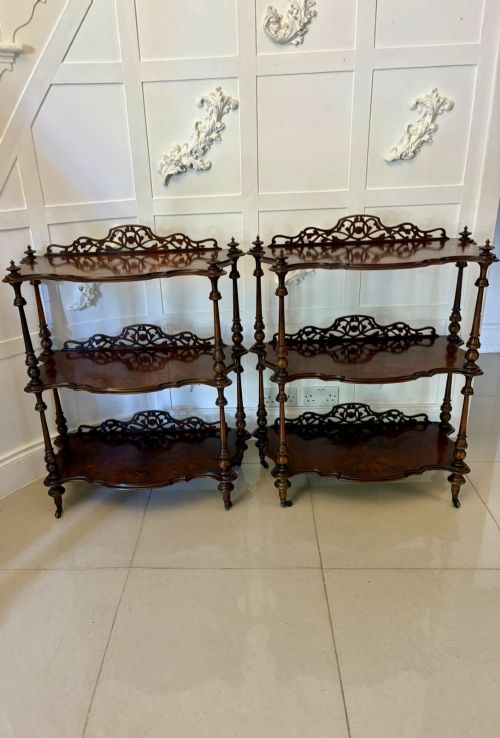
A serpentine burr walnut table is defined by its curving, wave-like front edge and the highly figured timber veneer applied across its surface. The examples encountered on this page span the Victorian era, the nineteenth century, and into the twentieth century with later revivals.
The primary forms appearing in this category include centre tables, card tables, console tables, and side tables. These pieces originated as functional domestic items for the parlour or drawing room, where timber grain and sweeping lines displayed household standing.
Makers adapted the serpentine silhouette across different decades, pairing the distinctive walnut veneer with styles ranging from Victorian Rococo Revival to Queen Anne Revival. Buyers frequently find folding card tables and freestanding centre tables adhering to this undulating outline.
Materials and Construction
Cabinet makers constructed these tables by applying thin slices of burr walnut veneer over a stable secondary wood carcass. The burr growth of the walnut tree creates intricate, swirling knot patterns that distinguish this timber from straight-grained walnut.
Structural embellishments often include carved wooden details, brass mounts, or ormolu trim fitted to the legs and aprons. Folding card and games tables frequently incorporate green or red leather playing surfaces set into the top.
Serpentine Burr Walnut Table Retail Price Guide 2026
Typical asking prices for serpentine burr walnut table among the pieces listed under this phrase on Sellingantiques today, from the lower quarter to the upper quarter. They describe what is for sale here now, not the wider market.
Listings demonstrate that burr walnut serpentine tables span the Victorian period through to the 1930s, utilising brass, ormolu, and leather alongside the primary wood.
Assessing Quality
Quality in a serpentine burr walnut table rests primarily upon the density and visual impact of the veneer figure. Tables featuring symmetrical, deeply swirled burr patterns across the entire top command greater attention than those with plain timber or interrupted grain.
The execution of the serpentine curve itself reveals the skill of the cabinet maker. Superior pieces maintain clean, fluid transitions along the undulating edge without buckling or distortion in the applied veneer.
Structural integrity and the retention of original decorative elements, such as brass mounts or ormolu, separate standard production pieces from finer examples. Card tables that open smoothly on their original hinges demonstrate careful preservation of the mechanical joints.
The Serpentine Burr Walnut Table Glossary
- Burr walnut
- A specialised wood veneer harvested from the wart-like growths on walnut trees. It yields complex, swirling grain patterns highly valued in fine cabinet making.
- Serpentine
- A furniture silhouette featuring an undulating front edge with a convex centre flanked by concave curves. This contour requires precise woodworking to shape both the solid frame and the applied veneer.
- Ormolu
- Gilded bronze ornamentation applied to furniture. It provides metallic contrast against the dark timber surfaces of nineteenth-century pieces.
- Centre table
- A freestanding table designed to be viewed from all sides rather than placed against a wall. These items often feature finished veneer work across the entirety of the top.
- Card table
- A folding table designed for games, typically featuring a baize-lined interior surface. Many examples pivot or fold over to form a console when not in use.
Serpentine Burr Walnut Table: Frequently Asked Questions
What is a serpentine edge?
A serpentine edge curves outward in the middle and inward near the corners, forming a wave-like contour. This shape was favoured by cabinet makers to add movement and elegance to case pieces and tables.
Crafting this profile required precise carpentry to ensure the wood veneer followed the undulating line without splitting or lifting over time.
Where were these tables placed?
These tables typically stood in principal rooms such as drawing rooms, parlours, or reception halls. Centre tables occupied the middle of the space, while console and side tables rested against walls.
Card tables remained folded against a wall until needed for evening entertainment, at which point staff or owners moved them into position.
How do I care for burr walnut?
Burr walnut requires stable indoor humidity and protection from direct sunlight to prevent the timber and veneer from drying out. Dusting with a soft, dry cloth maintains the finish without stripping natural oils.
Polishing should occur infrequently using traditional beeswax, avoiding modern silicone-based sprays that can penetrate micro-fissures in aged veneer.
How are Victorian and later tables told apart?
Victorian tables usually display heavier proportions, robust carved elements, and darker shellac finishes typical of mid-nineteenth-century taste. Later Edwardian and twentieth-century revivals often feature lighter framing and crisper, more restrained decorative carving.
Examining the secondary woods underneath and the style of the hardware provides further clues to the manufacturing decade.