
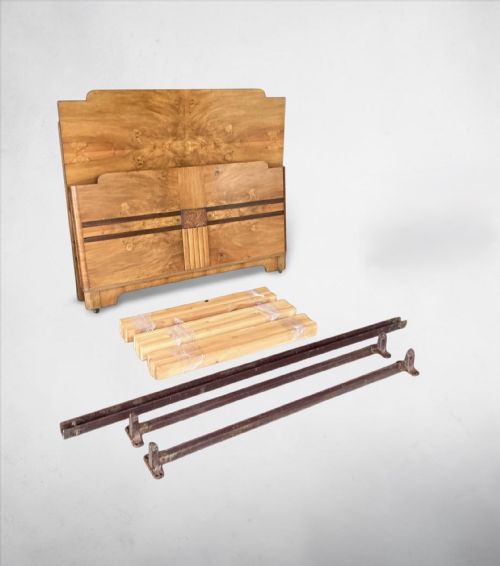
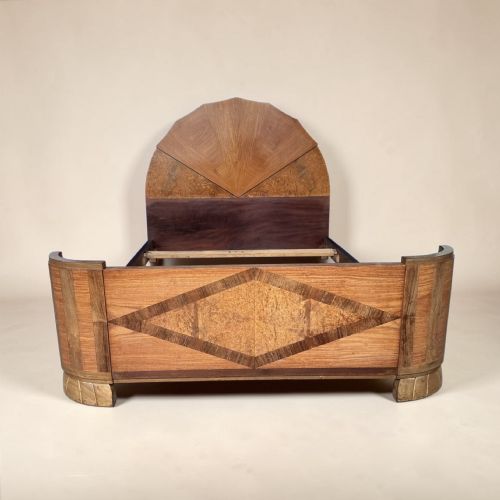
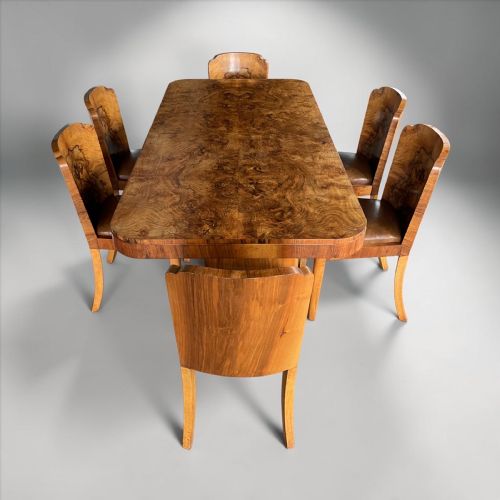
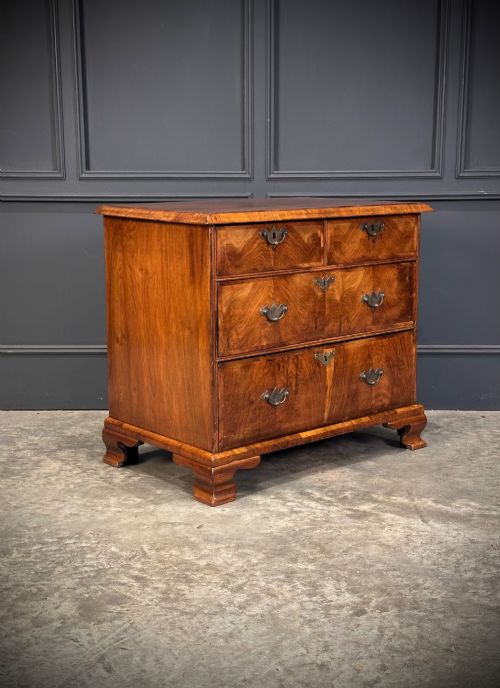
Vintage Burr Walnut Furniture
Vintage burr walnut furniture brings together rich swirling veneers and classic forms, offering both exceptional grain patterns and practical everyday utility.
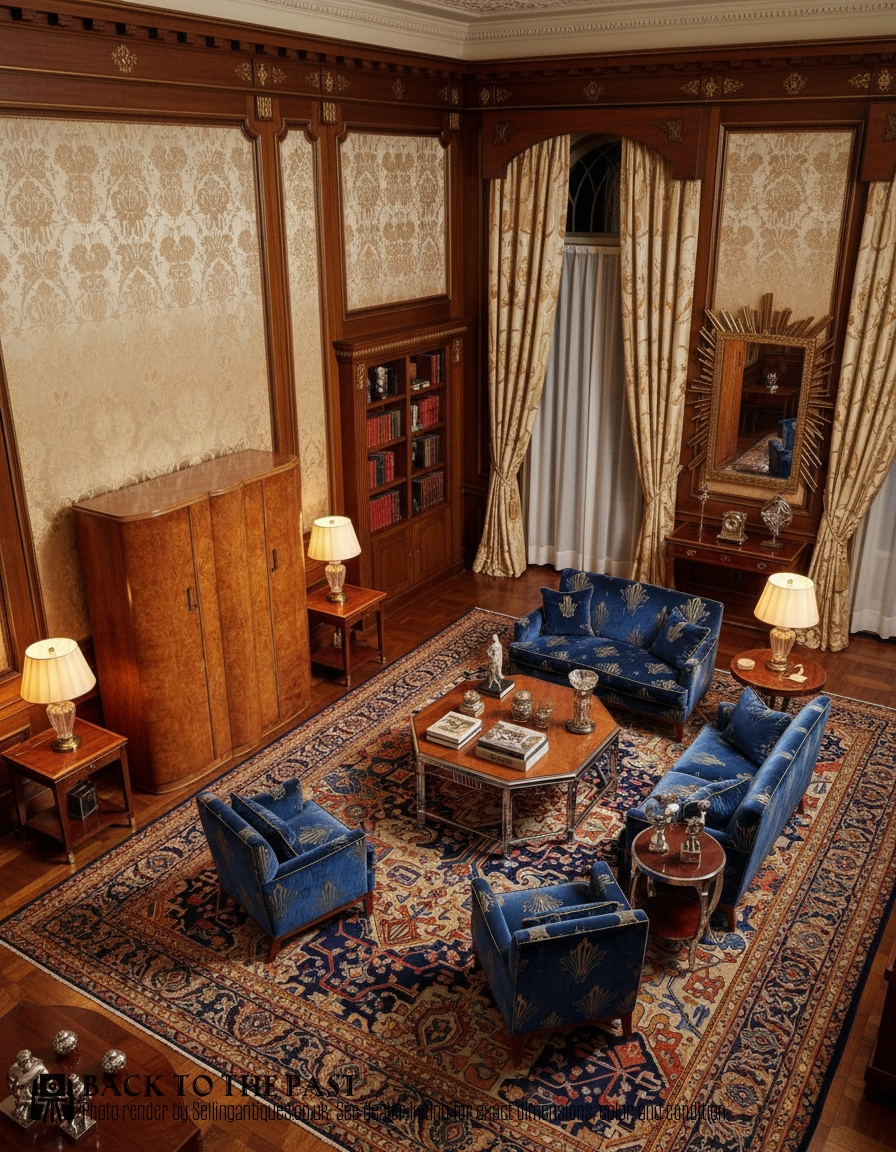
Vintage Burr Walnut Furniture
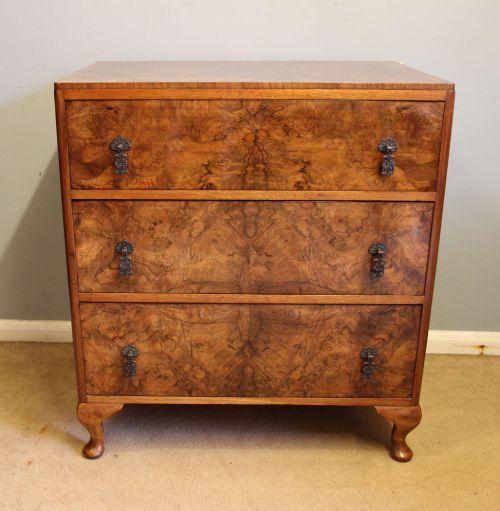
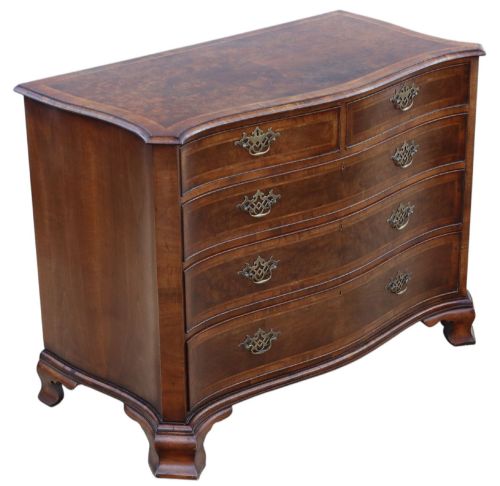
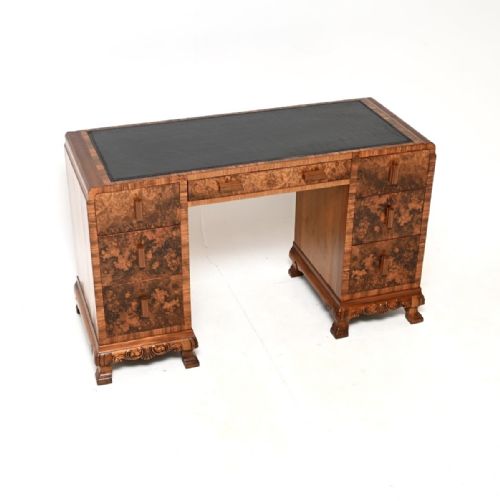
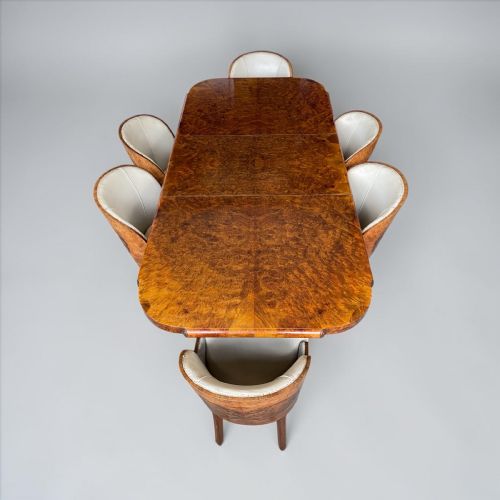
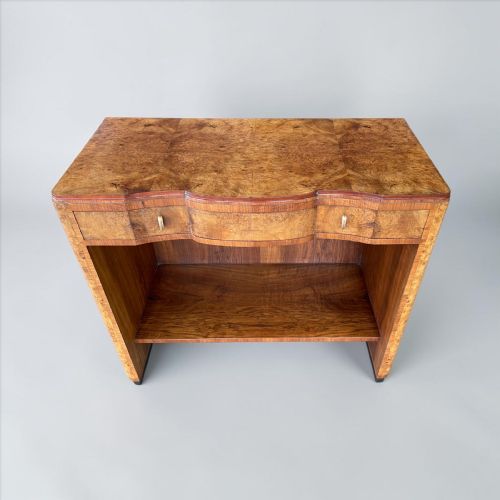
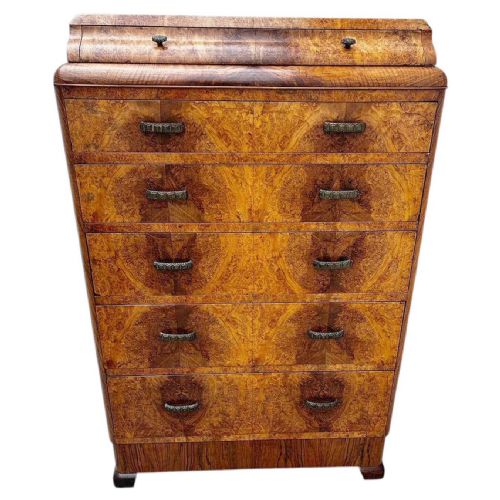
Vintage burr walnut furniture comprises a diverse range of domestic items, from serpentine chests of drawers and desks to dining sets and display cabinets, defined by their decorative wood surfaces. When exploring vintage burr walnut furniture, buyers frequently encounter pieces originating from the Art Deco period, alongside earlier Victorian examples and revival styles.
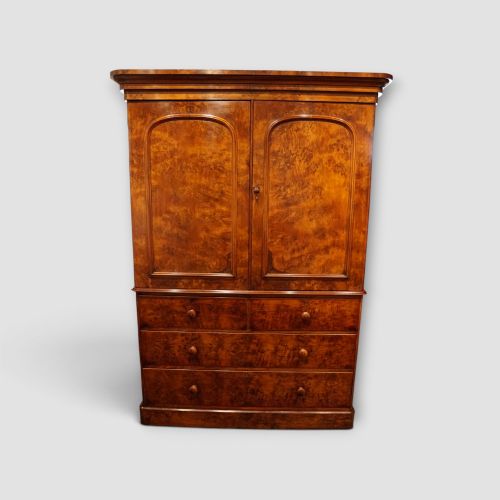
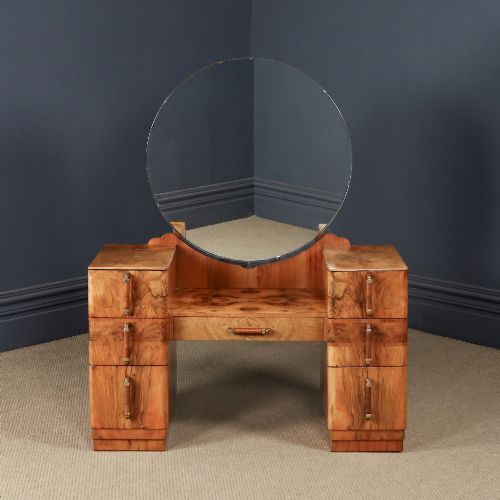
The selection spans numerous practical forms designed for living spaces and bedrooms. Storage pieces such as tallboys, linen presses, and bedside tables sit alongside functional items including writing desks, dressing tables, and coffee tables.
Origins vary across the centuries, incorporating 18th-century pieces alongside 19th-century Victorian items and early 20th-century creations. This variety allows collectors to find both formal period items and streamlined interwar designs sharing the same distinctive timber.
How they were made
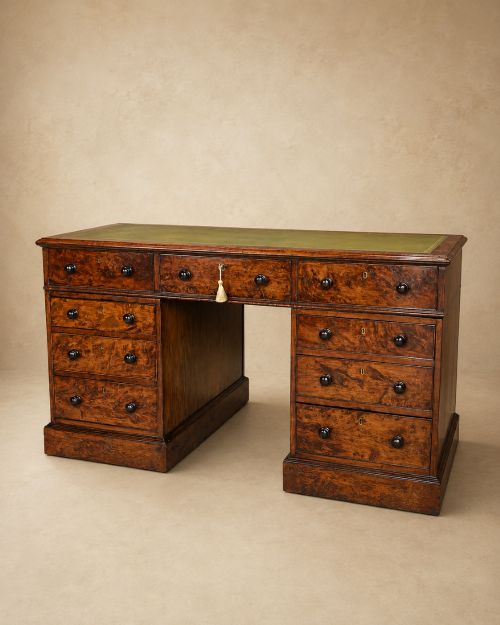
Cabinet makers utilised thin slices of burr walnut veneer applied over secondary woods to create striking figured patterns on flat and curved surfaces. This timber was frequently combined with solid walnut mouldings, brass handles, leather inserts for writing surfaces, and glass panels.
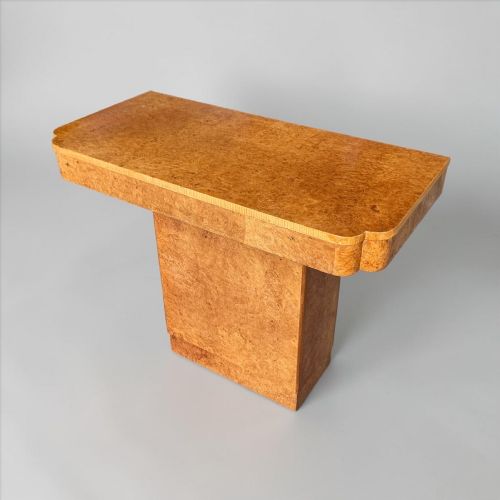
Construction techniques evolved from traditional dovetail joinery in earlier chests and desks to the streamlined geometric carcases seen in Art Deco cabinets and tables. Timber selection focused on knotty, swirling burr growths that produced unique grain figures across every tabletop, drawer front, and door panel.
Vintage Burr Walnut Furniture Retail Price Guide 2026
Typical asking prices for vintage burr walnut furniture among the pieces listed under this phrase on Sellingantiques today, from the lower quarter to the upper quarter. They describe what is for sale here now, not the wider market.
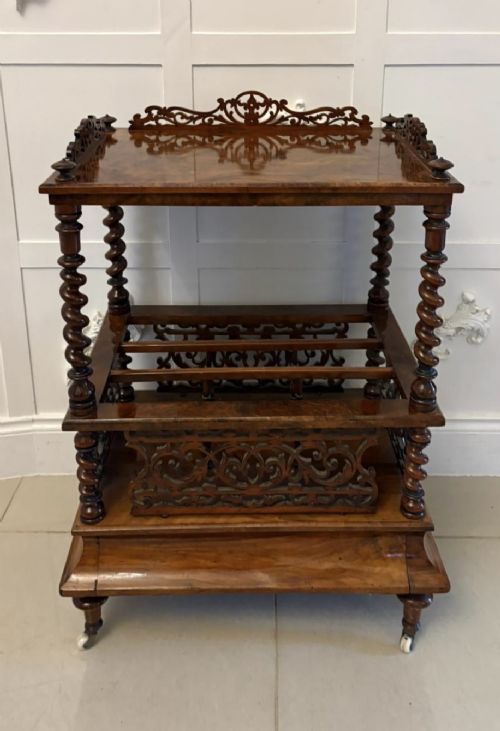
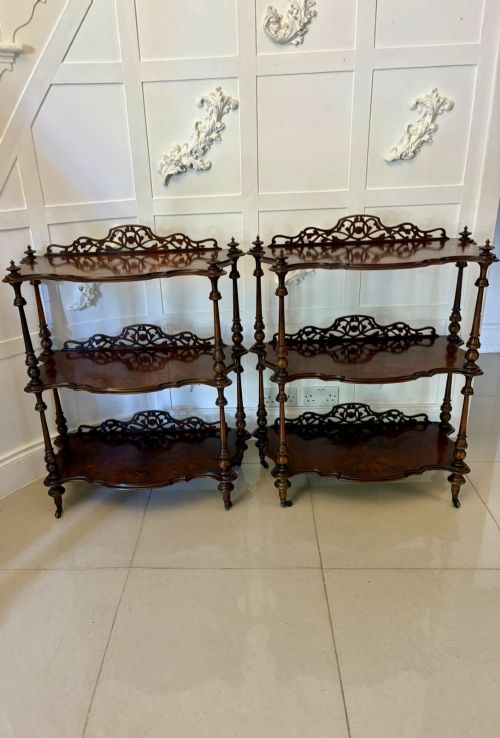
A Canterbury magazine rack from 1860 ensures your periodicals rest against the same swirling timber once admired by Victorian parlour guests.
What varies in quality
The visual impact of vintage burr walnut furniture depends heavily on the symmetry, depth, and placement of the veneer figures across the surfaces. Top-tier pieces display carefully matched grain patterns that flow seamlessly across drawers and doors, whereas lesser examples show random or mismatched figuring.
Construction integrity and the refinement of secondary details also set pieces apart. Superior items incorporate robust internal framing, precise drawer construction, and high-grade supporting materials such as brass or leather, maintaining structural stability alongside decorative appeal.
Maurice Adams·Harry and Lou Epstein·Maple and Co.
The Vintage Burr Walnut Furniture Glossary
- Burr walnut
- A veneer sliced from the distorted knot growths of a walnut tree. It produces highly figured, swirling patterns prized for decorative cabinet fronts.
- Serpentine
- A gently undulating curved shape popular on the fronts of chests of drawers and commodes. This contour requires precise woodworking skill to execute properly.
- Partners desk
- A large freestanding desk designed with drawers and cupboards on both sides. It allows two people to work opposite each other.
- Tallboy
- A tall chest of drawers standing upright, often combining a chest with a wardrobe or upper cabinet section. It maximises vertical storage space.
- Whatnot
- An open set of tiered shelving units used for displaying ornaments and books. Victorian examples often feature delicate turned supports.
Vintage Burr Walnut Furniture: Frequently Asked Questions
How do I care for burr walnut surfaces?
Keep vintage burr walnut furniture out of direct sunlight and away from direct heat sources to prevent the wood veneer from drying out or cracking. Regular dusting with a soft, dry cloth helps maintain the polished finish without damaging the delicate grain.
Avoid using silicone-based polishes or harsh chemical cleaners, as these can penetrate the aged surface and alter the sheen. Occasional application of a traditional wax helps nourish the timber and preserve its natural lustre.
What periods do these pieces come from?
The pieces span multiple centuries, ranging from 18th-century Queen Anne designs to 19th-century Victorian cabinets and desks. Early 20th-century items, particularly from the 1920s and Art Deco 1930s, appear frequently.
Revival styles from the Edwardian era also feature in the selection, mimicking earlier Georgian and Queen Anne aesthetics while utilising contemporary workshop methods of their time.
How can I tell Art Deco pieces apart from Victorian ones?
Art Deco pieces from the 1920s and 1930s tend to feature streamlined geometric forms, curved silhouettes, and minimalist hardware. The focus rests on clean architectural lines that showcase uninterrupted expanses of figured burr walnut veneer.
Victorian items typically display heavier proportions, carved flourishes, turned legs, and more traditional period revival motifs such as Queen Anne style cabriole supports or ornate brass handles.