




Regency Work Box
A regency work box is a portable repository for needlework and small treasures, combining refined cabinet-making with practical compartments for the Victorian home.

What a regency work box is
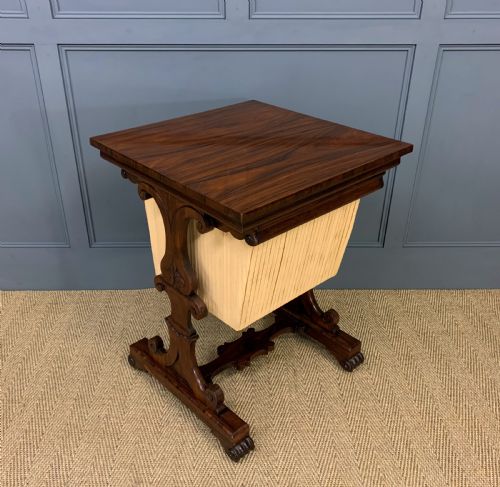
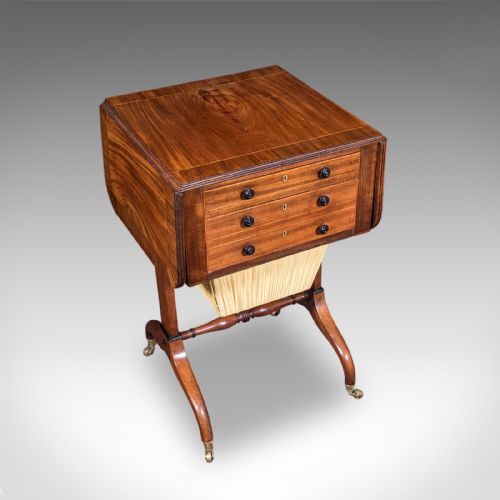
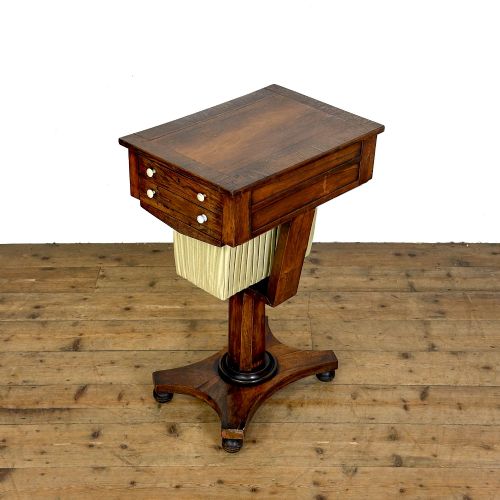
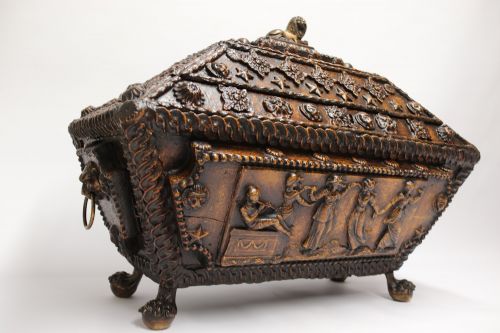
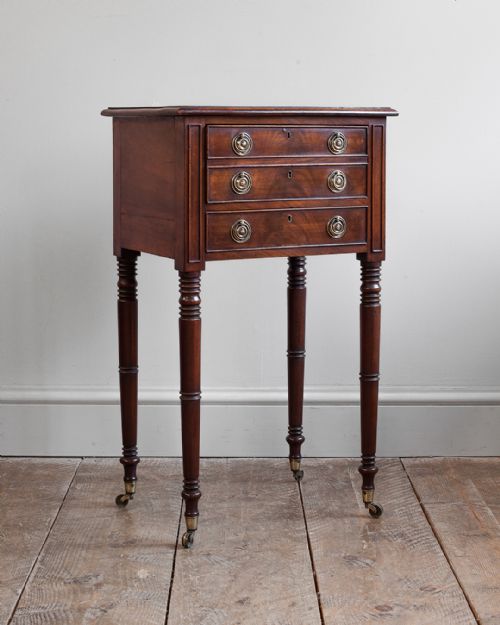
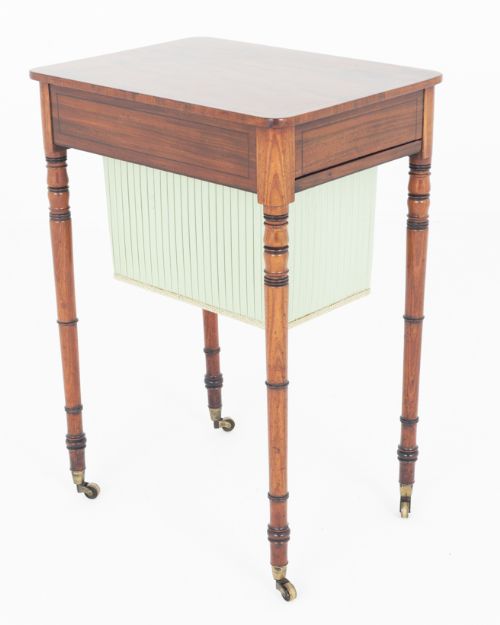
When you search for a regency work box, you encounter portable wooden containers designed for ladies' sewing and needlework, alongside larger versions on stands and ottoman seats. The pieces span the 19th Century and the Regency, William IV and Georgian periods.
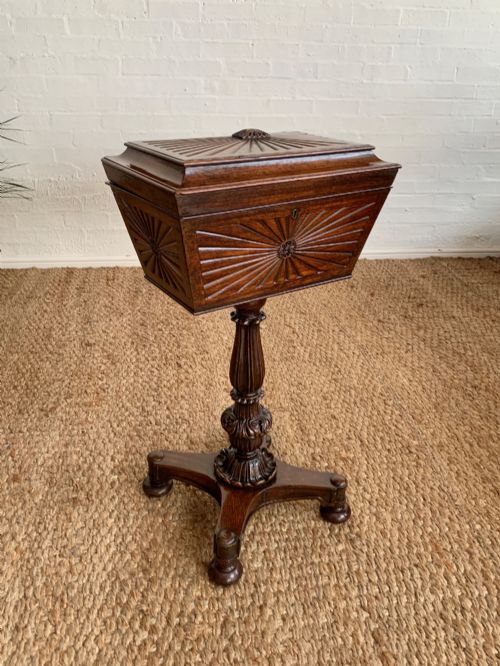
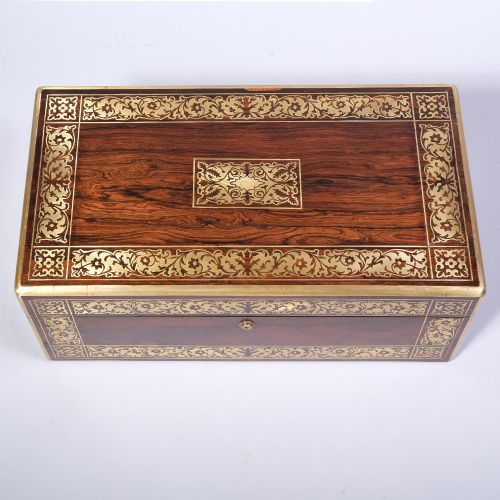
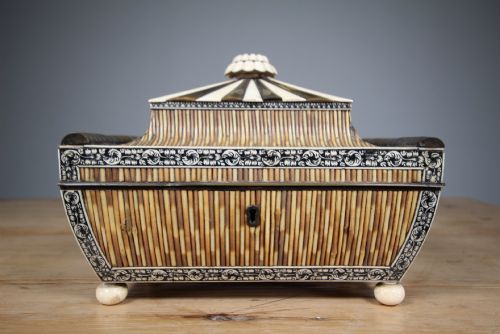
Tabletop versions appear most frequently on this page, taking the form of sarcophagus shapes, dome tops and rectangular caskets. Many incorporate fitted interiors with secret compartments, whilst others double as games tables or jewellery caskets.
Makers utilised diverse forms ranging from small miniature boxes to large boxes with fitted interiors, occasionally incorporating pincushions or chess boards into the design.
How they were made
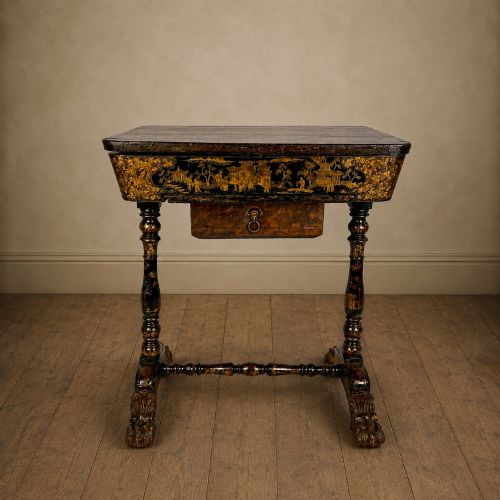
Craftsmen built these pieces using solid mahogany, flame mahogany, figured mahogany, rosewood, bird's eye maple, burr yew and walnut. Wood surfaces often received intricate penwork and pokerwork decoration, sometimes displaying Chinoiserie motifs or Brighton Pavilion themes.
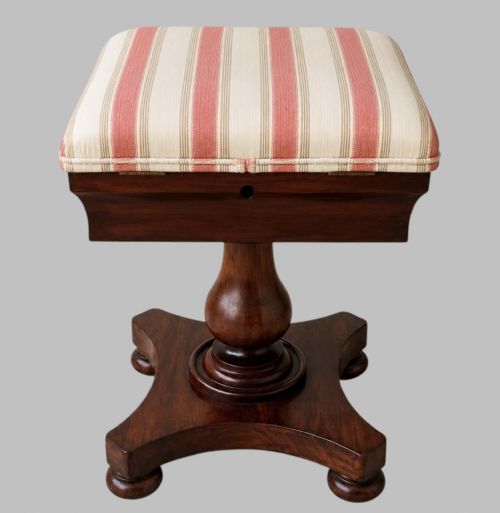
Construction incorporated brass mounts, brass inlay and gilt tooling on red or standard leather bindings. Certain boxes rested on claw and ball feet, whilst others sat upon dedicated stands or functioned as ottomans.
Retail Price Guide 2026
Typical UK retail prices for regency work box, calculated from the Sellingantiques database of over a million retail prices indexed since 2003. This retail price guide relies exclusively on Sellingantiques data; no external sources or auction records are used, so the figures do not describe the wider market.
Needleworkers of the era concealed their pins in tiny velvet pincushions perched atop miniature rosewood workboxes.
What varies in quality
Quality rests upon the choice of timber and the precision of surface decoration, distinguishing plain mahogany examples from richly figured rosewood, burr yew and bird's eye maple pieces. The presence of detailed penwork, brass inlay and rosette-shaped mounts elevates a piece significantly.
Interior architecture separates basic containers from superior items, particularly those retaining complex fitted interiors, secret compartments and original miniature components.
The Regency Work Box Glossary
- Penwork
- A decorative technique using ink to draw intricate patterns upon wooden surfaces. This method frequently produced Chinoiserie scenes and botanical details on boxes.
- Sarcophagus shape
- A distinctive form featuring a domed or stepped lid atop a tapered rectangular body. It mimics ancient funerary monuments popular in neoclassical design.
- Flame mahogany
- Timber veneer cut to reveal a characteristic flickering flame pattern in the grain. Cabinet-makers reserved this wood for prominent exterior surfaces.
- Ottoman
- A padded seat or stool containing internal storage space for sewing materials and textiles. These combination pieces served multiple domestic functions in drawing rooms.
Frequently Asked Questions
What fits inside a regency work box?
Interiors typically contain small compartments, trays and lidded sections designed to organise threads, needles, thimbles and pins. Many examples incorporate secret spaces beneath the main tray for private items.
Larger variants extend the storage capacity to accommodate folding games boards, chess pieces or small writing apparatus alongside sewing paraphernalia.
How do I distinguish penwork from inlay?
Penwork involves dark ink drawn directly onto the timber surface to create motifs, whereas inlay requires cutting pieces of brass or contrasting wood into recesses carved into the primary wood.
Close inspection reveals the flat surface of inked lines compared to the raised or flush metallic edges of brass mounts and stringing.
Were these boxes used for travel?
Most containers remained stationary on parlour tables, dressing chests or dedicated stands within the home rather than accompanying owners on journeys. Their heavy rosewood and mahogany construction, combined with delicate fitted glass and ivory elements, made frequent transport impractical.
Smaller leather-bound caskets offered slightly more portability for moving between rooms during needlework sessions.