

Antique Leather Box
An antique leather box holds the weight of old travel, private letters and hidden jewels, built to last generations.

What an antique leather box is
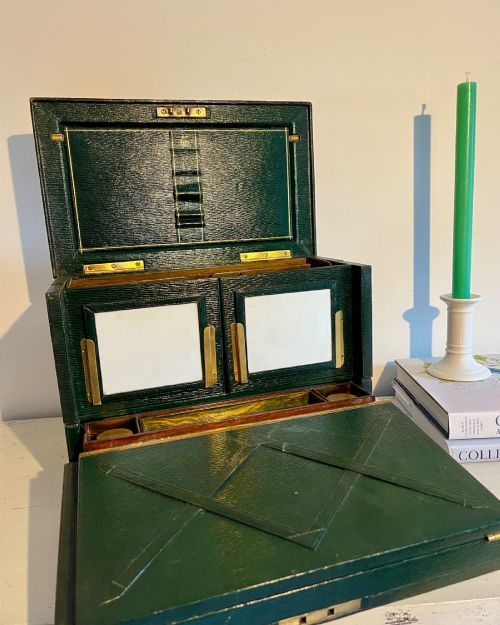
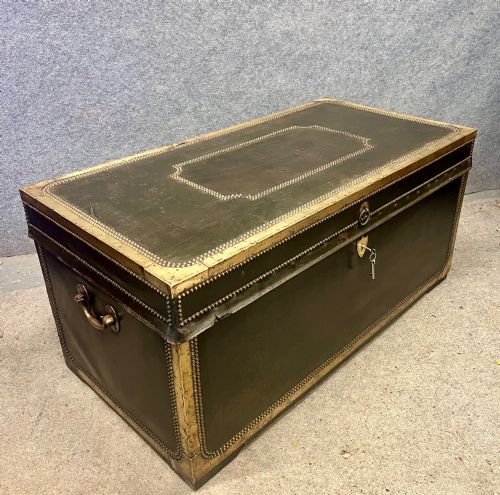
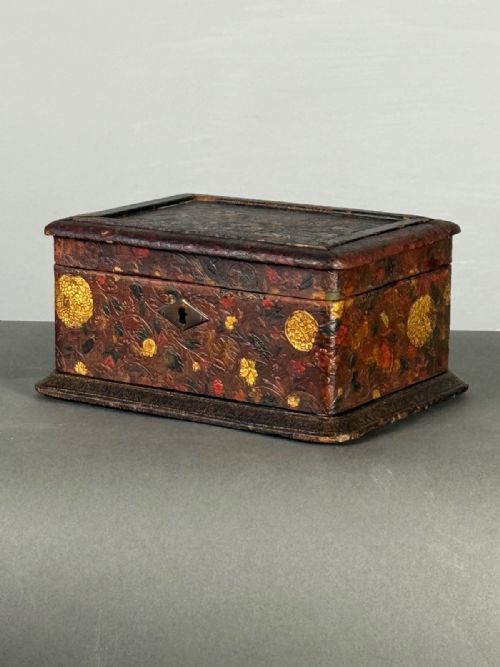
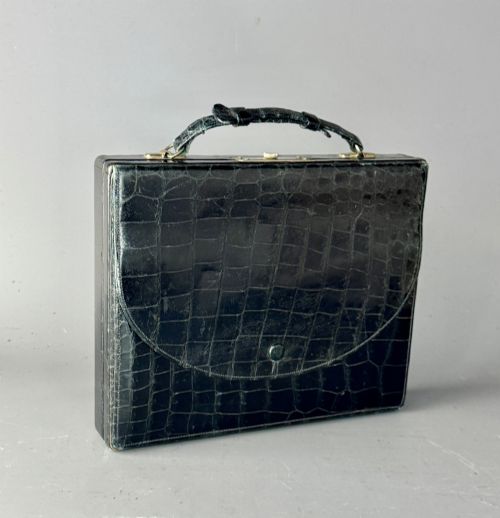
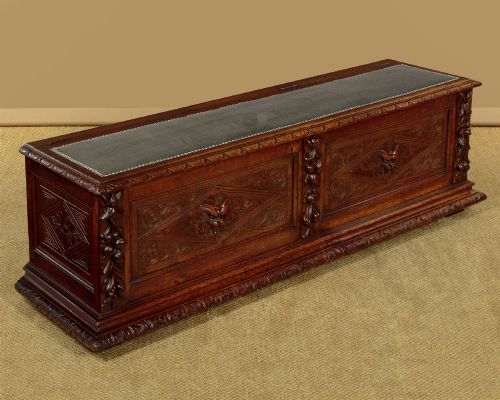
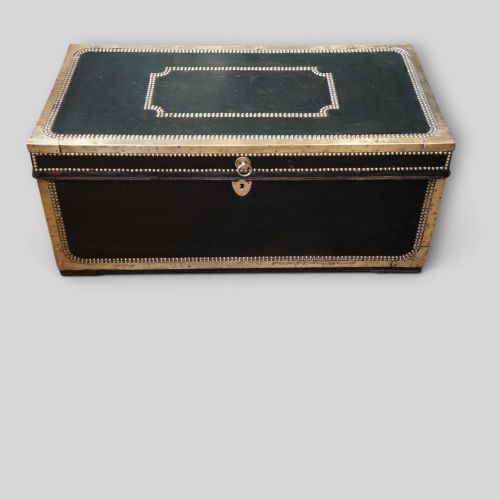
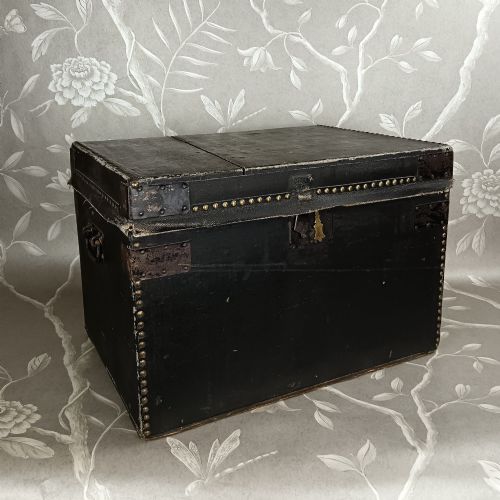
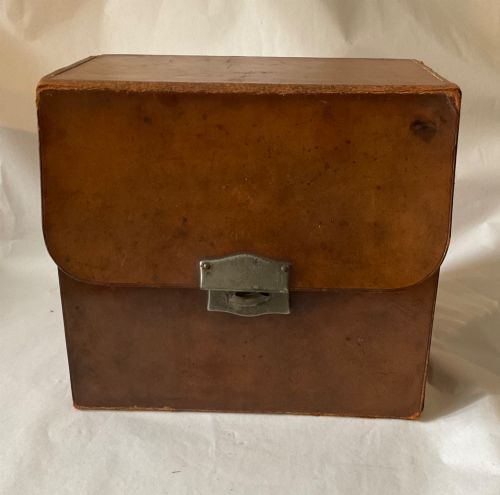
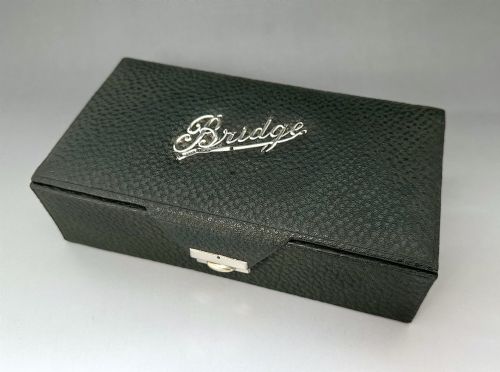
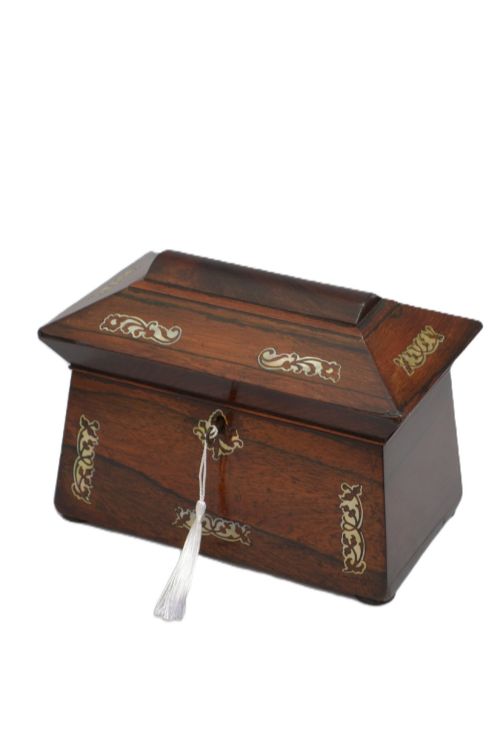
An antique leather box covers everything from travel trunks and officers' luggage to small jewellery caskets and stationery storage. When you search for an antique leather box, you encounter pieces spanning the Georgian, Regency and Victorian periods, often framed in wood or reinforced with brass.
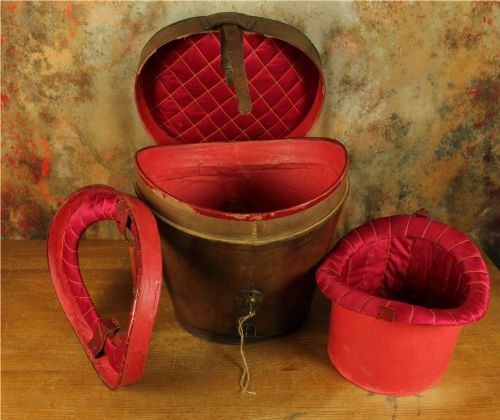
The common form on this page is the Victorian or 19th century piece, built for practical daily utility in the home or on the move. These items served specific purposes, such as holding correspondence, writing slopes, top hats or precious gems.
Makers ranged from specialist London retailers like Drew & Sons, Parkins & Gotto, and Finnigans to unnamed workshops producing sturdy coaching trunks and vanity cases. Each object reflects the travelling habits and domestic organisation of past centuries.
How they were made
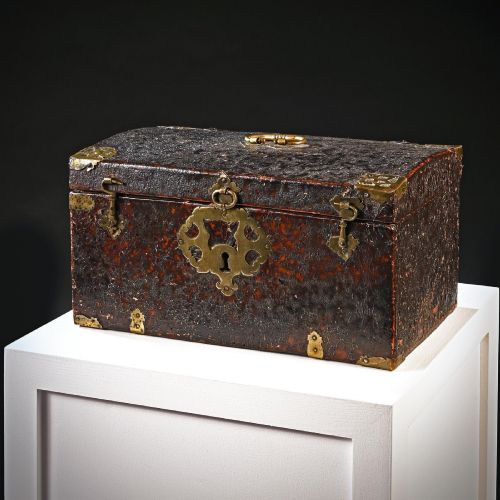
Craftsmen built the underlying carcase using wood such as mahogany, rosewood, walnut or boxwood, then wrapped and stitched leather over the rigid frame. Brass mounts, corner brackets, locks and handles reinforced the structure and protected the edges during transit.
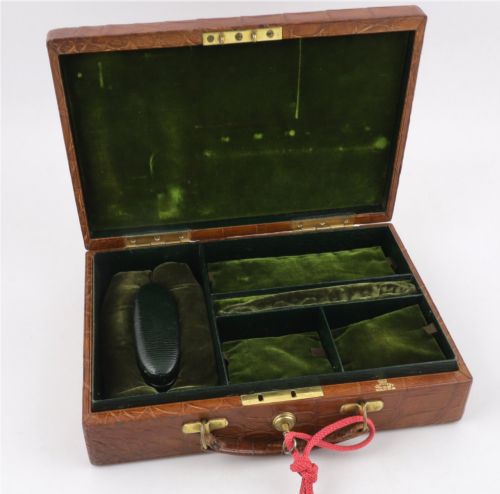
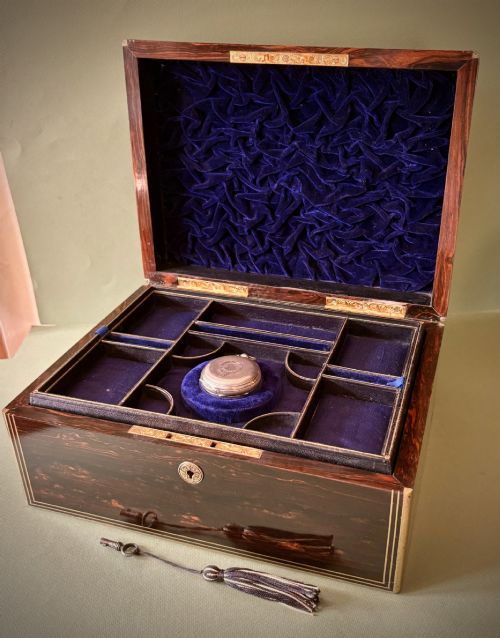
Interiors often featured velvet, silk, faux leather or paper linings alongside fitted compartments for bottles, pens and trays. Details such as gilt tooling, embossed labels and bronze mounts added decorative finish to the functional exteriors.
What varies in quality
Quality rests in the integrity of the structural carcass and the grade of the leather hide used by the maker. Superior pieces maintain tight joints, original brass hardware and well-fitted internal trays without loose veneers or warped wood.
The distinction between standard utility luggage and luxury dressing boxes appears in the fineness of the interior silk or velvet lining and the precision of the brass locks and tooling. Maker signatures from established firms like Drew & Sons or Finnigans elevate the standing of a piece.
Drew & Sons·Parkins & Gotto·Finnigans·Winsor & Newton·Cuthbertson of London
The Antique Leather Box Glossary
- Writing slope
- A portable desk with a hinged sloping lid that opens to reveal a leather-lined writing surface and storage compartments for ink and paper. These slope toward the user for comfortable letter writing.
- Campaign box
- Furniture and storage containers designed for military officers on active service, typically featuring brass corners, recessed handles and robust construction for hard travel. They dismantled or packed efficiently for transit.
- Gilt tooling
- The application of gold leaf into impressed patterns or lettering on leather surfaces using heated metal tools. This technique created ornamental borders and decorative crests.
- Treen
- Small handmade wooden household objects, sometimes incorporating leather straps or coverings. These items display the turned woodcraft of earlier centuries.
- Ottoman box
- A hollow upholstered seat with a hinged lid, often covered in leather and framed in mahogany or walnut. They combined seating with concealed room storage.
Frequently Asked Questions
What were antique leather boxes used for?
These boxes served specific domestic and travel needs, ranging from carrying correspondence and stationery to safeguarding jewellery, documents and top hats during long journeys.
Travellers and homeowners relied on them to keep personal effects organised, secure and protected from the elements while moving between residences or across continents.
How do I date an antique leather box?
Dating relies on examining the materials, construction methods, brass hardware styles and any maker marks or stamps present on the leather or locks.
Victorian pieces often feature robust brass mounts and rich mahogany carcases, while earlier Georgian or Regency examples display distinct cabinetmaking techniques and understated neoclassical mounts.
Are the interiors usually original?
Many boxes retain their original silk, velvet, paper or leather linings, often complete with fitted compartments, glass bottles and velvet pads.
Due to heavy use over the centuries, some interiors show wear or have undergone sympathetic re-lining by skilled restorers to preserve the utility of the box.
How do I care for antique leather?
Leather requires a stable indoor environment away from direct sunlight and extreme humidity fluctuations to prevent the hide from drying out or cracking.
Gentle dusting and occasional specialist leather conditioning help maintain the suppleness of the material and preserve the historic finish.