


Domed Leather Box
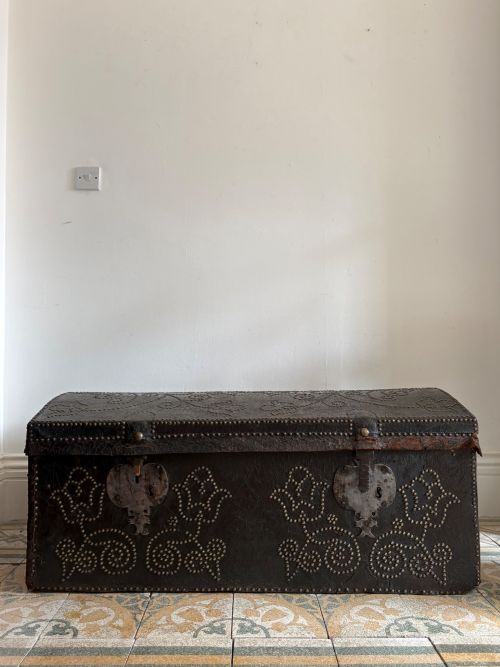
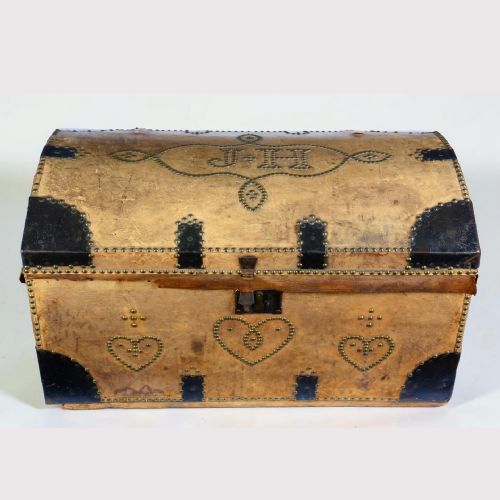
A domed leather box brings centuries of texture and utility into a room, offering robust storage with curved, historic profiles.
Domed Leather Box
When you search for a domed leather box, you encounter pieces that range from small scent bottle caskets to substantial trunks and chests. The selection draws on periods spanning the seventeenth, eighteenth, and nineteenth centuries, alongside regional expressions such as Spanish colonial and Dutch designs.
Most examples combine sturdy wooden carcases with hand-applied hide or leather, often secured with brass or iron studwork. You find everything from campaign cases bearing initials to round coffers and stationery boxes retaining original contents.
How they were made
Makers built the foundational structures using timber such as oak, then covered them in hides and leather, sometimes utilising canvas or metal reinforcement. The curved lids required skilled forming of materials to achieve the signature dome top.
Detailing relied on heavy brass and iron studwork, decorative embossing, and functional carry handles or mountings forged for travel and domestic storage.
One stationery box survived with its original contents intact, preserving a tiny time capsule from the year 1864.
What varies in quality
The distinction between ordinary utility pieces and finer examples rests on the integrity of the leatherwork, the precision of the brass or iron stud patterns, and the survival of original hardware such as handles and locks.
Proportion and execution define the hierarchy, where crisply embossed surfaces and intact internal fittings elevate a domestic trunk or casket above standard workshop production.
Arthur Wannop·Chapple & Sons
The Domed Leather Box Glossary
- Casket
- A small decorative box, often lined, used for holding valuables or small items like scent bottles.
- Studwork
- The application of brass or iron studs, frequently arranged in geometric patterns to secure leather coverings.
- Campaign case
- A portable chest or trunk designed for travel, typically featuring robust handles and reinforced corners.
- Coffer
- A large, sturdy chest traditionally used for storing treasures or valuables.
- Hide
- The untreated or dressed skin of a large animal, utilised for its durability as a primary outer covering.
Domed Leather Box: Frequently Asked Questions
What were domed leather boxes used for?
These pieces served multiple storage roles, from holding personal correspondence and stationery to safeguarding scent bottles and valuables during travel.
Substantial variants acted as trunks and chests in domestic settings, accommodating garments and household items while doubling as decorative furniture.
How do I date a domed leather box?
Dating relies on examining the underlying construction timber, the style of the brass or iron studwork, and the method of leather attachment.
Secondary clues include maker marks, period specific locks, and regional construction traits associated with Georgian, Victorian, or earlier eras.
How do I clean an antique leather box?
Maintenance requires gentle dusting with a soft brush and minimal moisture to protect fragile historic hides from drying or cracking.
Specialist leather conservation balms can nourish dry surfaces, but heavy chemical cleaners must be avoided to preserve original patination.
Where should I place one at home?
Smaller caskets and stationery boxes sit well on desks, side tables, or bookshelves where their textures add warmth and character to a room.
Larger coffers and chests function effectively as coffee tables, foot-of-the-bed storage, or freestanding accent pieces in hallways.