


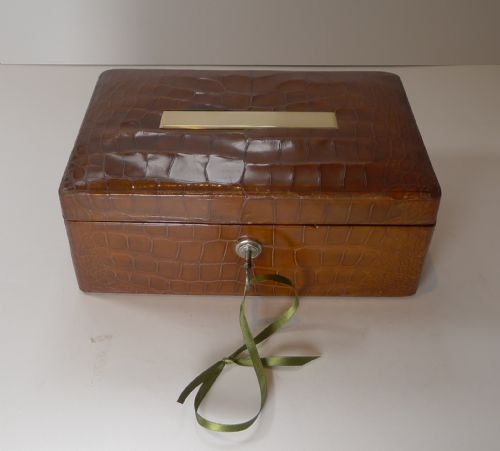


Leather Jewellery Casket
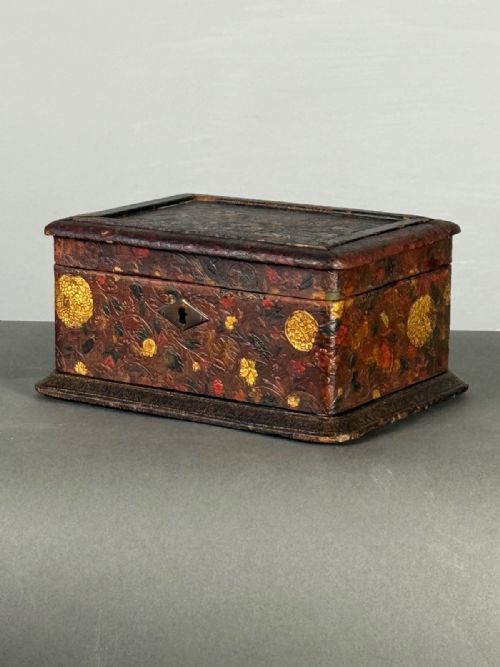
These leather jewellery casket examples combine functional storage with decorative surface work, offering a tactile way to house precious pieces.
Leather Jewellery Casket
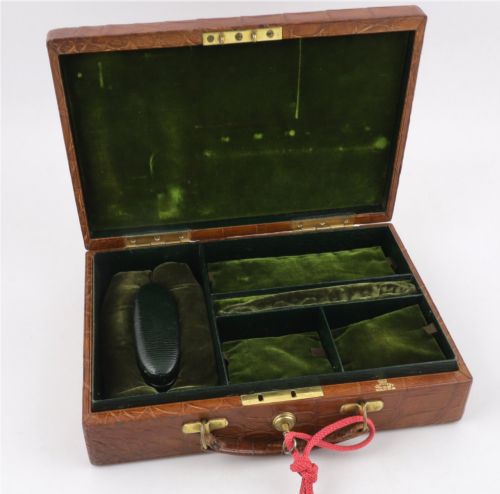
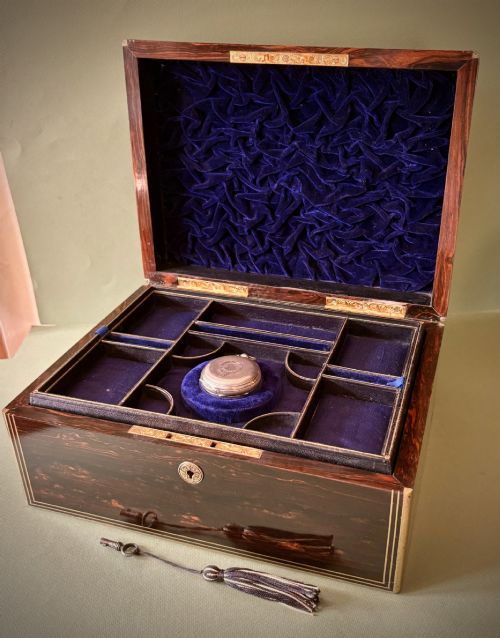
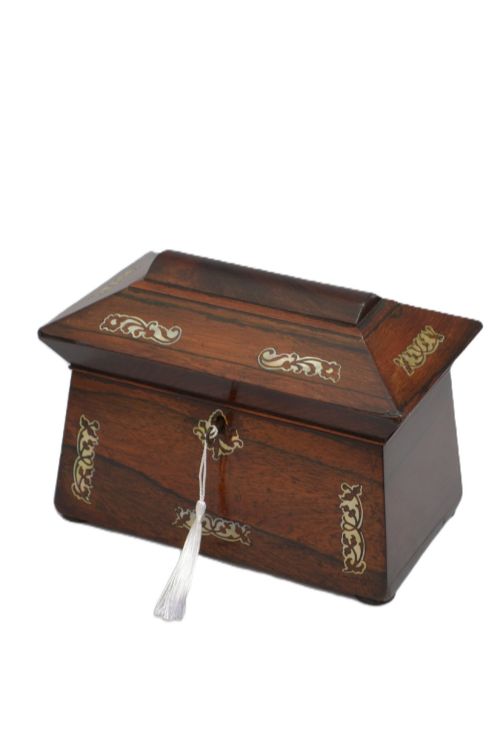
A leather jewellery casket serves as a portable container for valuables, appearing across this selection in forms ranging from compact trinket boxes to fully fitted dressing cases. Buyers encounter items designed for multiple uses, including sewing boxes, writing slopes, and faux book safes.
The Regency period and the Victorian era provide the majority of these pieces, alongside later Interwar and mid twentieth century examples. English and French workshops dominate the origins of these caskets, showing diverse regional preferences in closure mechanisms and internal layouts.
Materials and construction
Construction relies upon a robust core of wood, overlaid with plain leather, Russia-leather, pigskin, or exotic crocodile and alligator skin. Artisans secured these outer coverings using brass mounts, bronze fittings, and detailed gilt tooling.
Interiors frequently feature lined compartments finished in velvet or silk to protect contents. Exterior decoration often incorporates rosette shaped brass mounts, claw and ball feet, and precise blind tooling along the edges.
Listings feature items spanning the Regency period through to the mid twentieth century, utilising brass, various woods, and exotic skins.
Evaluating craftsmanship
Quality reveals itself in the treatment of the hide and the precision of the metal mounts. Finer specimens display crisp gilt tooling and securely fastened brass hardware that aligns properly with the wooden carcass.
Internal arrangement further separates standard boxes from superior items, particularly where original velvet or silk linings remain intact alongside functional locking mechanisms.
Susse Freres Paris·J C Vickery·W and J Milne Makers
The Leather Jewellery Casket Glossary
- Russia-leather
- A fragrant, durable leather traditionally prepared using birch bark oil during the tanning process. This material appears on high grade Regency work-boxes.
- Gilt tooling
- The application of gold leaf to leather surfaces using heated metal tools to create decorative patterns and borders. It defines the finish of many formal caskets.
- Fitted interior
- An internal arrangement featuring dedicated compartments, trays, and slots designed for specific items such as watches, cufflinks, and rings. These layouts aid organisation.
- Claw and ball feet
- A furniture foot style carved or cast to represent a bird's talon gripping a ball. This detail elevates the status of early nineteenth century pieces.
Leather Jewellery Casket: Frequently Asked Questions
How do I clean antique leather?
Dust the surface gently with a soft, dry cloth to remove loose particles. Avoid using modern chemical cleaners or excessive water, which can damage old hide and gilt tooling.
Apply a specialist museum grade leather wax very sparingly if the material feels dry. Buff lightly with a clean cloth to restore a natural sheen without altering the historic patina.
Were these caskets meant for travel?
Many examples from the Regency and Victorian periods were constructed for domestic use on dressing tables or writing desks. Their heavy wooden cores and delicate internal trays made them less suited for rugged journeys.
Some fitted variants with secure locks served upper class travellers on extended carriage or rail trips. These portable boxes protected jewellery and small personal documents away from home.
How can I tell a Regency casket from a Victorian one?
Regency caskets often feature straight architectural lines, sarcophagus forms, and Russia-leather finishes with restrained brass inlay. They frequently double as writing slopes or sewing boxes.
Victorian pieces tend to adopt heavier proportions, more elaborate gilt tooling, and advanced internal lifting mechanisms. Crocodile and alligator skins become more prevalent toward the later nineteenth century.
What is Russia-leather?
Russia-leather is a traditional cattle hide tanned using willow bark and finished with birch bark oil. This historic process imparted a distinct, lasting aroma and water resistant qualities.
It appears on high status nineteenth century work-boxes and caskets. The treatment gives the leather a characteristic cross hatch grain texture.