
Victorian Leather Box
A victorian leather box offers robust portable storage wrapped in tactile hide, bringing period utility and rich texture to contemporary interiors.
Victorian Leather Box
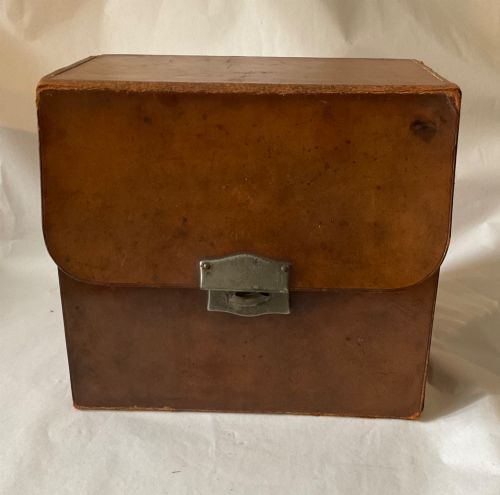
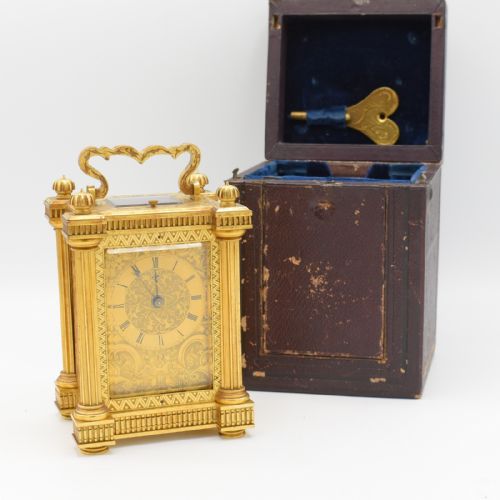
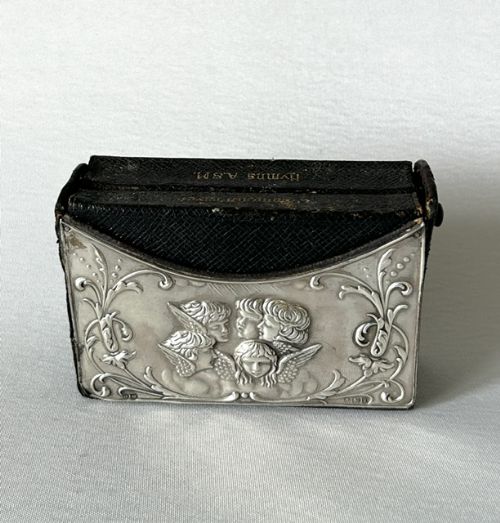
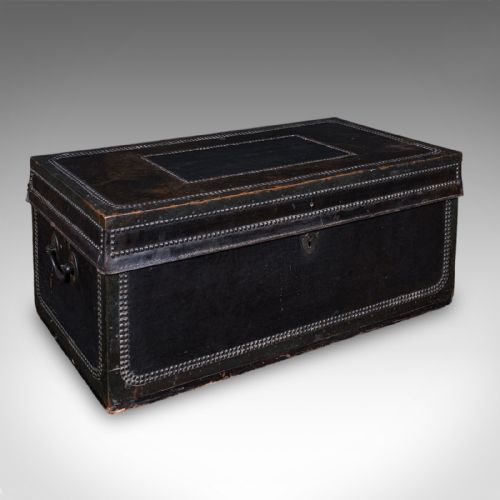
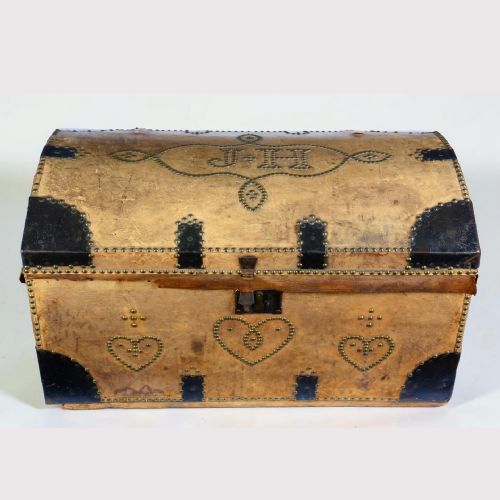
Many examples combine a rigid wooden core with hand-worked leather exteriors, often augmented by brass studwork, locks, and handles. These objects reflect the rigorous travel requirements and structured domestic organisation of the period.
How they were made
Craftsmen built the underlying carcase using sturdy timbers such as mahogany, walnut, or oak, occasionally employing camphorwood for campaign pieces. This structural core was then clad in bovine leather, frequently finished with tooled or embossed decorative borders.
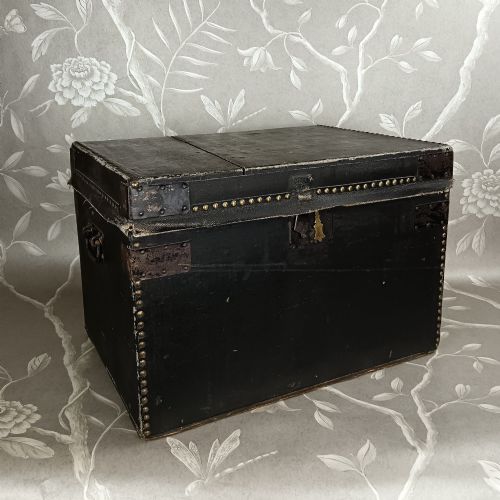
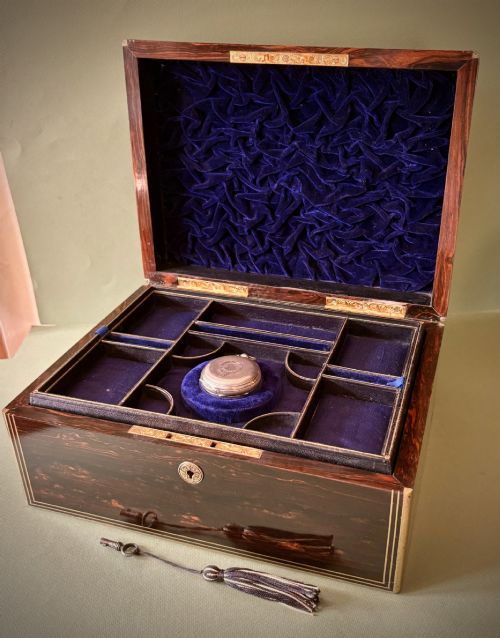
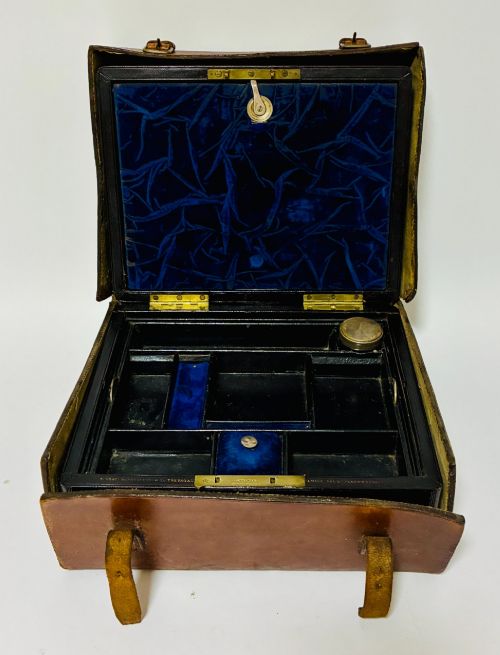
Metalwork played a crucial structural role, with brass corners, lockplates, and binding secured by iron screws or rivets to withstand heavy transit. Interiors often featured velvet, silk, or paper linings alongside fitted compartments for specific instruments or accessories.
Victorian Leather Box Retail Price Guide 2026
Typical asking prices for victorian leather box among the pieces listed under this phrase on Sellingantiques today, from the lower quarter to the upper quarter. They describe what is for sale here now, not the wider market.
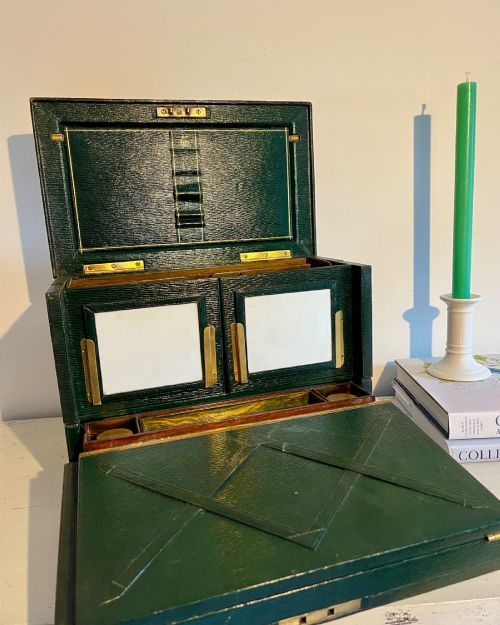
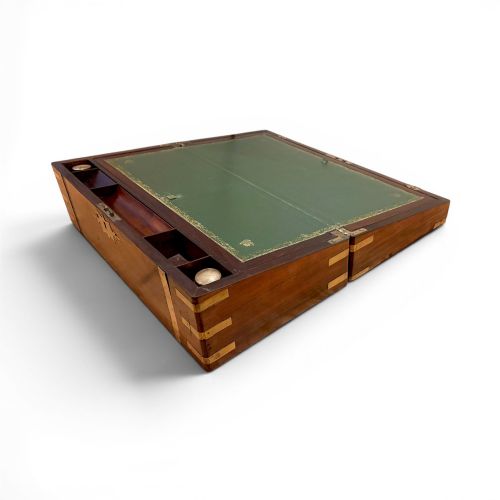
Document boxes and stationery cases frequently incorporate secret drawers and complex locking mechanisms.
What varies in quality
The distinction between standard utility items and premier pieces rests upon the precision of the internal fittings and the caliber of the hardware. Superior examples incorporate functioning locks by esteemed makers, secret compartments, and intact original trays.
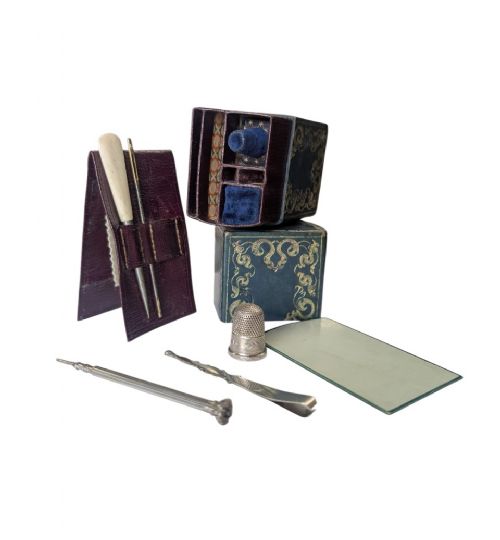
The thickness and condition of the leather hide, alongside the crispness of any blind tooling or gold leaf embossing, mark the tier of craftsmanship. Pieces retaining their original fitted contents demonstrate a higher degree of preservation.
Wm. Insall of Bristol·Howell & James London·Arthur Wannop·Lincoln Bennett·J.E.W.·James Purdey & Sons·Huntley & Palmers·Drew & Sons·Parkins & Gotto·F. West·JW Allen·H. Greaves·Asprey
The Victorian Leather Box Glossary
- Campaign
- Furniture and boxes designed for military officers and travellers, characterised by flush-fitting brass handles, reinforced corners, and portability. These items were built to endure arduous journeys across the empire.
- Writing Slope
- A portable desk featuring an angled, hinged writing surface that typically folds down to reveal pen trays, inkwell compartments, and hidden storage. Many examples are lined with tooled leather.
- Tooled leather
- Leather decorated by impressing heated brass tools or rolls into the damp surface to create patterns, often enhanced with gold leaf. This technique adds both texture and visual framing to the box exterior.
- Apothecary case
- A fitted container designed to transport glass medicine bottles, scales, and remedies safely. These compact chests feature internal wooden dividers tailored to secure fragile vials during transit.
Victorian Leather Box: Frequently Asked Questions
What were victorian leather boxes used for?
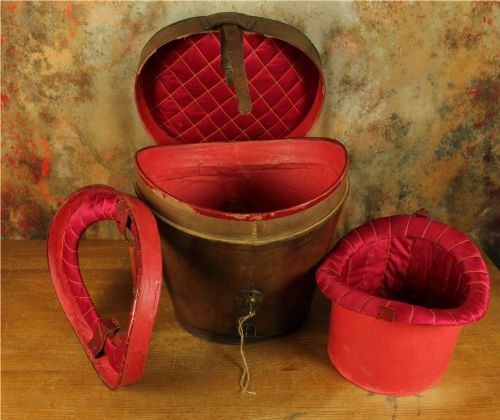
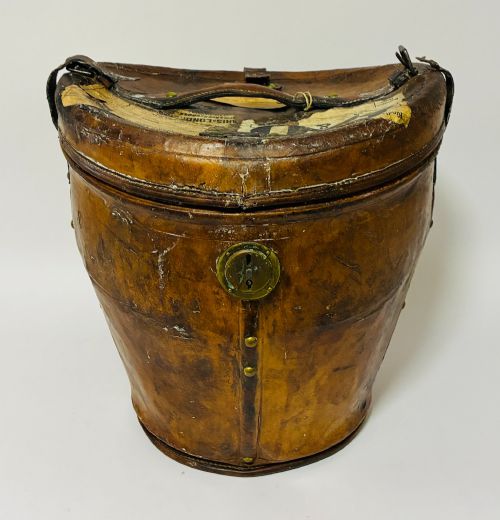
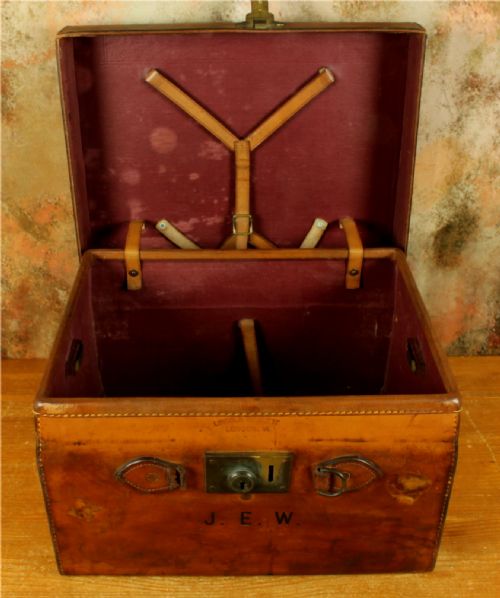
These containers served specific domestic and travel functions, ranging from safeguarding jewellery and correspondence to transporting tall silk hats and medical supplies. Their sturdy construction protected valuable personal possessions during horse-drawn or railway journeys.
As domestic life grew more organised, smaller boxes sat upon desks and dressing tables while larger trunks accompanied owners abroad.
How do I clean victorian leather?
Maintenance requires gentle dusting with a soft dry cloth to prevent particulate accumulation within the grain and crevices. Avoid harsh chemical cleaners or excessive moisture, which can damage aged hides and historic brass work.
Application of a specialist conservation-grade leather wax helps nourish the material and preserves suppleness without altering the original finish.
Are these boxes waterproof?
While leather provides a degree of natural resistance to light moisture, these historical items are not fully waterproof. The junctions between lids and bodies, alongside keyholes and stitching lines, permit moisture ingress during heavy exposure.
Owners should store and display them in dry environments away from direct sunlight to protect both the exterior hide and internal fabric linings.
How can I date a leather box?
Dating relies on examining the construction methods, lock types, and stylistic indicators present in the piece. Early examples often feature simpler brass hardware and hand-stitched seams, whereas later Victorian iterations display machine stamping and robust patent locks.
Maker stamps, retailer marks, and accompanying documentation can also narrow the production era.