
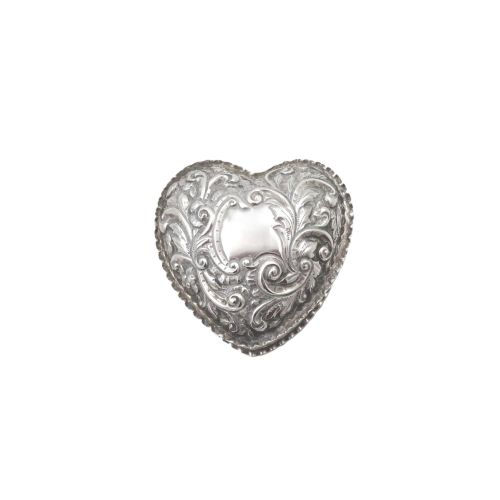


Late Victorian Jewellery Box
A late victorian jewellery box brings tangible nineteenth-century craftsmanship to a dressing table, offering a secure home for small valuables.
Late Victorian Jewellery Box
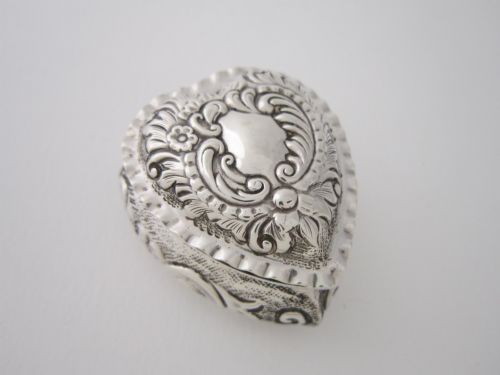
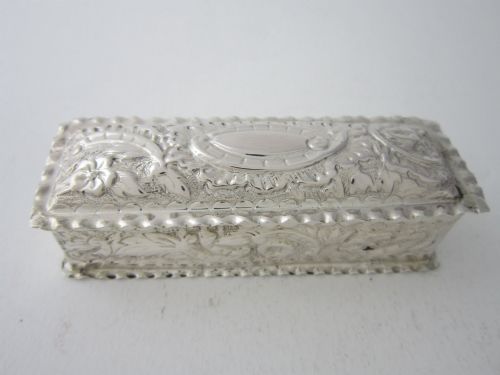
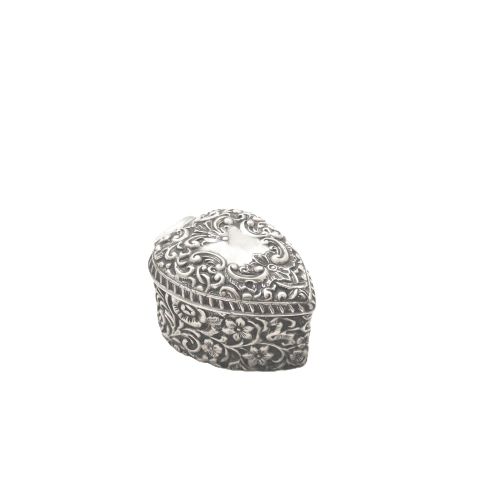
When you search for a late victorian jewellery box, you encounter compact receptacles designed to hold rings, trinkets, and personal treasures during the final decades of the nineteenth century. These pieces appear in numerous forms, including heart-shaped trinket boxes, rectangular caskets, and larger wooden table boxes intended for display.
The versions you meet most frequently on this page comprise sterling silver examples with embossed decoration, alongside timber carcases veneered in burr walnut or coromandel. Many incorporate fitted interiors lined with silk or velvet, reflecting the period habit of housing precious items securely.
The selection ranges from small desk accessories to substantial vanity boxes fitted with glass bottles and lower drawers. Origins span English workshops, Birmingham assay offices, and French ateliers influenced by revivalist aesthetics.
How they were made
Makers utilised a combination of precious metals, dense hardwoods, and moulded glass to construct these containers. Sterling silver elements were frequently cast, pierced, or embossed with floral and scroll motifs, often bearing hallmarks that date the metal precisely.
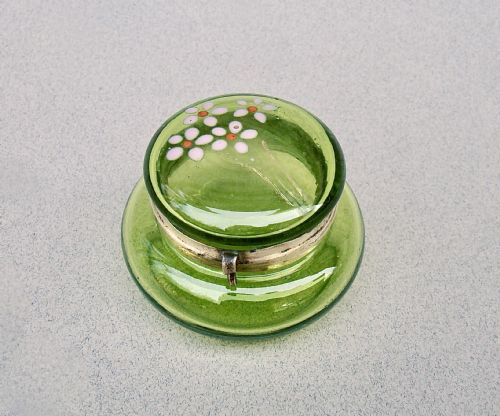
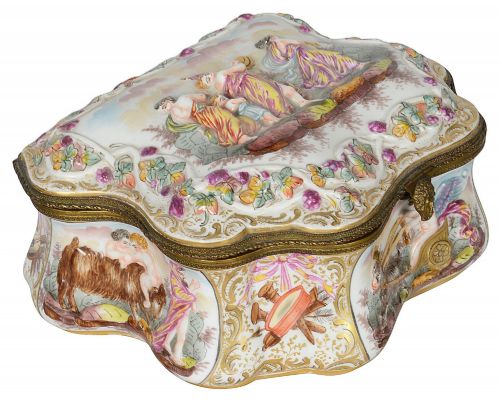
Wooden boxes relied upon stable carcases veneered in figured timbers such as walnut, coromandel, and amboyna, sometimes inlaid with brass or mother-of-pearl. Glass and porcelain bodies were combined with gilded copper mountings or electro-formed metal frameworks to achieve ornate, architectural profiles.
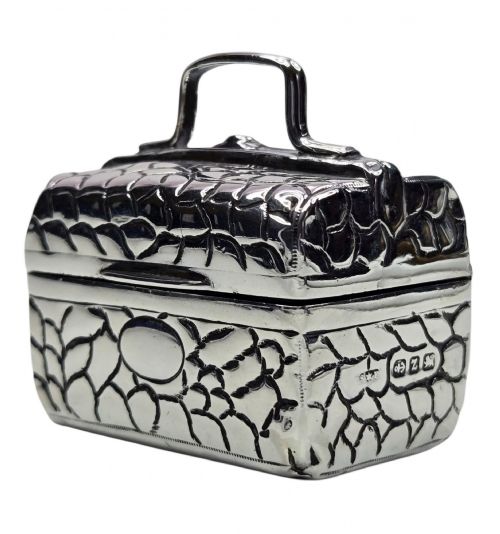
One recorded piece takes the unusual form of a crocodile skin trunk, proving the Victorians enjoyed a touch of wildlife in their accessories.
What varies in quality
The distinction between standard examples and the finest pieces lies in the precision of the metalwork, the choice of timber veneer, and the intactness of the interior lining. Master silversmiths achieved crisp relief and balanced proportions, whereas lesser items display mechanical stamping with softer detail.
Internal elements such as original silk or velvet upholstery, working locks with keys, and sound glass components elevate a piece. The selection of highly figured burr timber or exotic coromandel similarly marks out superior cabinetwork from plain utility boxes.
William Comyns & Sons
The Late Victorian Jewellery Box Glossary
- Hallmark
- An official stamp applied to precious metals indicating the standard of purity, the assay office, and the year of manufacture.
- Coromandel
- A dense, heavily figured dark timber from Asia, prized for nineteenth-century luxury cabinetwork and veneer.
- Electro-form
- A manufacturing technique utilising electroplating to deposit metal onto a core, creating hollow, intricate decorative items.
- Bijouterie table
- A glass-topped display table designed specifically for showcasing small ornaments and jewellery in a drawing room.
- Tramp art
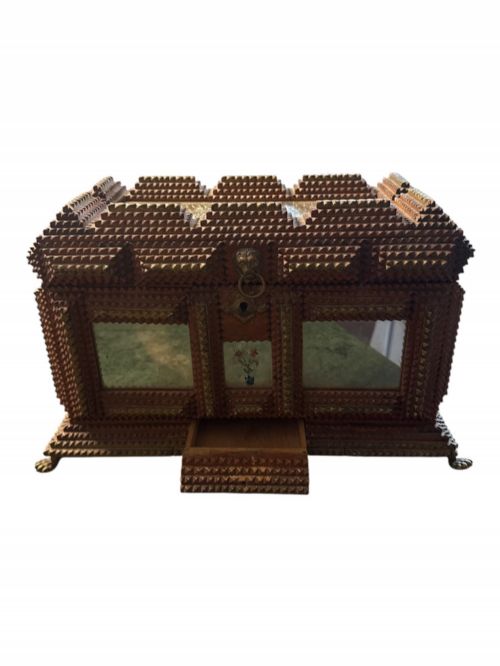
- A folk art style involving the carving and layering of scrap wood, often creating textured geometric patterns on boxes.
Late Victorian Jewellery Box: Frequently Asked Questions
What were late victorian jewellery boxes used for?
These boxes served to safeguard rings, brooches, and small personal valuables on dressing tables or in drawing rooms. They kept delicate items organised and protected from dust.
Larger versions accommodated vanity bottles and writing implements, doubling as multipurpose receptacles for daily domestic use.
How do I identify a silver box date?
British silver boxes usually carry hallmarks stamped directly into the metal or the bezel. These marks include a date letter corresponding to a specific assay office year.
Matching the stamp against official records reveals the exact year the silver component was tested and registered.
What woods appear on these boxes?
Cabinetmakers utilised dense exotic hardwoods such as walnut, coromandel, and amboyna for their rich grain patterns. These timbers were typically sliced into thin veneers and applied to a secondary wood carcase.
Folk art pieces also incorporated scrap woods shaped through carving and layering techniques.
Are interiors usually original?
Many boxes retain their original padded silk or velvet linings designed to cushion delicate jewellery pieces. Over decades of use, some linings show wear or have been replaced by later owners.
Original fabric with matching padded lids adds notable authenticity to the piece.