


Gilt Brass Casket
A gilt brass casket brings nineteenth-century craftsmanship to your dressing table, offering a secure and decorative home for small valuables.
Gilt Brass Casket
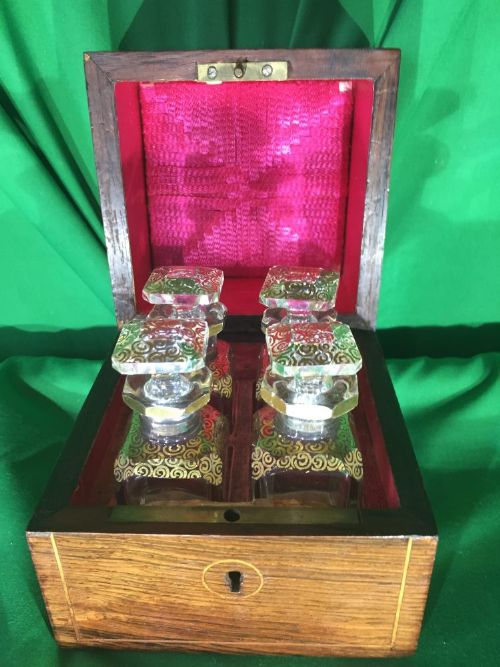
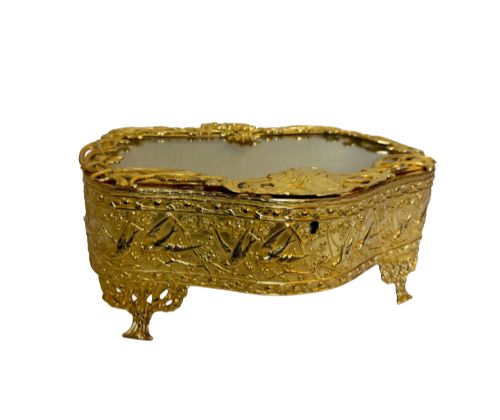
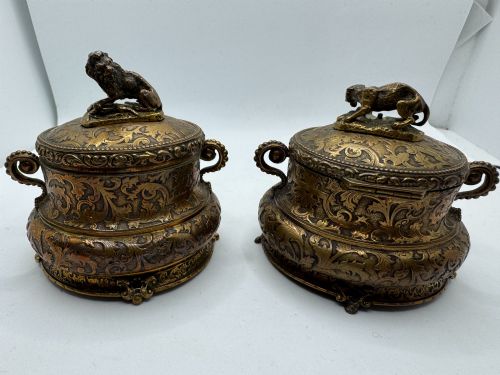
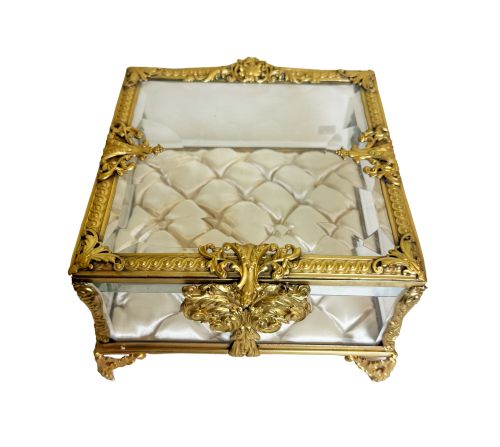
A gilt brass casket is a decorative container designed for jewellery, trinkets, or stationery, heavily represented on this page by nineteenth-century French and Victorian examples. These pieces combine metal frames with glass, porcelain, or stone panels, serving both utilitarian and display purposes.
Buyers seeking a gilt brass casket encounter various forms, including domed caskets, glass panels held in ormolu mounts, and table cabinets. The nineteenth century dominates the available selection, ranging from Regency work-boxes to late-century Art Nouveau designs.
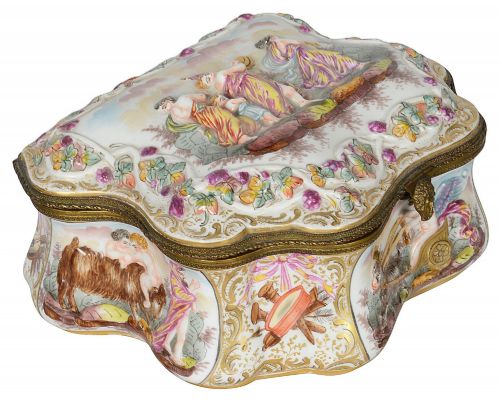
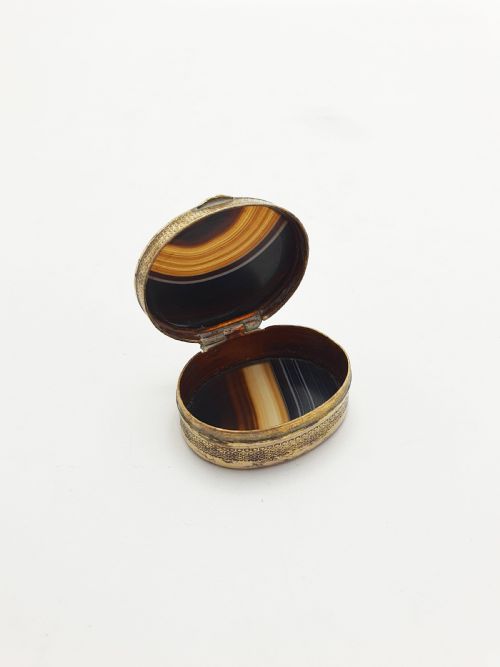
Many of these boxes incorporate secondary materials such as malachite, moss-agate, silk linings, and painted porcelain. Their origins trace across French, Italian, and Austro-Hungarian workshops, reflecting distinct regional decorative preferences of the period.
Materials and construction methods
The construction of a gilt brass casket relies on cast or stamped metal frameworks, often finished with fire-gilding or ormolu to provide a rich golden surface. Metal alloy components are assembled to secure glazed panels, stone insets, or porcelain plaques within the housing.
Interior elements frequently feature fitted silk linings, velvet bases, or leather compartments tailored for holding rings and trinkets. Glass-sided boxes utilise bevelled panes secured by metal flanges, while stone and marble variants depend on precise masonry to frame natural mineral slabs.
Gilt Brass Casket Retail Price Guide 2026
Typical asking prices for gilt brass casket among the pieces listed under this phrase on Sellingantiques today, from the lower quarter to the upper quarter. They describe what is for sale here now, not the wider market.
One miniature carriage box captures the nineteenth-century fascination for novelty travel items by doubling as an opaline egg container.
Distinctions in quality
Quality in a gilt brass casket is determined by the crispness of the metal casting and the depth of the gilding. Superior examples display finely chiselled mounts and tightly fitted joints without visible gaps in the metalwork.
The choice of inset materials dictates the upper tier of the range, with natural stones like malachite or moss-agate, hand-painted porcelain plaques, and bevelled crystal elevating a piece above standard glass and plain brass constructions.
The Gilt Brass Casket Glossary
- Ormolu
- Gilded bronze or brass created through a mercury-gilding process used extensively on decorative metalwork.
- Cabochon
- A gemstone or mineral polished into a convex, rounded shape rather than faceted, often set into box lids.
- Electro-form
- An object formed or coated through electrolytic deposition, a technique utilised for reproducing detailed metal shapes in the nineteenth century.
- Palais Royal
- A style associated with luxury novelty items sold in the Parisian arcades during the nineteenth century.
- Fall front
- A hinged door or panel that drops forward to reveal interior stationery slots or small drawers.
Gilt Brass Casket: Frequently Asked Questions
What were gilt brass caskets used for?
These boxes served as secure containers for personal valuables, including rings, necklaces, and delicate trinkets.
They also functioned as prominent decorative objects on nineteenth-century mantelpieces, desks, and dressing tables.
How do I date a gilt brass casket?
Dating relies on stylistic clues, such as the flowing organic lines of Art Nouveau or the classical symmetry of Regency designs.
Material use, hinge construction, and associated markers like registration stamps or Parisian maker marks also help narrow the period.
Are these caskets fragile?
While the metal frames are robust, many examples incorporate bevelled glass or thin stone panels that require careful handling.
Interior silk and velvet linings can also degrade over time if exposed to damp environments or direct sunlight.
Where were most gilt brass caskets made?
The majority originate from European manufacturing centres, with France and Austria producing many of the finest framed glass and agate pieces.
Italian workshops also contributed notable porcelain-panelled caskets during the nineteenth century.