

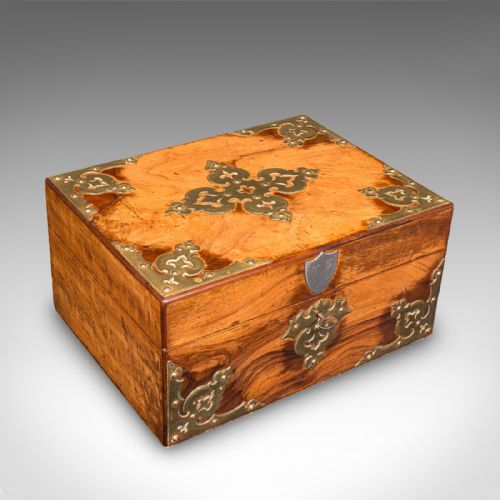


Brass Jewellery Chest
A brass jewellery chest is a small, portable container fashioned to secure precious trinkets, frequently incorporating metal mounts or frameworks.
Brass Jewellery Chest
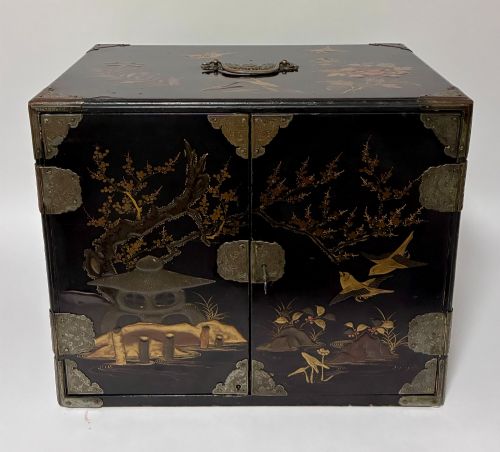
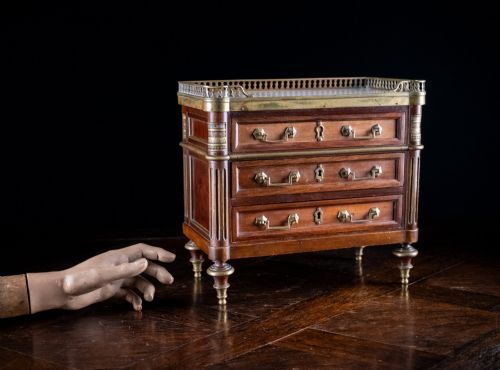
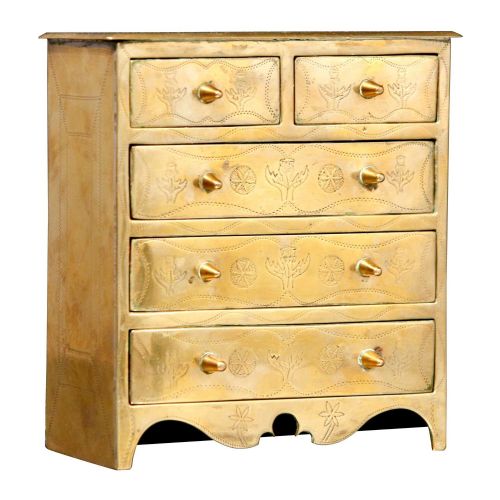
A brass jewellery chest encompasses portable receptacles and miniature cabinets designed to hold small valuables, often featuring metal mounts, strapwork, or complete brass construction.
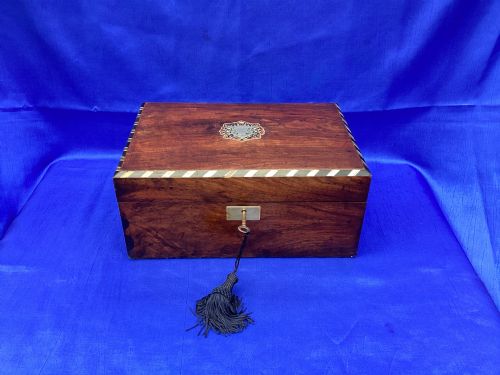
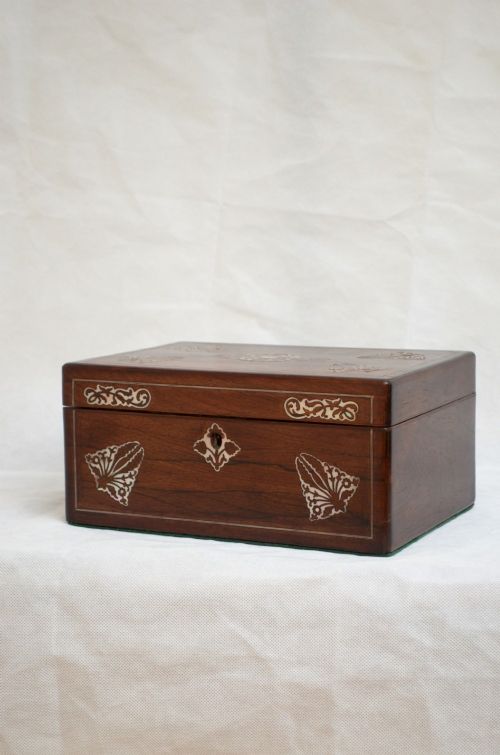
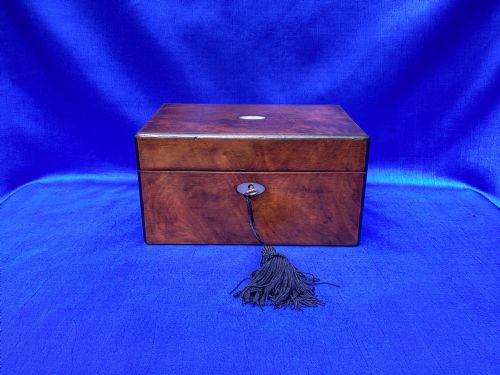
The versions most commonly met on this page date from the nineteenth century, including Victorian walnut and rosewood boxes fitted with brass corners, escutcheons, or internal trays.
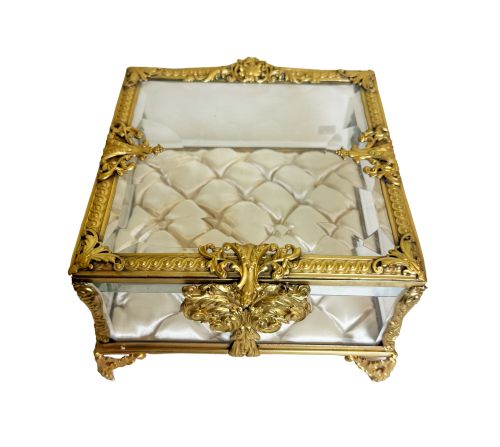
Makers utilised various timber carcases such as mahogany, teak, and burr walnut, alongside glass and leather, to form these decorative miniature chests and caskets.
How they were made
Craftsmen built timber carcases from rosewood, mahogany, and walnut, often applying veneers or leather coverings before securing structural corners and handles with brass plates.
Gilt bronze, brass mounts, and engraved detailing were fastened with small screws or pins to reinforce edges and adorn the exterior of miniature chests and workboxes.
Interiors were lined with fabrics or fitted with removable trays to organise compartments for jewellery, sewing implements, and letters.
Some miniature campaign trunks conceal secret letter drawers designed to keep private correspondence safe from prying eyes.
What varies in quality
The standard of timber selection and veneer matching defines the visual appeal of a miniature chest, with figured burr walnut or exotic woods sitting at the upper end of the range.
The execution of brass mounts, whether cast, engraved, or plain, indicates the level of craftsmanship invested in the piece during its manufacture.
Internal complexity, such as secret compartments, fitted velvet trays, and working locks with original keys, separates standard utility boxes from superior examples.
The Brass Jewellery Chest Glossary
- Apprentice chest
- A small scale piece of furniture demonstrating a joiner's skill, often configured as a miniature set of drawers.
- Campaign box
- A portable chest or box constructed for travel, typically reinforced with brass corners and recessed carrying handles.
- Escutcheon
- A protective plate surrounding a keyhole, frequently cast in brass or bronze on these boxes.
- Workbox
- A container fitted for sewing materials, threads, and small accessories, often sharing forms with jewellery caskets.
- Penwork
- A decorative technique utilising ink drawn onto wood or bone surfaces to create intricate geometric or pictorial patterns.
Brass Jewellery Chest: Frequently Asked Questions
What is a brass jewellery chest?
A brass jewellery chest is a small decorative box or miniature cabinet reinforced or adorned with brass mounts, used historically to store precious trinkets and valuables.
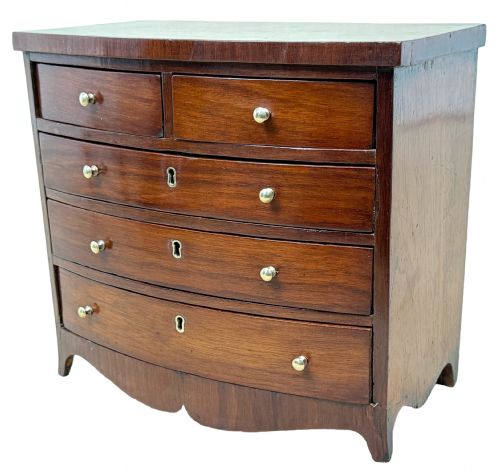
These pieces range from Victorian rosewood workboxes to campaign trunks and miniature chests of drawers.
How were these boxes used?
They sat upon dressing tables, desks, or chests of drawers to keep rings, necklaces, and letters secure and organised.
Many included fitted trays, compartments, and locks to safeguard personal items.
How do I date a wooden box?
Dating relies upon timber species, construction methods, hardware styles, and internal linings typical of periods like the Georgian or Victorian eras.
Mahogany and rosewood dominate eighteenth and nineteenth-century examples, while brass mounts reflect prevailing decorative fashions.
Are these chests portable?
Many examples are designed for travel, featuring recessed brass handles, sturdy locks, and robust timber carcases.
Others are purely decorative table cabinets meant to remain stationary in a domestic interior.