




Brass Apprentice Piece
A brass apprentice piece is a small-scale demonstration item made to show a craftsman's skill.
Brass Apprentice Piece
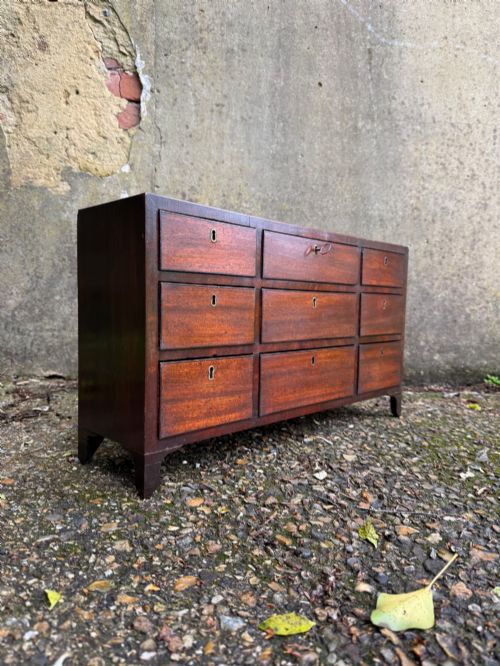
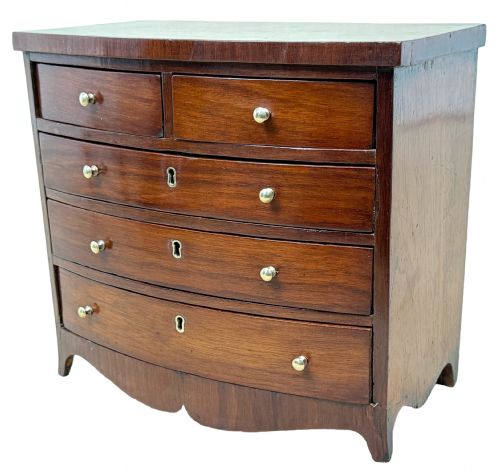
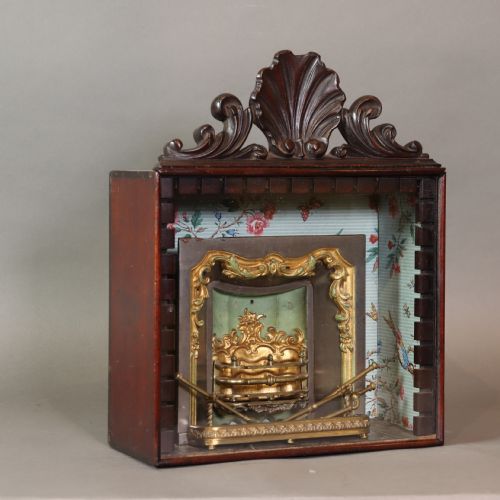
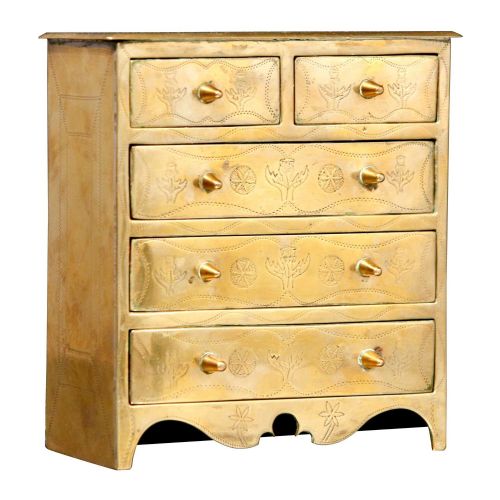
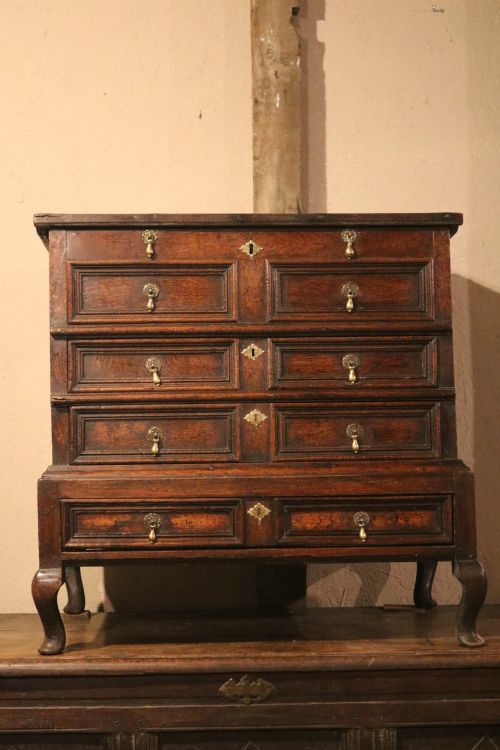
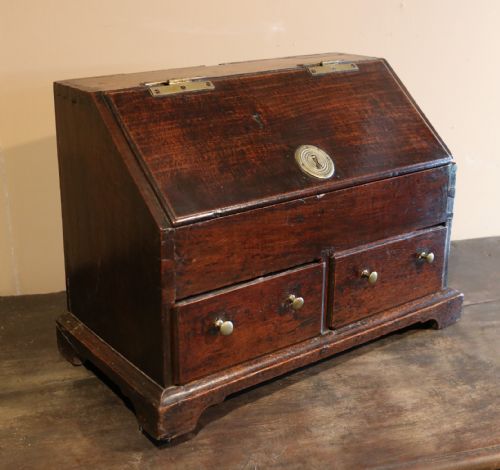
When you search for a brass apprentice piece, you are looking at small-scale items of miniature furniture or boxes featuring brass mounts, handles, or inlays. These objects include miniature chests of drawers, desks, and coffers created across the eighteenth and nineteenth centuries.
The versions you are most likely to meet on this page take the form of miniature chests, drawers, and boxes constructed from oak, mahogany, or walnut, accented with brass escutcheons and drawer pulls.
Originating from British, Dutch, and French workshops, these small items mirror full-sized furniture styles such as Georgian, Victorian, and French Louis XV. They serve as domestic decorative objects rather than working joinery models.
How they were made
Makers built these pieces using traditional cabinet-making timbers like oak, mahogany, elm, and kingwood, often joining the miniature drawer corners with dovetails.
Brass was utilised for keyhole escutcheons, drop handles, hinges, and occasional wire inlay, fixed securely to the wooden carcases by hand.
Surfaces received finishes such as wax polishing to highlight the natural grain of woods like walnut and paper-lined interiors on specific jewellery boxes.
Some miniature drawers are so small they could only ever hold a single button and a very short whisper.
What varies in quality
The standard of a piece depends heavily on the proportion and the accuracy with which full-sized architectural details are scaled down to miniature dimensions.
Material selection divides the range, with dense hardwoods like mahogany and figured kingwood showing greater refinement than simpler utility timbers.
The integration of the brass hardware, from neatly flush escutcheons to well-fitted hinges, marks the distinction between standard workshop output and superior craftsmanship.
The Brass Apprentice Piece Glossary
- Apprentice piece
- A small-scale item created by a trainee craftsman to demonstrate mastery of joinery and design before admission to a guild.
- Escutcheon
- A flat plate of brass surrounding a keyhole, designed to protect the surrounding wood from wear.
- Kneehole desk
- A compact writing table featuring a central recess for the legs flanked by banks of small drawers.
- Mule chest
- A traditional storage box fitted with one or two drawers beneath the main coffer compartment.
- Tallboy
- A tall chest of drawers consisting of one chest stacked upon another, rendered here in miniature form.
Brass Apprentice Piece: Frequently Asked Questions
What is a brass apprentice piece?
A brass apprentice piece is a miniature furniture item or box decorated with brass handles and escutcheons, historically made by trainees.
These items reflect the full-scale cabinet-making styles of the Georgian and Victorian eras.
How were these miniature items used?
Craftsmen used them to demonstrate technical proficiency to guild masters, while others served as salesman samples for travelling merchants.
In domestic settings, people later used them as desktop storage or jewellery boxes.
How do I identify the period?
Dating relies on timber choices, construction techniques, and stylistic markers such as Georgian bracket feet or Victorian bowfronts.
Brass hardware styles and secondary woods hidden inside drawers also offer clues to the decade of manufacture.
Are they made of solid wood?
Most pieces utilise solid timbers like oak, mahogany, elm, or walnut for their structural carcases and drawer frames.
Finer examples incorporate exotic veneers such as kingwood laid over a secondary wood base.
Where were these pieces made?
Workshop origins span British regions including Wales and England, alongside continental centres in France and the Netherlands.
Local timber availability often dictated whether an item was built in oak, walnut, or mahogany.