



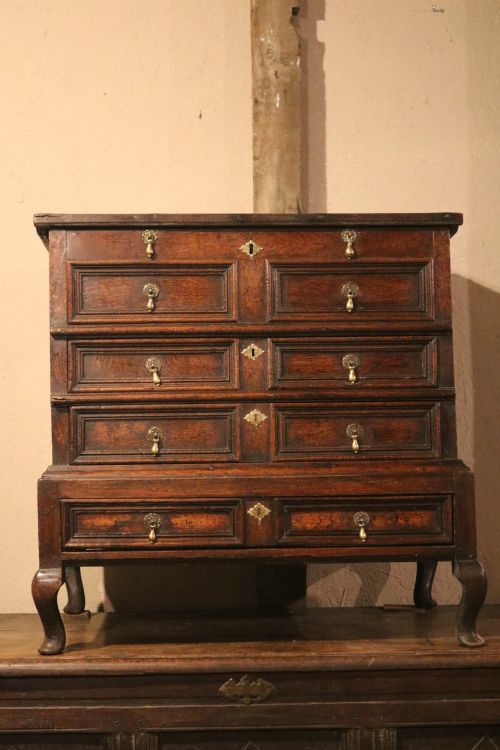


Miniature Brass Furniture
Miniature brass furniture encompasses diminutive chests, coffers and desks scaled down for apprentices or travellers, offering exquisite craftsmanship in a tiny footprint.
Miniature Brass Furniture
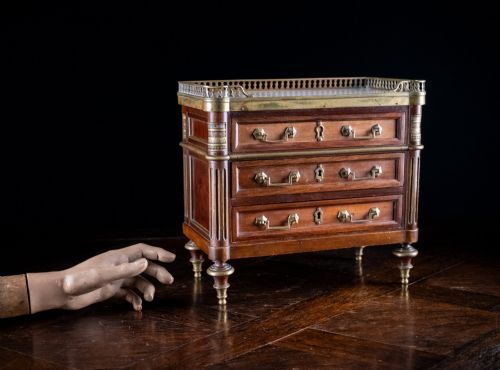
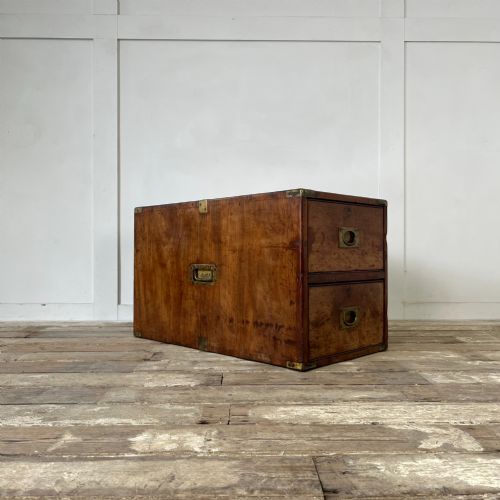
Miniature brass furniture comprises small-scale chests, desks and coffers produced across the eighteenth and nineteenth centuries, often featuring brass handles, escutcheons or corner mounts. These charming objects range from Georgian oak coffer bachs to Victorian campaign chests and French commodes, serving diverse domestic functions in reduced proportions.
The pieces on this page span the Georgian, Victorian and Edwardian eras, reflecting both British vernacular traditions and continental influences such as Louis XVI styles. Buyers will frequently encounter apprentice pieces, miniature chests of drawers and desktop storage items incorporating distinctive brass hardware.
Originating from various regions including Wales, England, France and India, these items demonstrate how cabinetmakers applied full-scale joinery techniques to diminutive forms. The integration of brass fittings provides both structural reinforcement and decorative contrast against woods like oak, mahogany and walnut.
How miniature brass furniture was made
Craftsmen built these pieces using primary timbers such as oak, mahogany, walnut and kingwood, frequently incorporating secondary woods for internal drawers and backboards. Structural joints like dovetails and mortise and tenon construction secured the small-scale carcases.
Brass formed an essential component, utilised for drop handles, keyhole escutcheons, corner brackets and engraved plaques. Surface finishes often included polish or ebonisation, sometimes paired with bronze mounts, marble tops or boulle work to emulate grander furniture.
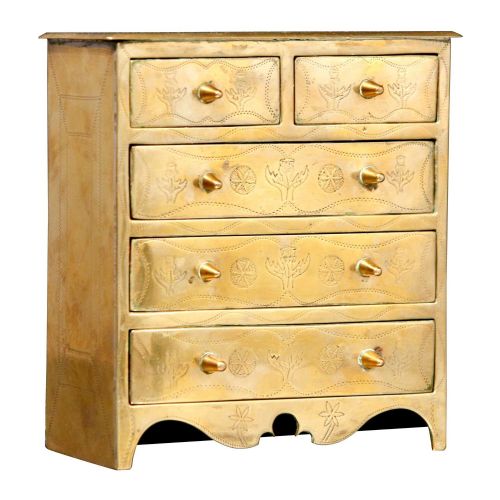
Cabinetmakers exercised immense precision to scale down functional hardware and working locks, ensuring miniature drawers operated smoothly within confined spaces. The application of brass engravings, such as thistle motifs, added refined decorative detail to apprentice and jewellery chests.
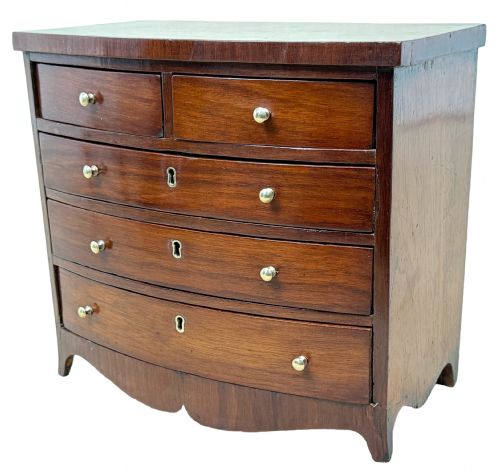
Object types include miniature chests of drawers, coffer bachs, campaign chests, kneehole desks and jewellery boxes fitted with brass hardware.
What varies in quality in miniature brass furniture
Quality rests upon the fidelity of the proportions and the proportionality of the brass mounts to the wooden carcase. Superior pieces display hand-cut dovetailing and carefully selected timber grains that appear convincing at any scale, rather than crude box construction.
The integrity and originality of the brass hardware significantly influence the standing of a piece. Well-cast or finely engraved handles and escutcheons that fit their intended depressions without disturbing the surrounding wood indicate superior workshop standards.
The Miniature Brass Furniture Glossary
- Coffer Bach
- A small Welsh oak chest, often featuring drawers beneath the main compartment and raised on feet. These traditional pieces served domestic storage purposes in rural households.
- Apprentice Piece
- A small-scale item of furniture created by a craftsman to demonstrate mastery of a trade. They exhibit the same joinery standards as full-sized furniture.
- Campaign Chest
- A modular chest built in sections with brass corner brackets and flush carrying handles for military transport. Miniature versions replicate this portable design for desk or travel use.
- Escutcheon
- A protective plate surrounding a keyhole, frequently cast in brass. It prevents the wood from splintering around the lock.
- Boulle
- A decorative technique involving inlaid tortoiseshell and brass, named after a French marquetry master. It appears on select nineteenth-century credenzas and commodes.
Miniature Brass Furniture: Frequently Asked Questions
What is miniature brass furniture used for?
These small pieces served various practical roles in historic homes, from desktop storage and jewellery organisation to apprentice demonstrations. Wealthy households also utilised them to display cabinetmaking skill or store precious items.
Today, collectors use them to adorn writing desks, shelves and side tables where full-sized furniture cannot fit. Their diminutive drawers remain functional for holding small trinkets and keepsakes.
How do I distinguish Georgian from Victorian pieces?
Georgian examples often utilise native timbers like oak or mahogany with vernacular regional characteristics, such as Welsh coffer bachs and simple brass pulls. Their lines tend to follow classic eighteenth-century proportions.
Victorian pieces frequently display heavier brass mounts, campaign hardware, or French-inspired commode forms using exotic woods like kingwood and mahogany. Ebonised finishes and elaborate escutcheons also point towards nineteenth-century production.
Are these pieces genuine antiques?
The selection includes items originating from the eighteenth and nineteenth centuries, spanning Georgian, Victorian and Edwardian periods. Materials like oak, mahogany and walnut show age-appropriate patination beneath their brass fittings.
Each piece reflects the woodworking styles of its specific era, from Welsh vernacular chests to French-influenced commodes and campaign desks.
How should I care for antique miniature furniture?
Keep these items away from direct sunlight and steady heat sources to prevent the timber from warping or splitting. Gentle dusting with a dry, soft cloth preserves the wood finish without harming delicate joints.
Polish brass hardware sparingly with a dry cloth rather than liquid cleaners, ensuring no residue reaches the surrounding wood surface. Maintaining stable indoor humidity protects both the carcase and the metal mounts.