






Brass Mounted Writing Box
A brass mounted writing box offers sturdy portable desks and stationery storage crafted for travel or desktop order during past centuries.
Brass Mounted Writing Box
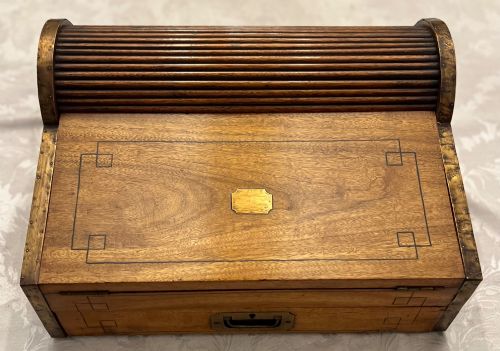
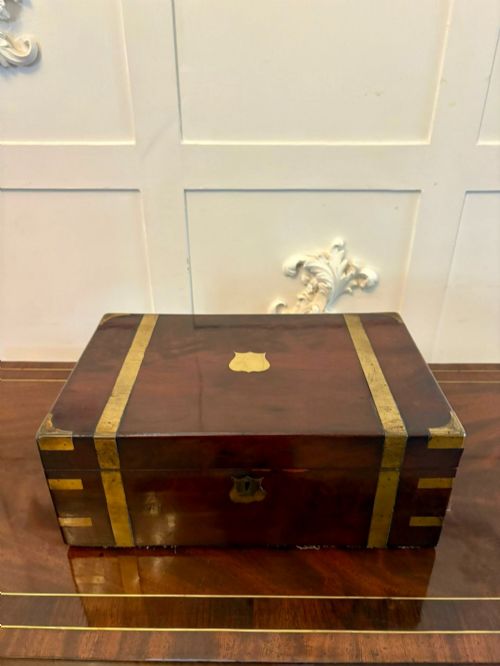
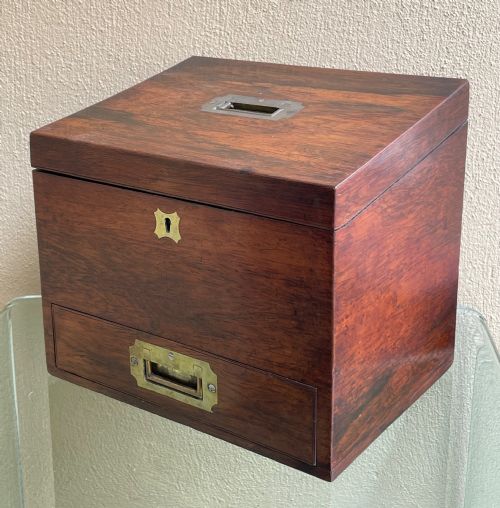
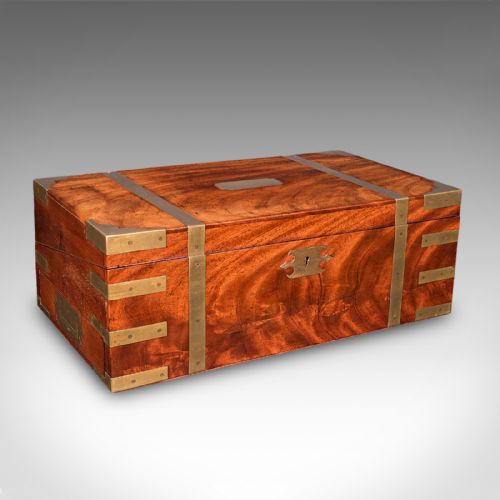
A brass mounted writing box encompasses portable writing slopes, campaign desks, and stationery cabinets designed for correspondence and document storage. These pieces emerge predominantly from the Georgian, Regency, and Victorian eras, carrying durable brass reinforcement intended to protect corners and edges during travel.
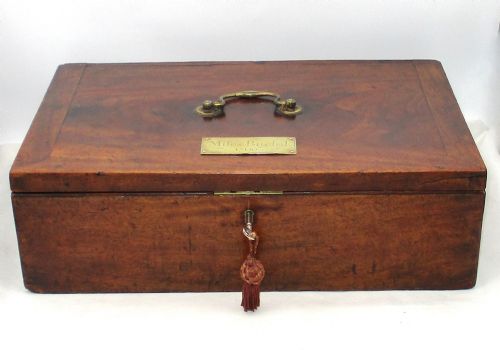
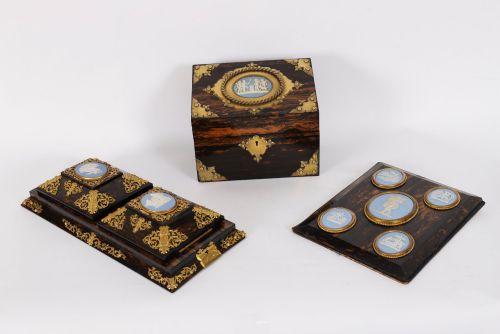
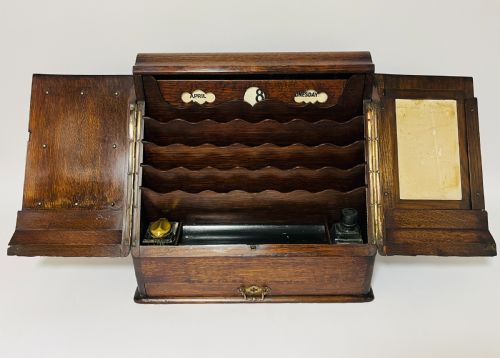
Buyers regularly encounter walnut, mahogany, and oak examples, alongside more decorative variations incorporating coromandel and tortoiseshell. Forms range from simple folding lap desks to elaborate stationery cabinets with fall fronts and internal compartments.
The objects serve both functional and decorative roles, shifting from military campaign gear to refined domestic desk accessories. Surviving specimens bridge the gap between utilitarian travel equipment and high Victorian craftsmanship.
How They Were Made
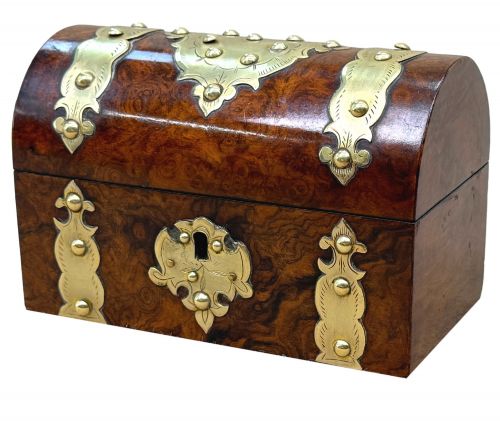
Cabinet makers utilised dense hardwoods such as mahogany, walnut, and oak as the structural foundation, often veneered in burr walnut or figured woods for visual depth. Brass corners, straps, and flush handles were hand-fitted and secured with tiny screws to reinforce the wooden joins against travel stress.
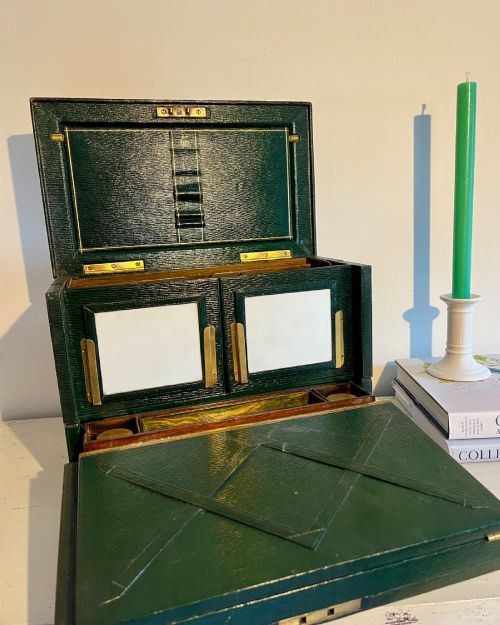
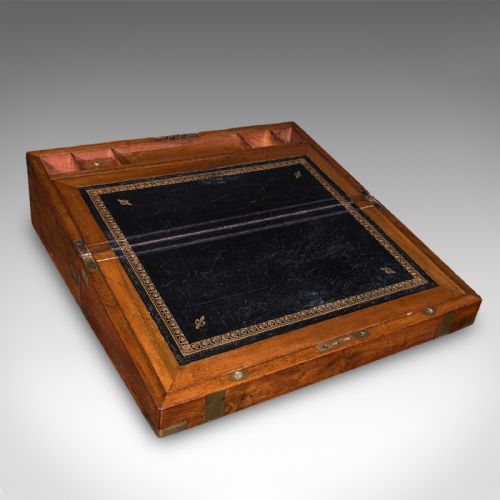
Internal fittings frequently include leather writing surfaces, glass inkwells with brass collars, and velvet-lined compartments tailored for pens and seals. Specialised versions integrate secret drawers, book rests, and locking mechanisms operated by small brass keys.
Brass Mounted Writing Box Retail Price Guide 2026
Typical asking prices for brass mounted writing box among the pieces listed under this phrase on Sellingantiques today, from the lower quarter to the upper quarter. They describe what is for sale here now, not the wider market.
Materials recorded across the inventory include brass, burr walnut, mahogany, oak, glass, and leather.
What Varies in Quality
The refinement of the brass work separates standard utility models from exhibition grade pieces, observable in heavy cast mounts versus thin stamped sheet metal. Precision in the flush fitting of corner brackets and escutcheons indicates the skill of the original workshop.
Internal complexity and choice of secondary woods also signal the tier of manufacture, with superior items offering secret drawers, gilt tooling on leather panels, and solid timber framing rather than thin veneers. Maker signatures stamped on locks or leather add archival weight to the build quality.
Briggs 27 Piccadilly London·Houghton and Gunn·Mechi and Bazin·Mappin and Webb·Rodman and Co of Belfast·Hicks of London
The Brass Mounted Writing Box Glossary
- Campaign Slope
- A portable writing desk built for travel, featuring recessed brass handles and reinforced corners designed to withstand rough transport.
- Stationery Cabinet
- A desk accessory with compartments or a fall front designed to hold paper, envelopes, and letters upright rather than flat.
- Escutcheon
- A protective brass plate surrounding a keyhole, often countersunk into the wood to maintain a flush exterior surface.
- Secret Drawer
- A concealed compartment hidden behind removable panels or activated by a hidden internal spring mechanism.
Brass Mounted Writing Box: Frequently Asked Questions
How were these boxes used?
Owners used these boxes to hold paper, inkwells, and writing implements while travelling or working at a desk. The folding lids opened to form a slanted writing surface lined with leather.
Stationery cabinets served a stationary desktop role, holding letters and envelopes upright in tiered compartments for easy daily correspondence.
What woods were commonly utilised?
Cabinet makers relied primarily on mahogany, walnut, and oak for their strength and stable grain. Decorative finishes often featured burr walnut veneers, coromandel, and Pollard oak.
Secondary woods inside compartments included pine and cedar, while brass provided structural edge reinforcement.
How do I date a piece?
Stylistic clues such as Regency proportions or Victorian Gothic revival brass details help narrow down the decade of manufacture. Maker marks stamped on locks or leather interiors offer precise chronological markers.
Construction methods, including hand-cut dovetails and cast brass mounts, distinguish earlier Georgian examples from later mass-produced variants.
Are inkwells usually included?
Many surviving pieces retain their original cut glass inkwells, frequently fitted with hinged brass or silver-plated tops. These sat securely inside dedicated corner slots within the internal tray.
Replacements are common due to breakage over decades of use, so matching glass inserts often date to a later period.