


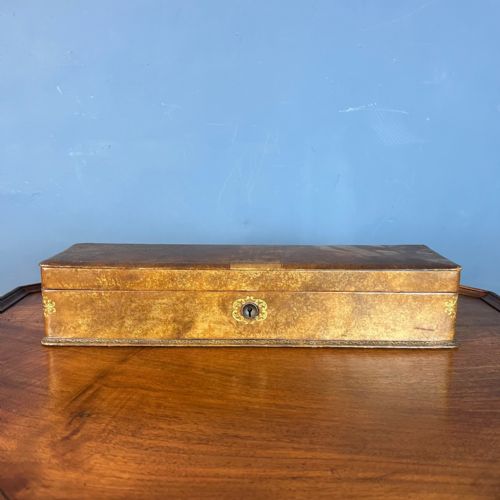


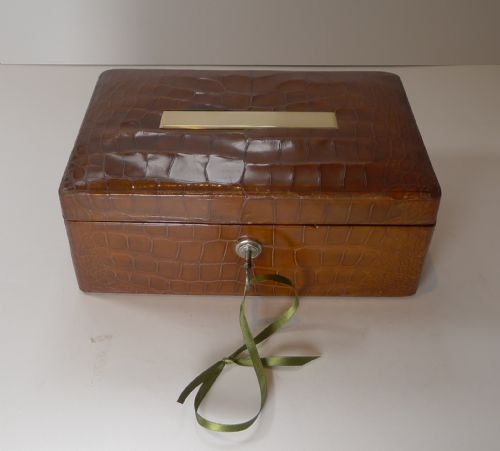


Brown Leather Casket
These brown leather caskets offer heavy hides and stout brass mounts, serving as secure storage for jewellery and letters.
Brown Leather Casket
A brown leather casket is a sturdy storage piece designed to hold jewellery, writing equipment, or personal documents. These containers take various forms, including jewellery boxes, writing slopes, travelling boxes, and faux book safes.
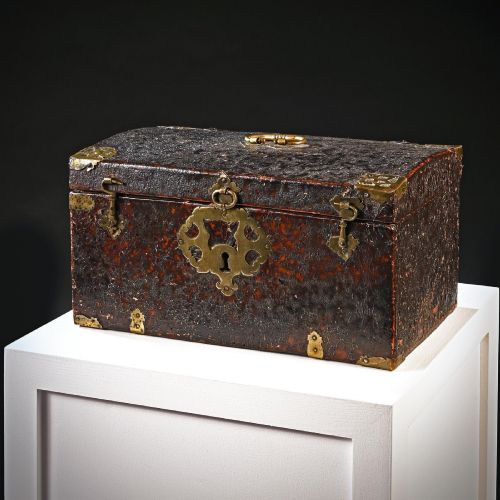
The pieces appearing on this page span several centuries, reaching from the late seventeenth century through the Georgian and Regency eras, into the Victorian period and the twentieth century. Buyers will frequently encounter nineteenth-century examples alongside early twentieth-century creations.
Origin and styling vary widely across the selection, encompassing French Provincial designs alongside English Regency and Victorian pieces. While some take the shape of standard chests, others mimic bound books or function as dedicated sewing boxes.
Materials and construction
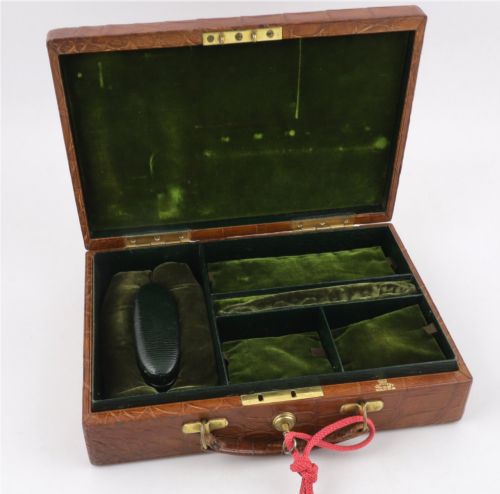
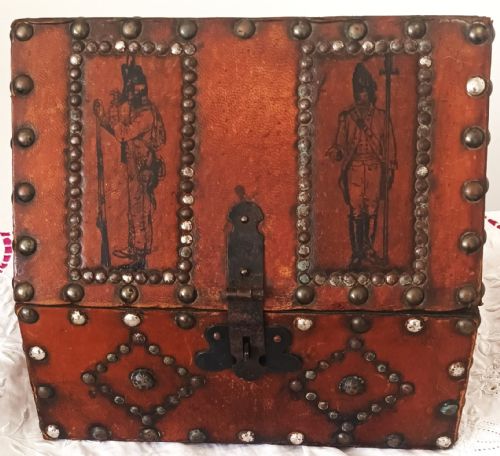
Construction relies upon a robust core of wood or iron encased in leather, pig skin, or exotic hides such as crocodile and alligator. Tooling and embossing frequently decorate the exterior surface, creating textured patterns and decorative borders.
Metal components play an essential role in both structure and ornamentation, utilising brass for mounts, hinges, corner brackets, and handles. Interiors are often lined with soft fabrics like velvet to protect delicate contents.
Some caskets disguise themselves entirely as scholarly books, hiding sewing kits or trinkets behind faux leather spines.
Distinctions in quality
Quality rests upon the selection of materials and the skill of the execution, distinguishing standard containers from exceptional luxury items. Finer pieces employ exotic skins like crocodile leather or incorporate detailed metalwork such as rosette-shaped brass mounts and claw and ball feet.
The integrity of the internal lining and the precision of the exterior tooling demonstrate the level of craftsmanship involved. Maker attribution, such as signed pieces by known makers, further elevates the standing of an individual box.
J C Vickery
The Brown Leather Casket Glossary
- Chasse
- A box or reliquary shaped like a house or a shrine with a pitched roof. Georgian leather-bound examples often adopt this architectural form.
- Writing slope
- A desktop box featuring an angled lid designed to provide a comfortable surface for writing letters. These often include internal compartments for inkwells and stationery.
- Tooled leather
- Leather decorated by pressing heated metal tools into the surface to create patterns or gilt designs. This technique is common on Victorian pen boxes and caskets.
- Claw and ball foot
- A furniture foot depicting a bird's talon clutching a ball, occasionally found supporting early nineteenth-century caskets. It adds a sculptural quality to the base of the box.
- Faux book
- An object constructed to resemble a bound volume or set of books. Mid-twentieth-century variants use this disguise for safes and decorative storage.
Brown Leather Casket: Frequently Asked Questions
What were brown leather caskets used for?
These boxes served multiple domestic and travel purposes, primarily holding valuable jewellery, cufflinks, and personal documents. Writing slopes and sewing boxes housed stationery and threads respectively.
Travellers also utilised stout leather travelling boxes to protect fragile belongings on long journeys.
How do I date a leather casket?
Dating relies upon observing the construction methods, materials, and stylistic cues present in the piece. Seventeenth-century examples display heavy framing and simple hardware, while Regency boxes often feature refined brass mounts and specific woodworking techniques.
Twentieth-century versions introduce new materials like pig skin and distinct locking mechanisms.
Are crocodile leather boxes genuine?
The crocodile and alligator skin boxes listed in this category utilise authentic exotic hides from the nineteenth and early twentieth centuries. These materials were favoured by luxury makers for their distinct texture and durability.
Such hides are typically paired with velvet interiors and brass hardware.
How should I care for antique leather?
Antique leather requires gentle handling to prevent the hide from drying out or cracking over time. Keeping the pieces away from direct sunlight and excessive moisture preserves both the leather and any internal velvet lining.
Periodic light dusting maintains the finish of the exterior tooling and brass mounts.