

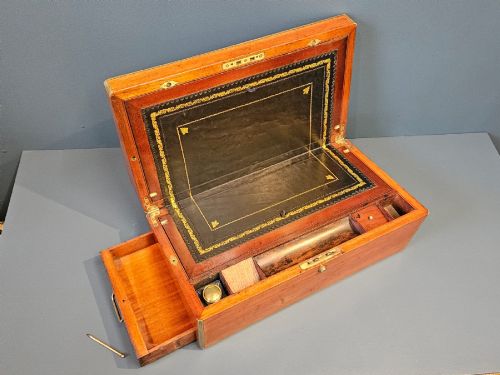


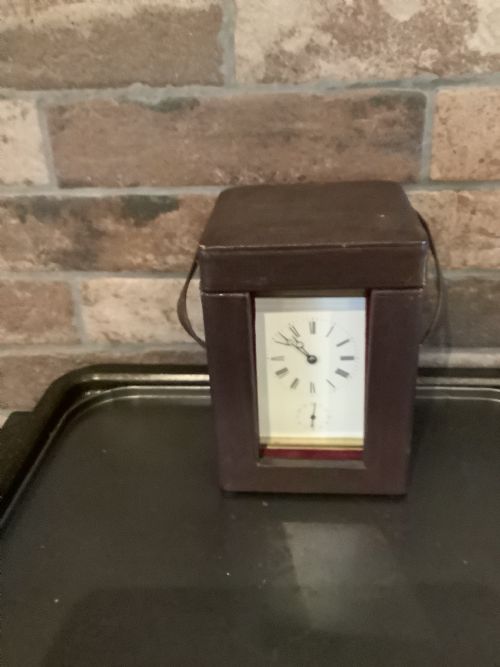

Brass Bound Leather Box
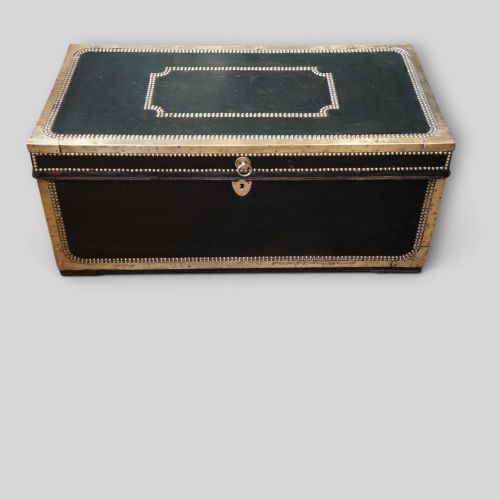
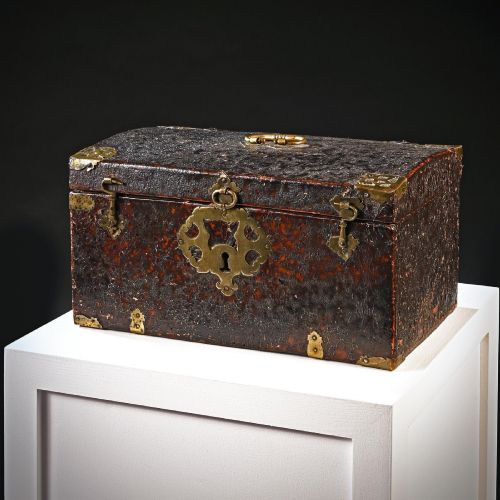
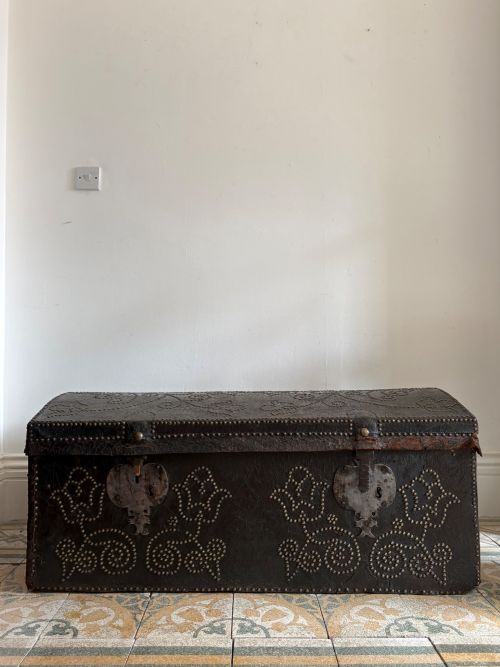
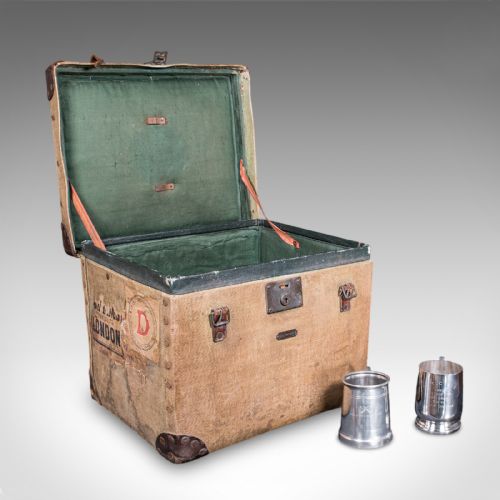
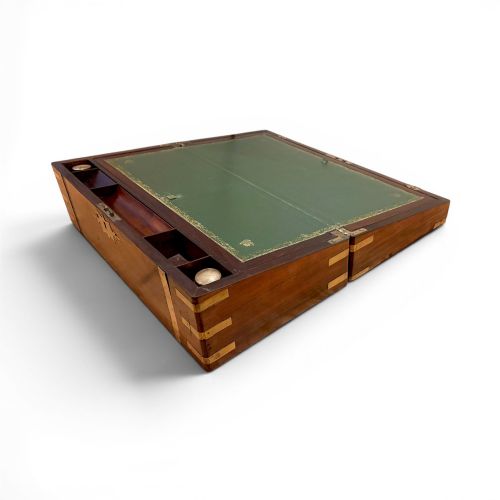
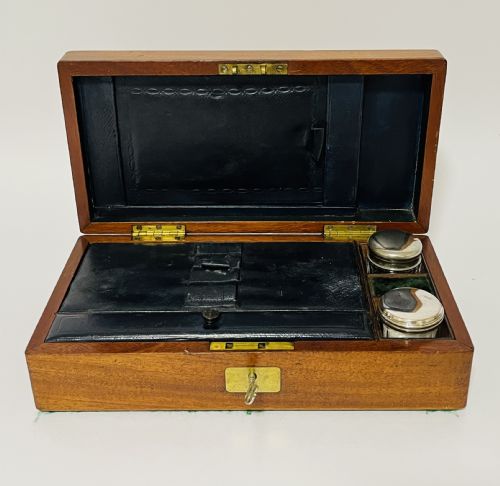
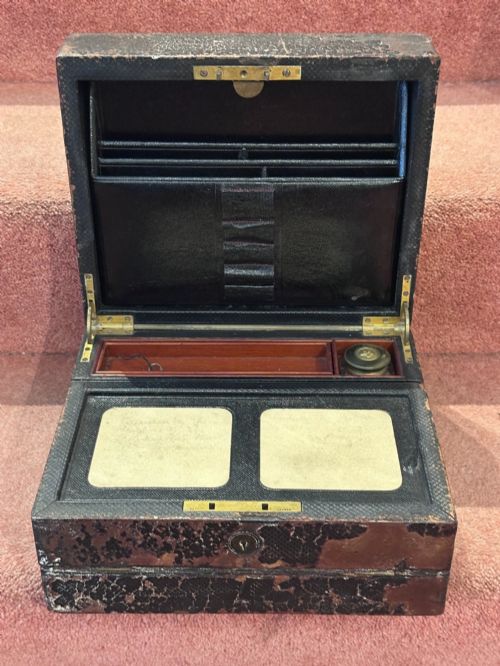
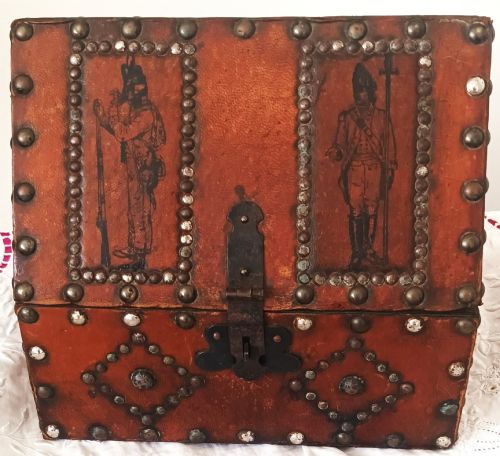
These brass bound leather box examples are robust vessels of utility and transport, built to endure the rigours of travel while holding personal valuables.
What a brass bound leather box is
A brass bound leather box combines sturdy hides with metal reinforcement to create a durable container for travel or domestic storage. These pieces appear in forms ranging from compact jewellery caskets and correspondence cases to larger campaign chests and trunks.
The pieces on this page span several distinct periods, notably the seventeenth century, the Regency era, and the late nineteenth century. Collectors will encounter specialised items such as camphor wood campaign chests alongside smaller travelling containers.
How they were made
Craftsmen built these containers using timber frames, including camphor wood, which were then covered in leather and secured with brass mounts. Fastenings and decorative elements such as rosette shaped brass mounts or claw and ball feet required careful metalworking skills.
Internal elements often incorporated secondary materials like bone for detail or compartments. Every joint and metal corner plate was fitted by hand to withstand the demands of long journeys.
Retail Price Guide 2026
Typical UK retail prices for brass bound leather box, calculated from the Sellingantiques database of over a million retail prices indexed since 2003. This retail price guide relies exclusively on Sellingantiques data; no external sources or auction records are used, so the figures do not describe the wider market.
The listings span from the late seventeenth century through the Regency era to late nineteenth century Victorian pieces.
What varies in quality
The distinction between standard utility items and finer examples rests on the precision of the metalwork and the selection of primary timbers like camphor wood beneath the leather. Superior pieces exhibit harmonious proportions and well-cast brass mounts rather than crude industrial stamping.
Detailing such as internal bone fittings, fitted correspondence trays, or decorative supports like claw and ball feet elevate a piece from a basic storage vessel to a refined collector object.
The Brass Bound Leather Box Glossary
- Camphor wood
- An aromatic timber prized in campaign furniture for its insect-repellent properties. It forms the sturdy internal core of several trunks and chests.
- Campaign chest
- A form of furniture designed to dismantle or travel easily with military officers on active service. These pieces feature recessed brass handles and corner brackets to prevent snagging.
- Rosette shaped brass mount
- A circular, flower-like metal fastening used to secure leather coverings and reinforce structural corners. It provides both structural integrity and ornament.
- Claw and ball foot
- A carved furniture support depicting a talon gripping a sphere. This stylistic detail appears on finer Regency examples.
Frequently Asked Questions
What is a brass bound leather box used for?
These containers served varied purposes ranging from safeguarding personal jewellery and official correspondence to transporting officers' belongings during military campaigns. Their durable construction kept contents secure from moisture and rough handling during travel.
Today, they function well as decorative storage on desks, sideboards, or chests of drawers, keeping modern items hidden while adding historic character to a room.
How do I care for antique leather and brass?
Leather surfaces benefit from occasional cleaning and conditioning to prevent drying and cracking over time. Avoid harsh chemical cleaners that might strip the historic finish.
Brass mounts can be left with their natural aged patina or gently polished with a soft cloth if brighter highlights are preferred. Keep the pieces away from direct sunlight and damp environments to protect the wood and hide.
How can I tell a Regency box from a Victorian one?
Regency pieces often display classical proportions and decorative flourishes such as claw and ball feet or rosette shaped brass mounts. They reflect a period of refined craftsmanship tied to classical revival styles.
Victorian examples tend towards utilitarian robustness or bolder aesthetic statements, often associated with officers' campaign equipment and strict functional utility. Examining the internal fittings and locking mechanisms also helps determine the specific era of manufacture.
Why are some boxes lined with camphor wood?
Camphor wood was selected for travelling chests because its natural aromatic oil repels moths and other destructive insects. This made the timber ideal for protecting uniforms and papers during long sea voyages.
The distinctive scent often lingers in well-preserved examples, offering a direct sensory connection to the maritime and military history of the piece.