





Nineteenth Century Campaign Chest
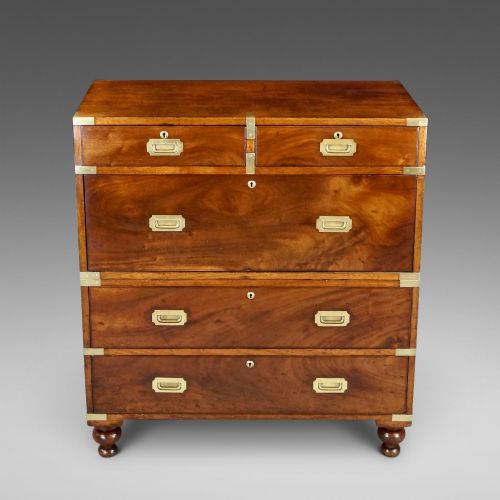
A nineteenth century campaign chest is a portable, brass-bound piece built for officers on the move, offering modular storage and rugged timber construction.
Nineteenth Century Campaign Chest
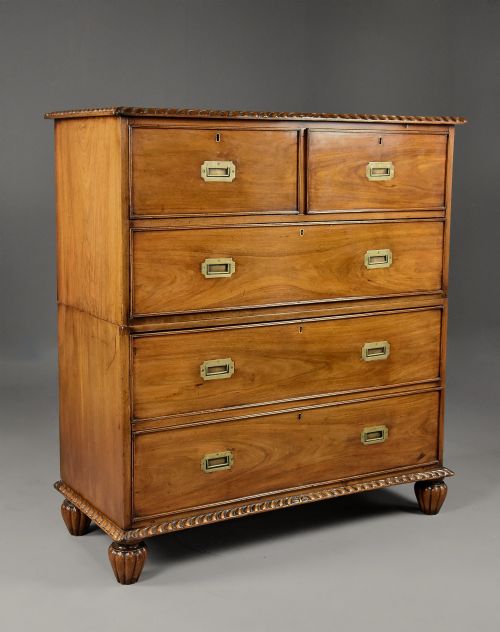
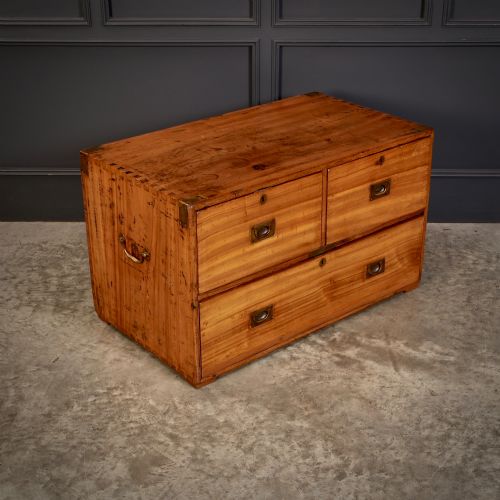
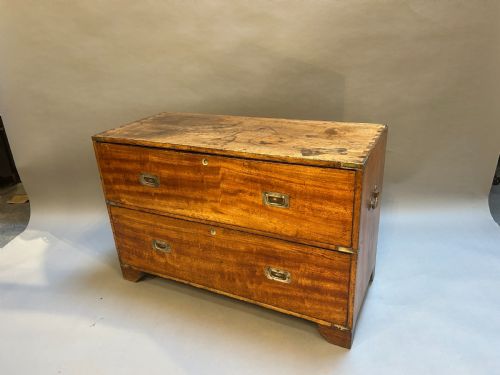
When you search for a nineteenth century campaign chest, you encounter practical furniture designed for military transport, colonial service, and long voyages. These pieces divide into sections with recessed brass handles and corner brackets to endure rough handling.
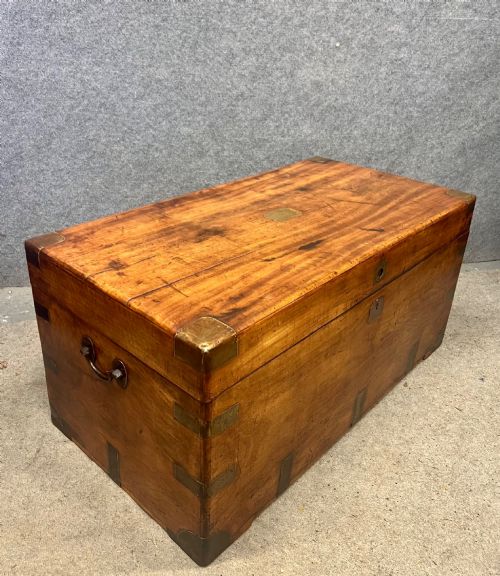
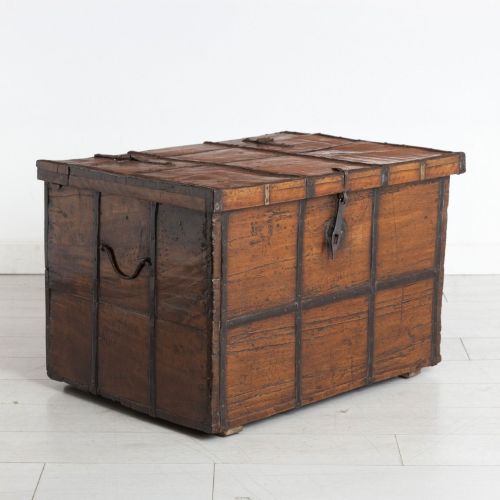
You meet chests of drawers, trunks, and secretaire cabinets originating from British colonial outposts, China trade routes, and domestic workshops. Mahogany, teak, and camphorwood dominate the forms available here, often built in two stacked halves.
The style spans Georgian beginnings through Victorian refinement, reflecting the utilitarian demands of officers and travellers. A standard chest provides deep drawers and fold-down writing surfaces tailored for campaign use.
Materials and construction
Cabinetmakers utilised dense timbers such as mahogany, teak, camphorwood, and padauk to withstand humidity and heavy transit. These woods are joined with robust construction methods and reinforced with iron or brass straps.
Recessed brass mounts and flush-fitting pull handles protect the corners and prevent snagging during loading. Chests typically separate into two distinct modular sections for easier carrying by pack animal or ship crew.
Nineteenth Century Campaign Chest Retail Price Guide 2026
Typical asking prices for nineteenth century campaign chest among the pieces listed under this phrase on Sellingantiques today, from the lower quarter to the upper quarter. They describe what is for sale here now, not the wider market.
A Scottish gentleman's sporran chest provides dedicated storage for Highland dress accessories.
What separates the finest examples
The precision of the brass work and the tightness of the corner joints distinguish superior chests from standard military issue. Higher quality pieces feature secondary timbers of equal grade, secret compartments, and integrated writing drawers.
Grain selection in the mahogany, teak, or camphorwood elevates the visual presence of a chest far beyond basic utility. The integrity of the original locking mechanisms and carrying handles also dictates desirability among collectors.
Ross & Co.·Seabrook of St.Pauls
The Nineteenth Century Campaign Chest Glossary
- Campaign chest
- A modular chest of drawers built in two or more sections with recessed hardware for ease of transport during military service.
- Camphorwood
- An aromatic timber utilised for campaign trunks and chests to deter insects and protect contents during tropical travel.
- Secretaire chest
- A cabinet featuring a pull-out drawer with a fitted writing surface and small pigeonholes for correspondence.
- Recessed handle
- A flush metal pull let into the wood so it does not project beyond the flat plane of the chest.
- China Trade
- Goods manufactured in treaty ports such as Canton for Western export, frequently utilising camphorwood and brass bindings.
Nineteenth Century Campaign Chest: Frequently Asked Questions
Why are campaign chests built in two sections?
The two-section design allowed officers to pack, load, and transport their heavy belongings more easily on ships, trains, and pack animals during long military campaigns.
Each stackable half locked securely into place with internal brackets, combining the large capacity of a stationary wardrobe with the modular portability required for frontier life.
How do I identify camphorwood?
Camphorwood is a pale to medium brown timber with a distinct, aromatic scent that often remains noticeable even after many decades of age. It was chosen for colonial and trade trunks because the natural oils repel moths and insects.
The wood frequently displays a fine grain and takes a warm polish when finished by period cabinetmakers.
Where were these chests used?
These chests accompanied British military officers, diplomats, and colonial administrators across India, China, and various overseas postings within the Empire. They served as portable desks, wardrobes, and storage vaults in tents, barracks, and cabins.
Their robust brass hardware and reinforced corners protected personal papers and uniforms from moisture and rough handling.
How do I care for a campaign chest?
Maintain the timber by keeping the piece away from direct heat sources and sudden humidity changes that might cause the solid wood to split. Regular dusting with a dry cloth and occasional application of appropriate wax will preserve the finish.
Avoid polishing the brass too aggressively to retain the historic patina developed over the nineteenth century.