


Warm Brown Campaign Drawers
Warm brown campaign drawers are timber chests of drawers built for travel, prized for their rich woods and robust brass hardware.
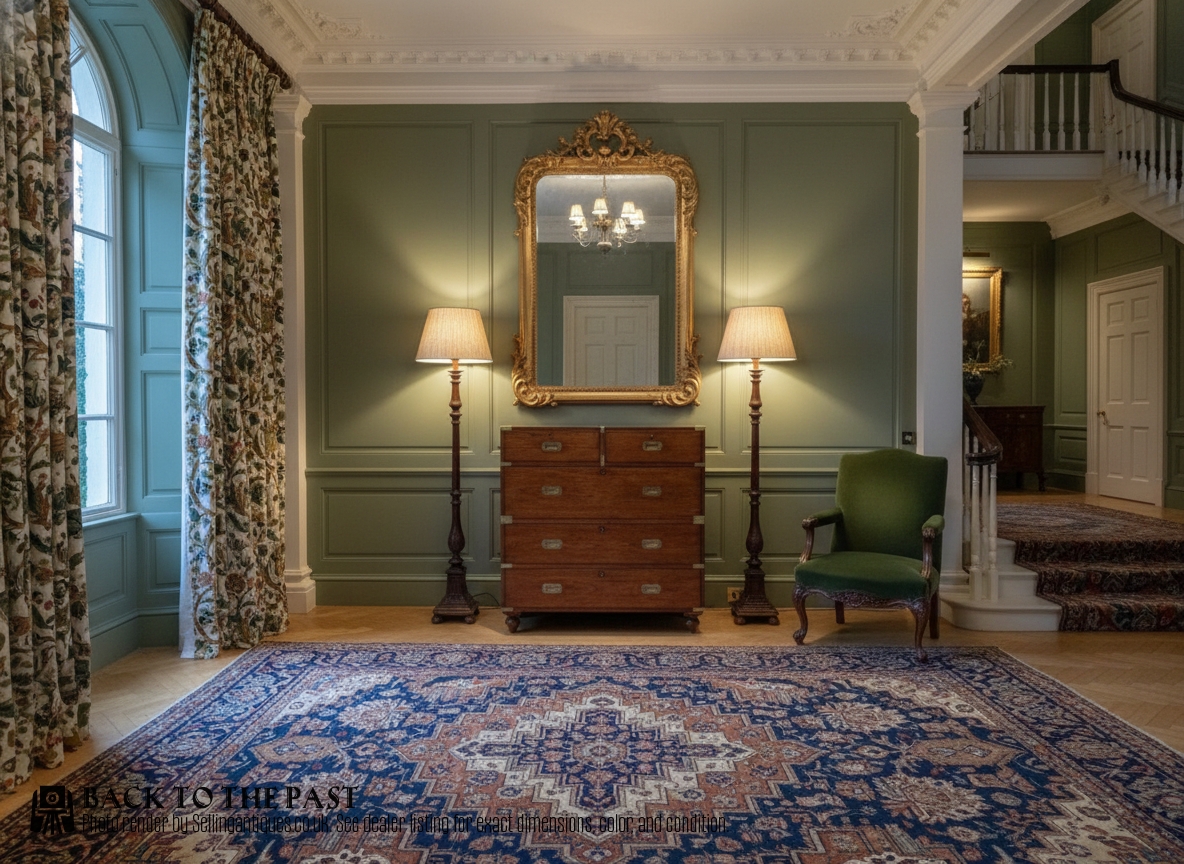
Warm Brown Campaign Drawers
Warm brown campaign drawers represent portable furniture built for officers on the move during the nineteenth and early twentieth centuries. These pieces typically take the form of chests of drawers, divided into stacked sections for ease of transport. Buyers searching this phrase encounter sturdy timber forms designed to withstand harsh journeys.
The pieces listed on this page span several decades from the Regency era through to the nineteen-twenties, incorporating Victorian military and British Colonial styles. Chests appear in both single and two-part formats, alongside tallboy configurations and specialised secretaire variants. Camphor wood, teak and mahogany dominate the selection, bringing deep brown tones to each piece.
Maritime and export influences also emerge among the items, including Chinese export trade pieces and items originating from ships. Buyers find robust woods combined with practical proportions intended for field or cabin use. This selection provides an authentic look into utilitarian travel furniture built with enduring structural integrity.
How they were made
Cabinetmakers utilised dense timbers such as camphor wood, teak and mahogany to construct these travel chests. These woods resist warping and provide the deep brown colour that defines the style. Pitch pine and ebony also appear in specific iterations, paired with iron elements where structural strength is paramount.
Makers integrated brass reinforcement to protect corners and edges from the knocks of transit. Recessed brass handles allow the drawers to sit flush against the facade, preventing snags during loading. Dovetail joinery secures the drawers, while the division into separate modular sections permits manageable lifting.
The listings show periods spanning from the Regency era through to nineteen-twenty, featuring materials like brass, camphor wood, mahogany and teak.
What varies in quality
The calibre of a piece rests upon the selection of timber and the precision of the joinery. Superior examples display tightly figured grain in woods like camphor and mahogany, paired with heavy, well-cast brass mounts. Lesser pieces show simpler construction with plain secondary timbers and lighter hardware.
Ingenuity in internal fittings distinguishes the finer items from standard utilitarian chests. Secretaire drawers featuring fitted writing slopes and small pigeonholes demand greater skill from the maker. The integrity of the original modular division and the crispness of the recessed brasswork further separate ordinary examples from exceptional ones.
The Warm Brown Campaign Drawers Glossary
- Secretaire chest
- A chest of drawers containing a fitted writing drawer with a drop-front or sliding surface. This internal compartment includes small drawers and pigeonholes for correspondence.
- Campaign hardware
- Brass corners, straps and flush-fitting handles designed to protect the furniture during travel and prevent protruding parts from catching. These elements define the visual identity of the style.
- Two-part chest
- A cabinet constructed as two distinct rectangular boxes that stack one upon the other. This configuration reduces weight and bulk for carriage on campaign.
- Chinese Export
- Furniture produced in China during the nineteenth century specifically for Western markets. These pieces frequently utilise camphor wood and traditional European forms.
Warm Brown Campaign Drawers: Frequently Asked Questions
Why are campaign drawers made in sections?
These chests divide into separate stacked boxes so officers could transport their belongings more easily on military campaigns or sea voyages.
Splitting the weight into manageable portions made loading onto pack animals or ships much simpler.
What wood is most common for campaign furniture?
Camphor wood, teak and mahogany form the primary materials found in these pieces. Camphor wood offered the added benefit of natural insect repellent for uniforms.
These dense timbers provided the durability required for rough travel conditions.
How do I distinguish a secretaire chest?
A secretaire chest incorporates a specialised top drawer that folds down or pulls out to reveal a writing surface. Inside, you find small compartments and tiny drawers for letters and ink.
This clever multi-functional design saved space in cramped campaign tents.
Where were these pieces originally used?
British military officers, colonial administrators and sailors used these chests during postings across the empire. They served inside campaign tents, colonial outposts and ship cabins.
Their robust construction protected personal items from dust, moisture and rough handling.
How should I care for camphor wood furniture?
Maintain the wood by applying a quality natural wax rather than modern silicone polishes. Keep the furniture away from direct heat sources and harsh sunlight to prevent the timber from drying out.
Regular gentle dusting preserves the natural grain and deep brown colour.