



Brass Escutcheon Box
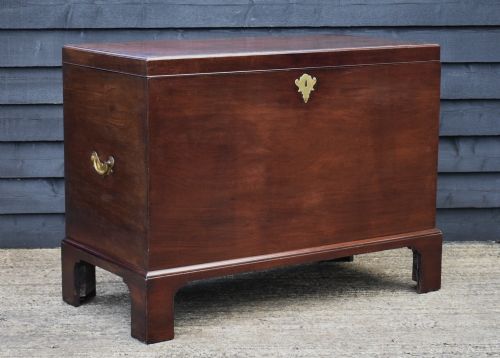
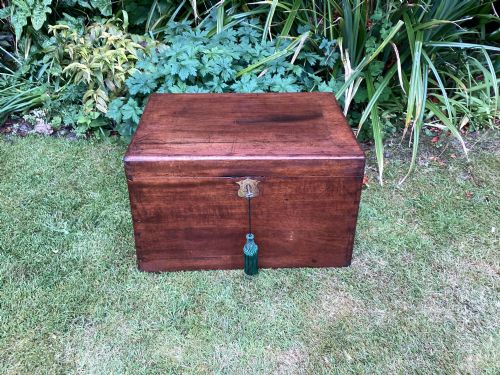
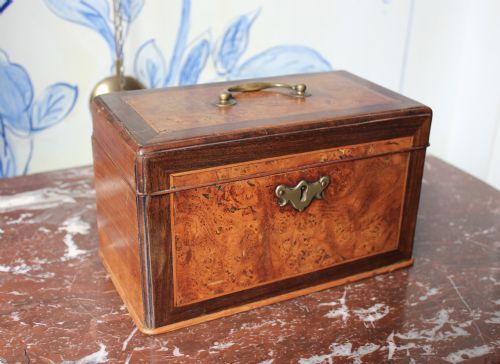
A brass escutcheon box is a fitted tabletop receptacle featuring metal keyhole surrounds, offering a practical place to store valuables.

What these pieces are
A brass escutcheon box takes several forms across the inventory, appearing most frequently as tea caddies, writing boxes, work boxes, and tabletop cabinets. These small receptacles were designed to sit on tables and desks to contain personal papers, sewing gear, tea leaves, or jewellery.
The pieces on this page span the Regency and Victorian periods, with dates extending from around eighteen thirty into the nineteenth century. Buyers will predominantly encounter rosewood and mahogany constructions that feature decorative brass keyhole plates.
Forms range from simple deed boxes to fitted work boxes containing internal compartments. Each version reflects the domestic storage needs of nineteenth-century households.
How they were made
Cabinet makers constructed these boxes using dense timbers such as mahogany and rosewood, frequently incorporating boxwood banding for surface contrast. The timber panels were joined to form rigid carcases suitable for daily desk or tabletop use.
Metalwork played a defining role in the construction, utilising brass for cartouches and escutcheons around the keyholes. These metallic elements were flush-fitted into the wooden surfaces to secure and adorn the lids and lock areas.
Retail Price Guide 2026
Typical UK retail prices for brass escutcheon box, calculated from the Sellingantiques database of over a million retail prices indexed since 2003. This retail price guide relies exclusively on Sellingantiques data; no external sources or auction records are used, so the figures do not describe the wider market.
Some nineteenth-century work boxes hide miniature compartments beneath lift-out trays where owners secreted private letters and tiny thimbles.
What varies in quality
Quality in these boxes is determined by the selection of figured timber veneers and the precision of the inlay work. Finer examples display carefully matched grain patterns across the mahogany or rosewood surfaces and crisp boxwood banding.
The execution of the brass mounts and escutcheons further separates standard boxes from superior pieces. Well-made specimens feature cleanly fitted metal hardware that integrates smoothly with the surrounding wood.
The Brass Escutcheon Box Glossary
- Escutcheon
- A flat plate of brass surrounding a keyhole that protects the surrounding wood from wear. This metal surround serves both a protective and decorative function on the box lid or front.
- Tea caddy
- A small lidded box designed to store tea leaves safely away from moisture. These containers often featured internal compartments and secure locks.
- Writing box
- A portable desk fitted with a sloped writing surface and internal storage for paper and ink. They were essential personal items during the Regency and Victorian periods.
- Cartouche
- An ornamental panel, often made of brass, set into the lid of a box for initials or crests. It provides a focal point on the polished wooden surface.
Frequently Asked Questions
What is a brass escutcheon box used for?
These boxes served various domestic storage needs, holding items such as letters, sewing implements, tea leaves, and jewellery on tabletops.
Their secure locking mechanisms made them suitable for keeping private possessions safe in nineteenth-century homes.
How do I date a rosewood box?
Dating relies on observing the timber choice, construction methods, and hardware styles associated with specific eras like the Regency or Victorian period.
Details such as brass escutcheon shapes and boxwood banding help narrow down the decade of manufacture.
Are these boxes made of solid wood?
Cabinet makers typically applied fine veneers of mahogany or rosewood over secondary structural timbers to create stable box carcases.
This technique prevented warping while presenting a highly decorative exterior grain to the room.
What is the difference between a work box and a writing box?
A work box contains shallow internal trays and compartments specifically arranged for sewing and needlework accessories.
A writing box incorporates a hinged sloping surface designed to support paper while writing letters.