




Brown Wood Needlework Box
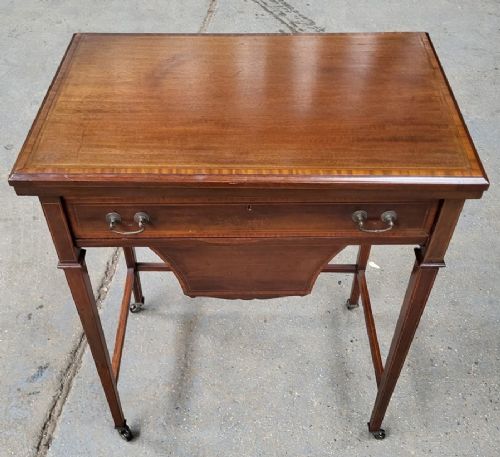
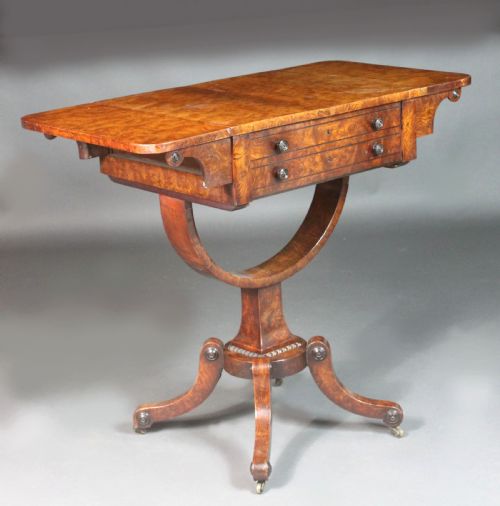
A brown wood needlework box provides a dedicated compartment for sewing tools and materials, combining practical storage with elegant domestic furniture.
Brown Wood Needlework Box
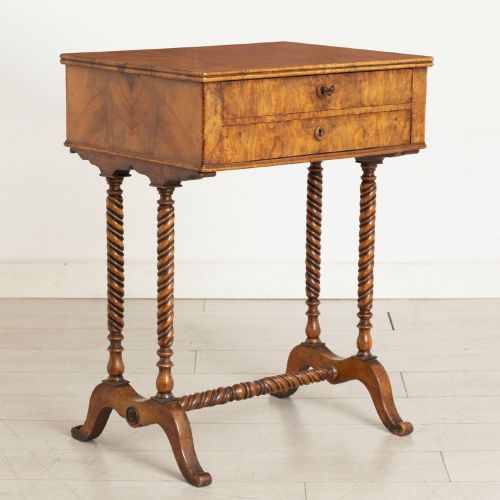
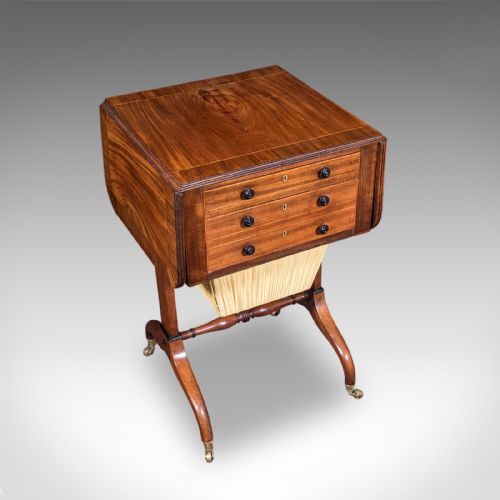
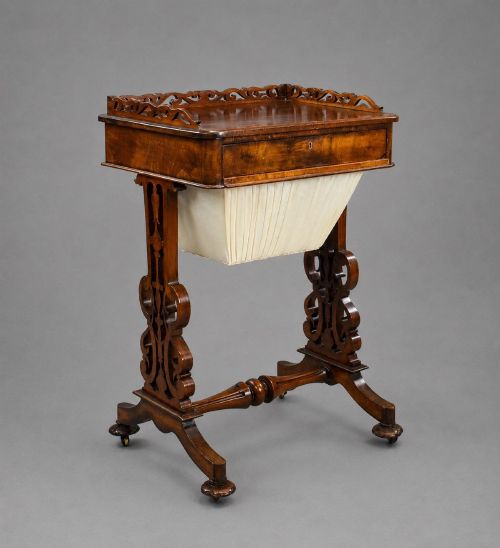
When you search for a brown wood needlework box, you encounter pieces designed to hold threads, needles and cloth for domestic needlecraft. These objects take the form of sewing tables, work tables, occasional tables and side tables spanning periods from the Regency era through to the Edwardian period.
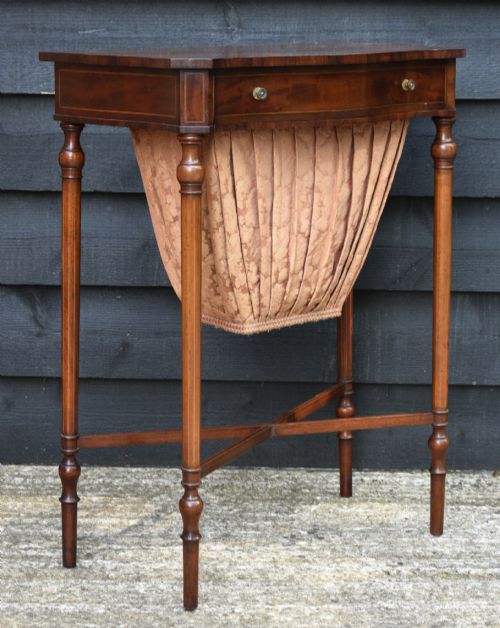
The most common formats on this page are freestanding tables featuring hinged lids, internal compartments and sometimes suspended fabric bags for wool and work in progress. These items originated as essential pieces for ladies in period parlours and drawing rooms.
The woods utilised include mahogany, walnut, burr walnut, burr ash and yew wood, often enhanced with contrasting stringing and cross-banding. Such pieces reflect the craftsmanship of the nineteenth and early twentieth centuries, serving both functional and decorative roles in the home.
Materials and construction
Cabinet makers utilised dense timbers such as mahogany and walnut as the primary structural foundations for these boxes and tables. Selected sections featuring burr walnut and burr ash provided highly figured grain patterns for exterior surfaces.
Inlaid decoration incorporated lighter veneers like satinwood alongside darker banding to create geometric borders and panels. Brass hardware, including hinges, escutcheons and small castors, completed the assembly of functional folding and drop-leaf mechanisms.
Form variations recorded here include dedicated sewing tables, side tables, occasional tables and versatile games and writing combinations.
Assessing quality in construction and detail
Joinery execution defines the durability and refinement of the item, seen in tight dovetail joints on drawers and smooth operation of drop leaves or folding tops. Finer pieces incorporate delicate inlay work and portrait decoration that remain crisp and secure within the surrounding wood.
Waring & Gillow
The Brown Wood Needlework Box Glossary
- Burr walnut
- A prized timber harvested from the burl growths of walnut trees, yielding complex swirling grain patterns. Cabinet makers employed these veneers on prominent exterior surfaces to create rich visual depth.
- Cross-banding
- A decorative border technique where strips of veneer are laid perpendicular to the grain of the central panel. This frames the top surface of a table or box with a neat contrasting margin.
- Drop leaf
- A hinged flap on the side of a table that folds down when not in use and is supported by swing brackets. It allows the surface area to expand for active sewing or writing tasks.
- Serpentine
- A curved contour that bends inward in the centre and outward at the ends, forming an undulating line. This shape appears on advanced Edwardian and Victorian furniture designs to soften rigid rectangular forms.
- Trumpet work table
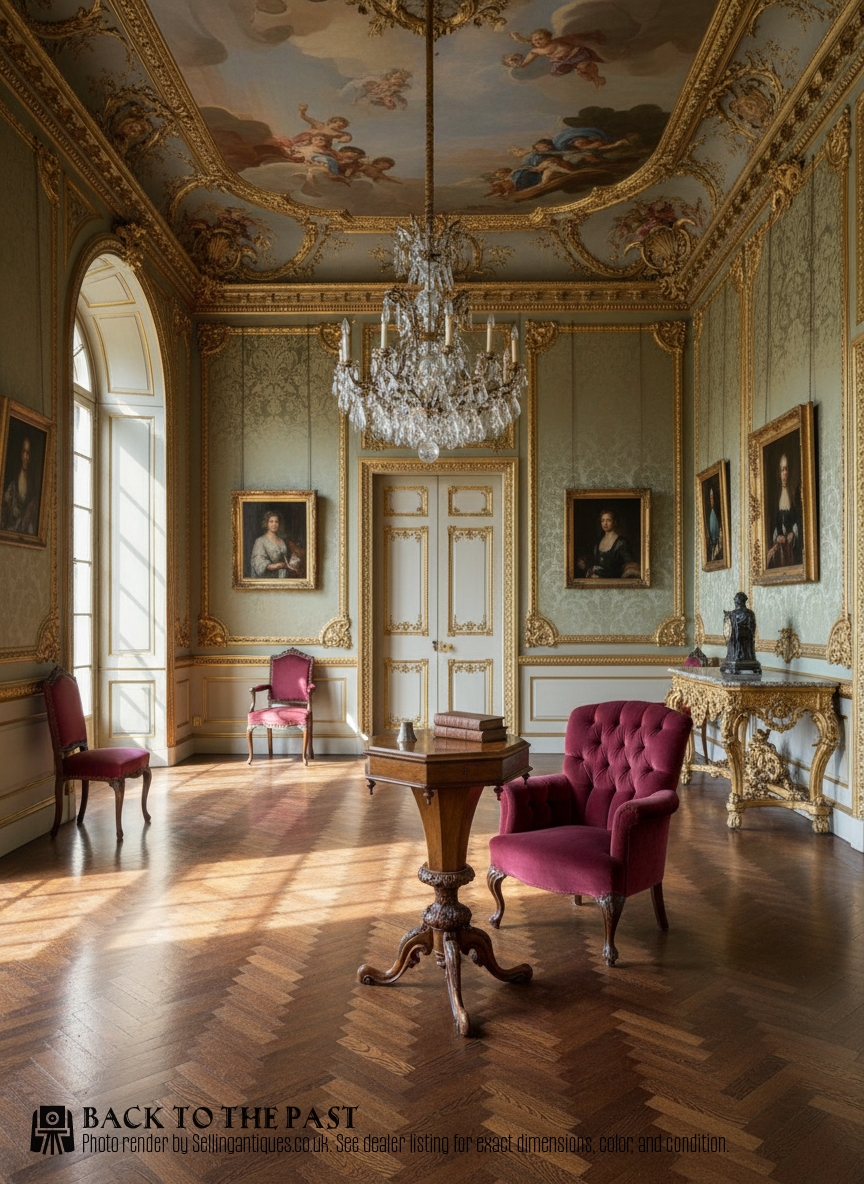
- A form characterised by an octagonal or flared body resting on a pillar and carved base, resembling the bell of a musical instrument. The interior typically conceals a fitted compartment for sewing implements.
Brown Wood Needlework Box: Frequently Asked Questions
What is inside a brown wood needlework box?
These pieces generally contain fitted wooden trays, divided compartments and small lidded sections designed to organise spools, pins and instruments.
Many examples also include a suspended fabric bag underneath to catch scraps of wool and hold larger pieces of cloth.
How do I date a brown wood needlework box?
Dating relies on identifying stylistic markers, timber choices and construction methods associated with periods such as Regency, Victorian and Edwardian.
Heavier proportions and rosewood or mahogany indicate earlier nineteenth-century origins, while lighter inlaid Edwardian pieces point towards the turn of the twentieth century.
Where were these tables placed in a home?
Victorian and Regency households positioned these work tables beside seating areas in drawing rooms and parlours where ladies gathered for handcrafts.
Their dual function as side or occasional tables allowed them to hold writing materials or small decorative objects when sewing was finished.
How do I care for wooden sewing tables?
Maintenance involves keeping the timber away from direct heat sources and strong sunlight to prevent the veneers from drying and cracking.
Regular dusting with a dry cloth and occasional application of appropriate furniture wax preserves the finish of mahogany and walnut surfaces.