
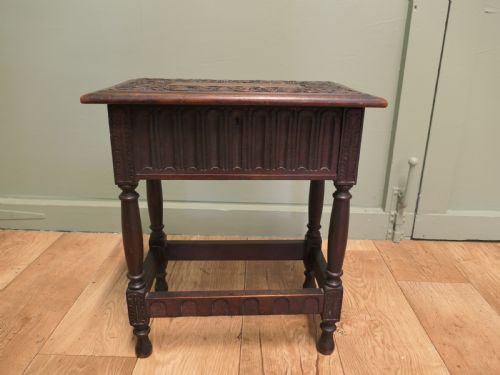
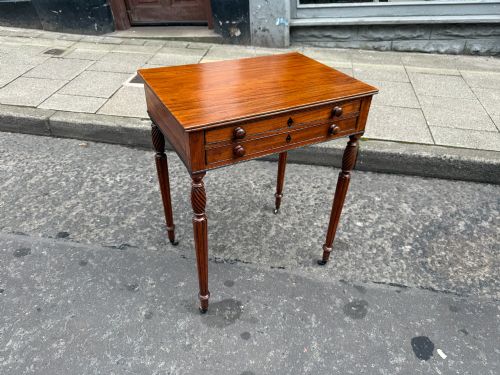
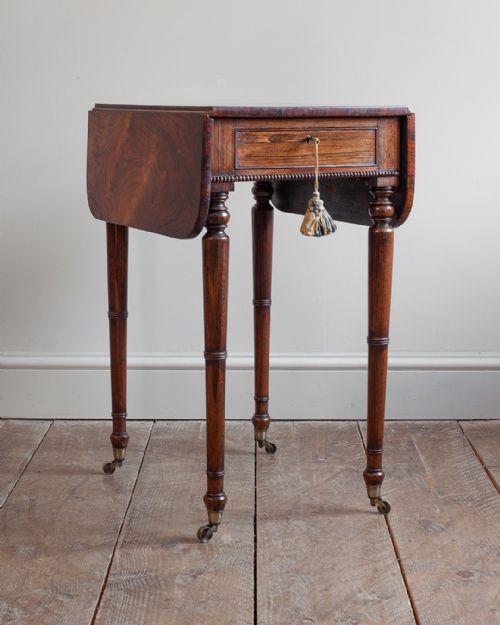
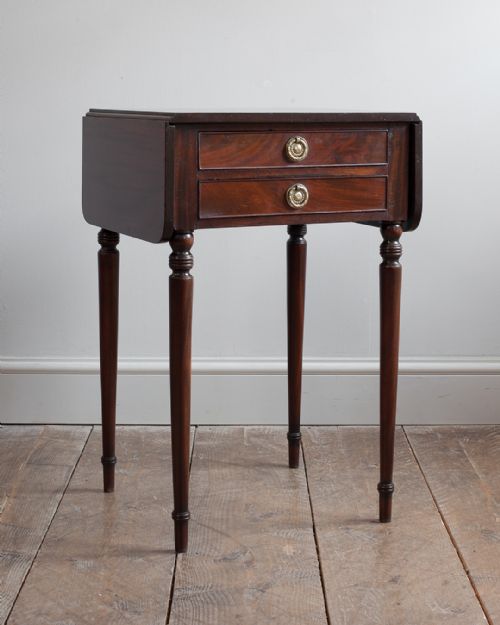
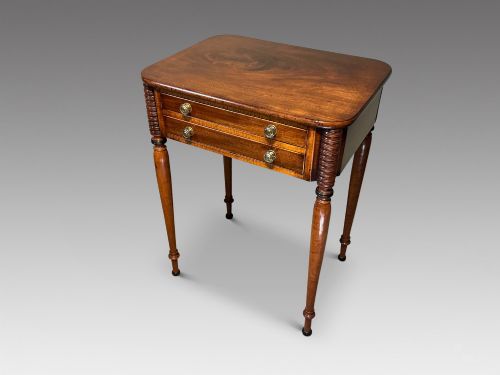

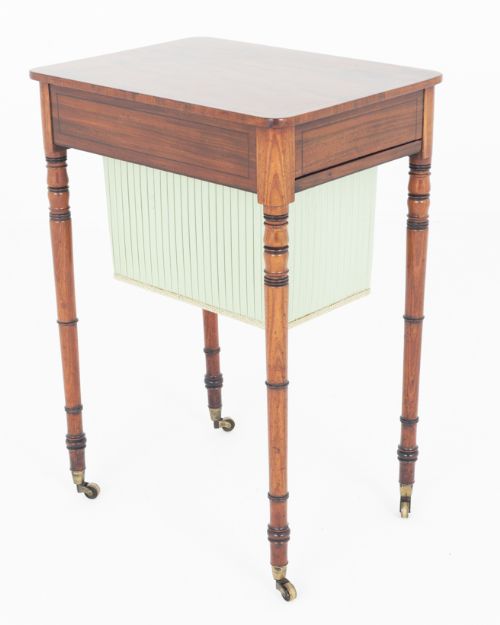


Turned Leg Sewing Table
These turned leg sewing table examples combine practical compartments with elegant supports, making them a compact centrepiece for any traditional sitting room.
Turned Leg Sewing Table
A turned leg sewing table serves as a functional workspace and a decorative side piece, originating primarily across the Georgian, Regency and Victorian eras. These pieces typically incorporate storage compartments or drop leaves designed originally for needlework and small domestic tasks.
Most examples found on this page span the nineteenth century, featuring timber construction with characteristic upright supports. Buyers encounter variations including pembroke formats, games surfaces and compact occasional tables resting on shaped wooden legs.
Materials and construction
Cabinet makers utilised dense hardwoods such as mahogany, rosewood and walnut, frequently selecting burr veneers for figured grain patterns on top surfaces and drawer fronts. Secondary timbers like maple appear alongside decorative additions including boxwood inlay, bone details and brass fittings.
Structural integrity relies on traditional joinery methods combined with turned wooden legs that provide both stability and slender visual proportions. Drop-leaf mechanisms and internal fabric work bags demonstrate the clever space-saving engineering typical of the period.
Listings feature mahogany, rosewood and walnut constructions spanning Georgian, Regency and Victorian periods.
Distinctions in craftsmanship
Superior execution shows in the crispness of the turning on the legs and the careful selection of timber veneers that match across surfaces. Higher-end pieces integrate finer secondary details like intricate boxwood stringing or specialised internal compartments for sewing tools.
Construction solidity separates standard production from exceptional examples, particularly in the smooth operation of drawers and drop-leaf hinges. The integration of quality brass hardware and well-figured mahogany or rosewood elevates the overall presence of the table.
Heal & Son
The Turned Leg Sewing Table Glossary
- Pembroke table
- A small table with hinged drop leaves on either side designed to extend the top surface when needed. These versatile items often feature a single drawer or dummy drawer fronts.
- Work table
- A dedicated piece of furniture built to house sewing equipment, threads and personal crafts. They frequently incorporate an under-slung fabric bag or deep wooden box compartment.
- Drop-leaf
- A hinged flap on the side of a table that lowers or lifts to alter the footprint of the furniture. This mechanism allows the table to sit compactly against a wall.
- Burr walnut
- Timber taken from the gnarled growth of a walnut tree, producing highly decorative and swirling grain patterns. Cabinet makers prized this material for veneering prominent surfaces.
- Inlay
- A decorative technique where contrasting materials such as boxwood or bone are inserted into recessed cavities on the wood surface. This creates geometric patterns or delicate lines.
Turned Leg Sewing Table: Frequently Asked Questions
What is a turned leg sewing table used for today?
Modern homes utilise these versatile pieces as lamp tables, bedside stands or compact desks in sitting rooms and hallways.
Their narrow proportions and useful drawer storage make them practical for contemporary spaces while retaining period character.
How do I identify a Regency sewing table?
Regency examples generally feature classical proportions, dark timbers like rosewood or mahogany, and precise brass or inlay decorations.
Turned pillar legs and bolder architectural influences distinguish this period from later Victorian iterations.
Are drop-leaf work tables sturdy?
The drop-leaf mechanism relies on hinged wooden brackets that swing out to support the extended flaps securely during daily use.
When properly adjusted, these leaves provide a stable surface comparable to fixed-top tables.
What woods are most common in these tables?
Mahogany forms the majority of surviving pieces, complemented by rich rosewood and figured burr walnut veneers.
Occasional examples incorporate exotic accents like satinwood or contrasting stringing lines.