


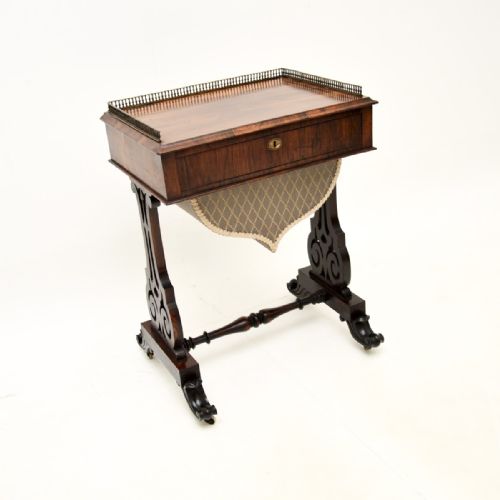
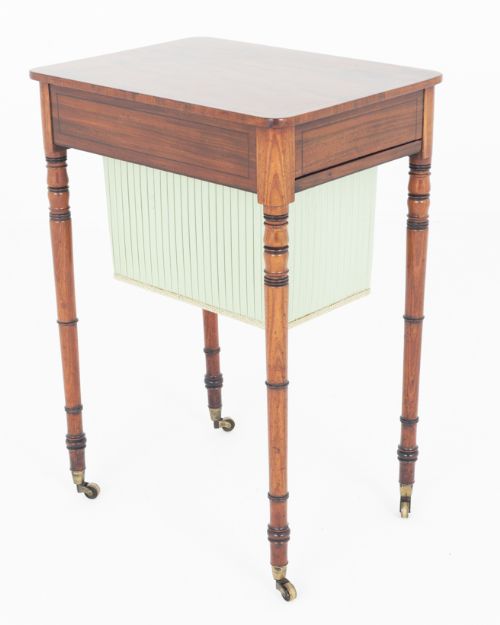
Work Table with Basket
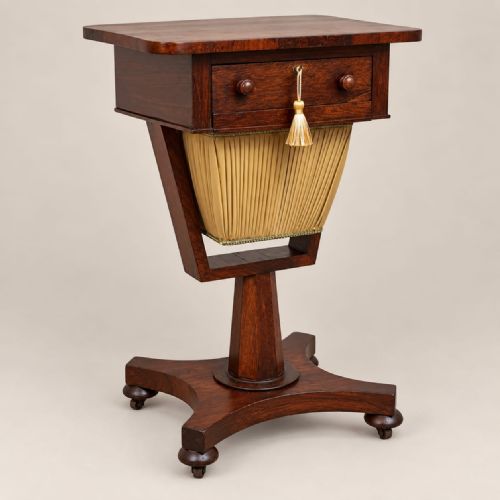
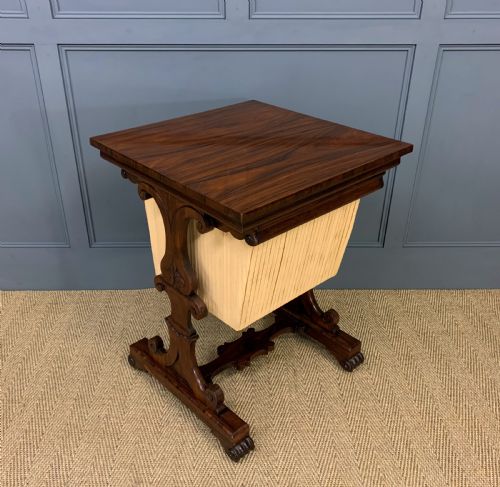
A work table with basket offers a clever place for needlework, combining a practical sewing companion with an elegant occasional table.
Work Table with Basket
When you search for a work table with basket, you encounter versatile pieces designed for needlework, games, and occasional use in the home. These items date primarily from the nineteenth century, encompassing Georgian, Regency, William IV, Victorian, and Edwardian periods.
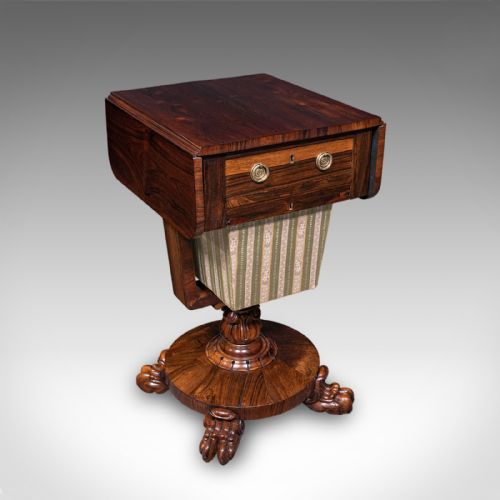
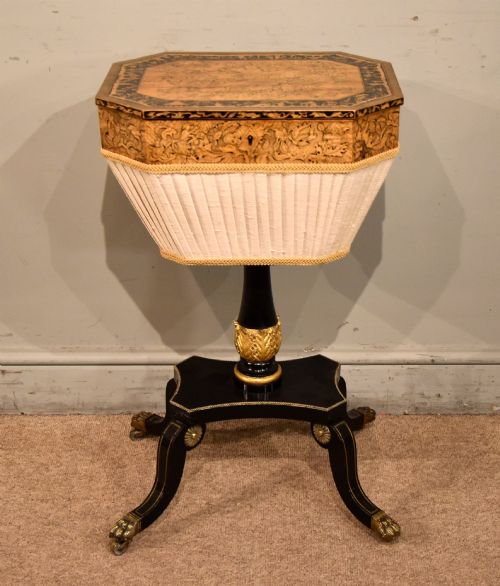
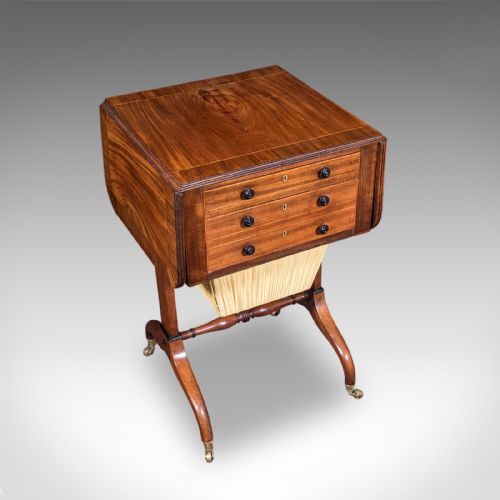
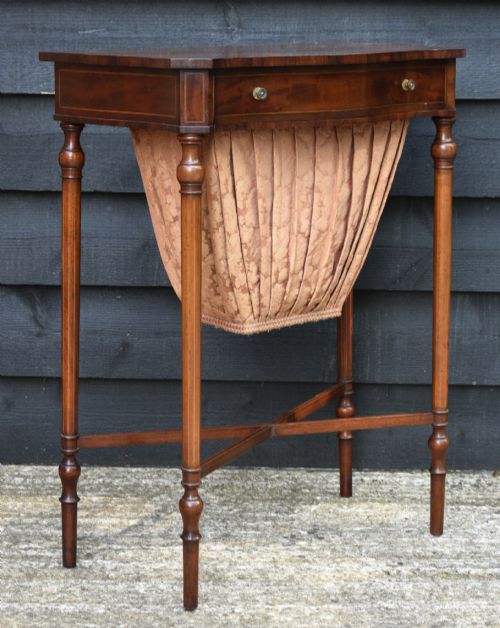
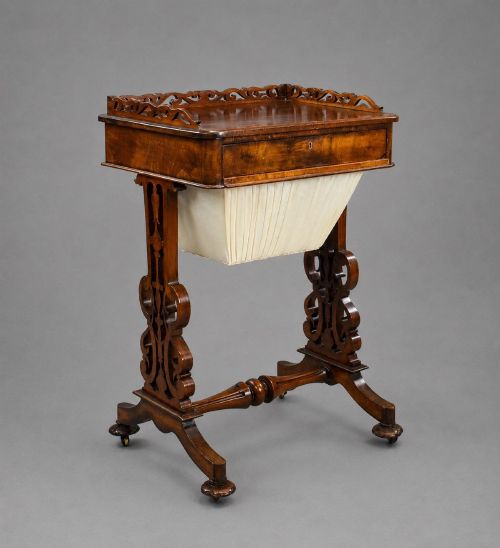
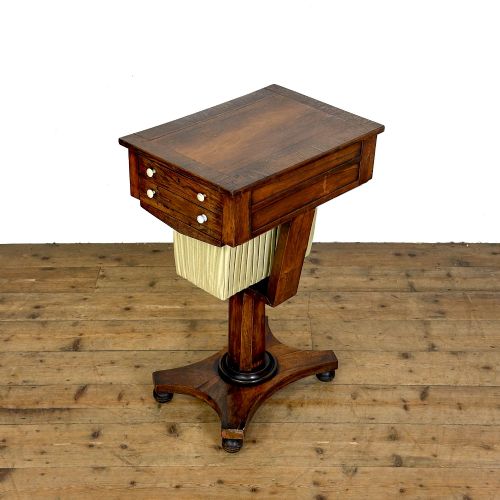
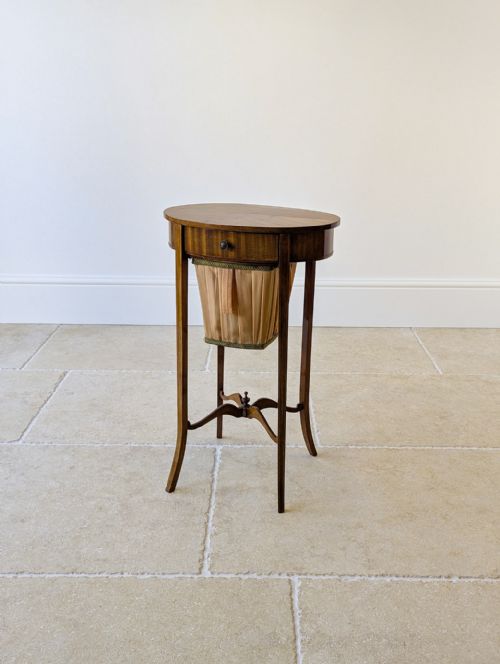
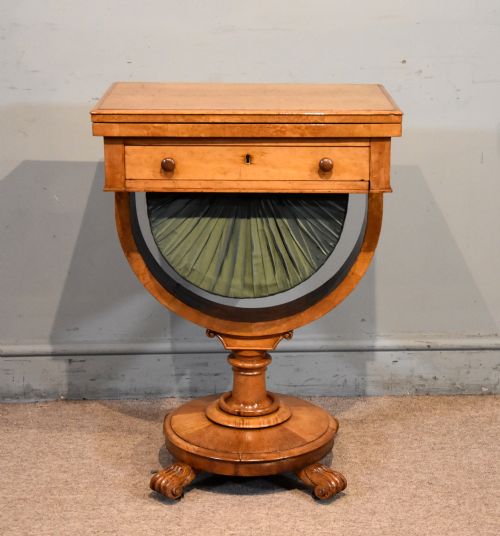
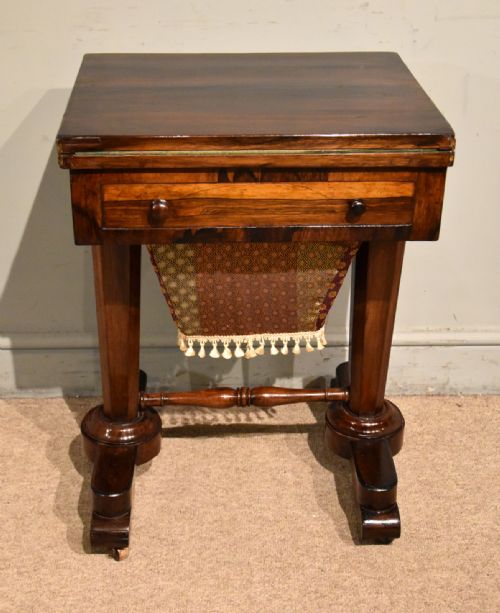
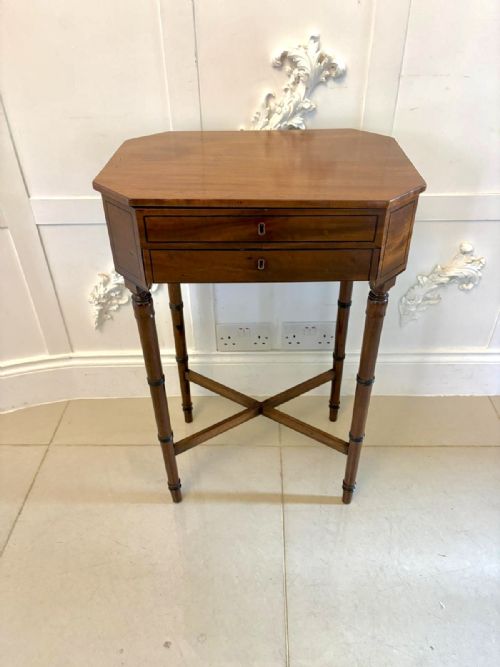
The pieces on this page appear in forms such as sewing tables, games tables, lamp tables, and side tables. They frequently feature timber frames paired with drop leaves, fold-over tops, and suspended fabric or silk receptacles underneath.
Mahogany and rosewood dominate the listings, alongside burr walnut, walnut, and satinwood. Many examples integrate multiple functions, combining a writing surface or chess board with enclosed storage and a hanging basket for threads and fabrics.
Materials and construction
Cabinet makers utilised dense hardwoods such as mahogany and rosewood for the structural frames, legs, and table tops. Burr walnut and satinwood appear as decorative veneers, providing rich grain patterns and contrasting borders.
Interiors and hanging components incorporate textiles including fabric and silk to form the drop-in or suspended baskets. Brass fittings often secure castors, hinges, and drawer pulls, ensuring smooth movement for drop-leaf mechanisms and sliding compartments.
Object forms include occasional tables, sewing tables, games tables, work tables, and side tables attributed to Georgian, Regency, and Victorian periods.
Assessing quality and craftsmanship
The distinction between standard examples and finer pieces lies in the choice of timber and the precision of the cabinetwork. Richly figured rosewood and burr walnut veneers, combined with crisp inlay work, separate superior constructions from plain mahogany versions.
The integration of the basket mechanism reveals the maker's attention to detail, whether through a fitted silk bag, a removable wooden frame, or a stable drop-leaf hinge system.
The Work Table with Basket Glossary
- Drop leaf
- A table top with hinged flaps on one or both sides that can be raised to increase surface area or lowered when space is limited. This mechanism allows the table to adapt to smaller rooms.
- Sewing table
- A specialised small table designed for needlework, featuring compartments, drawers, and an attached basket for storing fabrics and threads. These pieces served a central role in nineteenth-century domestic parlours.
- Games table
- A multipurpose table with a folding or reversible top concealing a board for chess, cards, or backgammon. They often double as work tables or lamp tables.
- Veneer
- A thin layer of finely figured wood applied over a secondary timber base to create a decorative surface. This technique highlights rich grain patterns like burr walnut or satinwood.
- Inlay
- A decorative technique where pieces of contrasting wood or brass are set into the surface of a furniture piece to form patterns. It adds visual refinement to table tops and friezes.
Work Table with Basket: Frequently Asked Questions
What is a work table with basket used for?
These tables served primarily as functional companions for sewing and needlework, holding fabrics, threads, and tools within the suspended basket. They also functioned as convenient lamp tables, occasional side tables, or games tables for cards and chess.
The combination of a flat top surface and concealed storage made them adaptable for various rooms in the English country house, accommodating both leisure activities and practical domestic tasks.
How do I identify the period of my table?
Dating relies on observing the timber choices, hardware, and stylistic details present in the construction. Georgian and Regency pieces often showcase clean mahogany lines, while William IV and Victorian examples favour heavier proportions in rosewood and burr walnut.
Edwardian items frequently display lighter satinwood finishes and delicate inlay work. Comparing the leg turnings and edge mouldings against established stylistic eras helps narrow down the decade of manufacture.
Are the baskets original to the tables?
The hanging baskets on these tables endured frequent handling and wear over the centuries, meaning many fabric or silk components have been replaced. Surviving original baskets retain period-appropriate textiles and hand-stitched linings.
Replacements are standard in restoration work and are chosen to match the historical aesthetic of the timber frame. Inspecting the mounting hardware reveals whether the suspension mechanism has been altered.
How do I care for rosewood and mahogany surfaces?
Maintaining these antique timbers requires keeping them away from direct sunlight and extreme humidity fluctuations to prevent veneer cracking or fading. Regular dusting with a soft, dry cloth preserves the polished finish.
Occasional application of appropriate beeswax or furniture polish nourishes the wood grain without building up a sticky residue. Avoid placing hot or wet items directly on the antique polish.