


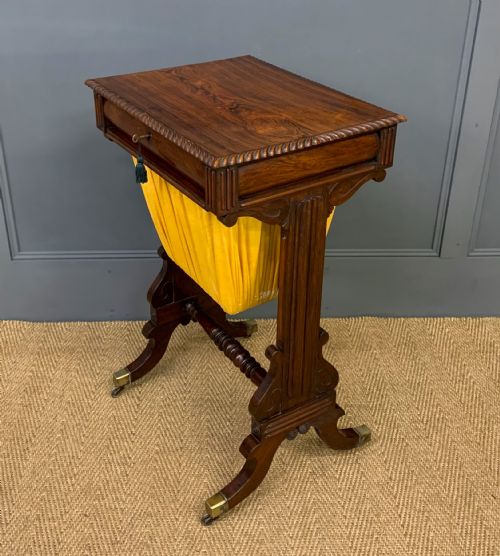


Regency Pouch Table
These regency pouch table pieces combine elegant small-scale furniture with practical storage for needlework and sewing.
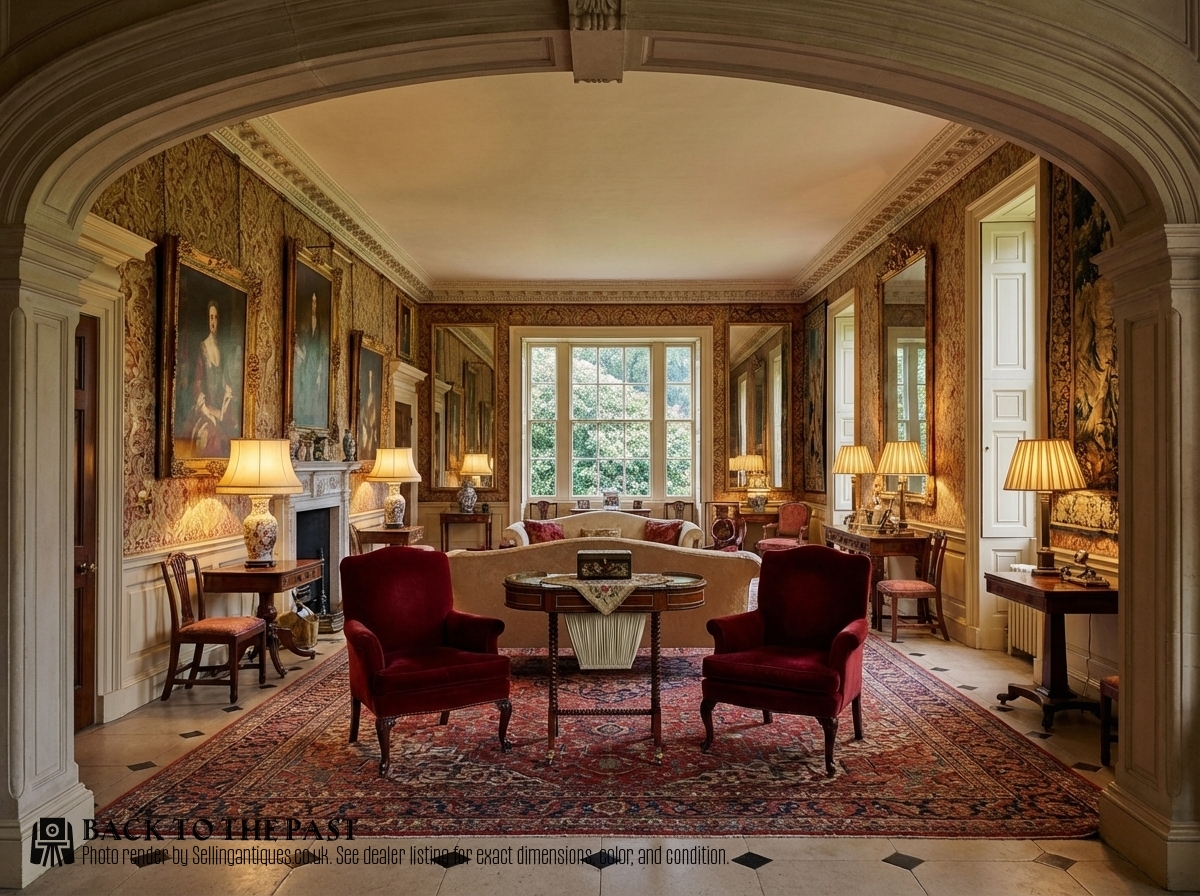
Regency Pouch Table
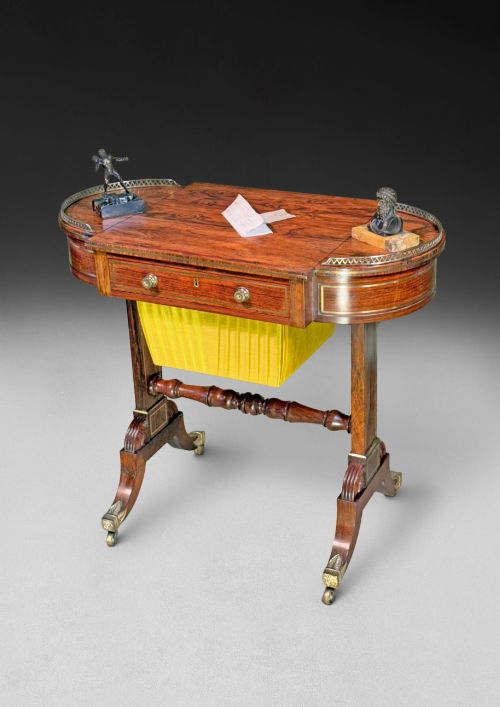
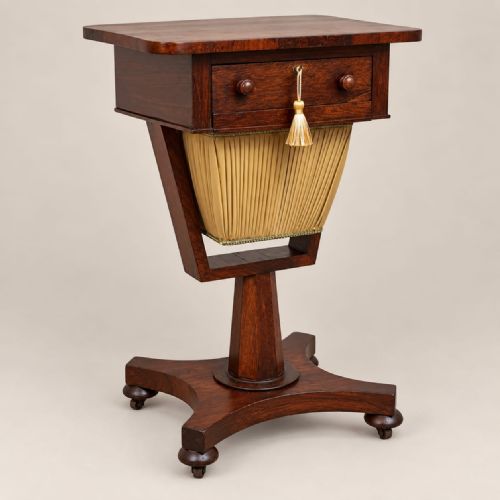
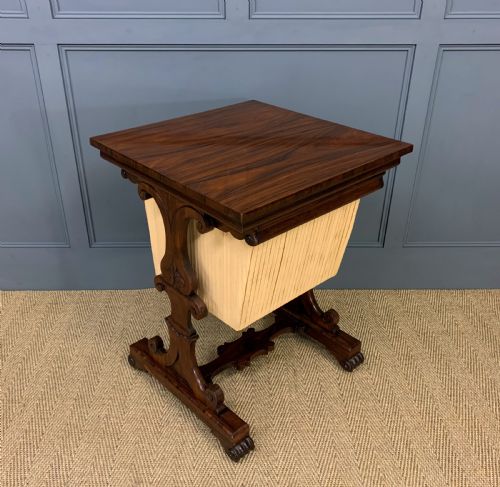
A regency pouch table is a versatile piece of small furniture designed primarily for sewing, needlework, and ladies' domestic tasks. These tables generally feature a suspended fabric or silk pouch beneath the top to hold threads, fabrics, and ongoing projects.
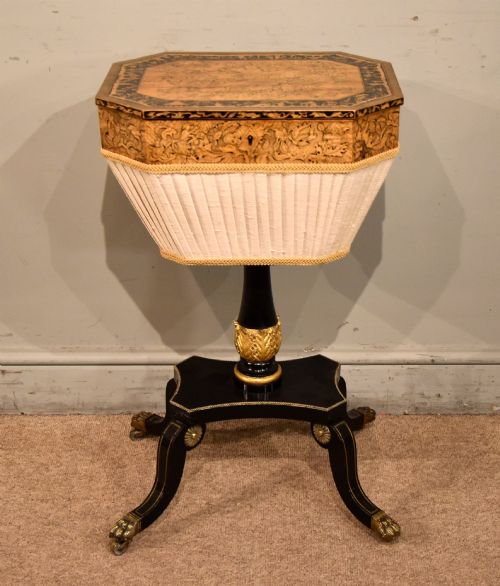
The pieces on this page span the Regency, William IV, and Georgian periods, with occasional later nineteenth-century examples. Mahogany and rosewood are the dominant timbers, often complemented by satinwood, pollard oak, and ebonised wood.
Most examples function as work tables, sewing tables, or occasional side tables, often supported by pedestals, lyre ends, or column legs. They offer a compact footprint that suits modern living spaces just as well as traditional rooms.
Materials and Construction
Cabinet makers utilised dense tropical hardwoods like mahogany and rosewood for the structural frames and table tops, frequently selecting veneers to display rich grain patterns. Boxwood stringing, brass inlay, and specimen wood veneers add decorative contrast to the surfaces.
The hanging pouches beneath the tables incorporate textiles such as silk and fabric, gathered to create soft storage compartments. Brass details appear in the form of castors, ring handles, and inlaid stringing lines that accent the mahogany and rosewood frames.
Craftsmen occasionally hid tiny compartments inside sewing tables to keep thimbles, pins, and secret notes safe from curious eyes.
Assessing Quality and Craftsmanship
Quality in these tables rests on the crispness of the timber selection and the precision of any inlay work. Finer examples display carefully matched wood grains, delicate brass stringing, and well-executed penwork details.
The structural stability of the pedestal base or legs dictates everyday durability. Superior pieces maintain tight joints and smooth mechanical action in their drawers and drop flaps, using high-grade secondary woods throughout the interior construction.
John MaClean
The Regency Pouch Table Glossary
- Work table
- A small functional table designed for sewing and needlework, typically featuring drawers and an attached fabric bag. These pieces were essential furnishings for ladies in the nineteenth century.
- Lyre-ended
- A furniture support shaped in the form of a classical lyre instrument. This design feature is frequently found on the pedestals of Regency tables.
- Penwork
- A decorative technique using ink applied to wood surfaces to create intricate geometric or pictorial motifs. It appears on select Regency sewing tables.
- Specimen wood
- Small pieces of various decorative timbers arranged in geometric patterns or mosaics. Cabinet makers utilised these veneers to showcase the diverse colours of exotic woods.
- Drop flap
- A hinged leaf on the side of a table that can be raised to extend the surface area or lowered when space is limited.
Regency Pouch Table: Frequently Asked Questions
What is a regency pouch table used for?
These tables were originally designed for ladies to store sewing materials, threads, and needlework projects within the suspended fabric pouch. The top surface provided a stable area for writing or close handwork.
Today, they function well as compact side tables or bedside storage pieces in contemporary homes.
What woods are typical for these tables?
Mahogany and rosewood are the most common timbers found in these listings, offering deep natural colour and strong grain patterns. Cabinet makers also utilised satinwood, pollard oak, and ebonised wood for variety.
Inlays of boxwood and brass frequently accent these primary woods.
How do I date a sewing table?
Dating relies on observing the combination of timber, leg style, and decorative motifs. Regency and Georgian examples often feature pedestal bases, brass stringing, or lyre supports.
Later Victorian pieces introduce heavier proportions while retaining the core form of the work table.
Are the fabric pouches original?
The hanging pouches on these tables are frequently replaced restorations due to the delicate nature of silk and antique fabrics. Examining the mounting points and interior framing reveals how the textile component integrates with the wooden structure.
Replacements follow traditional gathering styles to match the historical period.
Can I use a work table daily?
These tables adapt readily to modern rooms as lamp tables or occasional display surfaces next to seating. Their narrow proportions and built-in storage make them practical for small spaces.
Care should be taken with polished wood surfaces and delicate textile pouches during routine use.