


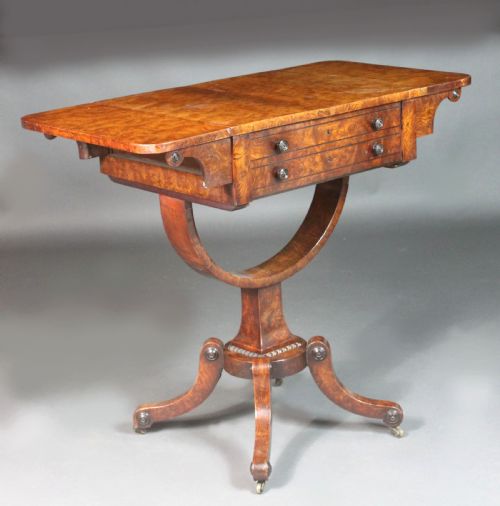


English Regency Work Table
These english regency work table pieces are clever multi-purpose furniture designed for ladies' needlework and writing, offering elegant storage alongside timeless decorative appeal.
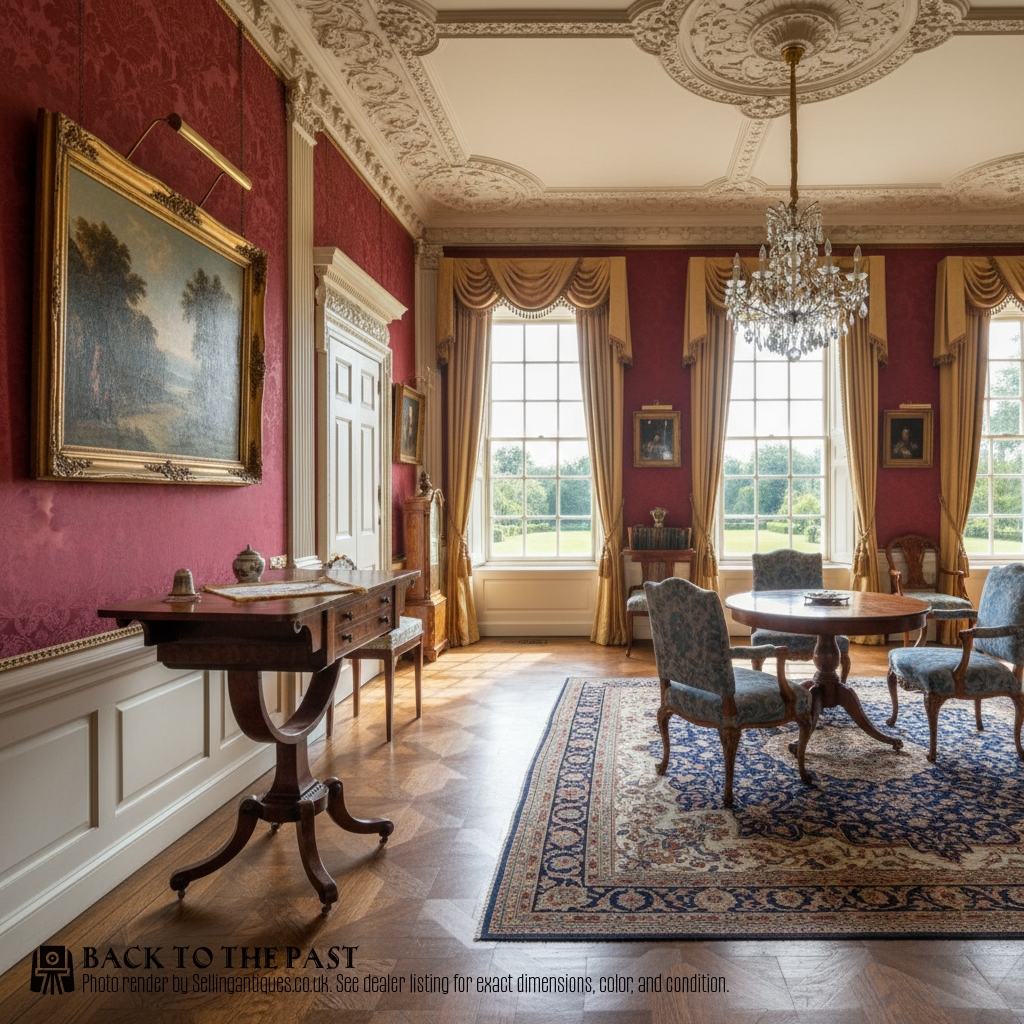
English Regency Work Table
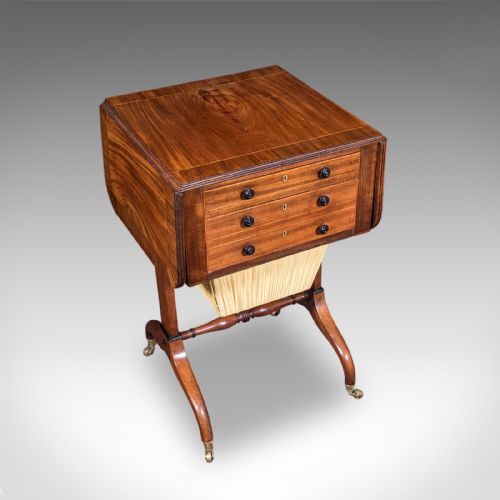
An english regency work table is fundamentally a specialised piece of ladies' furniture intended for sewing, needlework, and correspondence. These compact pieces typically incorporate interior compartments, drawers, and hanging silk or fabric bags to contain domestic crafts.
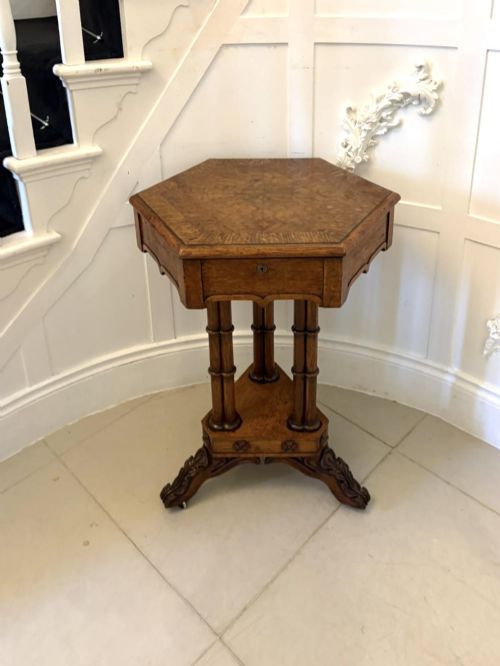
The examples found here span the Regency, William IV, and broader nineteenth-century periods, often manifesting as drop-leaf designs, sewing stands, or dual-aspect work boxes on slender supports. Mahogany and rosewood dominate the construction, reflecting the prevailing cabinet-making tastes of the era.
Beyond purely domestic sewing tasks, many variants double as writing tables or games surfaces, utilising fold-over tops and clever internal fittings. They represent the pinnacle of functional versatility during a period celebrated for refined interior decoration.
Materials and Construction Techniques
Cabinet-makers relied heavily on dense tropical hardwoods like mahogany and rosewood, frequently selecting figured veneers such as flame mahogany, burr ash, or burr walnut to create visually striking surfaces. Secondary timbers provide structural stability while the principal visible elements showcase meticulous grain matching.
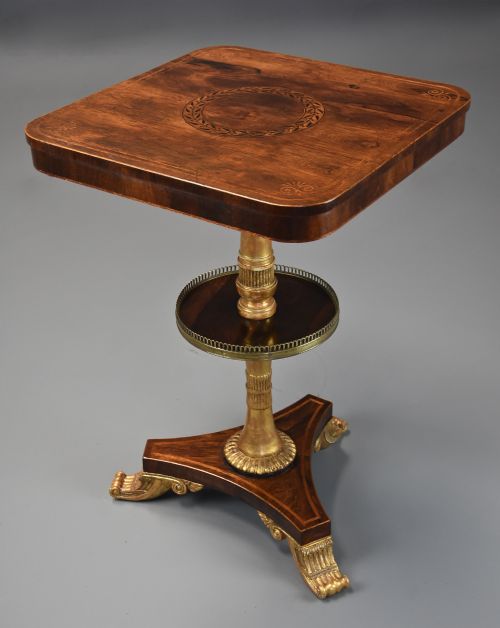
Decorative embellishments often include fine brass inlay, giltwood highlights, and intricate penwork or ivory detailing applied to specific cabinet forms. Drop-leaf hinges, small brass castors, and custom drawer pulls complete the assembly, balancing mobility with refined aesthetic proportion.
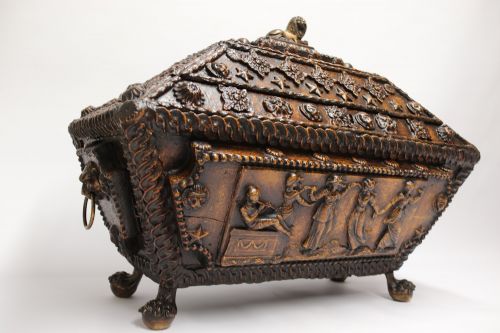
Object types include sewing tables, teapoys, writing tables, games tables, mantel clocks, and decorative boxes.
Distinguishing Quality in Period Furniture
Quality rests significantly on the selection of cabinet timbers and the dexterity of the veneer work, where superior examples exhibit continuous, balanced figuring across the entire top and drawer fronts. The crispness of carved details, such as gesso decoration or reeded legs, separates standard workshop output from exceptional cabinet-making.
Internal execution determines the long-term integrity of the piece, visible in the dovetail construction of small drawers and the neatness of the fabric bag framework. Furthermore, association with recorded makers or distinctive regional styles elevates the standing of an individual table.
Gillow Lancaster·George Bullock·George Smith·Barrett London·J Kingerley Manchester
The English Regency Work Table Glossary
- Teapoy
- A small stand or box designed to hold tea canisters, frequently sharing similar proportions and cabinet work with sewing tables of the period.
- Penwork
- A decorative technique utilising fine ink drawing on wood, often finished with varnish to create intricate geometric or pictorial motifs.
- Drop Leaf
- A hinged table leaf that can be raised to extend the surface area or dropped down when space is restricted.
- Gesso
- A plaster-based material applied to wood surfaces and carved or moulded to receive gilding or paint in Regency decorative schemes.
- Pembroke Table
- A small table featuring two hinged flaps on opposite sides, popular for occasional use and light domestic tasks.
English Regency Work Table: Frequently Asked Questions
What is an english regency work table used for?
These tables were originally built for ladies to store sewing equipment, threads, and needlework supplies within built-in drawers and hanging fabric bags. Many versions also feature fold-over tops or sliding surfaces intended for writing letters or playing games.
Today, they function well as compact side tables, lamp stands, or decorative accents in sitting rooms. Their clever internal compartments remain useful for storing small household items while preserving period character.
How can I tell a Regency table from a William IV one?
Regency pieces dating from the early nineteenth century generally favour leaner, classically inspired proportions with slender reeded or sabre legs and refined brass mounts. The influence remains tied to strict Regency and English Empire design vocabularies.
William IV examples, emerging towards the eighteen-thirties, typically display heavier, more robust proportions with bolder scrolling supports and substantial mahogany or rosewood timbers. Cabinet-makers of this later phase favored sturdier silhouettes while retaining traditional sewing table layouts.
Are sewing tables and work tables the same thing?
Yes, the terms are largely interchangeable within antique furniture descriptions, both referring to specialised small tables equipped for domestic needlecraft. Descriptions often group them alongside side tables, writing tables, and occasional furniture due to their multi-functional nature.
Some variants emphasise the writing slope or games board aspect, yet the presence of an internal compartment or silk work bag unites them under the broader work table category.
What woods were used for these tables?
Mahogany and rosewood are the primary timbers encountered in these listings, valued for their deep colour and suitability for fine turning and veneer work. Cabinet-makers also utilised exotic accents and decorative veneers including burr ash, burr walnut, and amboyna.
Secondary woods provided structural framing beneath the decorative outer veneers, while brass and glass elements frequently appeared in handles, castors, and inlay work.