
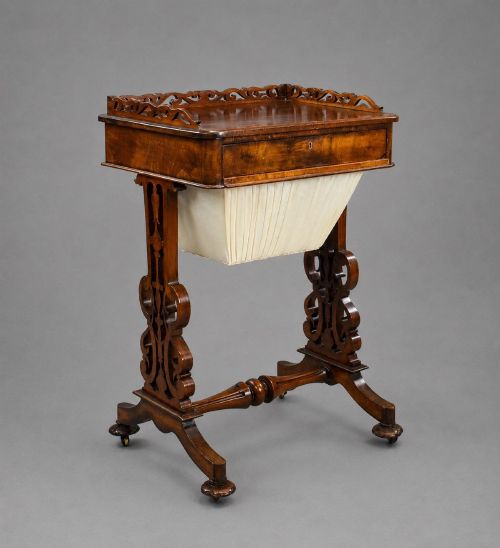
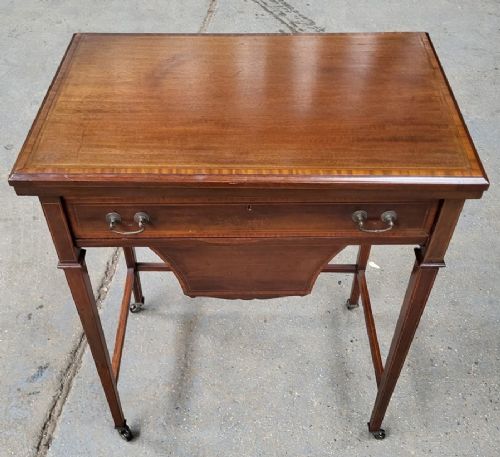
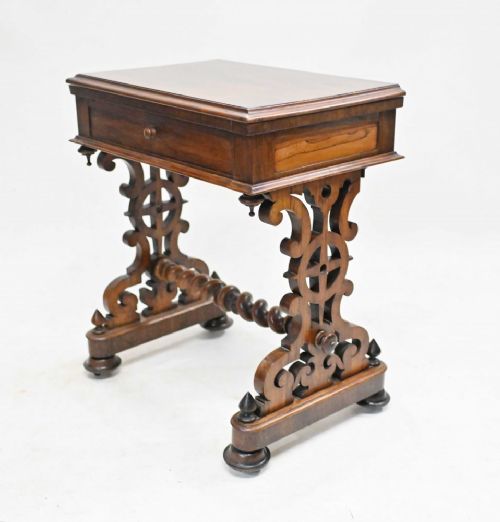


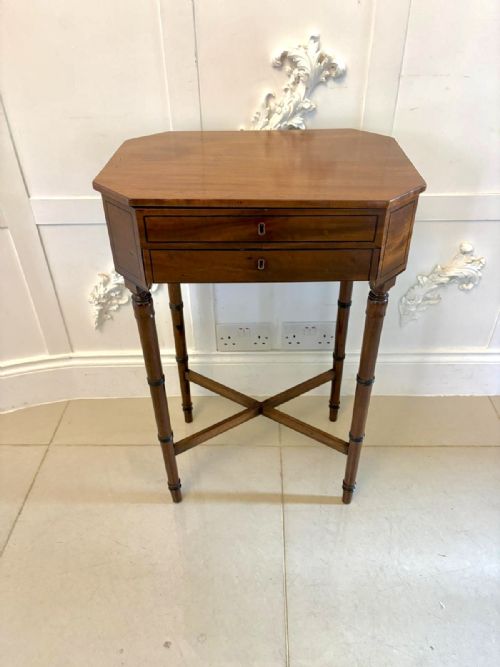


Brown Wood Sewing Table
A brown wood sewing table combines domestic craft with fine cabinetmaking, offering useful surface space and hidden storage for needlework.
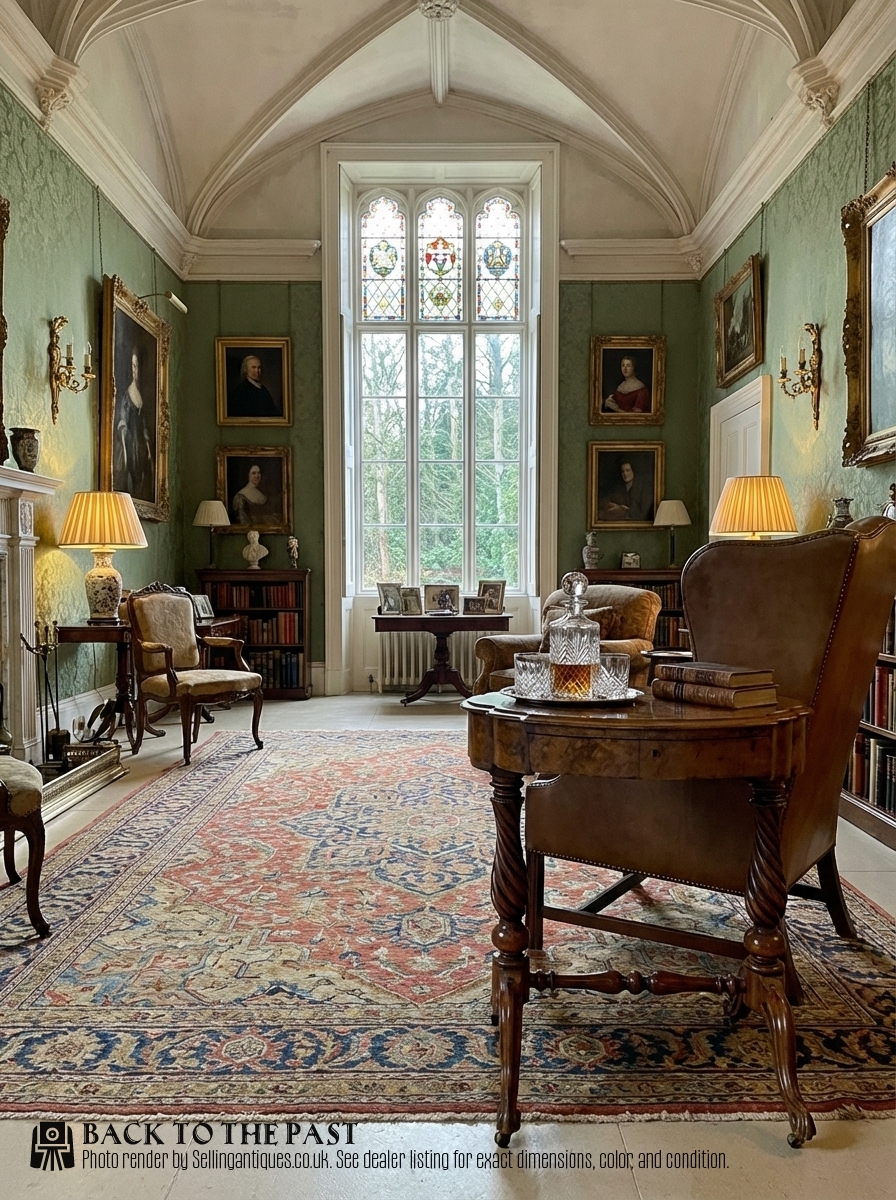
Brown Wood Sewing Table
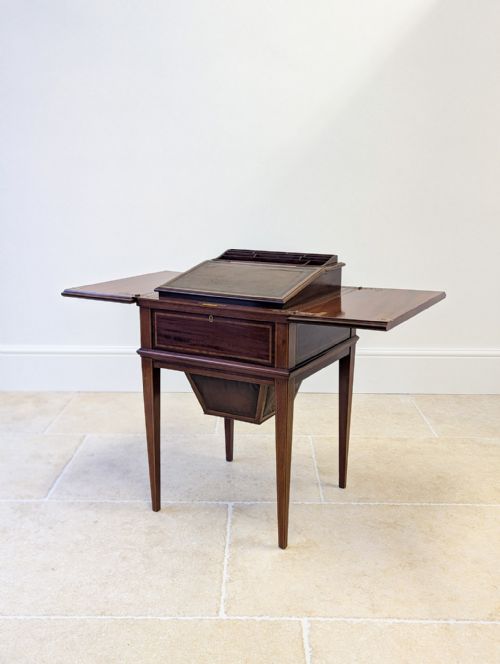
A brown wood sewing table is a functional piece of antique furniture designed for needlework, writing, and occasional use, often featuring internal compartments or integrated baskets. These tables appear across multiple periods, including the Georgian, Regency, William IV, and Victorian eras, up to the Edwardian period.
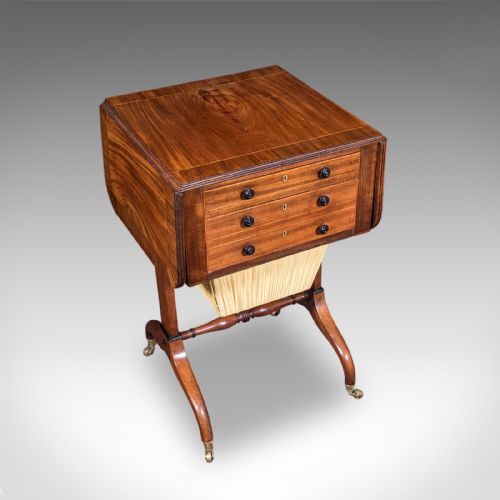
Makers and cabinetmakers produced these items in various woods, sometimes incorporating drop leaves, trumpet bases, or removable sewing baskets. The form remains versatile, serving beside a sofa or chair as a compact lamp or side table.
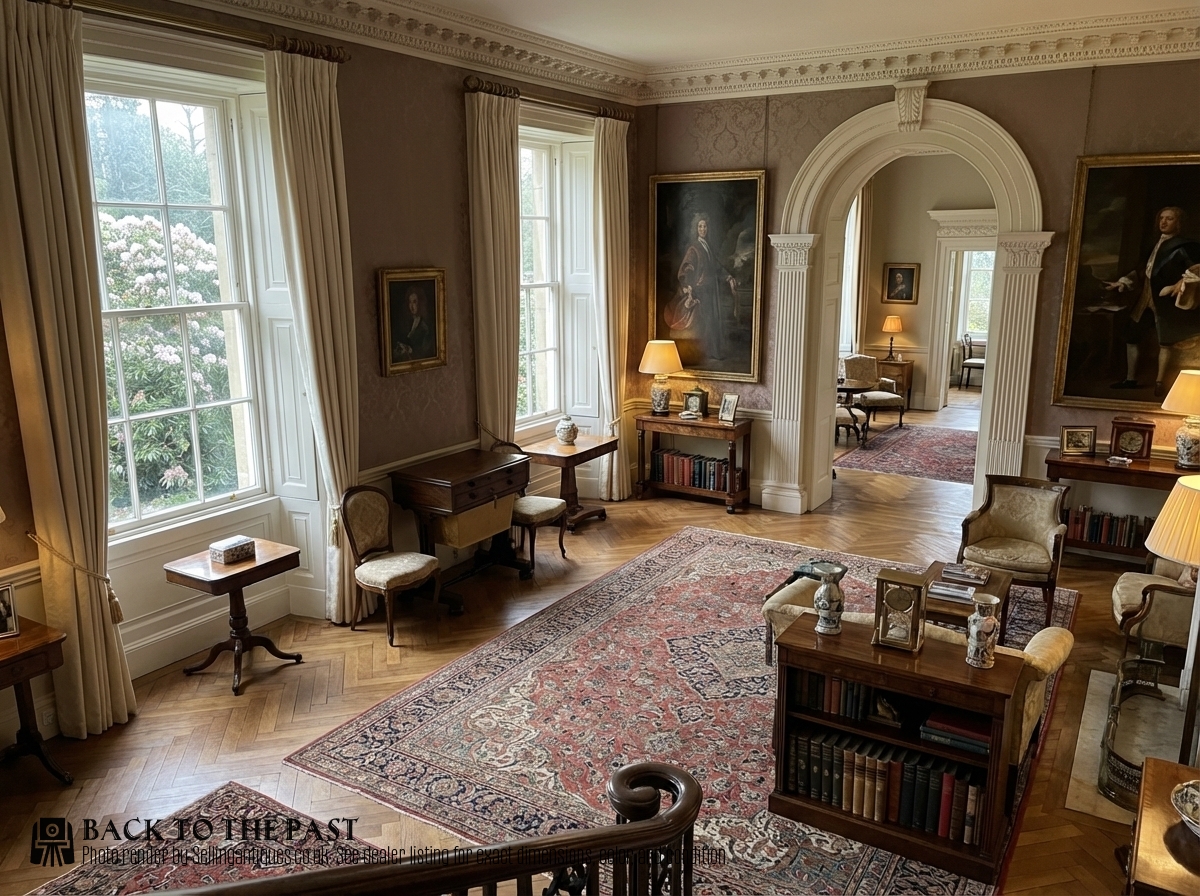
Materials and construction
Makers built brown wood sewing tables using dense timbers such as mahogany, walnut, burr walnut, and occasional exotic woods like satinwood, rosewood, and amboyna. Surfaces often display cross-banding, marquetry inlay, or contrasting boxwood lines to frame the grain.
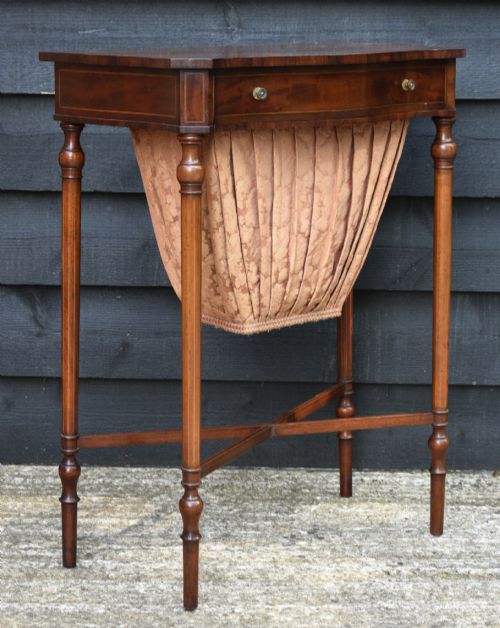
Structural elements include turned pedestals, tripod bases, and trumpet-shaped pedestals supporting hinged lids that open to fitted interior compartments. Brass fittings, leather inserts, and fabric or wicker sewing baskets complete the construction.
Brown Wood Sewing Table Retail Price Guide 2026
Typical asking prices for brown wood sewing table among the pieces listed under this phrase on Sellingantiques today, from the lower quarter to the upper quarter. They describe what is for sale here now, not the wider market.
Some Victorian ladies tables conceal miniature compartments designed exclusively for storing spools of silk and ivory bone bodkins.
What varies in quality
The distinction between standard and superior pieces rests on the choice of timber and the precision of the cabinetwork. Tables utilising highly figured burr walnut, amboyna, or finely matched mahogany veneers command greater attention than plain variants.
Refinement in secondary details elevates a piece, such as crisp marquetry inlay, delicate boxwood stringing, original brass hardware, and well-executed internal compartment fittings. The integrity of the structural joinery and the fluidity of drop-leaf or hinged mechanisms further separate workshop standards.
Waring and Gillow
The Brown Wood Sewing Table Glossary
- Burr walnut
- A figured wood veneer taken from the wart or burl of a walnut tree, prized for its swirling grain patterns. It appears frequently on high-status Victorian sewing tables.
- Cross-banding
- A border of veneer laid around the edge of a table top so that the grain runs perpendicular to the central panel. This technique frames the primary wood.
- Trumpet table
- A form of sewing table featuring an octagonal or flared trumpet-shaped body resting on a tripod base. The lower section typically houses a fabric work bag.
- Marquetry
- Decorative patterns formed by the insertion of different coloured wood veneers into a solid ground. It adds pictorial or geometric detail to the lid.
- Drop leaf
- A hinged flap on the side of a table that can be raised to extend the surface area or lowered when space is limited.
Brown Wood Sewing Table: Frequently Asked Questions
What is a brown wood sewing table used for today?
These tables function well as compact side tables, lamp tables, or bedside surfaces in modern homes. Their internal compartments and fitted drawers also provide discreet storage for small household items or craft supplies.
Placing one beside a sofa or armchair makes the most of the surface area while keeping the historical character visible in the room.
How do I identify a Victorian sewing table?
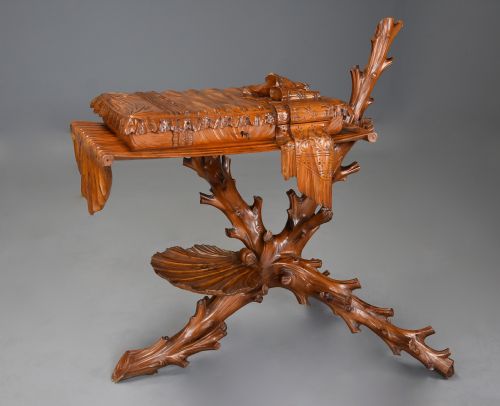
Victorian sewing tables frequently utilise dark timbers like mahogany or heavily figured burr walnut. They often feature trumpet pedestals, carved tripod bases, or hinged lids opening to fitted compartments.
Looking closely at the secondary woods inside the drawers and the style of the turned supports helps confirm the mid to late nineteenth-century origin.
Are these tables suitable for small rooms?
Their modest proportions and slim footprints make these tables ideal for tight spaces. Drop-leaf variants allow the user to adjust the surface width according to immediate needs.
Their lightweight construction also permits easy relocation around the room as a lamp or occasional table.