
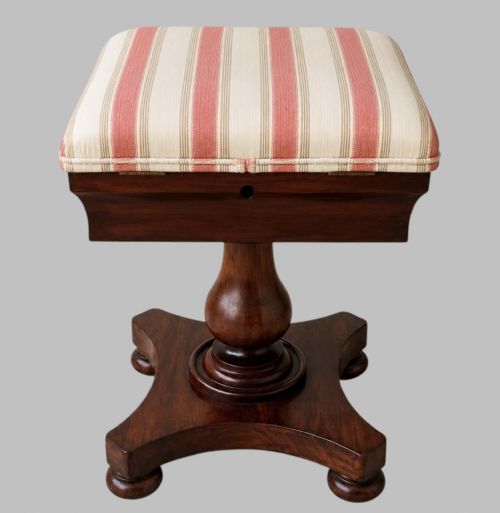
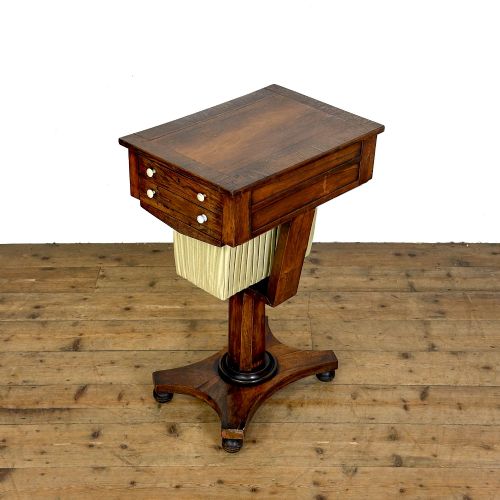
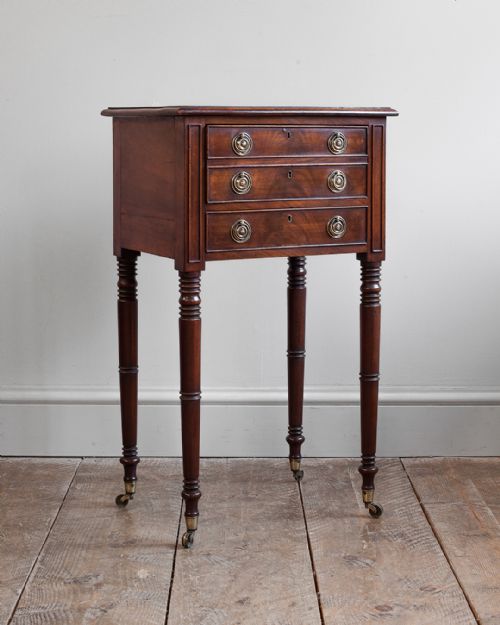

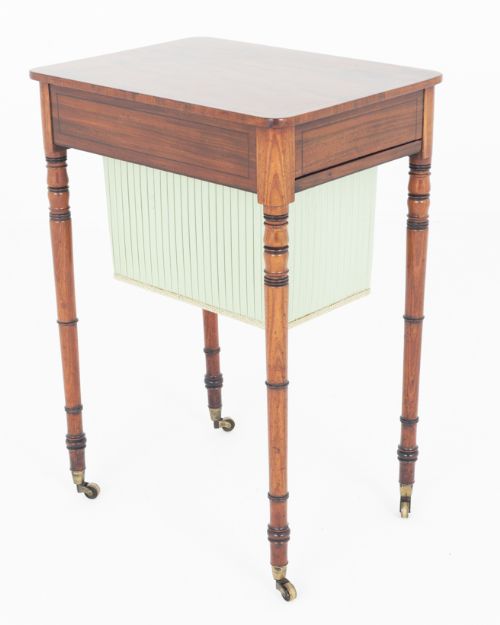


Regency Sewing Box Table
A regency sewing box table combines domestic utility with refined cabinetmaking, providing an elegant spot for needlework and small treasures.
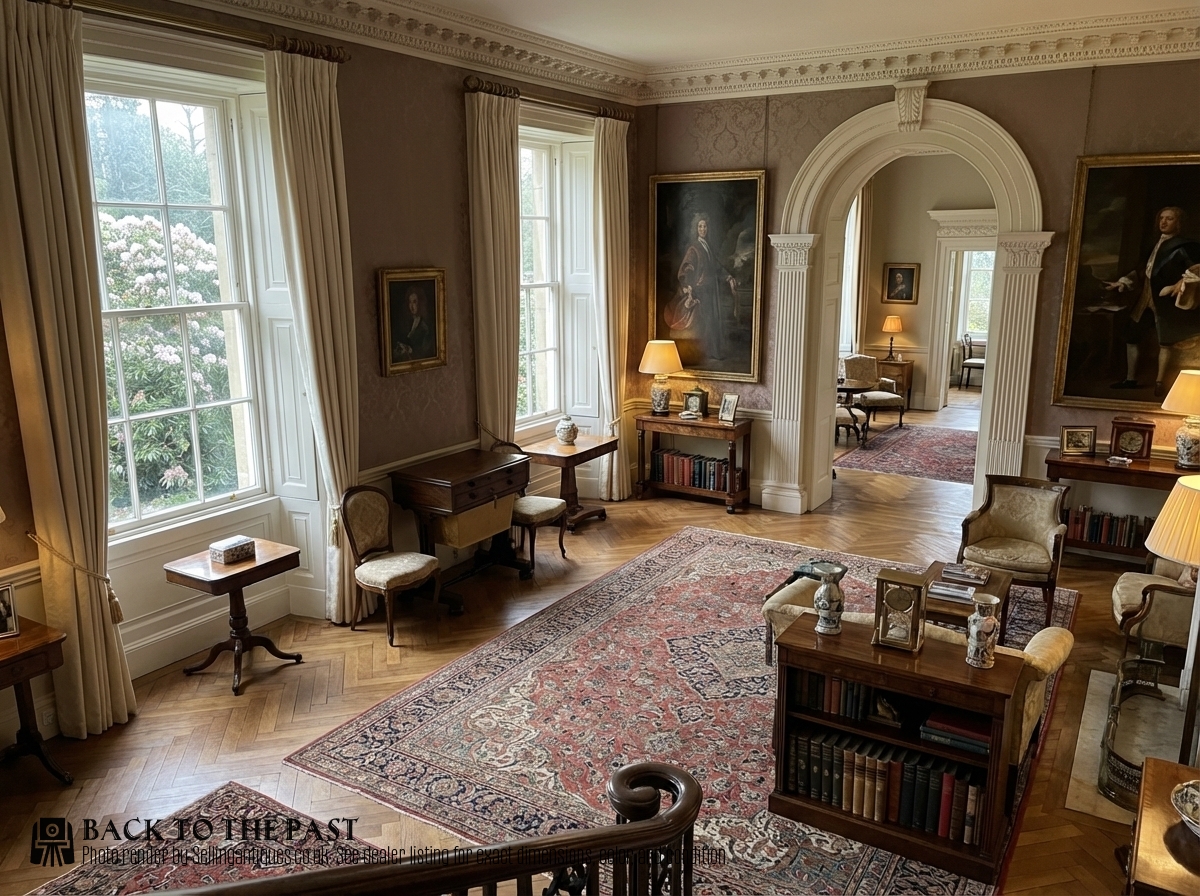
Regency Sewing Box Table
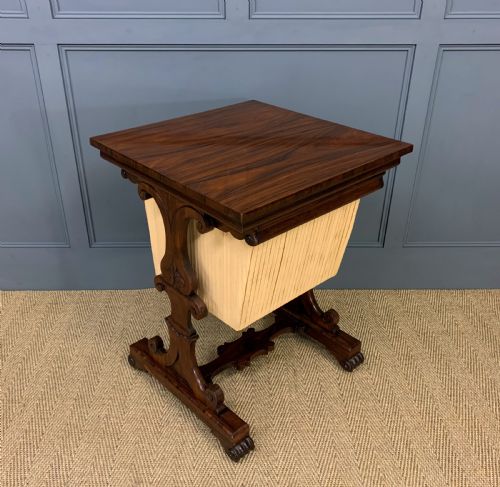
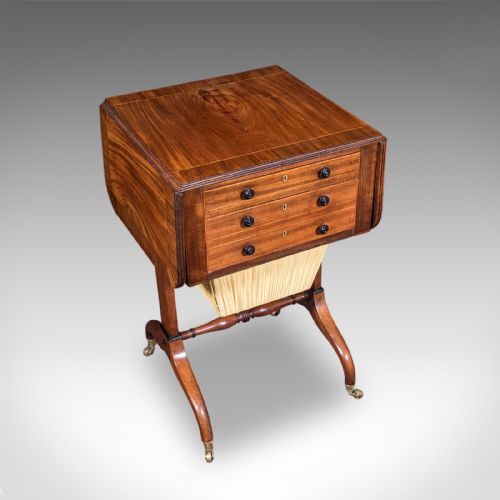
When searching for a regency sewing box table, a buyer explores multifunctional furniture designed for domestic craft during the nineteenth century. These pieces combine a fitted compartment or hanging bag for needlework with a stable writing or occasional surface.
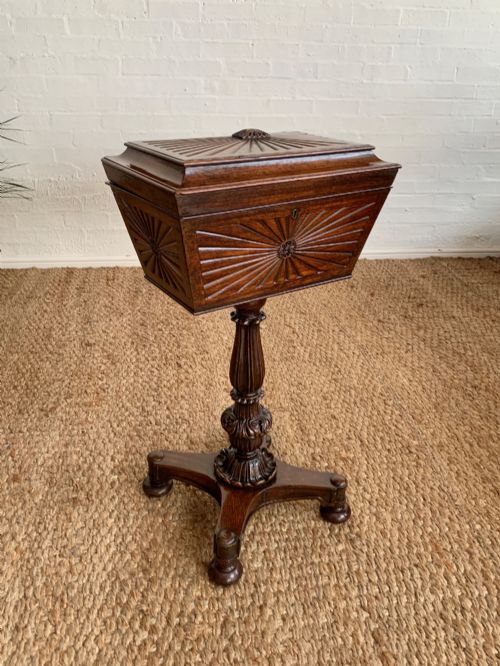
The versions most frequently met on this page include mahogany and rosewood work tables originating from the Regency, William IV, and early Victorian periods. Examples span drop-leaf designs, pedestal stands, and occasional tables fitted with internal trays and compartments.
How they were made
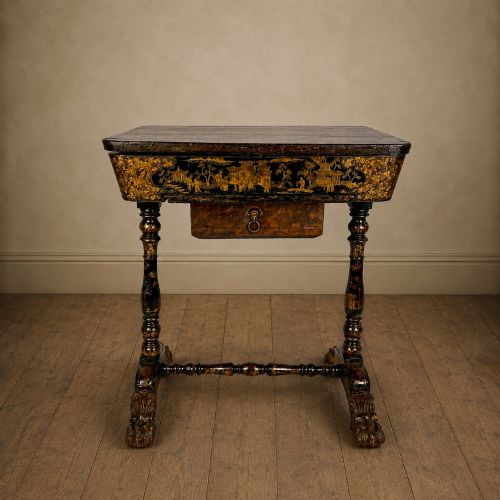
Cabinetmakers constructed these tables using dense timbers such as mahogany and rosewood, frequently selecting figured veneers and flame mahogany to ornament the exterior surfaces. Brass hardware, silk linings, and occasionally black and gilt lacquer added decorative contrast to the woodwork.
Structural assembly relied on traditional joinery techniques, supporting drop leaves, lyre ends, and pedestal pillars with stable plinths or legs. Internal compartments were carefully divided to hold spools, needles, and writing implements.
Listings feature mahogany, rosewood, burr ash, and lacquer finishes across 19th century periods.
What varies in quality
The distinction between standard examples and superior pieces rests on the choice of timber and the precision of the cabinetwork. Finer tables utilise heavily figured rosewood or flame mahogany, paired with intricate inlay and well-executed carving rather than plain secondary woods.
Interior execution also separates grades, with better pieces retaining original fitted silk trays, tortoiseshell accents, or compartments that demonstrate thoughtful interior organisation. The integration of functional elements, such as smooth-running drawers and secure drop leaves, defines the upper tier.
The Regency Sewing Box Table Glossary
- Work table
- A small freestanding table designed for needlework, sewing, and light domestic tasks. It usually incorporates a drawer or hanging fabric bag beneath the top.
- Teapoy
- A small stand or box originally used for storing and serving tea, often related in form and period to work tables. These pieces share similar pedestal or cabinet configurations.
- Lyre-ended
- A form of support shaped like an ancient stringed musical instrument, commonly utilised on the pedestals of Regency tables. This design adds architectural grace to the framework.
- Chinese Export
- Furniture produced in China specifically for the European market, often finished in black and gilt lacquer. These pieces combine traditional Asian decorative techniques with Western furniture forms.
Regency Sewing Box Table: Frequently Asked Questions
What is a regency sewing box table?
A regency sewing box table is a nineteenth-century piece of furniture created to hold needlework materials while serving as an occasional or side table in a drawing room.
These tables typically feature a top compartment or drawer for threads and needles, often accompanied by a hanging fabric bag underneath for unfinished projects.
How were these tables used originally?
Ladies utilised these tables during the Georgian and Regency periods for sewing, embroidery, and correspondence. The surfaces provided a convenient spot for writing or holding small domestic items.
Inside the compartments, specialised trays kept needles, spools, and thimbles organised while keeping the room tidy.
Where do I put a sewing table today?
A sewing table fits comfortably beside a sofa or armchair as an occasional lamp table or side table. The compact footprint makes them suitable for smaller spaces that require functional surface area.
Closed compartments provide discreet storage for modern sundries, keeping contemporary clutter out of sight.
How do I identify a Regency period piece?
Regency pieces often display classical architectural influences, such as lyre supports, brass inlay, and turned pedestal bases. Mahogany and rosewood are the primary timbers encountered from this era.
Proportions tend to be balanced and restrained, reflecting the neoclassical tastes prevalent during the early nineteenth century.