




Regency Mahogany Worktable
These regency mahogany worktable pieces are elegant multi-purpose furniture designed for needlework and small domestic tasks, offering refined craftsmanship.

Regency Mahogany Worktable
When searching for a regency mahogany worktable, you encounter compact occasional furniture designed primarily for sewing, needlework, and light writing tasks. These versatile pieces date predominantly from the nineteenth century, spanning the Georgian, Regency, William IV, and early Victorian periods.
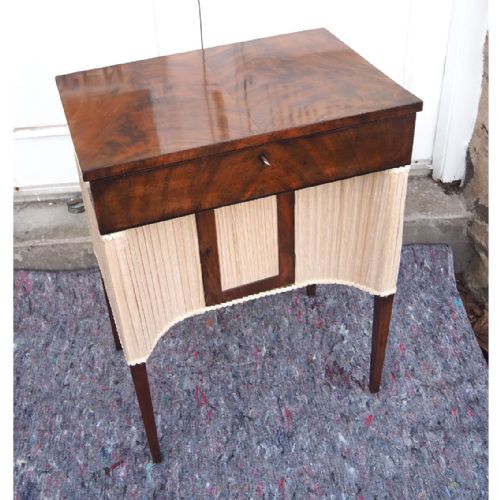
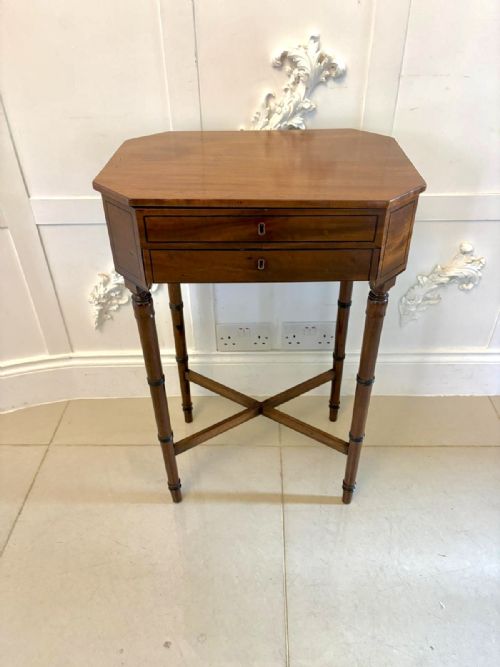
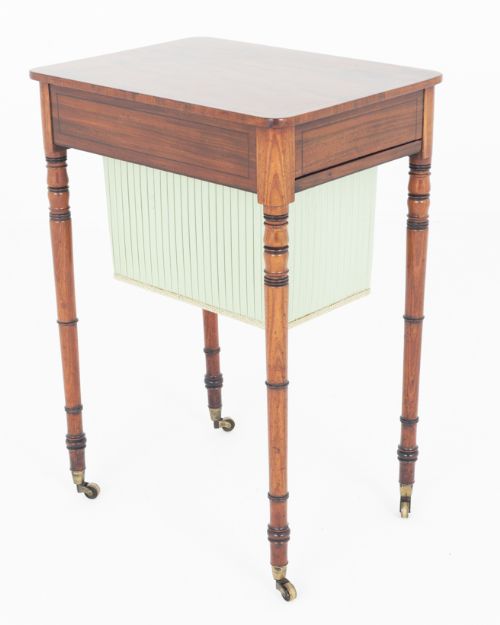
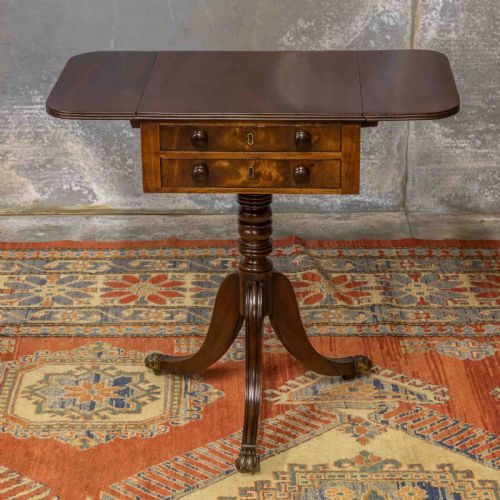
The versions most frequently met on this page include freestanding pedestal models, drop-leaf Pembroke designs, and pieces equipped with removable sewing baskets or internal fabric bags. Their forms combine utility with formal elegance, serving as functional tables and decorative accents in period interiors.
Materials and construction
Cabinetmakers utilised solid mahogany and figured flame mahogany veneers over secondary timbers, often accentuating the surfaces with boxwood stringing and brass details. These materials provided a rich, dark ground that highlighted the natural grain and polished to a deep lustre.
Construction techniques involved precise joinery for pedestal bases, drop-leaf mechanisms, and fitted drawer interiors designed to hold sewing implements. Silk and other fabrics were integrated into the hanging work bags suspended beneath the main carcase.
Regency Mahogany Worktable Retail Price Guide 2026
Typical asking prices for regency mahogany worktable among the pieces listed under this phrase on Sellingantiques today, from the lower quarter to the upper quarter. They describe what is for sale here now, not the wider market.
Many surviving sewing tables still retain their original silk bags, preserved through centuries of needlework.
Distinctions in quality
The standard of execution depends heavily on the choice of timber figure, such as highly figured flame mahogany, and the crispness of any inlaid boxwood or brass ornamentation. Superior examples display refined proportions and more complex internal fittings for sewing and writing.
Integration of design elements, from the turning of central pedestals to the stability of drop-leaf mechanisms, separates standard production items from pieces bearing finer cabinetmaking signatures.
Gillows
The Regency Mahogany Worktable Glossary
- Pembroke table
- A small occasional table featuring two hinged drop leaves on opposing sides. It typically includes one or more drawers.
- Flame mahogany
- A veneer cut from timber where the branch meets the main trunk, producing a distinctive flickering flame-like grain pattern. This decorative cut was favoured for prominent drawer fronts and tabletops.
- Pedestal table
- A standalone table supported by a central pillar rising from a platform base with spreading feet. These feet often incorporate brass castors for mobility.
- Boxwood stringing
- Thin inlaid lines of light-coloured boxwood set flush into contrasting mahogany surfaces to create geometric borders. It defines the edges of tabletops and drawer fronts.
- Drop-leaf
- A hinged flap on a table that can be raised to extend the surface area or lowered when space is limited. It is supported by pivoting wooden brackets known as fly brackets.
Regency Mahogany Worktable: Frequently Asked Questions
What is a regency mahogany worktable?
A regency mahogany worktable is a small nineteenth-century table built for sewing, needlework, and light writing. These pieces typically feature fitted drawers and suspended fabric bags.
They functioned as versatile occasional furniture in sitting rooms and ladies' chambers, combining practical storage with refined proportions.
How were worktables used originally?
Gentlewomen used these tables to keep embroidery, lacemaking supplies, and small writing materials close at hand. The enclosed compartments and hanging bags kept threads and textiles organised.
Many examples also doubled as lamp stands or light side tables when needlework was finished for the day.
How do I identify a Regency period table?
Regency tables are identified by their classical proportions, use of solid mahogany or flame mahogany veneer, and characteristic pedestal bases. Details often include brass mounts and subtle boxwood stringing.
Stylistic markers bridge late Georgian restraint and the heavier forms of the subsequent William IV era.
Where should I place a worktable at home?
These compact tables fit well beside armchairs, sofas, or as freestanding accent pieces in a living room or study. Their modest footprint makes them useful in tighter spaces where surface area is needed.
The finished backs on many freestanding models allow them to sit away from walls.