






Antique Work Table Castors
Antique work table castors belong to small sewing and occasional furniture, providing mobility to tables crafted in mahogany, rosewood, and walnut during the Georgian, Regency, and Victorian periods.
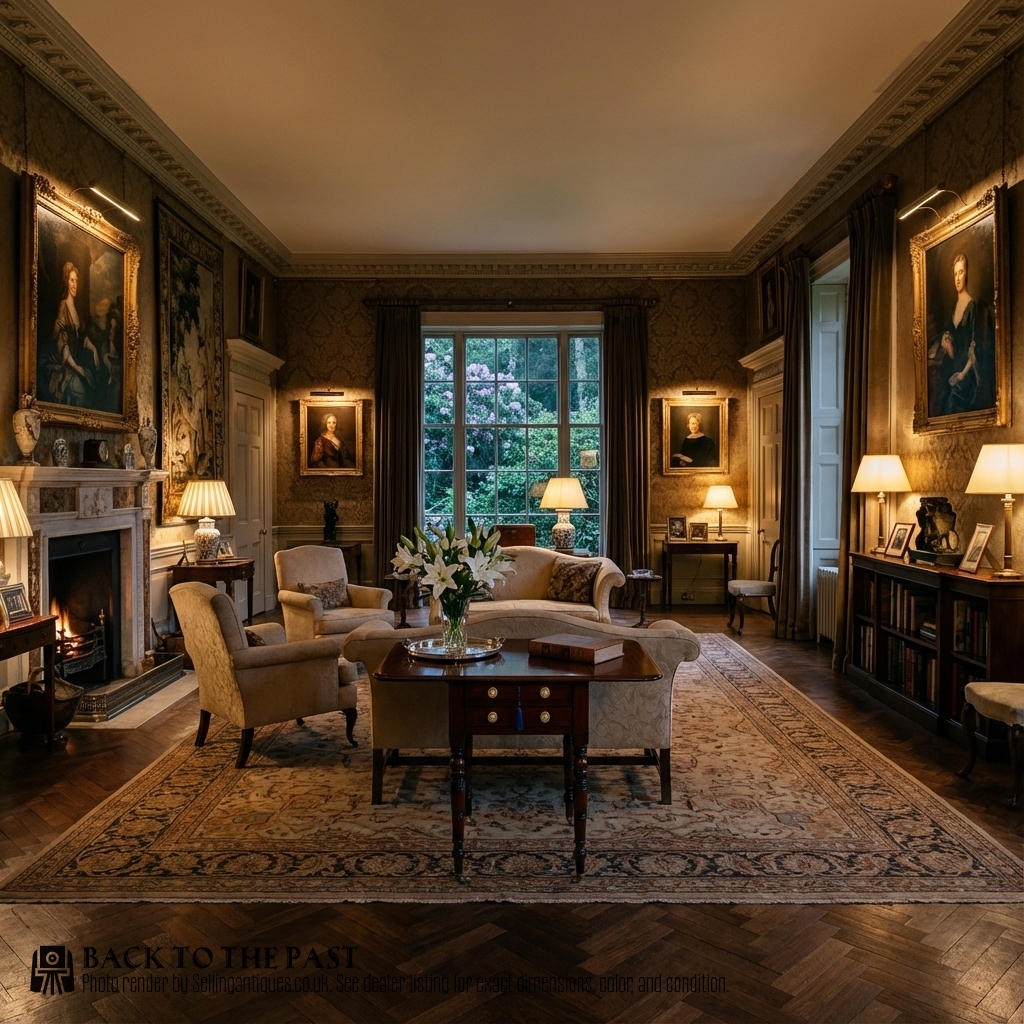
Antique Work Table Castors
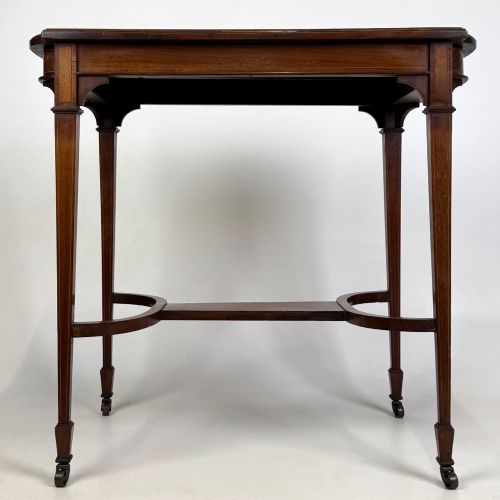
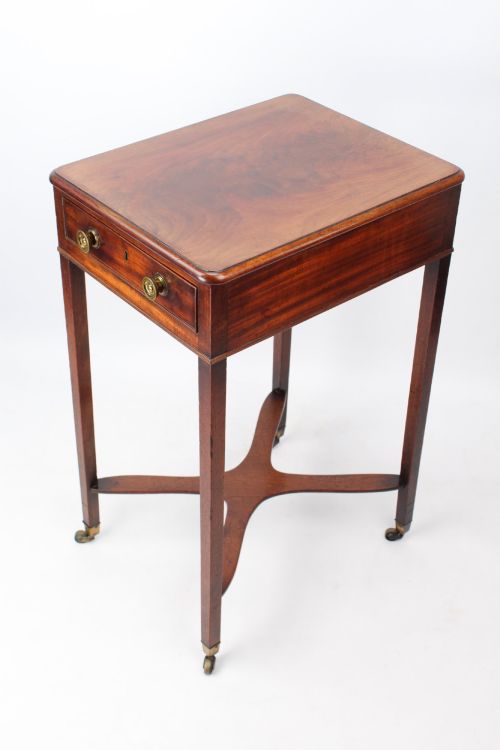
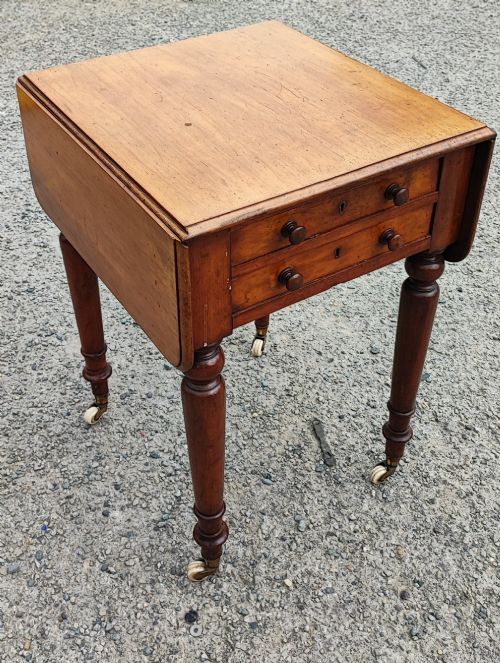
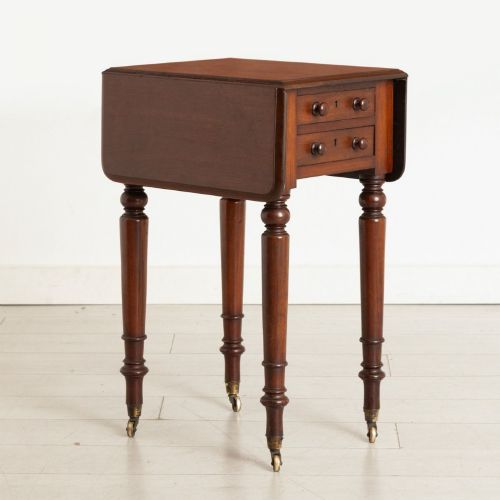
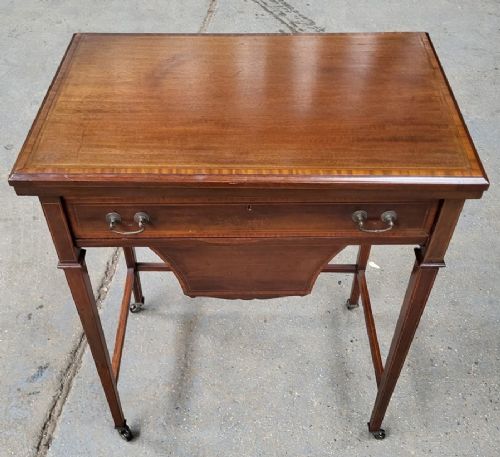
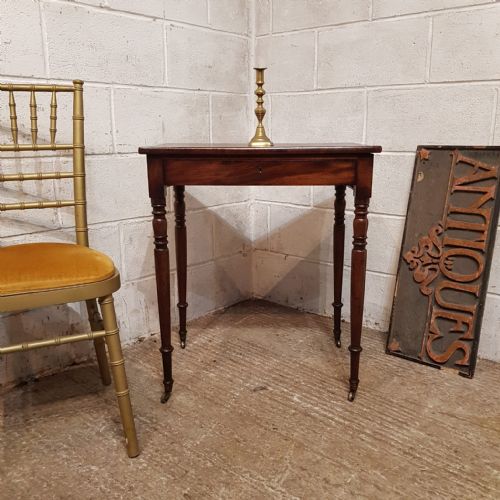
When searching for antique work table castors, you are examining the small wheels fitted to the base of nineteenth-century sewing, games, and occasional tables. These fittings allowed delicate tables to be moved easily across carpets and wooden floors in period drawing rooms and boudoirs.
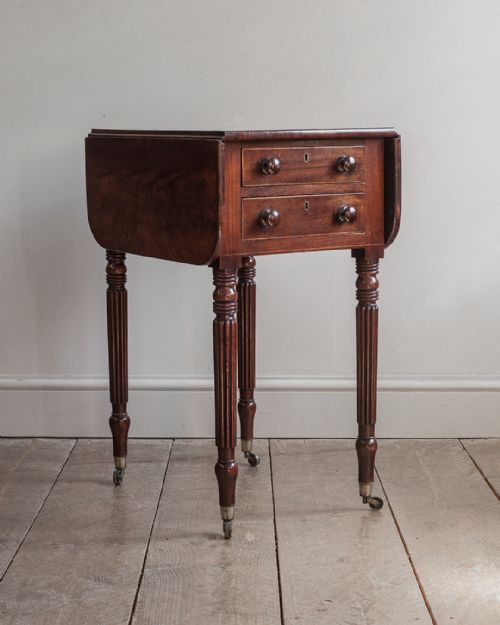
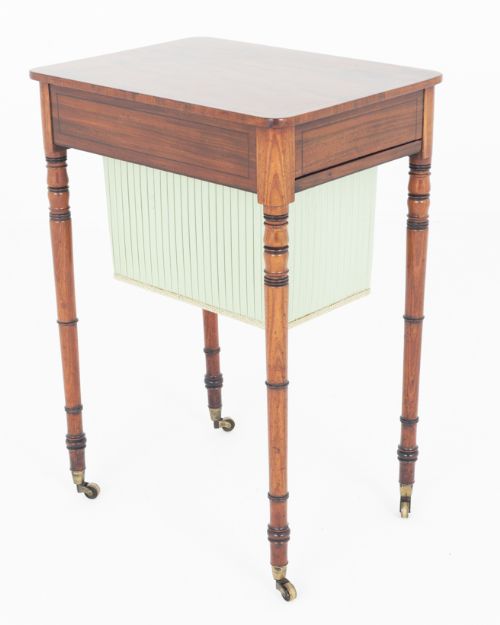
The tables resting upon these castors most frequently take the form of work tables, sewing tables, and Pembroke tables in mahogany or rosewood. You will encounter specimens spanning the Georgian, Regency, William IV, and Victorian eras, often featuring drop leaves and fitted interior compartments for needlework.
The castors themselves support slender table legs, ranging from delicate turned supports to pillar bases. They connect the functional mobility of the furniture directly to the floor beneath.
Materials and construction
Tables designed with these small wheels rely on dense timbers such as mahogany, rosewood, walnut, and satinwood, frequently shaped with drop leaves or inlaid surfaces. Cabinetmakers constructed the frames using traditional joinery, attaching small sockets to receive the metal stems of the wheels.
The metal components themselves typically comprise cast brass, sometimes paired with small ceramic or porcelain rollers that protected delicate floor coverings. This combination of heavy timber frames and small metal rolling elements required precise balancing so the furniture remained stable when moved.
Forms include Pembroke tables, sewing tables, games tables, and occasional lamp tables.
Assessing quality in tables and fittings
The standard of a piece rests upon the crispness of the timber selection, such as figured rosewood or burr walnut, and the integrity of the internal sewing compartments. Superior examples exhibit fine craftsmanship in the leg turnings and secure mounting points for the undercarriage fittings.
Finer tables maintain original mounts and wheels that move freely without play in the sockets. The distinction between standard workshop production and high cabinet work appears in the precision of the secondary woods and the fluid integration of the wheels into the table base.
Gillows·Waring and Gillow
The Antique Work Table Castors Glossary
- Castor
- A small wheel mounted on a swivel or socket attached to the base of a piece of furniture to permit easy movement. They appear in brass and ceramic materials beneath nineteenth-century tables.
- Work table
- A small specialised table designed for women's needlework, featuring fitted interior trays and fabric bags. These pieces frequently stand upon mobile undercarriages.
- Pembroke table
- A small rectangular table fitted with two hinged drop leaves on opposing sides. They often incorporate a single drawer and rest upon wheeled supports.
- Rosewood
- A dense, heavily figured dark timber utilised extensively during the Regency and Victorian periods for fashionable sewing and lamp tables. It provides a rich surface contrast to brass fittings.
- Drop leaf
- A hinged flap on a table top that can be raised to extend the surface area or lowered when space is restricted. These flaps are common on sewing and occasional tables.
Antique Work Table Castors: Frequently Asked Questions
What is an antique work table?
An antique work table is a small nineteenth-century piece of furniture designed specifically for sewing, needlework, and writing tasks. They typically include internal compartments and small drawers.
These tables were kept in sitting rooms and chambers, allowing ladies to store threads, fabrics, and small personal items close at hand.
Why do these tables have wheels?
Wheels were fitted to the feet of these small tables to permit effortless repositioning around a drawing room as daylight shifted or social arrangements changed.
Because sewing tables were frequently moved closer to seating for handwork, mobility was a practical necessity for the user.
How do I identify a Regency sewing table?
Regency sewing tables usually display clean architectural lines, dark rosewood or mahogany timbers, and brass mounts. They often feature rectangular tops and silk work bags suspended below.
Unlike heavier Victorian examples, Regency pieces lean towards refined proportions and restraint in ornament, frequently resting upon slender pillar bases with brass castors.
Are these tables suitable for modern use?
These compact tables function well as lamp tables, bedside stands, or occasional desks in contemporary interiors. Their modest proportions suit smaller spaces.
Drawer space accommodates modern stationery or small accessories, while the traditional wheeled base retains its original utility for repositioning.