


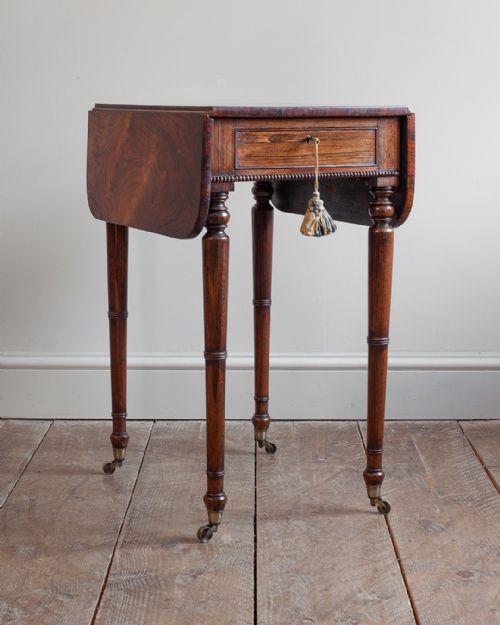
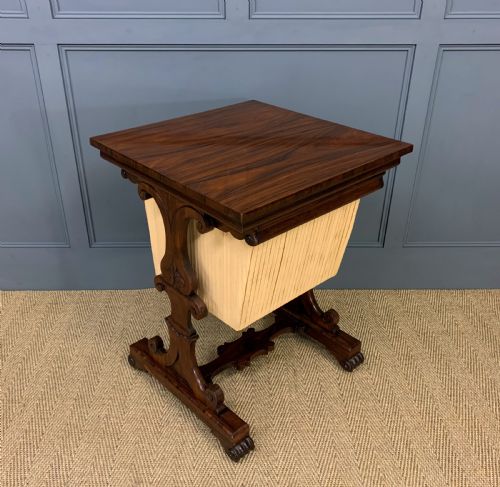
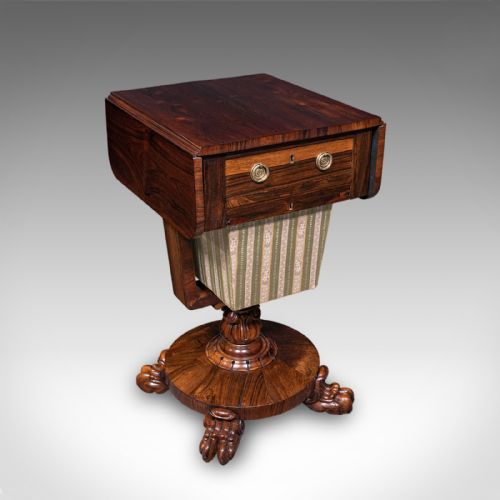
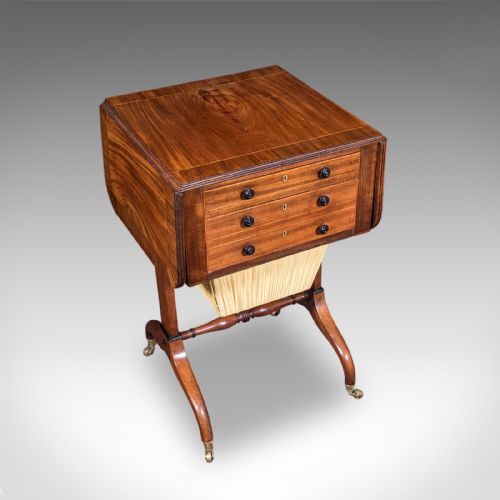
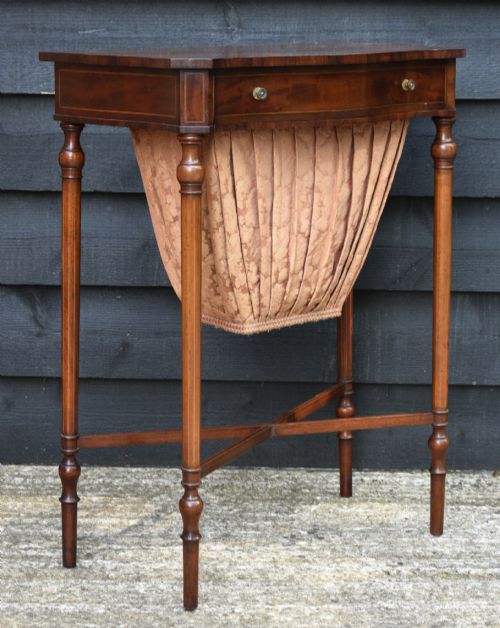
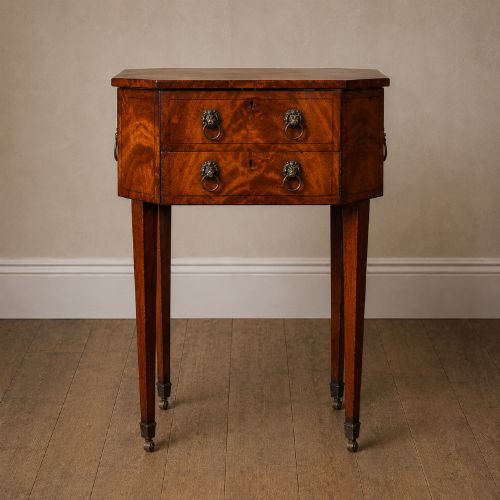
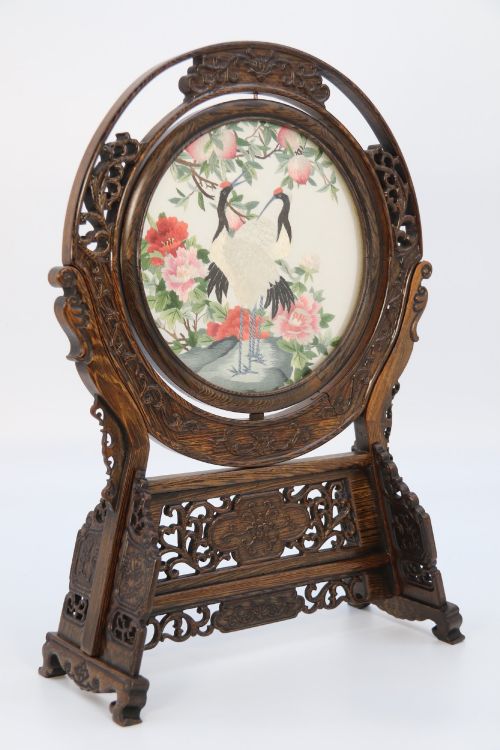
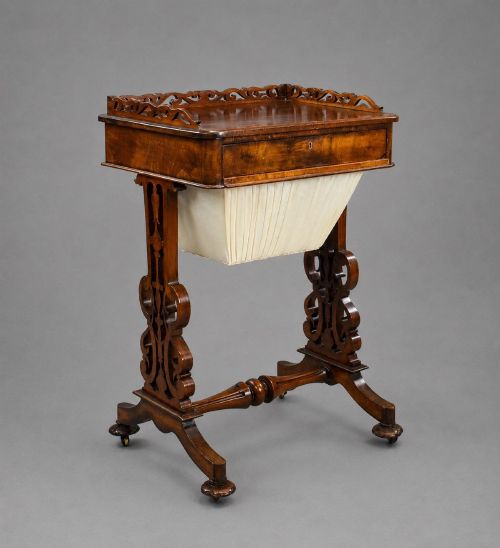
Needlework Side Table
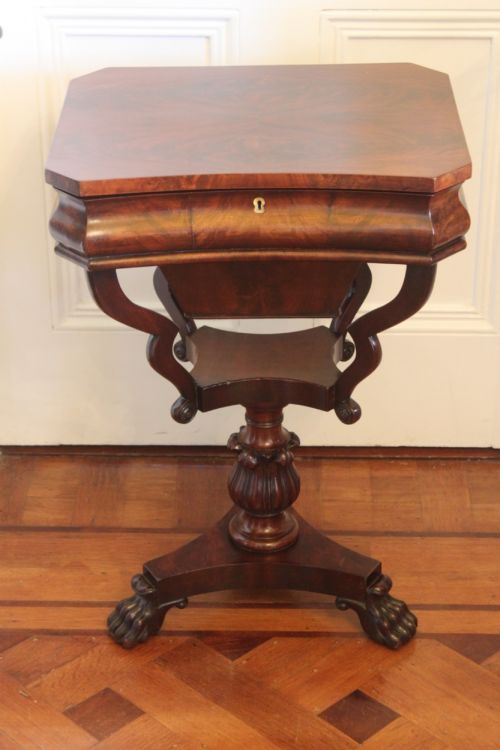
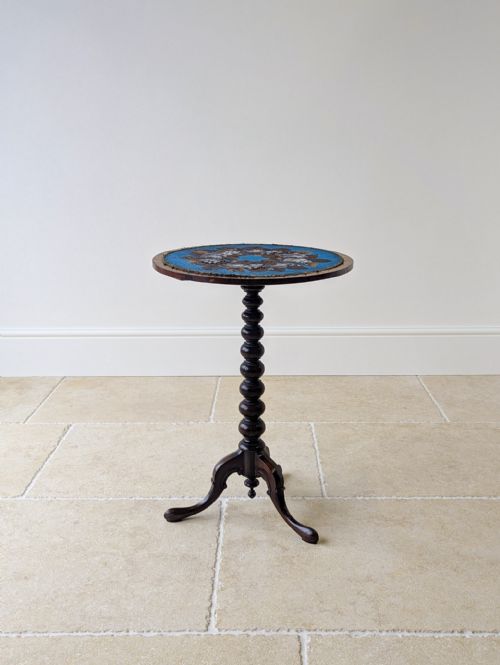
A needlework side table combines a practical sewing station with a refined surface for the parlour, most frequently appearing in rich Victorian burr walnut or Regency rosewood.
Needlework Side Table
A needlework side table is a specialised piece designed primarily for domestic sewing and craft pursuits, incorporating clever storage beneath the top. When exploring this phrase, buyers encounter variations spanning the Georgian, Regency, Victorian, and Edwardian periods.
The form frequently overlaps with sewing tables, work tables, and occasional tables, often featuring drop leaves or fitted interior compartments. Mahogany, rosewood, and burr walnut dominate the structural choices across these eras.
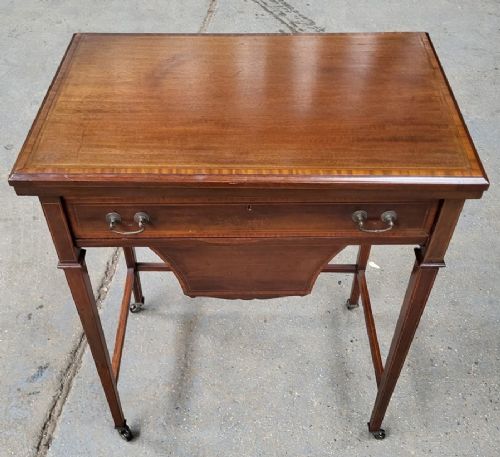
Victorian and Edwardian iterations frequently showcase intricate marquetry inlay, silk baskets, or trumpet bodies designed to hold textiles. Simpler Georgian and Regency examples rely on figured grain and clean lines to achieve their presence.
Materials and construction methods
Cabinet makers utilised dense hardwoods such as mahogany, rosewood, and burr walnut, often applying matched veneers to accentuate the natural grain of the timber. Satinwood and birch also appear alongside brass fittings and delicate inlay work.
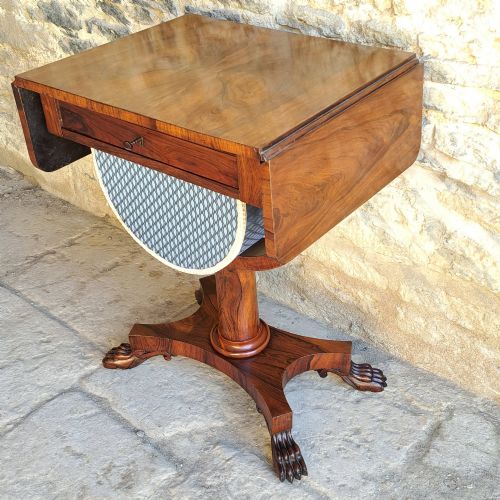
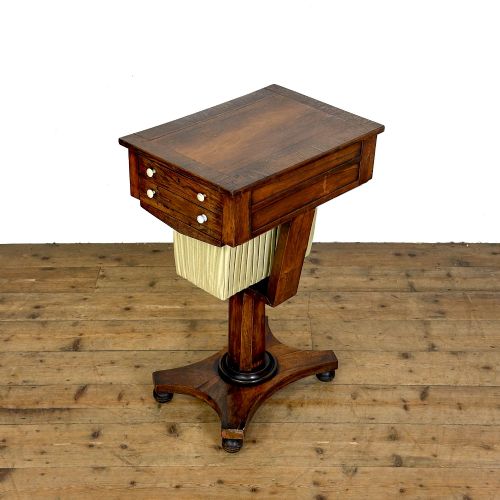
Interior compartments required precise joinery to organise thread, needles, and fabric scraps, frequently pairing solid timber frames with hanging silk or fabric baskets. Drop leaves rely on hinged supports or pivoting wooden brackets to extend the surface area safely.
Some nineteenth-century work tables arrive complete with their original silk baskets and sewing contents still tucked inside.
Judging the standard of execution
Quality rests upon the selection of timber veneers, where symmetrical burr walnut or flame mahogany indicates a superior piece chosen by the maker. The crispness of marquetry inlay and the retention of original brass hardware or fitted interior trays further elevate the standing of a table.
Stability in the pedestal base or legs dictates structural success, particularly in tripod designs and trumpet forms where weight distribution matters. Refined proportions and cleanly turned supports separate utilitarian examples from finer parlour pieces.
The Needlework Side Table Glossary
- Burr walnut
- A figured timber harvested from the wart-like growths on walnut trees, prized for its swirling grain patterns on Victorian table tops.
- Drop leaf
- A hinged flap on the side of a table that folds down when not in use and lifts to extend the surface.
- Marquetry
- Decorative patterns formed by inserting thin pieces of wood veneer into a solid background.
- Trumpet table
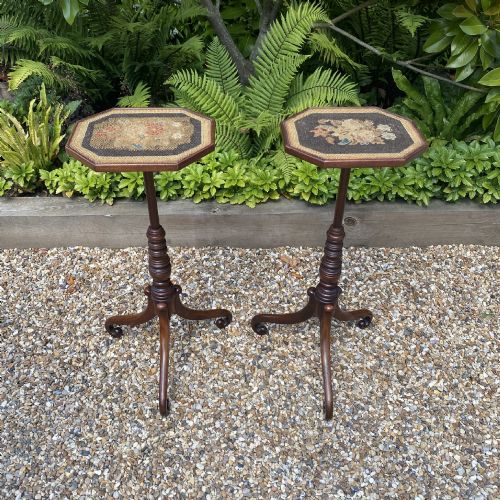
- A Victorian work table featuring an octagonal or flared body shaped like a musical instrument, standing on a tripod base.
Needlework Side Table: Frequently Asked Questions
What is a needlework side table used for?
These tables served as designated stations for domestic sewing, embroidery, and correspondence in the nineteenth-century parlour.
Beneath the work surface, fitted compartments and hanging fabric baskets kept threads, needles, and ongoing projects neatly contained.
How do I date a sewing table?
Dating relies on stylistic markers, timber choices, and construction techniques visible in the frame and interior fittings.
Georgian and Regency models tend to feature lean, rectilinear or lyre-shaped supports, whereas Victorian versions often favour heavy burr walnut, trumpet pedestals, or elaborate marquetry.
Are these tables sturdy enough for daily use?
Most examples are constructed from durable hardwoods like mahogany and rosewood, built to withstand regular domestic placement.
Care should be taken with drop-leaf mechanisms and delicate pedestal bases when moving the furniture across carpeted floors.
What is the difference between a work table and a side table?
A standard side table provides a simple surface for lamps and ornaments, while a work table includes integrated storage for sewing materials.
Many antique examples successfully perform both roles by concealing their craft interiors beneath a polished wooden lid.