



Antique Work Basket Table
An antique work basket table brings refined utility to a room, offering a clever place to stow needlework while serving as a fine occasional table.

What an antique work basket table is
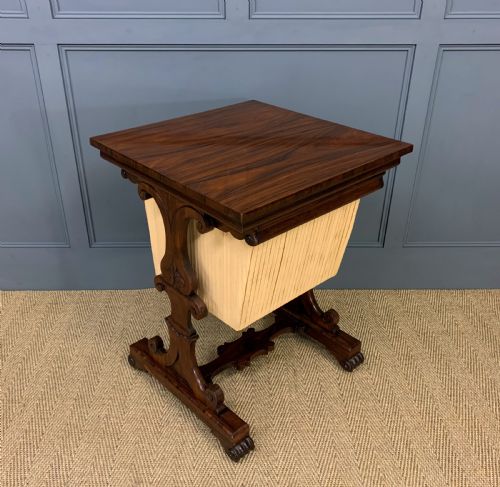
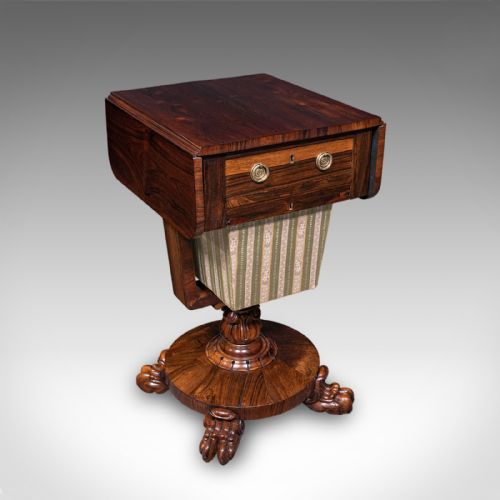
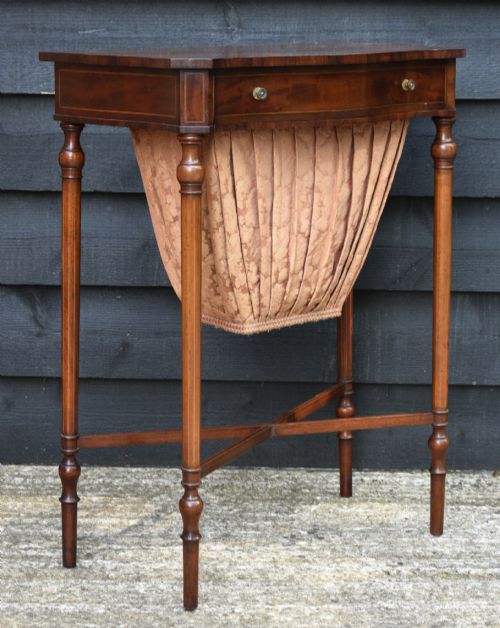
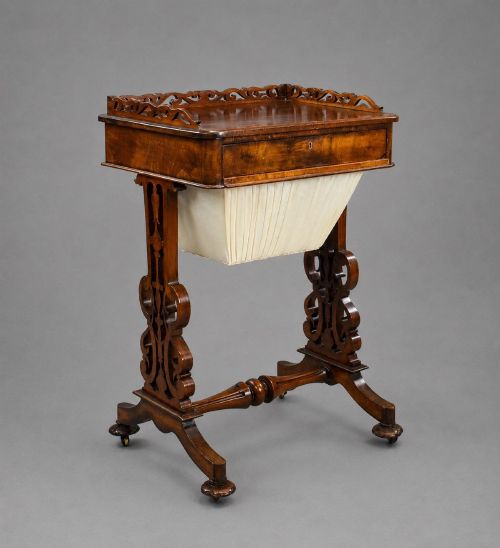
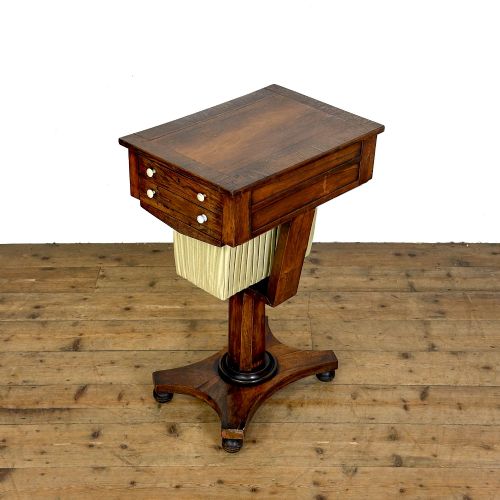
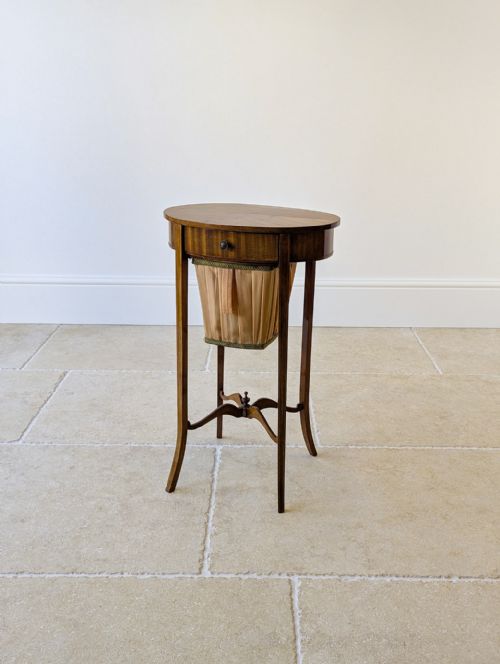
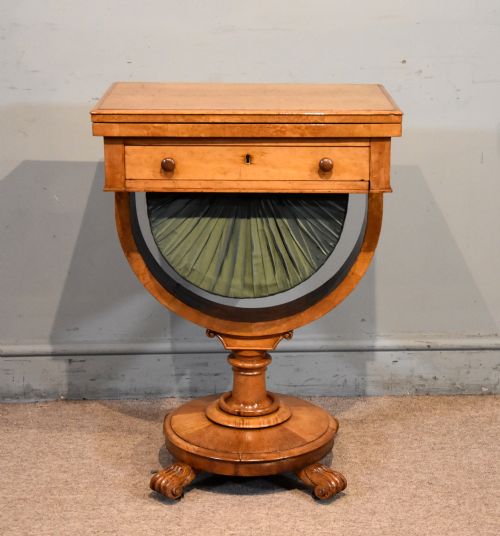
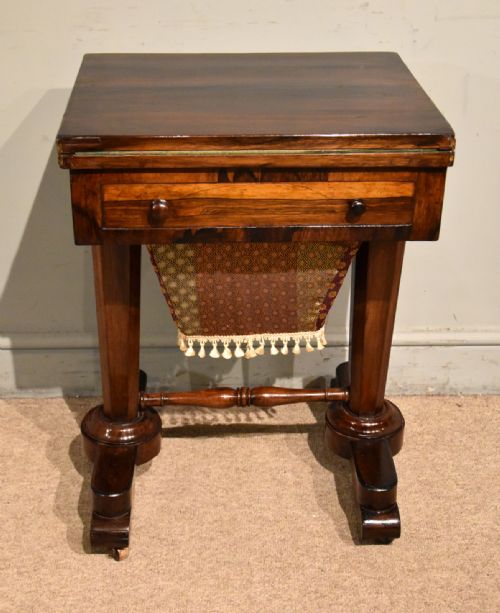
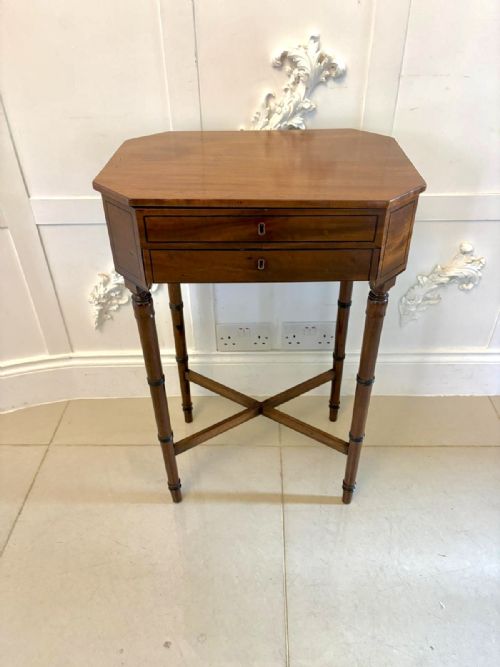
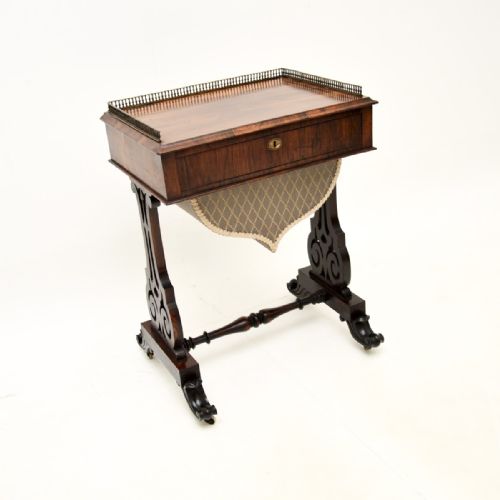
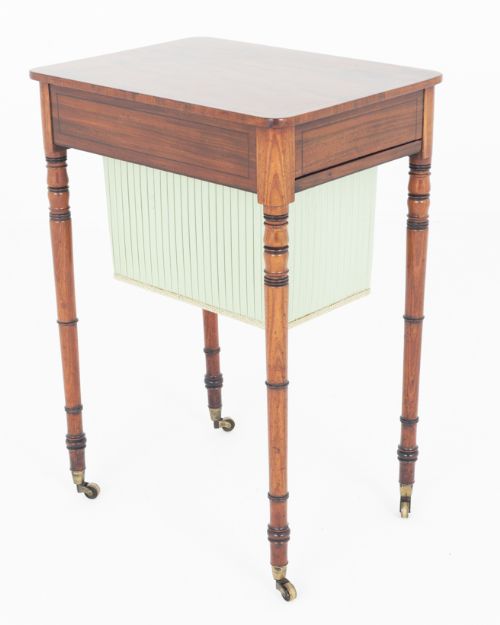
An antique work basket table combines the functions of a sewing stand, a side table and occasionally a games table, designed for domestic use in sitting rooms and boudoirs. These versatile pieces appeared across the Georgian, Regency, William IV and Victorian periods, remaining popular throughout the nineteenth century.
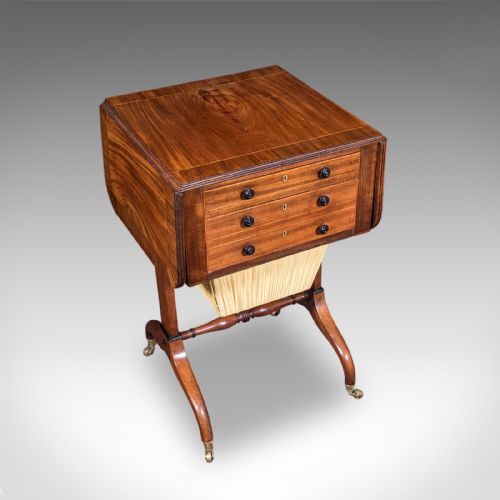
The most common form on this page is the sewing table constructed in rich timbers such as mahogany and rosewood, often fitted with a hanging fabric bag or a wooden box beneath the top. Some examples feature drop leaves, writing surfaces or compartments designed specifically for threads, needles and small implements.
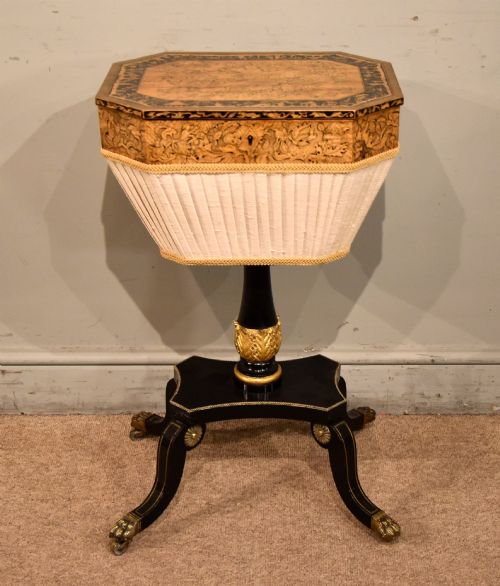
Makers of the nineteenth century produced these tables in various regional and London workshops, incorporating decorative techniques like penwork or incorporating boxwood stringing. Buyers encounter forms ranging from simple occasional tables to elaborate metamorphic designs.
Materials and construction
Cabinetmakers utilised dense hardwoods such as mahogany and figured rosewood for the primary frames and table tops, frequently enhancing the surfaces with boxwood stringing and ebonised wood details. Metal elements like brass appear in hinges, castors and decorative mounts, while giltwood accents adorn finer Regency and Victorian examples.
The integrated baskets or receptacles typically involved gathered silk or other fabrics suspended from wooden frames or drawers. Joinery relied on traditional techniques suitable for small domestic furniture, accommodating folding drop leaves and sliding internal compartments.
Retail Price Guide 2026
Typical UK retail prices for work basket table, calculated from the Sellingantiques database of over a million retail prices indexed since 2003. This retail price guide relies exclusively on Sellingantiques data; no external sources or auction records are used, so the figures do not describe the wider market.
Listings span the Georgian, Regency, William IV and Victorian periods, showcasing forms in mahogany, rosewood, silk and brass.
Judging quality in work tables
The distinction between standard examples and superior pieces rests upon the choice of timber figure, such as highly figured rosewood veneer versus plain mahogany. Refinement in secondary details, including precise boxwood stringing, delicate penwork decoration and quality brass hardware, elevates a piece significantly.
Structural complexity also defines the upper tier, where metamorphic mechanisms or multi-purpose utility as both a games table and sewing stand demonstrate greater ambition in design. The preservation of original fabric components and interior fittings further distinguishes the most accomplished survivals from altered ones.
The Antique Work Basket Table Glossary
- Work table
- A small domestic table designed for sewing and needlework, typically fitted with drawers, compartments or an attached fabric basket.
- Penwork
- A decorative technique using ink applied to wood to create intricate linear designs, often seen on Regency pieces.
- Drop leaf
- A hinged flap on the side of a table top that can be raised to increase surface area or lowered when space is required.
- Metamorphic table
- A piece of furniture engineered to transform from one form or function into another, such as combining a writing surface with a sewing stand.
- Stringing
- Thin inlay of a contrasting wood, such as boxwood, used to outline panels, drawer fronts and table tops.
Frequently Asked Questions
What is an antique work basket table?
An antique work basket table is a small nineteenth-century piece of furniture designed to hold sewing supplies and needlework.
These tables typically feature an integrated fabric bag, a wooden box, or a drawer beneath the top surface, serving both as a functional sewing station and an occasional table.
How were work tables used in the home?
In Georgian and Victorian parlours, these tables provided ladies with a convenient spot to keep ongoing needlework, thread and small tools close at hand.
Many examples included drop leaves or specialised compartments for writing and games, making them adaptable for various light parlour activities throughout the day.
What woods were used for sewing tables?
Cabinetmakers primarily constructed these tables using dense tropical hardwoods such as mahogany and figured rosewood.
Details and accents often incorporated boxwood for stringing, ebonised wood for contrast, and occasional giltwood or brass mounts to enhance the decorative appearance.
How do I identify a Regency work table?
Regency work tables typically exhibit classical proportions, elegant pillar supports, and decorative treatments like intricate penwork or contrasting wood inlays.
They date from the early nineteenth century and often feature refined rosewood or mahogany grains, sometimes incorporating brass paw castors or ring handles.
Can these tables be used as normal side tables?
These pieces function very well as side tables or lamp tables in modern sitting rooms, provided the height matches adjacent seating.
The enclosed storage or fabric basket underneath also offers practical utility for hiding small everyday items while maintaining a traditional aesthetic.