




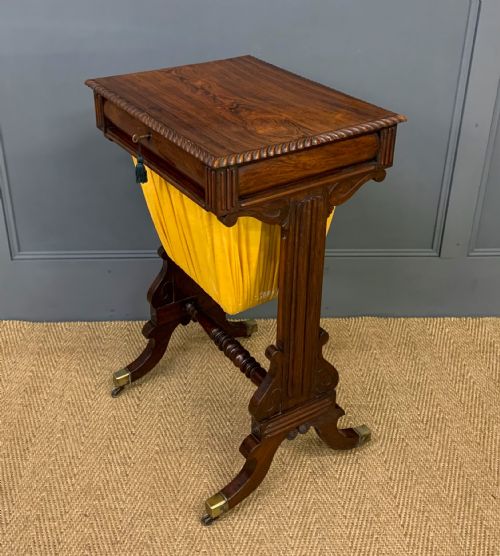
Antique Rosewood Worktable
An antique rosewood worktable combines practical storage for needlework with handsome timber, making it a versatile centrepiece for any room.

Antique Rosewood Worktable
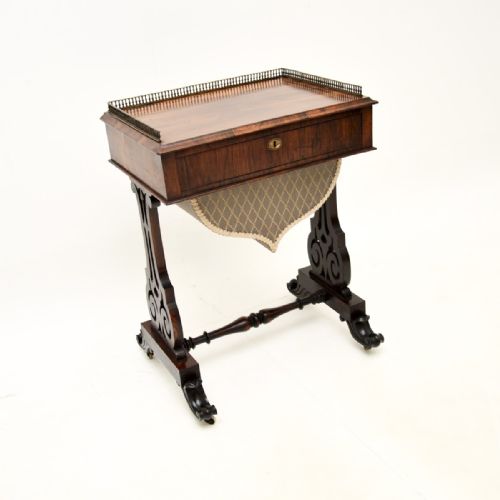
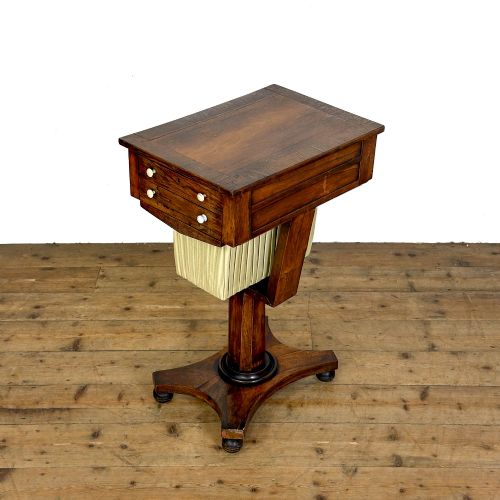
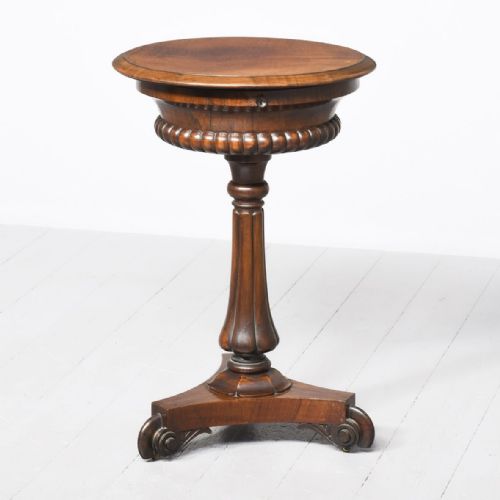
An antique rosewood worktable is a dedicated piece of furniture designed for sewing, writing, and small domestic tasks, appearing frequently in Regency and Victorian forms. These tables often feature fitted interiors with compartments for cottons and needles, alongside drop leaves and under-tier bags made from silk or fabric. Buyers encounter diverse variants ranging from compact occasional tables to multi-functional games and writing consoles.
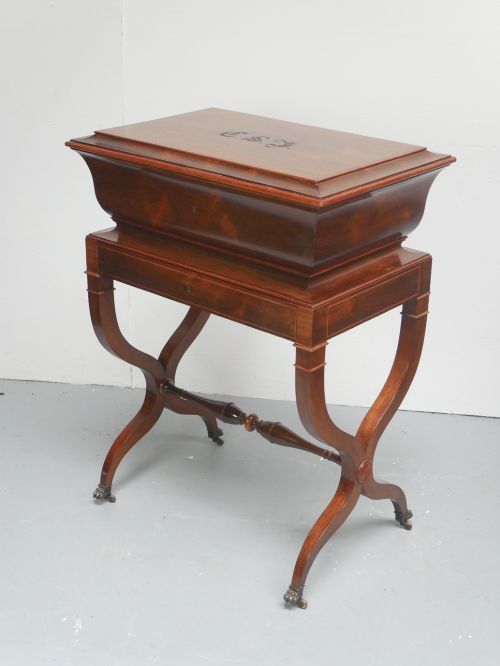
The pieces listed here span the nineteenth century, including specific periods such as William IV, George IV, and French Restoration styles. Sewing tables and work boxes on stands dominate the selection, alongside rarer examples like the Victorian poudreuse and games-adapted surfaces. Each iteration demonstrates how nineteenth-century makers combined utility with refined drawing-room elegance.
How they were made
Cabinet makers utilised dense rosewood veneers applied to solid timber carcases, often highlighting the grain through book-matching and symmetrical placement. Inlays of satinwood and fruitwood add contrasting geometric and floral detail to tops and friezes.
Metal mounts in brass and ormolu provide structural accents and hinges, while secondary woods support internal compartments. Silk and fabric linings complete the fitted interior trays and under-table storage bags.
Antique Rosewood Worktable Retail Price Guide 2026
Typical asking prices for rosewood worktable among the pieces listed under this phrase on Sellingantiques today, from the lower quarter to the upper quarter. They describe what is for sale here now, not the wider market.
What varies in quality
The richness of the rosewood grain and the precision of the satinwood or fruitwood inlay set finer pieces apart from simpler constructions. Higher-tier examples display superior timber selection, where figured veneers are matched seamlessly across the entire top and drawer fronts.
The complexity of the interior fittings also dictates standard, with elaborate multi-compartment boxes and integrated writing slopes showing greater craftsmanship than basic single-drawer models. Furthermore, the integration of secondary functions, such as games boards or reading stands, elevates the design.
Gillows of Lancaster·Lesage
The Antique Rosewood Worktable Glossary
- Rosewood
- A dense, heavily figured timber prized for its dark grain and reddish-brown coloration. It takes a high polish and forms the primary material for these tables.
- Marquetry
- The art of applying pieces of veneer to a structure to form decorative patterns and pictures. Makers used contrasting woods like satinwood to create detailed motifs on tabletops.
- Ormolu
- Gilded bronze used for decorative mounts, feet, and key escutcheons. It provides a bright metallic contrast against the dark rosewood surface.
- Poudreuse
- A French dressing table equipped with a mirror and compartments for cosmetics and toilet articles. Some nineteenth-century examples double as work tables.
- Satinwood
- A pale, lustrous timber native to the tropics, frequently used for contrasting inlay and stringing lines on dark furniture.
Antique Rosewood Worktable: Frequently Asked Questions
What is an antique rosewood worktable?
An antique rosewood worktable is a nineteenth-century small table designed primarily for needlework, containing internal compartments and sometimes a fabric sewing bag suspended beneath.
These pieces served as functional furniture for ladies in the drawing room, combining storage for threads and notions with a refined surface for writing or reading.
How do I tell Regency from Victorian tables?
Regency worktables generally display cleaner architectural lines, brass inlay, and saber legs dating from the early part of the nineteenth century.
Victorian examples tend to feature heavier proportions, carved scrolling supports, and richer revival styles reflecting mid-century tastes.
Were these tables only used for sewing?
While primarily built for needlework, many designs incorporate folding tops for games, writing slopes with leather inserts, or reading racks.
This multi-functionality made them adaptable pieces for sitting rooms and boudoirs throughout the Victorian era.
How should I care for rosewood furniture?
Rosewood benefits from stable indoor humidity and protection from direct sunlight, which can fade the rich reddish-brown colour of the timber.
Periodic application of appropriate wax polish maintains the lustre of the veneer without building up heavy residues.