
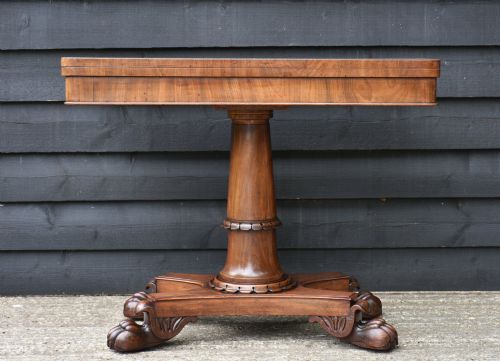
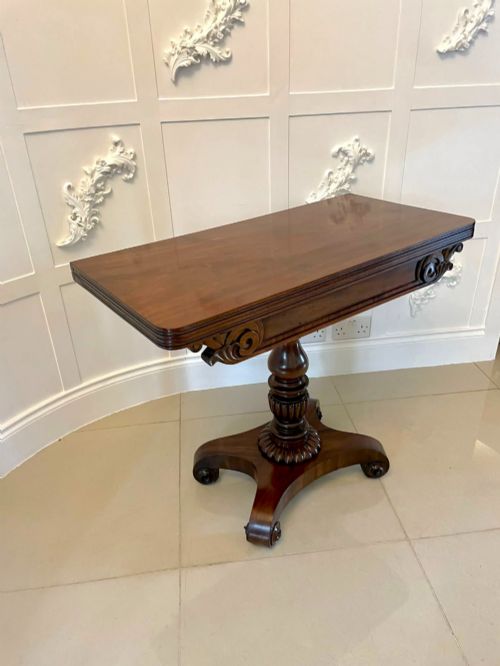
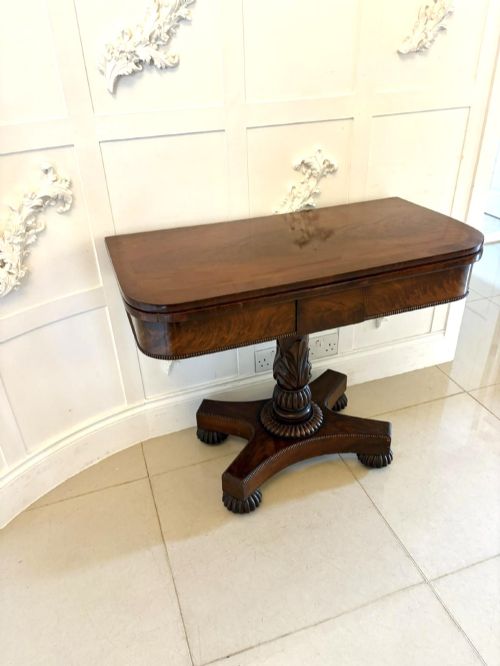
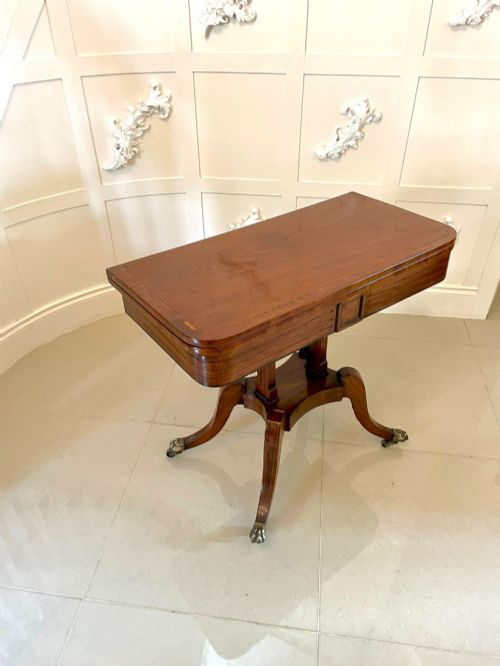

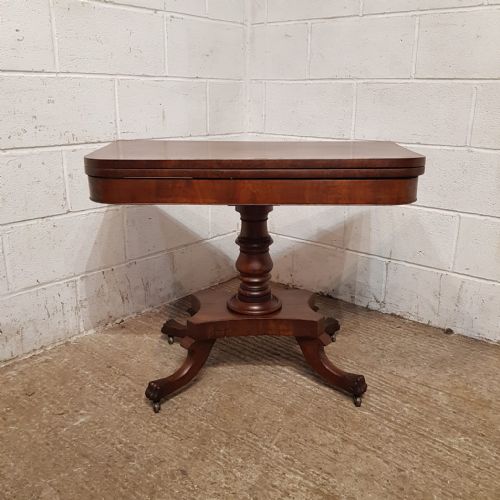
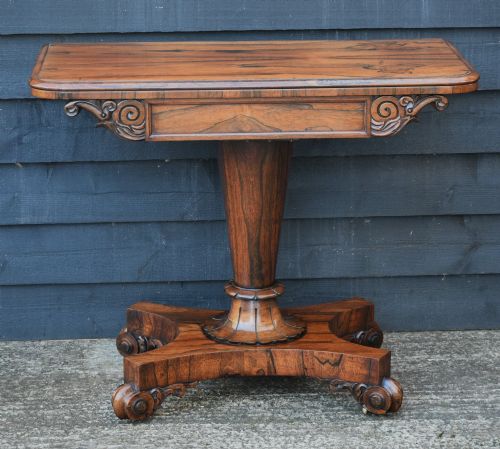
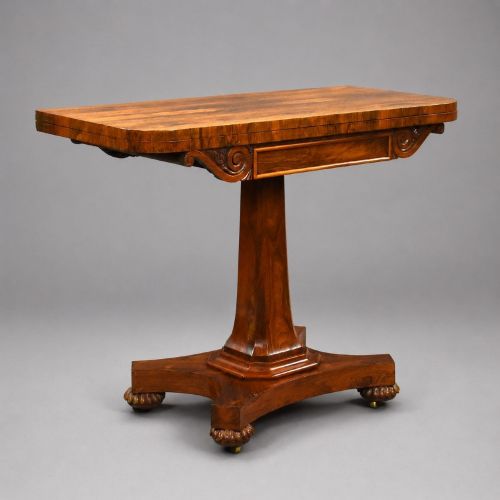
Regency Pedestal Games Table
A regency pedestal games table combines elegant proportions with a practical fold-over top, offering collectors a versatile piece of period furniture.
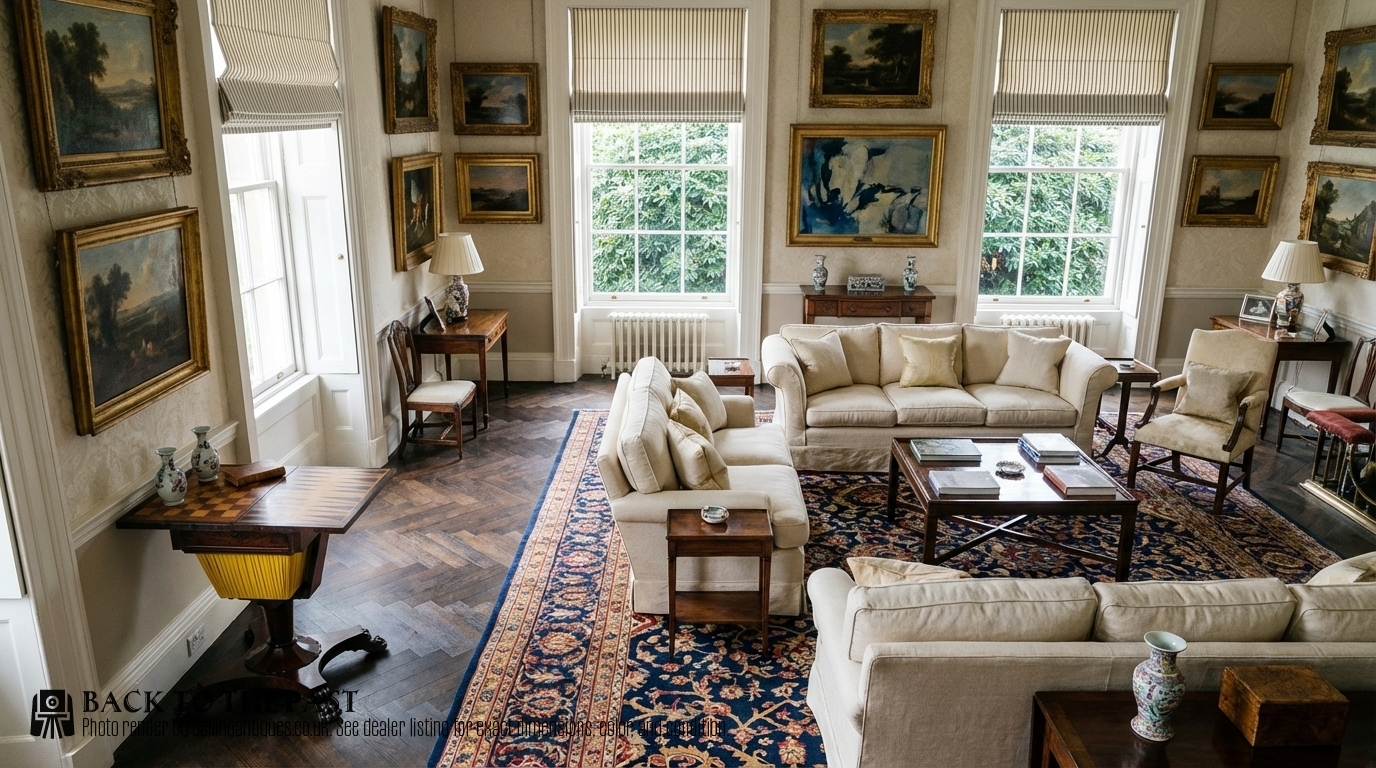
Regency Pedestal Games Table
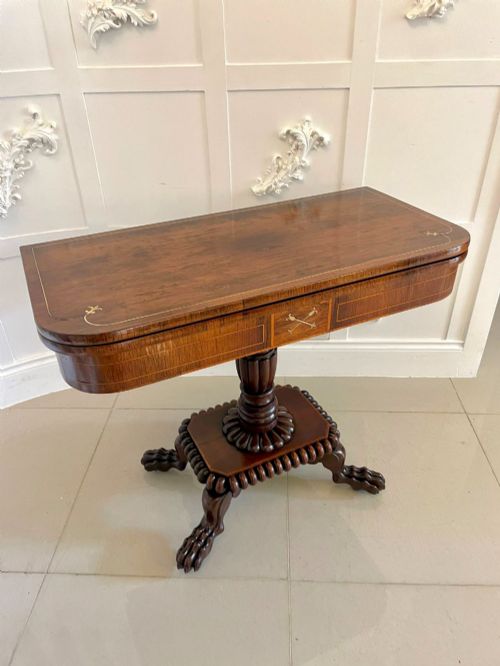
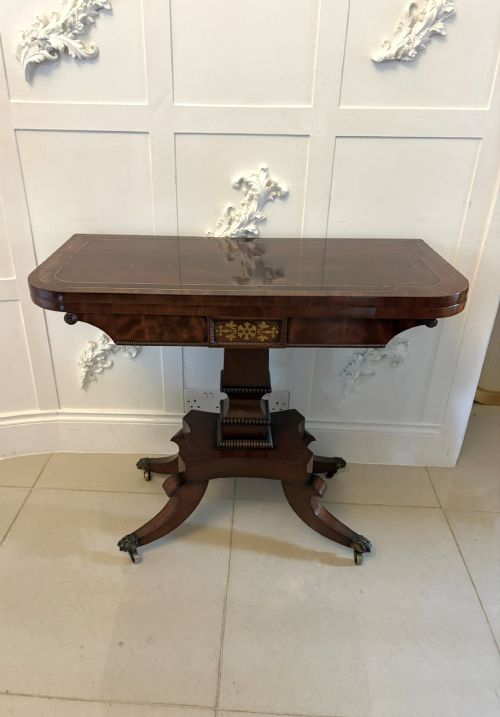
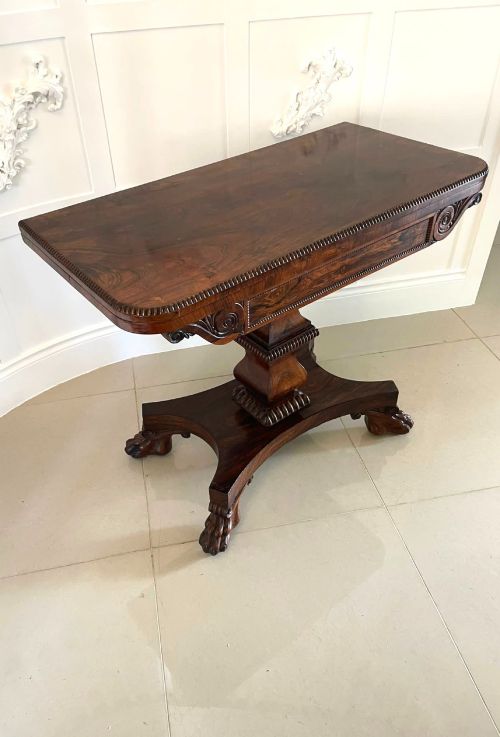
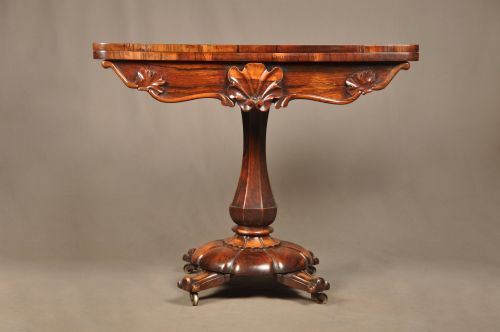
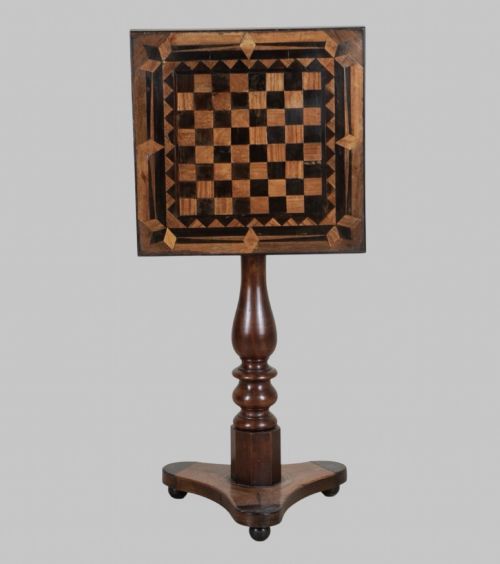
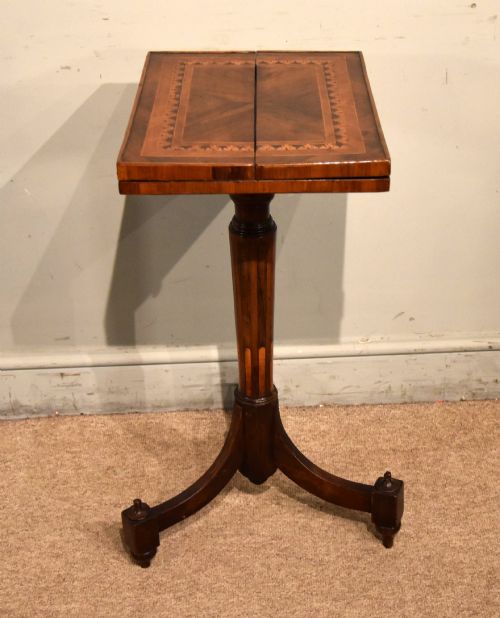
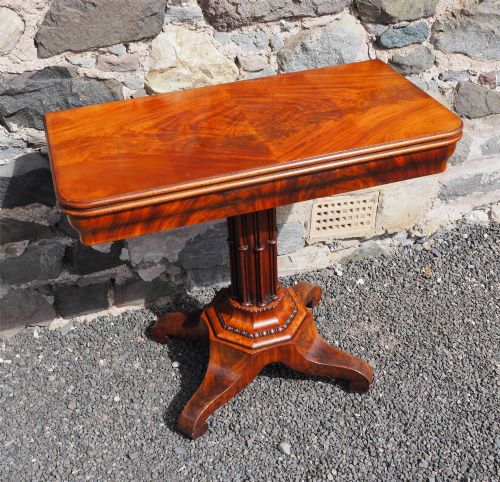
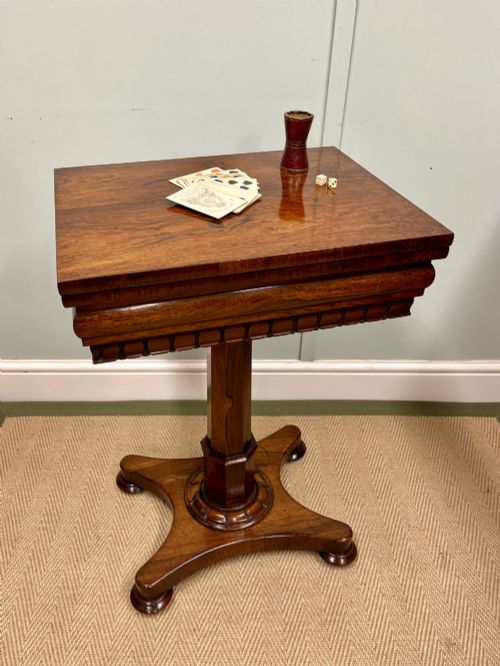
A regency pedestal games table typically arrives as a card, chess, or multi-purpose games table supported by a central pillar and platform base. The selections seen here span the Regency, Georgian, and William IV periods, alongside later nineteenth-century examples.
Makers of the era designed these tables with fold-over leaves, swiveling tops, and hidden compartments intended for cards and counters. Mahogany and rosewood dominate the forms, frequently enriched with brass inlay, boxwood stringing, and satinwood veneers.

What varies in quality
The refinement of the timber selection dictates much of the distinction, separating plain surfaces from richly figured flame mahogany and highly grained rosewood. Precision in the brass inlay and crispness of the carved pedestal bases also mark out superior workshops.
Structural integrity of the pivoting mechanism and the alignment of the fold-over top reveal the original standard of cabinet making. Examples attributed to prominent makers display a higher degree of finish in the interior compartments and secondary woods.
Regency Pedestal Games Table Retail Price Guide 2026
Typical asking prices for regency pedestal games table among the pieces listed under this phrase on Sellingantiques today, from the lower quarter to the upper quarter. They describe what is for sale here now, not the wider market.
Listings feature various exotic timbers, including burr yew, olive, and satinwood, alongside standard mahogany and rosewood.
George Bullock·Gillows
The Regency Pedestal Games Table Glossary
- Pedestal base
- A central pillar support resting on a platform or feet rather than four traditional corner legs. This form allows greater legroom for seated players.
- Fold-over top
- A hinged table surface that doubles the surface area when opened for card games or writing. The interior often conceals a baize or fabric lined playing surface.
- Brass inlay
- Strips or motifs of brass embedded flush into the timber surface to create geometric or floral patterns. It is frequently seen on rosewood tables from the Regency period.
- Flame mahogany
- A veneer cut from the branch junction of a mahogany tree, producing a distinctive fire-like ripple pattern. It was favoured for the primary display surfaces of high-status tables.
Regency Pedestal Games Table: Frequently Asked Questions
What is a regency pedestal games table?
A regency pedestal games table is a nineteenth-century multi-functional table featuring a central pillar base and a top that opens to reveal a playing surface for cards or chess.
These tables were designed to sit in the drawing room, serving as a console or side table when closed and transforming for evening entertainment when opened.
How do I identify a Regency period piece?
Regency pieces typically date from the early nineteenth century and exhibit classical architectural influences, dark timbers like rosewood and mahogany, and brass inlay.
Look for distinctive pedestal supports, such as scroll bases, lyres, or carved dolphin motifs, which help distinguish them from later Victorian interpretations.
Were these tables used only for cards?
While primarily built for card games, many examples accommodated chess, backgammon, or general needlework and writing.
Interior wells often stored gaming counters, dice, or sewing materials beneath the folding top.
How do I care for rosewood and mahogany surfaces?
Protect the timber from direct sunlight and maintain a stable room humidity to prevent veneer splitting or fading.
Apply a traditional beeswax polish sparingly and buff with a soft cloth to preserve the natural lustre of the polished wood.