


Dark Rosewood Work Table
A dark rosewood work table combines rich grain with practical compartments, serving as an elegant desk or sewing station.

Dark Rosewood Work Table
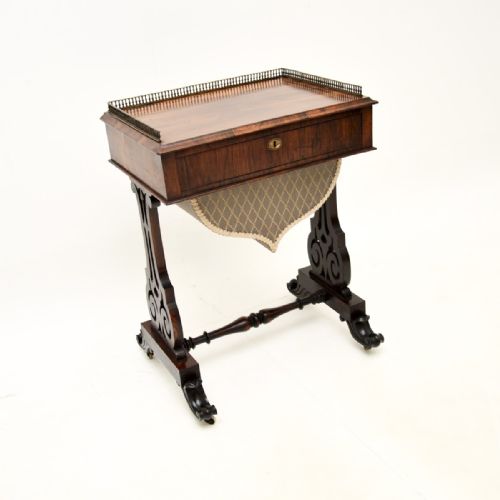
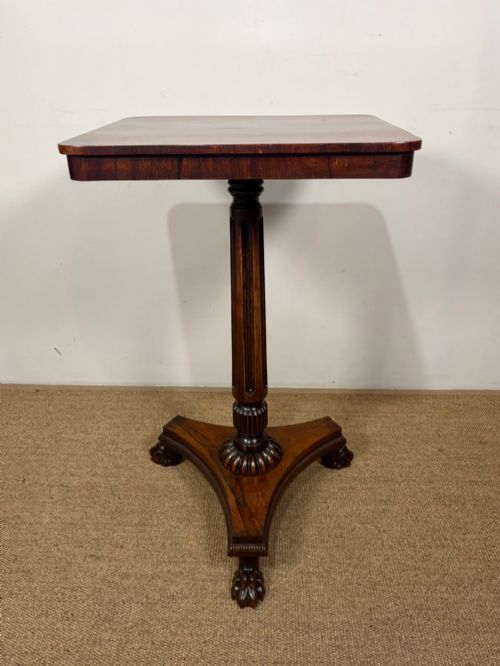
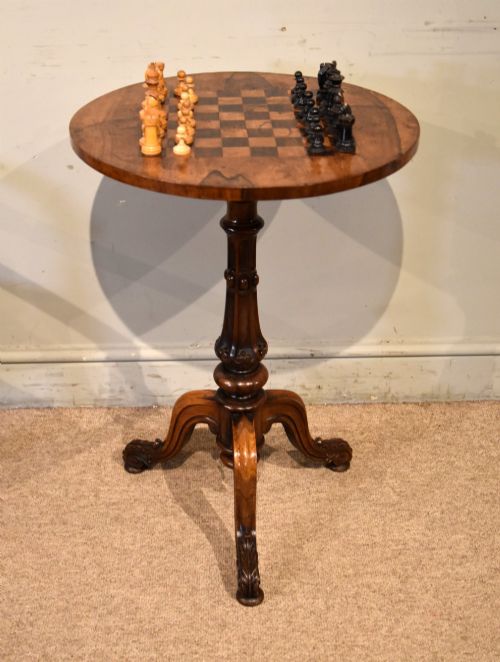
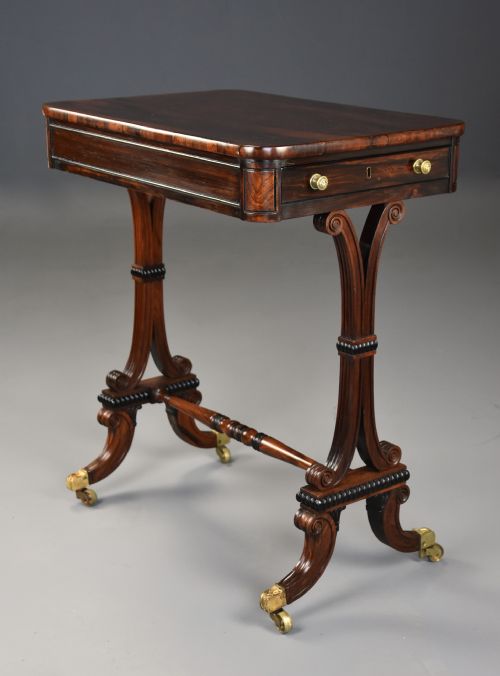
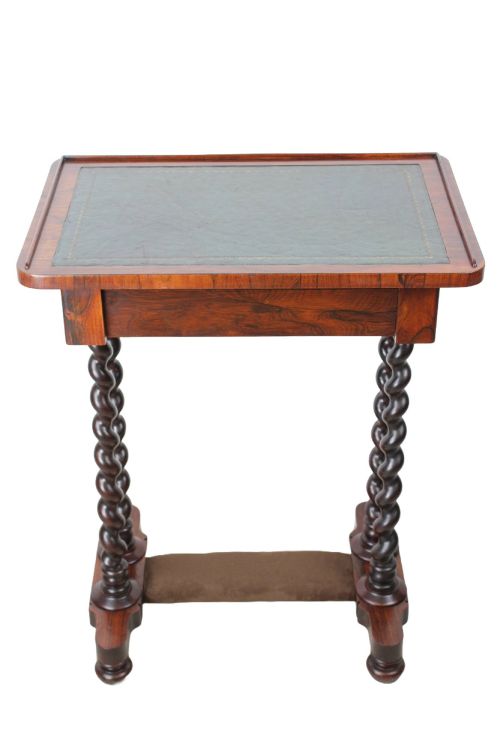
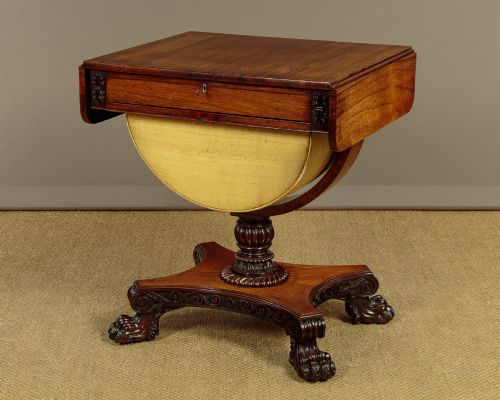
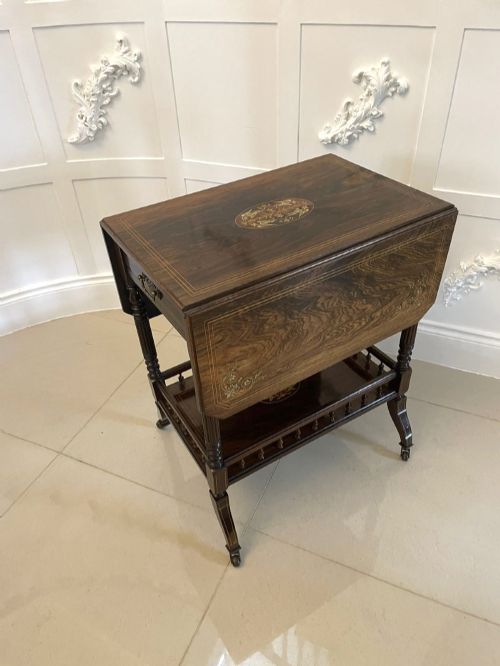
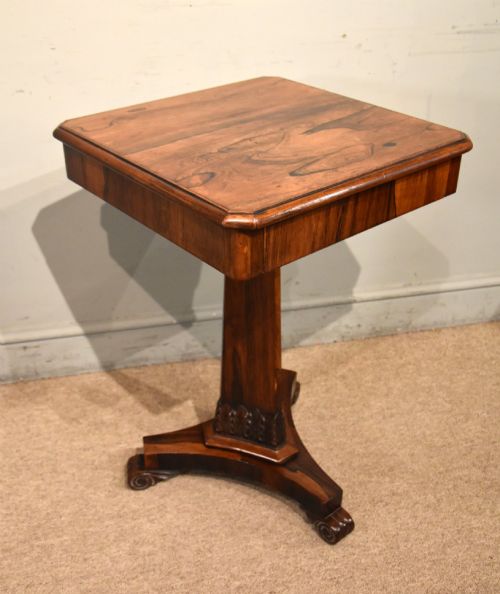
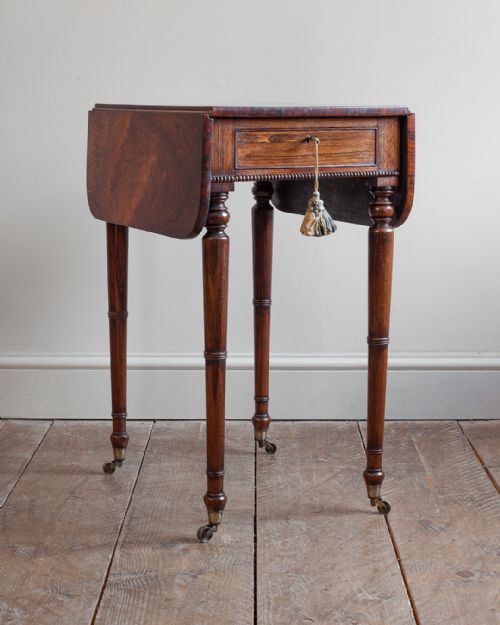
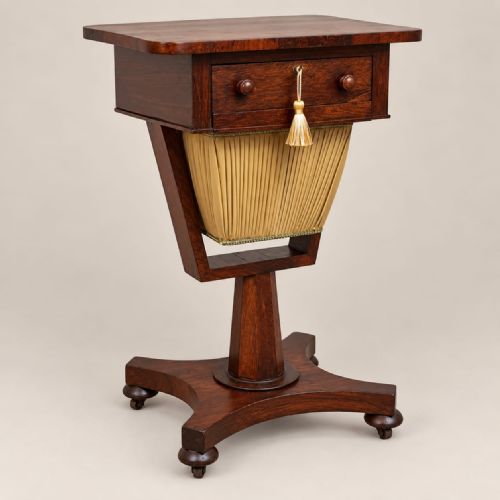
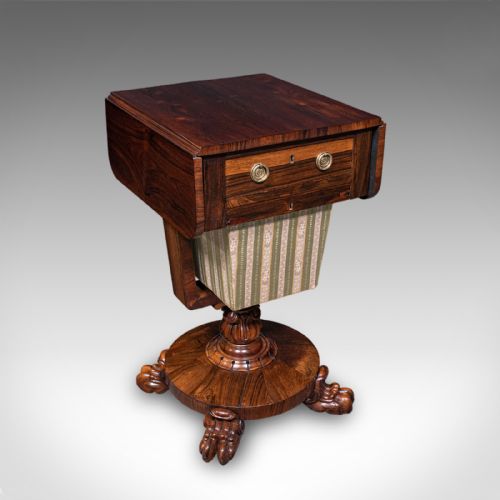
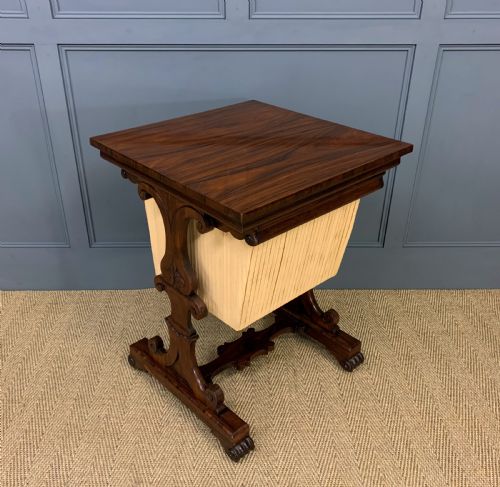
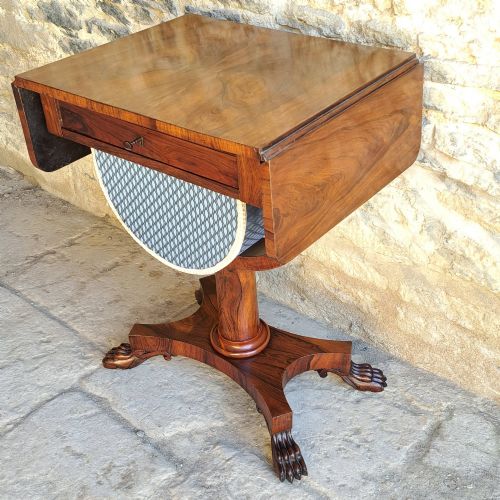
A dark rosewood work table is a functional domestic piece designed for sewing, writing, and small games, appearing frequently across Regency, William IV, and Victorian periods. Buyers encounter drop leaf occasional tables, pedestal sewing tables, and trumpet forms fitted with internal compartments and fitted drawers.
These tables originate largely from nineteenth-century British workshops, spanning Georgian influences through to late Victorian revivals. Makers utilised the dense, dark timber to create versatile furnishings for the parlour, boudoir, and drawing room.
Materials and Technique
Craftsmen built these tables using solid rosewood and veneers over secondary timbers, frequently incorporating intricate wood inlay, satinwood detailing, and brass fittings. Drop leaves, pedestal columns, and caddy tops required precise joinery to support folding mechanisms and internal sewing bags.
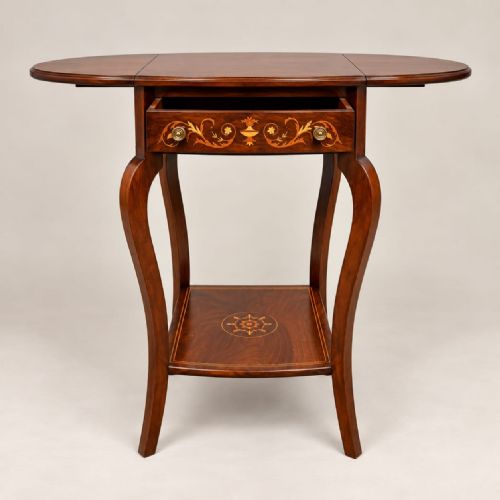
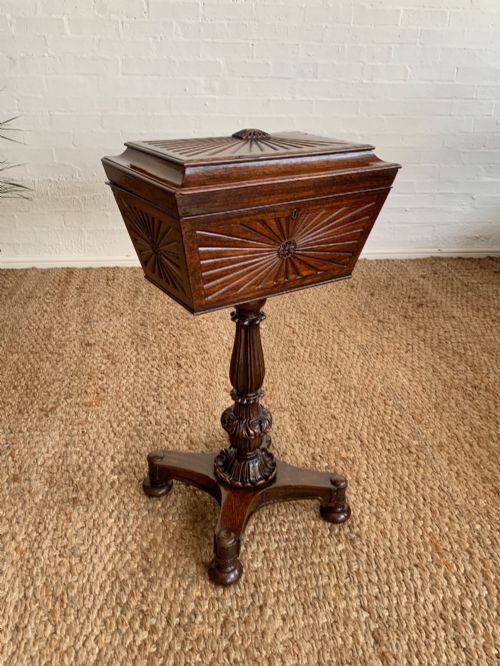
Surfaces often display marquetry or linear inlay, while structural elements utilise turned pillars, sunburst carvings, and tiered platforms. Silk and fabric components traditionally lined the under-table work bags and compartments designed for needles, threads, and documents.
Dark Rosewood Work Table Retail Price Guide 2026
Typical asking prices for dark rosewood work table among the pieces listed under this phrase on Sellingantiques today, from the lower quarter to the upper quarter. They describe what is for sale here now, not the wider market.
Materials appearing across these tables include solid rosewood, mahogany, satinwood inlay, brass accents, and fabric work compartments.
Craftsmanship and Proportion
Quality rests upon the depth of the rosewood grain, the crispness of any marquetry inlay, and the structural integrity of the pivoting or folding mechanisms. Superior pieces exhibit refined carving on pedestals and seamless matching of timber veneers across table tops and drop leaves.
The sophistication of the internal fittings, such as compartmentalised stationery trays or specialised sewing boxes, distinguishes finer workshop output from standard production. Proportion and balance between the upper surface and the supporting base define the visual success of each piece.
George Bullock·Gillows
The Dark Rosewood Work Table Glossary
- Work table
- A small movable table equipped with drawers or fabric bags specifically designed for needlework, sewing, and domestic crafts. These pieces frequently double as writing or occasional surfaces.
- Marquetry
- Decorative veneer patterns formed by fitting together small pieces of diverse woods, such as satinwood, into the primary rosewood surface. This technique creates elaborate floral or geometric motifs.
- Caddy top
- A hinged or stepped lid construction reminiscent of tea caddies, often featuring carved mouldings on the upper surface of the table. It provides a distinct profile typical of the period.
- Drop leaf
- A hinged side flap that folds down to reduce the footprint of the table or lifts up on pivoting wooden arms to extend the surface area. Pembroke tables and sewing desks commonly utilise this feature.
- Trumpet table
- A pedestal-supported work table characterised by an octagonal or flared body shaped like a musical instrument, opening to reveal internal storage compartments.
Dark Rosewood Work Table: Frequently Asked Questions
What is a dark rosewood work table used for?
These tables served primarily as compact stations for needlework, sewing, and letter writing in nineteenth-century domestic settings. The integrated drawers and fabric bags kept crafting supplies organised out of sight.
Today, they function well as bedside tables, lamp tables, or small desks in modern living spaces, offering concealed storage alongside a polished surface.
How do I tell Regency from Victorian tables?
Regency and early pieces tend to display cleaner classical lines, architectural pedestals, and restrained brass mounts. They often reflect the influence of designers like Gillows.
Victorian examples frequently introduce heavier proportions, intricate marquetry inlay, and distinct forms like the trumpet table or elaborate caddy tops.
Are the fabric bags original?
The hanging silk or fabric work bags beneath the tables experienced heavy wear during daily use and were frequently replaced over the decades. Finding an intact original lining is uncommon.
Many examples retain restored or replica silk linings chosen to match the historical aesthetic of the timber frame and period interior.
How do I care for antique rosewood?
Rosewood requires protection from direct sunlight and extreme humidity changes to prevent the dark timber veneers from drying out or splitting. Gentle dusting with a dry cloth maintains the finish without stripping natural oils.
Occasional applications of appropriate wax feed the wood grain and preserve the deep reddish-brown tone characteristic of nineteenth-century pieces.