


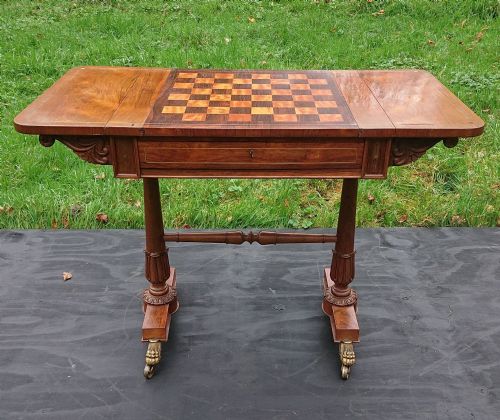


Gillows Work Table
A Gillows work table is a refined nineteenth-century piece designed for needlework and writing, prized for exceptional Lancaster craftsmanship.
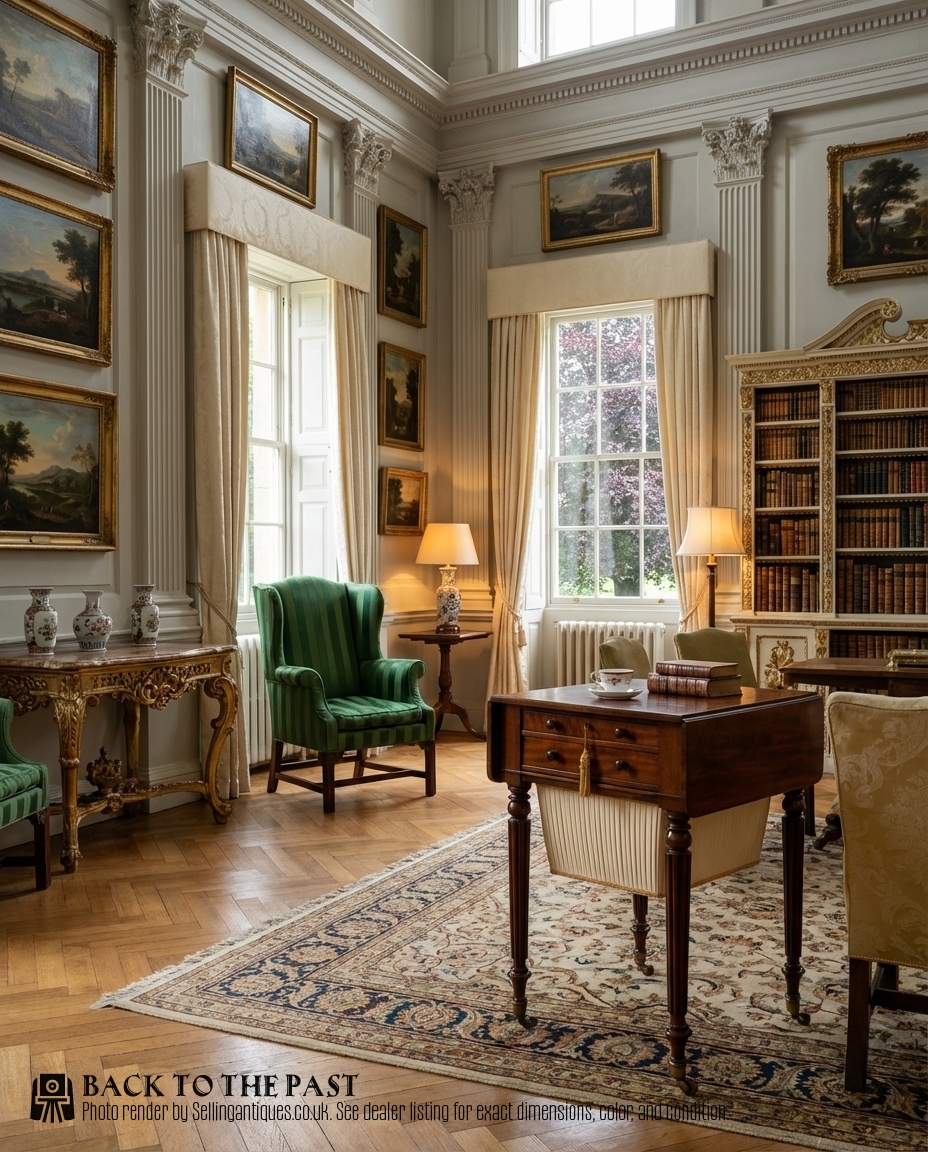
Gillows Work Table
When you search for a gillows work table, you encounter nineteenth-century sewing, writing, and occasional tables originating from the celebrated Lancaster firm. These pieces combine domestic utility with cabinet-making of the highest order, often incorporating fitted interiors for threads and implements.
The versions most frequently met on this page date from the Regency and William IV periods, constructed in figured rosewood or rich mahogany. They frequently feature drop leaves, turned legs, and lower silk catch bags or wooden drawers.
Beyond standard sewing tables, the selections span dual-purpose games tables with chess boards and sophisticated writing desks. Each example demonstrates the restrained elegance and functional design characteristic of Gillows workshops.
How they were made
Cabinet-makers utilised solid mahogany and rosewood, often selecting flame mahogany or burr walnut veneers for striking surface grain. Secondary woods like oak and pine appear in drawer linings and internal framing.
Construction techniques include precise dovetailing for drawers and robust turning for legs, sometimes incorporating brass castors and inlaid details. Drop-leaf mechanisms rely on hinged flaps supported by pivoting wooden brackets.
Fitted interiors required meticulous miniature joinery to create compartments for spools and writing materials, paired with gathered fabric bags suspended beneath.
Some nineteenth-century makers thoughtfully included sliding silk catch bags so your embroidery scraps could disappear in style.
What varies in quality
The selection of timber dictates much of the visual appeal, with highly figured rosewood veneers and rich flame mahogany setting the finest examples apart from plainer variants. Grain matching across table tops and drawer fronts reveals the cabinet-maker's deliberate attention to harmony.
Hardware and internal fittings demonstrate the grade of production, from simple turned knobs to cast brass handles and intricate lidded compartments. The crispness of carved mouldings and the smoothness of drawer movement further separate standard workshop output from exceptional cabinet-work.
Gillow Lancaster·Waring and Gillow
The Gillows Work Table Glossary
- Work table
- A small domestic table designed to hold sewing equipment, threads, and textile projects. These pieces often feature an attached fabric bag or integrated wooden drawers beneath the top.
- Pembroke table
- A small rectangular table featuring two hinged drop leaves on opposing sides. This form allows the footprint to expand or contract according to the requirements of the room.
- Sofa table
- A low rectangular table traditionally placed in front of or beside a sofa, often fitted with small drawers. Gillows produced sophisticated variations that doubled as writing or work surfaces.
- Flame mahogany
- A decorative mahogany veneer cut from timber where the branches join the main trunk. This process produces a distinct flickering, flame-like grain pattern.
- Drop leaf
- A hinged flap on a table surface that can be raised to extend the top or lowered when space is limited. Brass hinges and wooden support brackets secure the leaf in position.
Gillows Work Table: Frequently Asked Questions
What is a gillows work table used for?
These tables served as versatile companions for domestic needlework, embroidery, and light correspondence. Ladies utilised the internal compartments to organise threads, needles, and sewing implements.
Beyond the sewing room, their compact dimensions allowed them to function as lamp tables, side tables, or occasional desks in Regency and Victorian interiors.
How do I identify a gillows work table?
Look for exceptional timber selection, such as figured rosewood and flame mahogany, coupled with restrained neoclassical or revival design. Many pieces bear stamped signatures, maker's marks, or distinct construction habits associated with the Lancaster workshops.
Attributions often rest on characteristic turned legs, fine brass castors, and meticulously fitted interior compartments designed for domestic utility.
Which woods were used in these tables?
Mahogany and rosewood dominate the surviving pieces, favoured for their rich colour and stable grain. Makers utilised solid timber for structural elements and applied figured veneers to tabletops and drawer fronts.
Walnut appears in later Victorian examples, while secondary woods like oak support internal drawer construction.