


Nineteenth Century Sewing Desk
A nineteenth century sewing desk brings refined utility to a room, offering clever storage alongside an elegant surface.
Nineteenth Century Sewing Desk
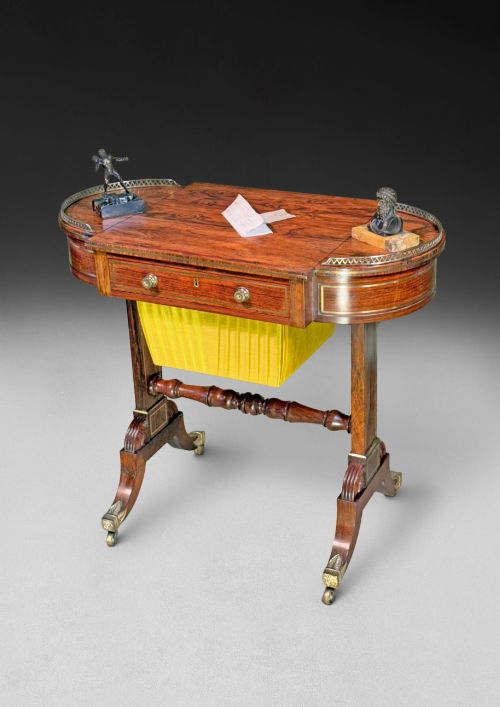
A nineteenth century sewing desk combines a compact writing or display surface with integrated compartments for needlework and domestic crafts. These pieces appear in Regency, Victorian, and William IV styles, reflecting the changing tastes of the eighteen hundreds.
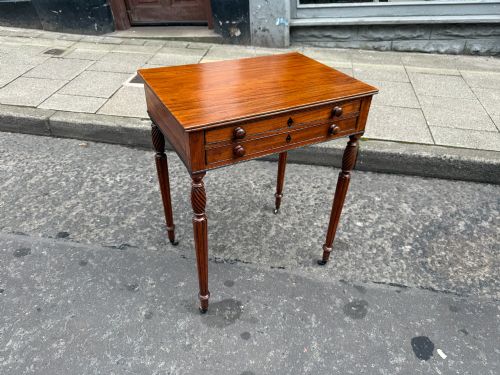
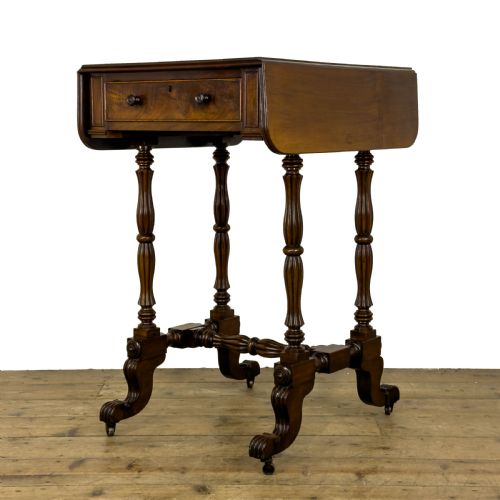
Most examples function primarily as work tables or drop leaf tables, featuring fitted interiors beneath the main top. Mahogany, rosewood, and burr walnut dominate the construction, often accented with boxwood inlay or delicate satinwood.
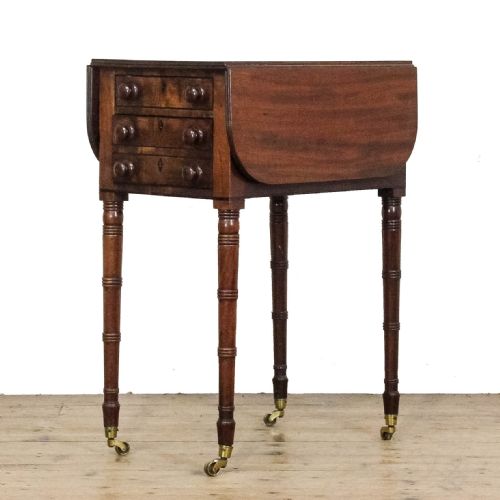
Buyers will encounter pedestal forms alongside drop leaf and pembroke designs. The origin spans simple domestic workshops up to distinguished cabinet makers like Gillows of Lancaster.
Materials and construction
Cabinet makers utilised dense hardwoods such as mahogany and rosewood for the primary carcases, ensuring stability for daily use. Burr walnut and satinwood veneers added decorative contrast to the exterior surfaces.
Inlaid boxwood details frequently frame the tops and drawers, requiring precise hand-cutting and fitting by skilled artisans. Brass fittings, including castors and pulls, complete the structural assembly.
Listings feature mahogany, rosewood, and burr walnut alongside satinwood and boxwood inlay.
Evaluating craftsmanship
Quality rests upon the selection of timber veneers and the precision of the boxwood inlay. Finer pieces display carefully matched grain patterns across the top and drawer fronts, while simpler versions rely on plain mahogany or rosewood boards.
The sophistication of the internal fittings distinguishes standard workshop output from exceptional cabinet work. Well-designed compartments and smoothly operating drop leaves indicate superior construction standards.
GILLOWS of LANCASTER
The Nineteenth Century Sewing Desk Glossary
- Work Table
- A small multipurpose table designed for sewing and needlework, typically featuring an internal compartment or suspended bag. These items served as practical furniture for the parlour or drawing room.
- Drop Leaf
- A table top configuration featuring hinged flaps that raise to extend the surface area when needed. This mechanism allowed desks to remain compact until utilised.
- Pembroke
- A rectangular table design featuring two hinged drop leaves on opposite sides and one or two small drawers. It originated in the eighteenth century and remained popular throughout the nineteenth.
- Satinwood
- A lustrous, yellow-toned timber imported from the tropics, prized for high-end Regency and Victorian cabinet work. It creates a striking contrast when paired with darker woods like mahogany.
Nineteenth Century Sewing Desk: Frequently Asked Questions
What is a nineteenth century sewing desk?
A nineteenth century sewing desk is a compact table designed for needlework, featuring fitted internal compartments beneath the main surface. These pieces often double as writing or occasional tables.
Cabinet makers of the period produced them in various timbers, including mahogany, rosewood, and burr walnut. They remain versatile items for modern interiors.
How do I identify a Regency sewing table?
Regency sewing tables typically feature classical proportions, dark timbers like mahogany or rosewood, and restrained brass mounts. Pedestal bases with sabre legs are common in this style.
Look for crisp boxwood inlay and balanced geometric forms that define the early decades of the nineteenth century.
Where were sewing tables placed?
These tables stood in drawing rooms, parlours, and private chambers where ladies engaged in embroidery and correspondence. Their compact size allowed them to sit near windows or seating areas.
Drop leaf mechanisms meant they could expand when extra surface space was required during social calls.
What is a pembroke worktable?
A pembroke worktable incorporates hinged drop leaves on two opposing sides, supported by folding brackets. It combines the utility of a pembroke table with internal storage for sewing equipment.
This form offers flexibility for smaller rooms while maintaining a finished appearance from all angles.