
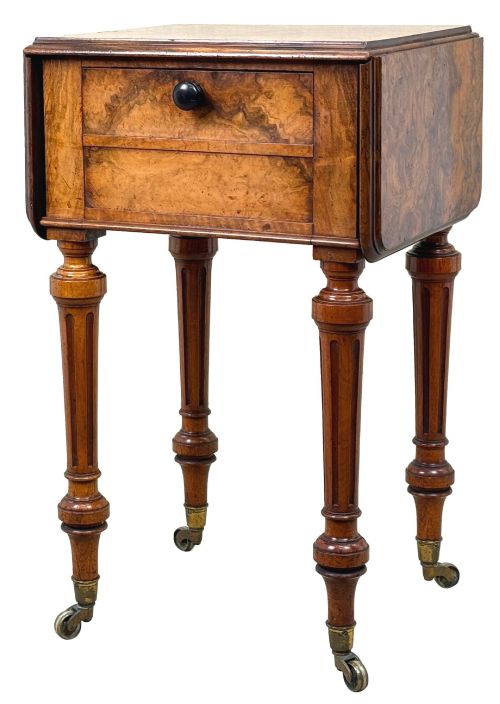
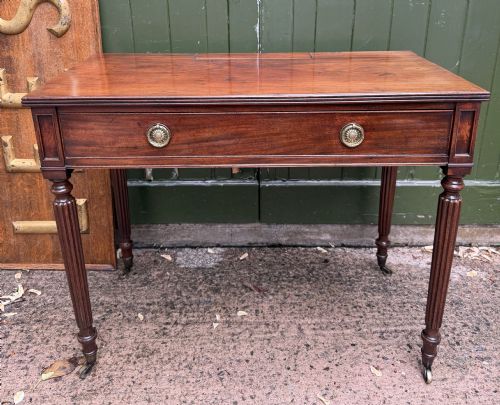


Gillows Lancaster Side Table
A gillows lancaster side table brings precision cabinet-making and restrained proportion to a room, valued for its documentary stamp and functional utility.
Gillows Lancaster Side Table
A gillows lancaster side table is a piece of English brown furniture or occasional furniture produced by the celebrated Lancaster and London firm, spanning periods from the late eighteenth century through the Victorian era. When searching for a gillows lancaster side table, buyers encounter forms ranging from compact writing and chamber tables to larger serving and library tables.
The material palette is predominantly mahogany, rosewood, and satinwood, occasionally appearing in oak or walnut during later revival periods. Surviving examples demonstrate the firm's versatility, including specialised forms like work tables, pembroke tables, and console tables.
Most pieces seen on this page date from the Regency and nineteenth century, reflecting the firm's peak production years. Attribution often rests on physical characteristics, stamps, or stylistic cues that align with documented works from the Lancaster workshops.
How they were made
Makers utilised dense timbers such as Cuban mahogany, rosewood, and satinwood, selected for grain figure and stability. Solid secondary woods like oak appear in drawer linings and internal framing.
Construction techniques involve precise dovetailing, finely turned legs, and brass castors. Details such as stamped maker marks, ebony stringing, and leather writing inserts evidence the workshop standard.
Bidet stools and dumb waiters occasionally slip into the furniture lineup alongside the standard writing and side tables.
What varies in quality
The grade of timber selection dictates visual success, with highly figured rosewood or figured mahogany marking out superior examples. Crispness in carved details, reeded legs, and brass mounts separates standard output from exceptional commissions.
Documentation provides the clearest distinction, where physical stamps by the firm hold greater weight than stylistic attribution alone. Original brass hardware, uncompromised drawer linings, and intact structural integrity elevate a piece within the range.
Gillows of Lancaster·Gillow Lancaster·Gillows
The Gillows Lancaster Side Table Glossary
- Gillows
- A renowned furniture-making firm founded in Lancaster in the eighteenth century by Robert Gillow, known for high quality cabinet-making and stamped signatures.
- Regency
- An English design period spanning the early nineteenth century, characterised by classical revival motifs, clean lines, and dark imported woods.
- Pembroke table
- A small occasional table featuring two hinged drop leaves on opposite sides, frequently utilised as a breakfast or writing surface.
- Satinwood
- A durable, yellowish timber native to India and the Caribbean, highly prized in cabinet-making for its lustrous grain and decorative veneers.
- Quartetto tables
- A nested set of four small occasional tables designed to slide neatly beneath one another when not in use.
Gillows Lancaster Side Table: Frequently Asked Questions
How do I spot a real stamp?
Genuine maker marks typically appear stamped directly into the top edge of a drawer side, reading simply as the firm name.
Faded impressions require careful angled lighting to read clearly, and lack of a stamp does not rule out attribution based on construction methods.
What woods were used most?
Mahogany forms the majority of surviving examples, sourced in both standard and heavily figured varieties like Cuban mahogany. Rosewood and satinwood appear frequently in finer Regency work tables and writing desks.
Later Victorian pieces introduce oak and walnut during revival periods.
Can I use one as a desk?
Many smaller examples served originally as chamber tables, dressing tables, or writing desks equipped with fitted drawers and leather inserts.
Height and knee clearance vary by piece, so checking individual dimensions ensures comfortable daily writing use.
How do I care for the surface?
Polished timber surfaces require regular dusting with a dry lint-free cloth and protection from direct sunlight and excessive moisture.
Avoid modern silicone sprays, relying instead on traditional beeswax applied sparingly to nourish the antique polish.