

Small Mahogany Drop Leaf
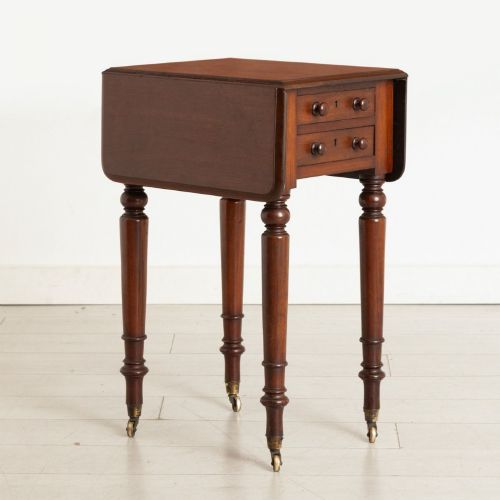
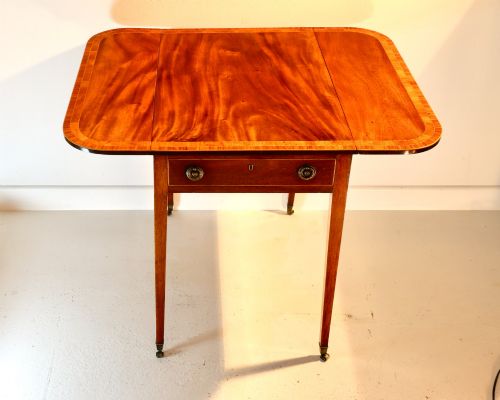
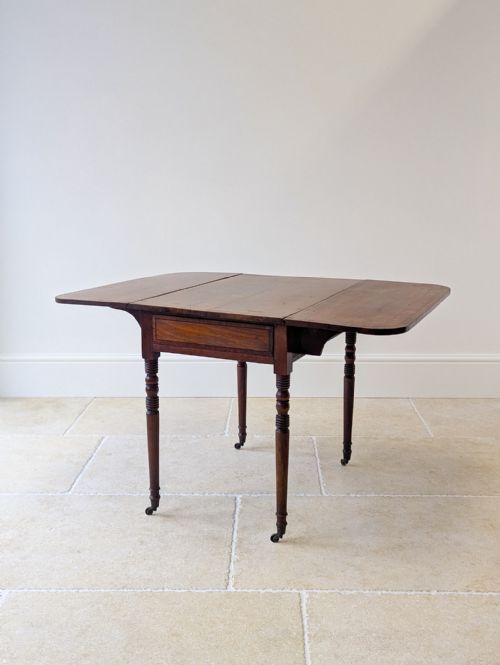
When you search for small mahogany drop leaf, you are looking at compact timber tables designed to expand when needed and fold away neatly against a wall.
Small Mahogany Drop Leaf
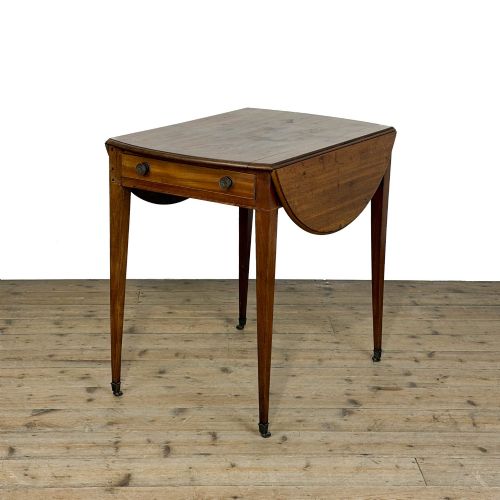
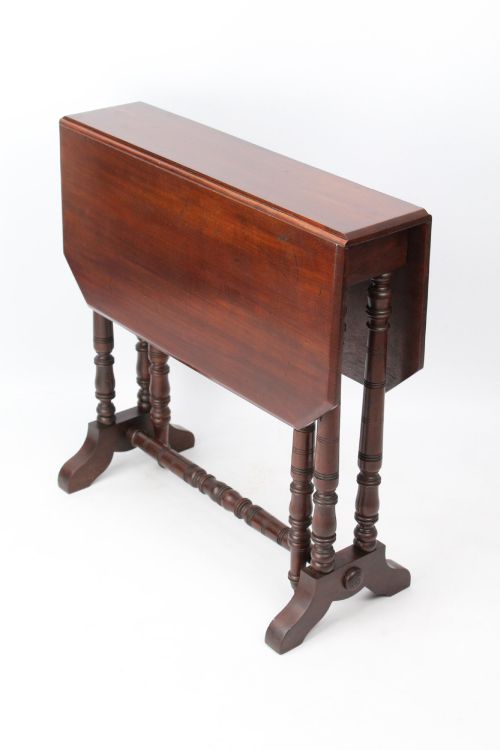
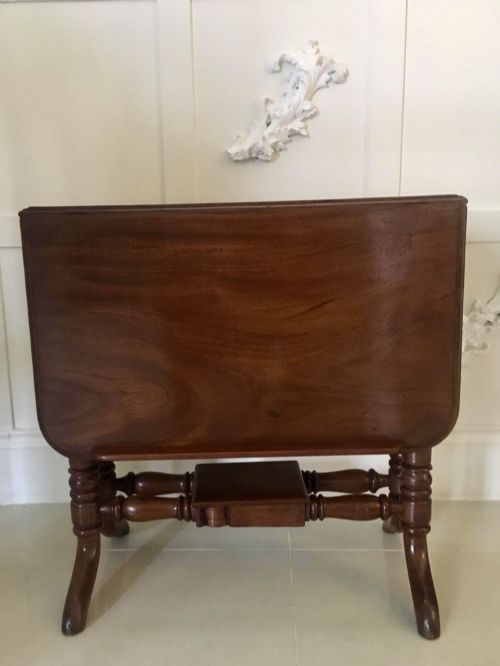
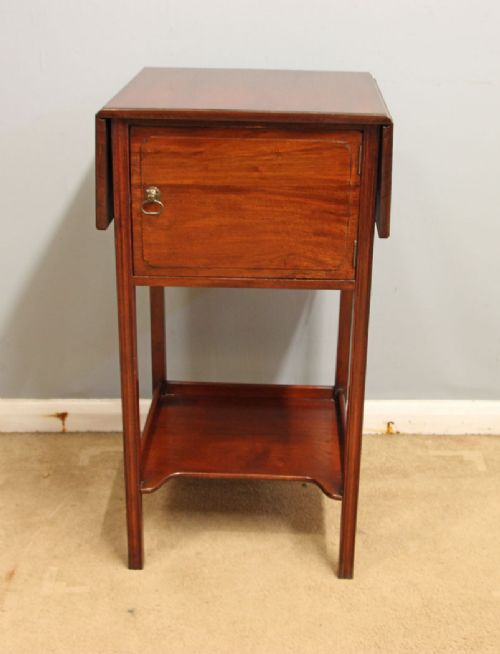
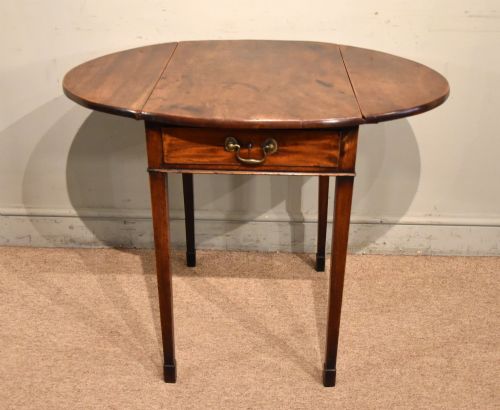
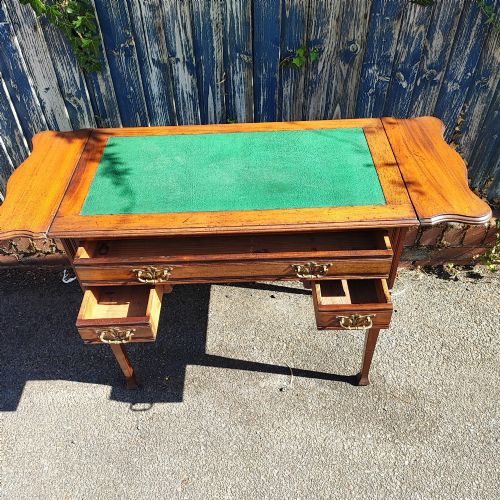
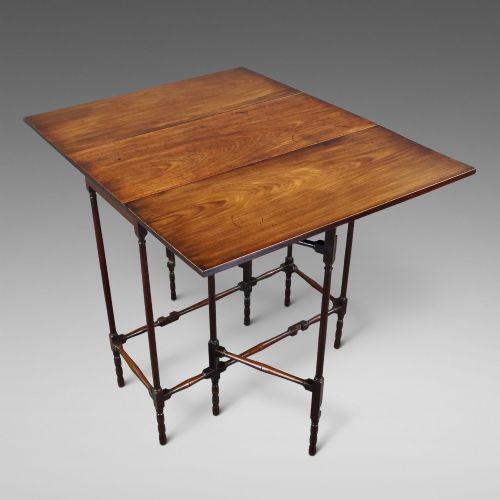
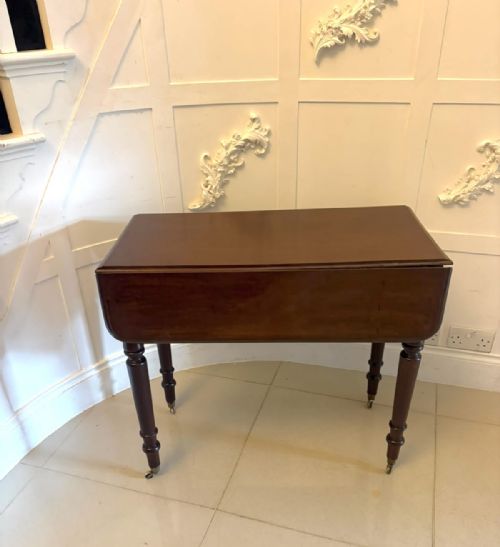
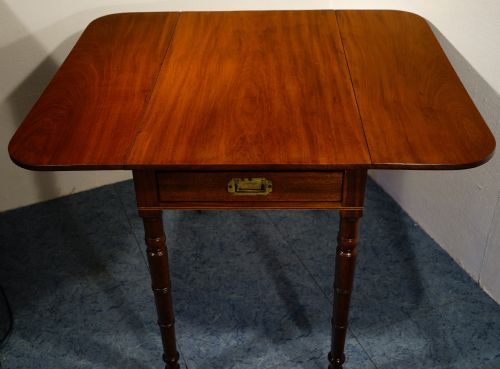
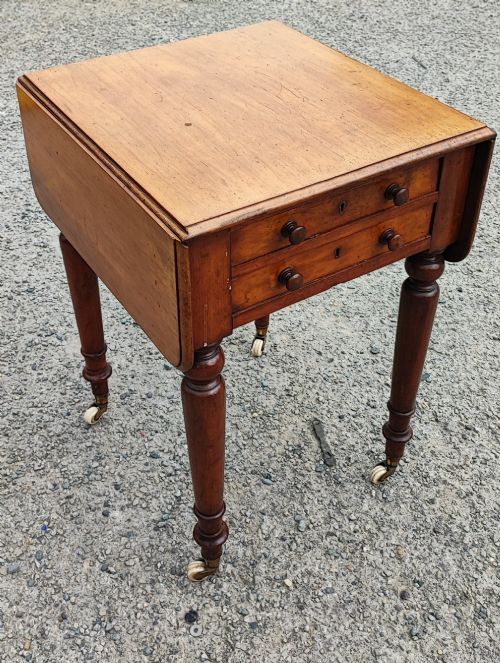
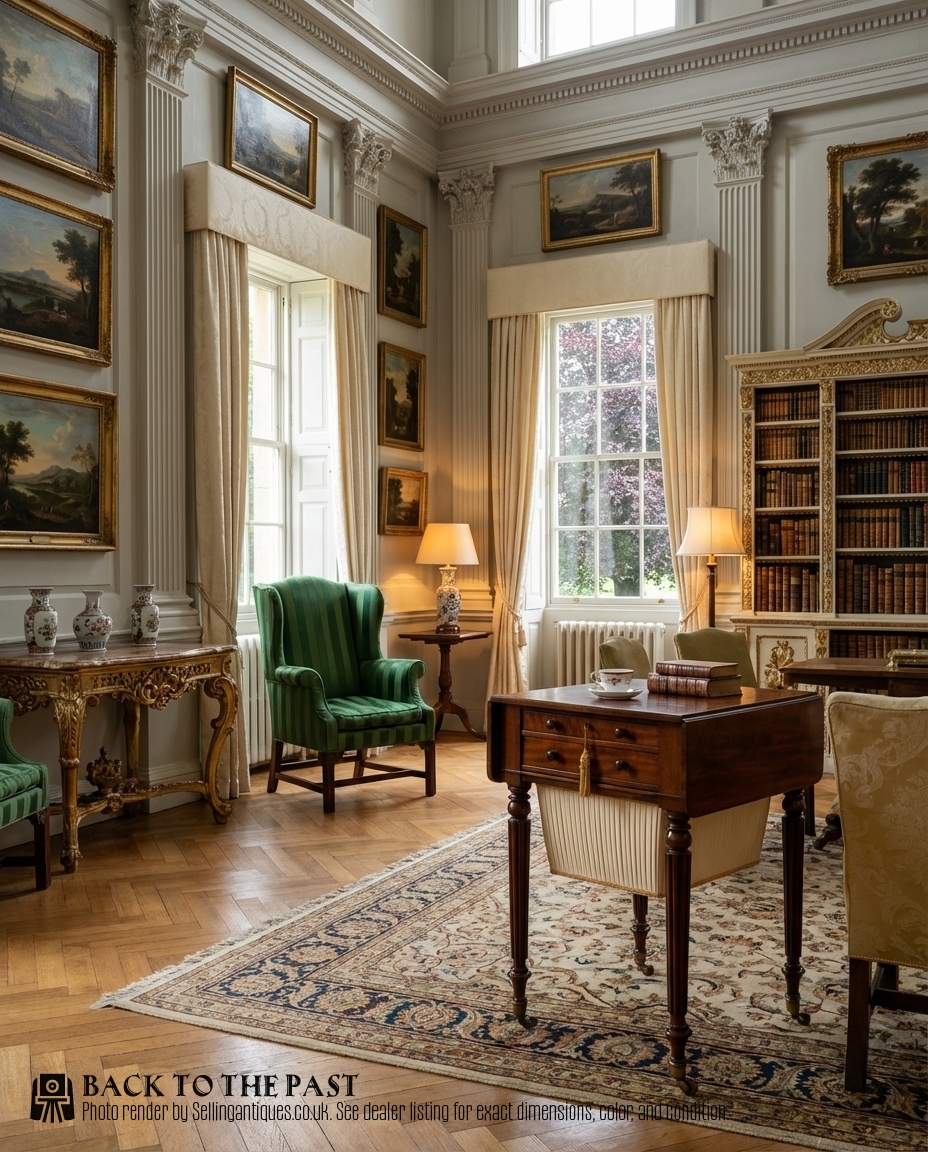
Small mahogany drop leaf furniture spans several centuries, encompassing Georgian, Regency, Victorian, and Edwardian periods where timber versatility was paramount. The most common forms met on this page are Pembroke tables, Sutherland tables, and compact gateleg dining or occasional tables designed for limited interior spaces.
These items served various roles in historic homes, functioning as bedside cabinets, lamp tables, reading desks, or breakfast tables for small households. Makers utilised the pivoting flap mechanism to alter the footprint of the furniture instantly, accommodating daily domestic shifts without cluttering a room.
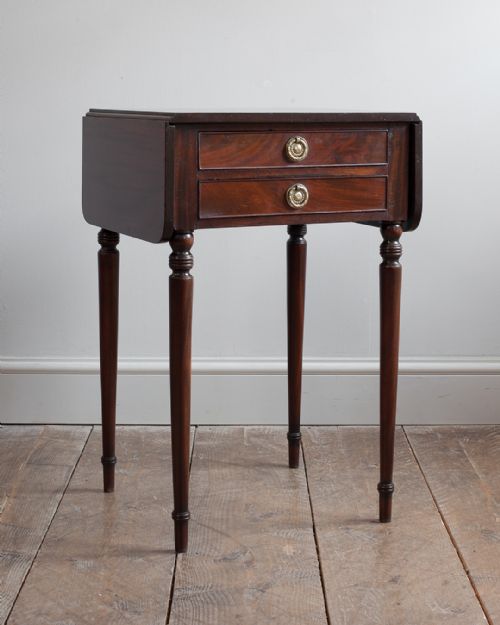
Originating in periods ranging from the mid-eighteenth century through to the early twentieth century, these pieces reflect changing fashions in domestic utility. Edwardian examples often feature lighter proportions and subtle inlay, whereas Georgian and Regency versions rely on the deep grain of solid timber and classical turning.
Materials and construction
Makers relied primarily on solid mahogany and mahogany veneers, often enhanced by secondary timbers such as satinwood, boxwood, and ebonised highlights for stringing and crossbanding. Brass castors, hinges, and drawer pulls provided functional hardware, while ceramic components occasionally appeared in domestic fittings.
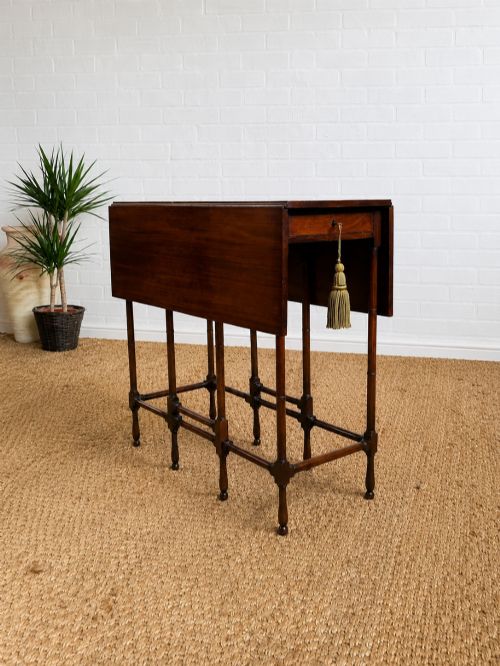
Joinery techniques included mortise and tenon frames, tapered or bamboo-turned legs, and hinged bracket supports or swing legs to hold the drop leaves. The timber was selected for rich figure and grain, sometimes polished to a deep lustre that highlighted the natural depth of the wood.
Listings feature items from the Georgian, Regency, Victorian, and Edwardian eras, constructed in mahogany with brass, satinwood, and boxwood details.
Assessing quality
Quality rests in the choice of timber figure, the crispness of any inlaid satinwood or boxwood work, and the structural integrity of the drop leaf hinges and folding leg supports. Superior pieces display thoughtful proportions, balanced grain matching across the leaves, and robust internal framing rather than hasty mass production.
The refinement of the turning on the legs, whether bamboo-style, tapered, or reeded, distinguishes workshop output. Finer examples maintain smooth movement in their drawers and leaves, showing precise joinery that withstands centuries of folding and unfolding.
Gillows·Morison of Ayr
The Small Mahogany Drop Leaf Glossary
- Pembroke table
- A small occasional or breakfast table featuring two hinged drop leaves on opposing sides, frequently fitted with a single end drawer.
- Sutherland table
- A narrow drop leaf table characterised by particularly slender legs and leaves that fold down almost vertically to occupy minimal floor space.
- Gateleg table
- A table with hinged leaves supported by legs that swing out on a gate-like pivot to bear the weight of the extended top.
- Spider leg
- A style featuring exceptionally thin, delicate turned legs braced by fine stretchers, typical of lighter occasional tables.
- Satinwood inlay
- Contrasting pale exotic wood inserted into the mahogany surface in geometric or floral patterns to decorative effect.
Small Mahogany Drop Leaf: Frequently Asked Questions
What is a small mahogany drop leaf table used for?
These versatile items served multiple functions in historic domestic spaces, acting as breakfast tables, writing desks, and lamp stands depending on their specific form. Their folding leaves allowed households to adapt room layouts quickly throughout the day.
Today, they suit modern apartments and smaller rooms where floor space is at a premium. Owners frequently utilise them as side tables that expand when guests arrive for tea or dinner.
How do I tell a Georgian table from an Edwardian one?
Georgian pieces generally display heavier solid timbers, simpler structural lines, and deeper patination acquired over longer periods of use. Their legs are often square tapered or pad foot designs associated with mid-eighteenth to early nineteenth-century cabinet making.
Edwardian interpretations tend to be lighter in weight, frequently incorporating satinwood inlay, ebonised highlights, or bamboo-turned legs reflecting revivalist tastes. The construction inside the drawers and the underside hardware also help indicate the manufacturing era.
How do the drop leaves stay up?
Drop leaves are supported by a variety of pivoting mechanisms, including swing brackets attached beneath the frame, pull-out wooden arms, or hinged gate legs. When the leaf is raised, the support swings outward to lock it into a horizontal plane.
When folding the table down, the mechanism tucks neatly back against the central rail. Proper alignment ensures the leaves sit level with the main top when fully extended.
Are these tables sturdy enough for daily dining?
Many of these items, particularly larger Pembroke and gateleg formats, were constructed specifically as dining tables for four people. Their solid mahogany frames provide substantial weight and structural support when the leaves are secured.
Smaller occasional or Sutherland variants are better suited for lamps, books, or light tea service rather than heavy daily dining. Checking the stability of the folding leg joints clarifies the practical capacity of each piece.