




Slender Leg Side Table
These slender leg side table pieces bring nimble proportions and rich timber to a room, offering practical surfaces without heavy bulk.
Slender Leg Side Table
A slender leg side table encompasses nimble occasional and tea tables designed for versatile placement around a room. The selections here draw predominantly from the eighteenth century and the Georgian period, alongside occasional later pieces.
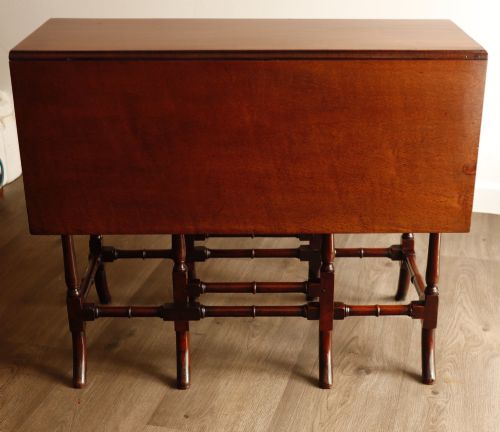
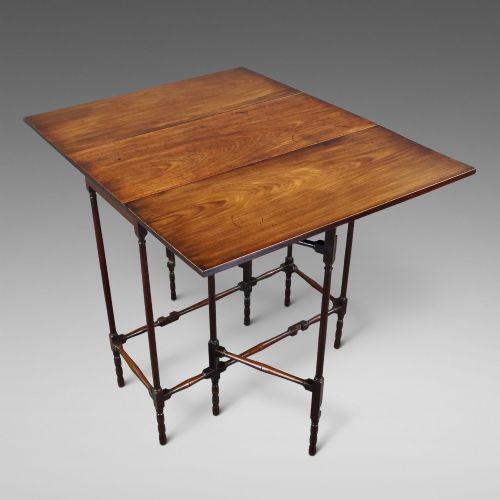
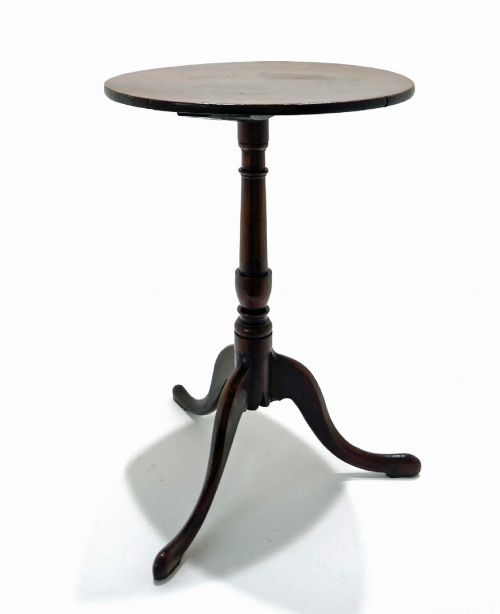
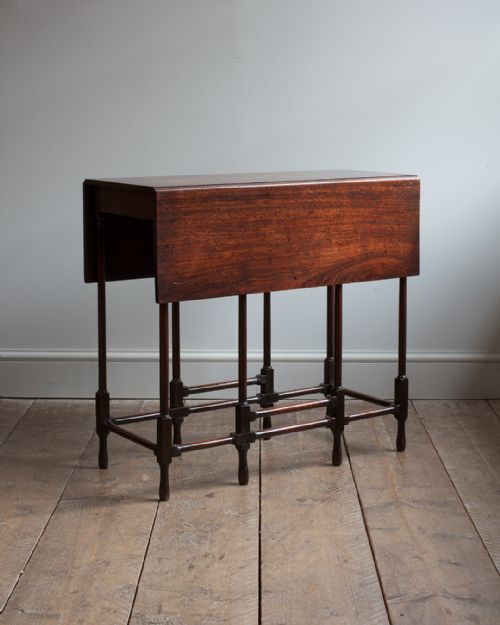
Makers shaped these forms primarily as drop leaf or spider leg tables, featuring exceptionally delicate supports that maximise floor space. Console tables and tripod variants also appear across the selection, providing distinct profiles for different interior settings.
Materials and construction
Craftsmen built these tables using dense timbers such as mahogany and oak, which provided the structural integrity required for such delicate legs. Satinwood, lacquer, and ebonised hardwood also surface in specific stylistic periods to alter the visual weight of the piece.
Joinery techniques focused on stability despite the slender proportions, frequently employing drop flap mechanisms and spider leg framing. Brass hardware and gold leaf embellishments occasionally accented the woodwork, particularly on late eighteenth century Chinoiserie examples.
The listings here feature eighteenth century and Georgian pieces predominantly, with mahogany as the most common timber alongside occasional oak, satinwood, and lacquer.
Assessing quality and craftsmanship
Quality rests in the precision of the turning on the slender legs and the crispness of the timber grain. Superior examples display harmonious proportions where the lightness of the support perfectly balances the top.
The sophistication of the secondary materials, such as figured mahogany or detailed japanning on lacquer surfaces, distinguishes standard production from finer workshop output. Original joinery integrity and timber depth remain crucial markers of distinction.
The Slender Leg Side Table Glossary
- Spider leg table
- A small drop leaf table featuring numerous exceptionally thin turned legs joined by slender stretchers. This design creates a remarkably light silhouette.
- Tripod table
- A freestanding table supported by a central pillar resting on three legs. It offers stable placement on uneven floors.
- Drop flap
- A hinged leaf attached to the main table top that lifts to extend the surface area. It lowers when not in use to save space.
- Chinoiserie
- European decorative style reflecting Chinese artistic influences, frequently utilising lacquer and gold leaf. It flourished during the Georgian period.
- Console table
- A table designed to stand against a wall, sometimes fixed to it. These pieces often feature taller proportions suited to hallways and reception rooms.
Slender Leg Side Table: Frequently Asked Questions
What is a slender leg side table?
A slender leg side table is a compact occasional piece defined by delicate supports rather than heavy structural framing. These tables provide functional surface space while maintaining an open, airy visual footprint in a room.
Examples on this page span from eighteenth century spider leg designs to later console variants, each prioritising graceful timber turning and nimble proportions.
How were spider leg tables used?
Spider leg tables served primarily as tea tables or light occasional surfaces in Georgian parlours. Their drop leaf mechanism allowed owners to fold the sides down and tuck the table against a wall when not in use.
The remarkably thin legs made these pieces easy to reposition around a room for entertaining or reading.
How do I identify a Georgian piece?
Georgian tables typically display dense mahogany timbers with deep, warm patination developed over centuries. Construction details include hand-turned stretchers and traditional joinery methods characteristic of eighteenth-century workshops.
Stylistic markers such as Sheraton influences or fine Chinoiserie lacquerwork further help anchor a piece within this specific historical period.
Where should I place a console table?
Console tables suit entryways, hallways, or the rear of freestanding sofas where depth is restricted. Their narrow profile allows them to anchor a wall space and display decorative objects without obstructing pathways.
Perect for pairing with a wall mirror or artwork, these tables add architectural definition to transitional spaces.