





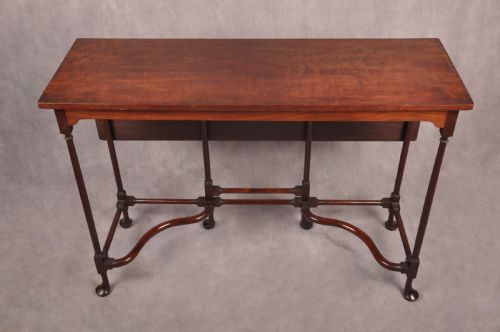

Spider Leg Side Table
These spider leg side table examples bring slender elegance and folding utility to any room, prized for their delicate frames and sturdy drop leaves.
Spider Leg Side Table
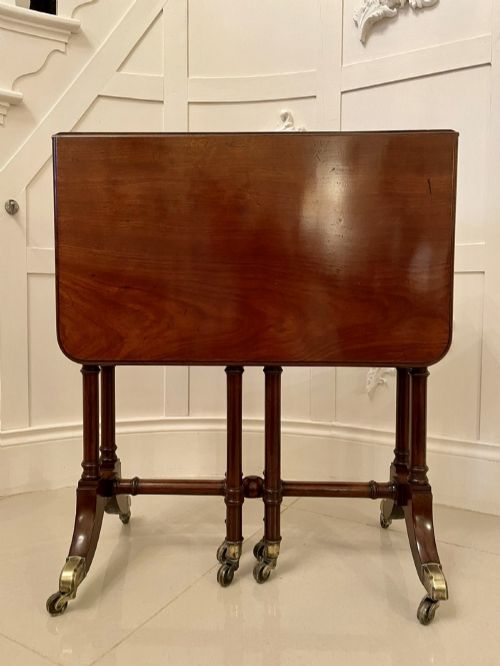
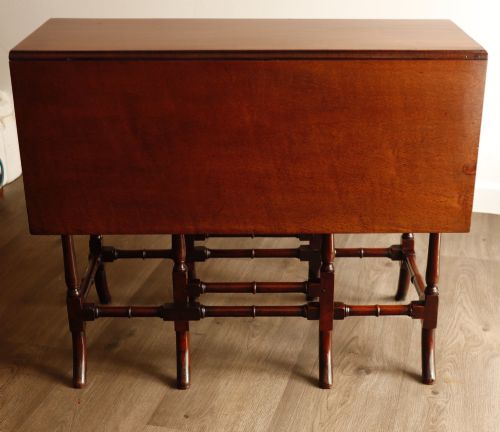
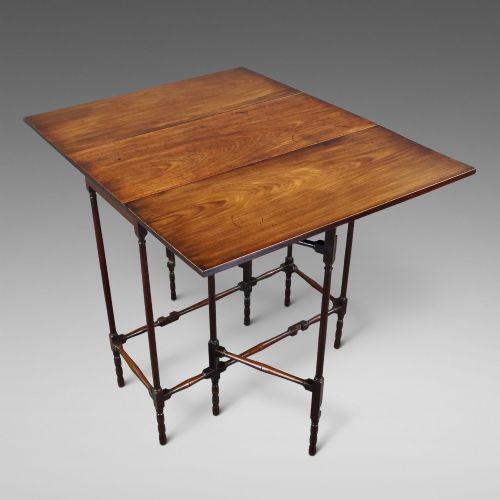
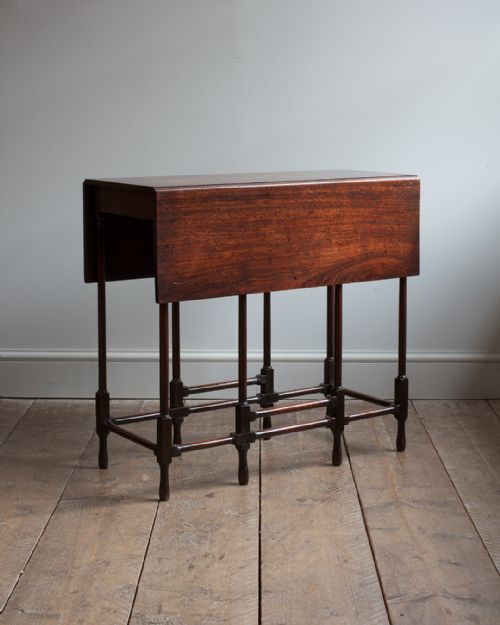
A spider leg side table is a light occasional table designed for versatility, featuring exceptionally thin turned uprights that support a drop leaf top. When you search for a spider leg side table, you encounter pieces primarily from the eighteenth century, Georgian era, and Edwardian period.
The form frequently appears as a drop leaf table, tea table, or nest of tables. These tables offer a compact footprint when the flaps are dropped, making them practical for sitting beside chairs or in smaller spaces.
Materials and construction
Makers relied heavily on mahogany as the principal timber, utilising its grain strength to permit such extraordinarily slender legs without immediate failure. Brass hardware frequently appears on hinges and castors.
Joinery techniques focus on stabilizing the delicate gate leg action, where swing legs support the folding leaves. Hardwood frames receive careful turning to achieve the signature spider leg profile.
Mahogany is the dominant timber across these listings, spanning eighteenth-century Georgian origins through Edwardian revivals and later periods.
What separates the better pieces
Quality rests upon the crispness of the timber turning and the proportional balance between the exceptionally fine legs and the top. Better examples maintain structural rigidity despite the slender framing.
The subtlety of the drop leaf action and the fidelity of period styles, such as Georgian or Chippendale interpretations, distinguish finer workshop output from simpler utilitarian items.
The Spider Leg Side Table Glossary
- Spider leg
- A descriptor for tables with exceptionally thin, delicate turned uprights resembling spider legs. This design maximises visual lightness while providing functional support.
- Drop leaf
- A table top with hinged flaps that fold down to save space. These flaps lift to extend the surface area when needed.
- Gate leg
- A table leg hinged to swing outward like a gate to support a drop leaf. This mechanism provides reliable weight distribution beneath the extended flaps.
- Pembroke table
- A small occasional table with two hinged flaps on opposite sides. They often include a single drawer and delicate proportions.
Spider Leg Side Table: Frequently Asked Questions
What is a spider leg table?
A spider leg table is a lightweight occasional piece characterised by exceptionally thin turned legs and folding drop leaves.
They emerged to provide versatile surface space that could be easily tucked away when not in use.
How do you use a spider leg side table?
These tables function well beside seating to hold small items like books or cups. Lowering the flaps adapts the footprint for tight corners.
Their mobility allows them to move easily around a room as needed.
Are spider leg tables sturdy?
Despite their fragile appearance, period examples utilise dense timbers like mahogany to maintain stability. The swing legs lock securely beneath the open leaves.
Care should be taken not to place heavy downward pressure on the unsupported edges of the drop leaves.
How do I date a spider leg table?
Dating relies on timber choice, turning style, and structural hardware. Eighteenth-century versions often display crisp Georgian or Chippendale details.
Edwardian revivals reproduce these earlier proportions using similar hardwood materials.