
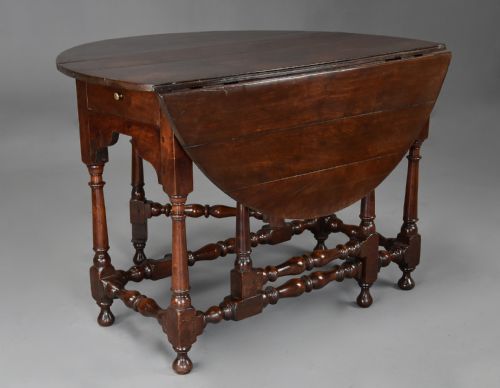


Georgian Gate Leg Table
A georgian gate leg table provides clever expanding surface space through pivoting swing-legs that support hinged drop leaves.
Georgian Gate Leg Table
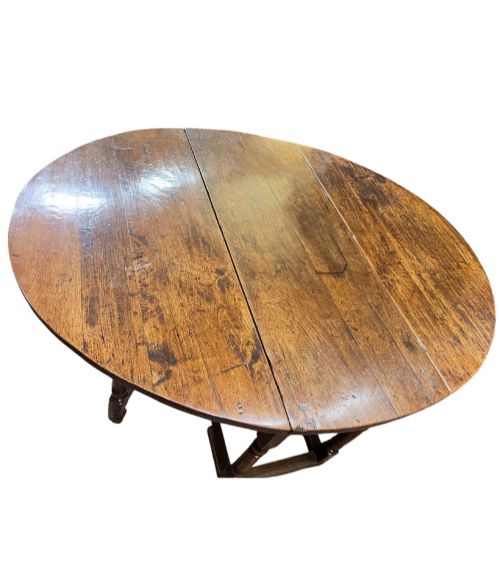
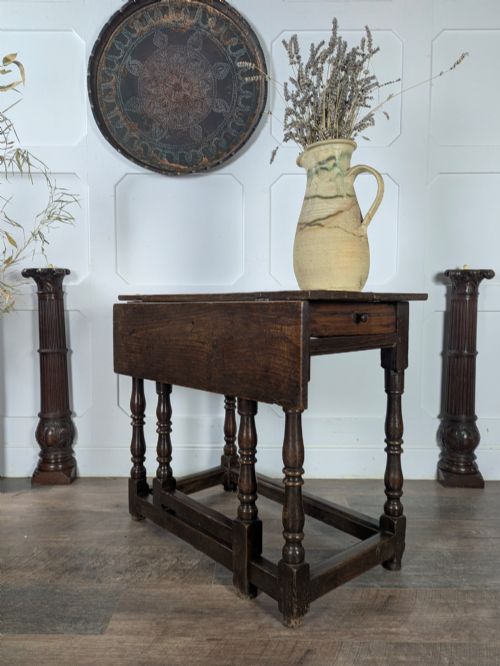
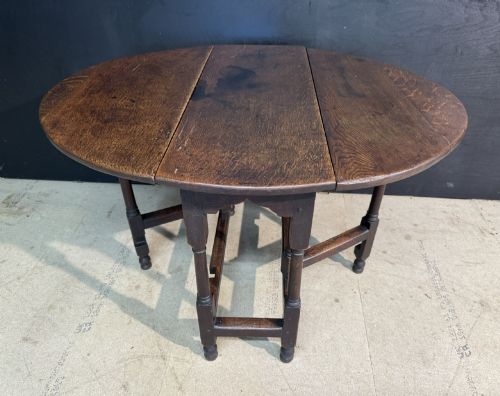
A georgian gate leg table is fundamentally a drop-leaf design resting on pivoting swing legs that pull outward to support folding flaps, creating an expanding surface for dining or supper. The examples found here span compact occasional pieces up to large eight-seater dining formats suitable for country kitchens.
Oak and mahogany form the vast majority of these pieces, alongside walnut, elm, fruitwood and yew, reflecting the timber preferences of the eighteenth century and subsequent revival periods. Most surfaces take an oval or circular shape when fully opened, resting on turned or slender spider legs.
Materials and Construction
Cabinet makers constructed these tables primarily from dense hardwoods like oak, mahogany and walnut, utilising sturdy pegged or jointed frames to bear the weight of heavy drop leaves. Swing-gate mechanisms rely on pivoting wooden legs that fold neatly into the central underframe when the leaves drop down.
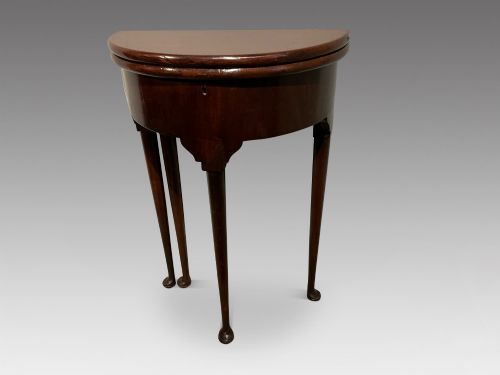
Surface details range from plain polished timber to subtle inlay work, supported by turnery such as pad feet, ball and claw designs, or slender spider legs depending on the specific period and wood used.
Georgian Gate Leg Table Retail Price Guide 2026
Typical asking prices for georgian gate leg table among the pieces listed under this phrase on Sellingantiques today, from the lower quarter to the upper quarter. They describe what is for sale here now, not the wider market.
Listings feature pieces spanning the early eighteenth century through to Edwardian interpretations, constructed primarily from oak, mahogany and walnut.
Judging Quality
The standard of a georgian gate leg table rests upon the choice of timber and the structural integrity of the pivoting gate mechanism. Dense, well-figured mahogany or richly patinated oak command attention, whilst smooth-operating swing legs indicate careful original carpentry.
Proportion and stability separate finer examples from simpler provincial pieces, particularly where delicate spider legs or substantial dining frames maintain balance under extended leaves.
George III·George II·George I·Queen Anne
The Georgian Gate Leg Table Glossary
- Gateleg
- A table with hinged flaps supported by legs that swing outward like a gate. This clever mechanism allows the footprint to shrink or expand instantly.
- Drop-leaf
- A table top featuring a fixed centre section with movable side flaps attached by hinges. These flaps lower when not in use to save floor space.
- Pad foot
- A simple rounded foot shape popular on eighteenth-century cabriole legs. It rests flat on the floor without complicated carving.
- Spider leg
- An exceptionally slender, delicate turned leg utilised on light occasional and Pembroke tables. They provide surprisingly sturdy support despite their thin profile.
Georgian Gate Leg Table: Frequently Asked Questions
How do gate leg tables work?
These tables feature hinged leaves on either side that drop down when not in use. To expand the surface, hinged support legs swing outward from the central frame to hold the leaves steady.
This simple pivoting mechanism allowed households to clear floor space easily between meals while retaining a large dining surface when required.
What woods were used for georgian gate leg table designs?
Cabinet makers predominantly utilised native oak and imported mahogany for these tables, alongside walnut, elm, fruitwood and occasional yew. Oak forms the basis of many early country examples, while mahogany dominates the finer formal dining pieces.
Each timber brings distinct grain patterns and weights, influencing both the visual character and the durability of the piece.
How do I seat guests comfortably around an oval table?
The pivoting swing legs provide vital clearance when the leaves are raised, allowing chairs to tuck underneath without awkward obstructions. Oval formats accommodate more diners than rectangular shapes of a similar length because the curved ends soften the seating arrangement.
Larger versions easily seat up to eight people when fully extended with both leaves raised.
Are these tables suitable for everyday dining?
Solid hardwood construction and sturdy frame joints make these practical for daily use in modern dining rooms or country kitchens. The folding leaves offer flexibility for smaller rooms where a permanent large table would crowd the space.
Routine care involves maintaining the polished timber surface and ensuring the swing-leg hinges move smoothly.