
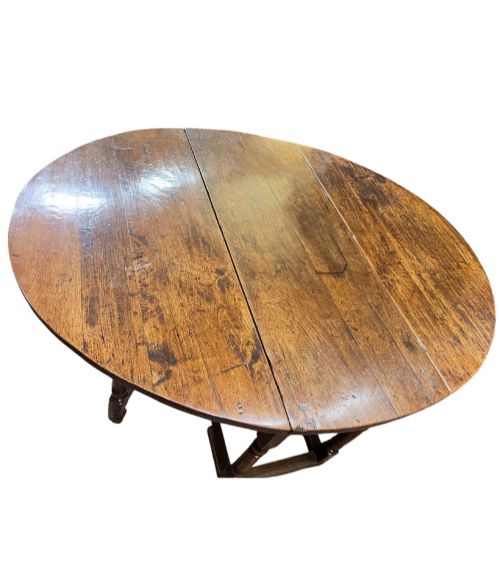
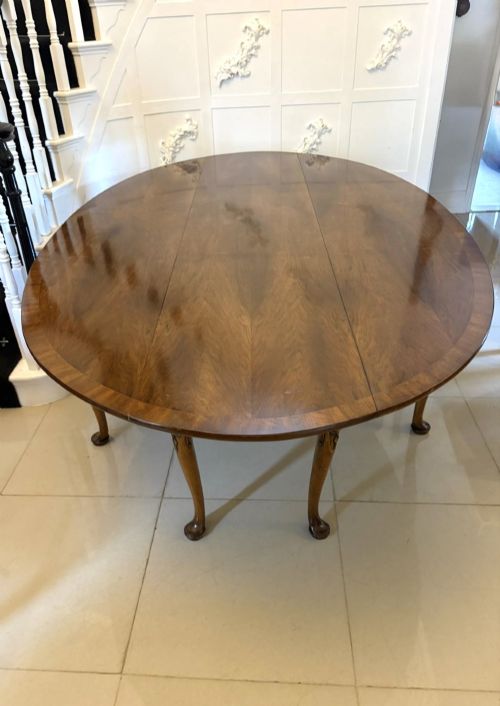
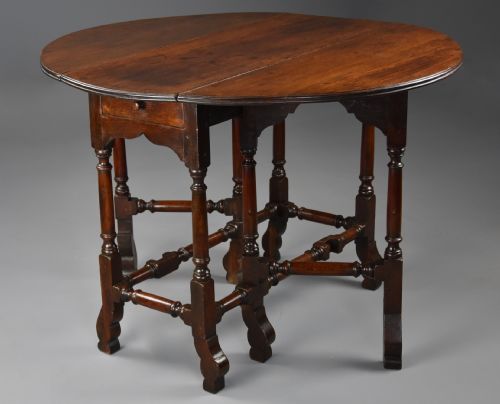
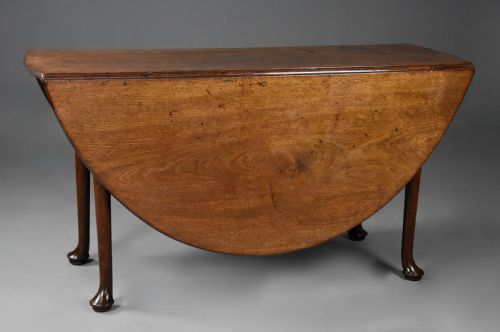



Georgian Walnut Drop Leaf Table
A georgian walnut drop leaf table offers rich timber figures and versatile folding leaves suited to both dining rooms and compact spaces.
Georgian Walnut Drop Leaf Table
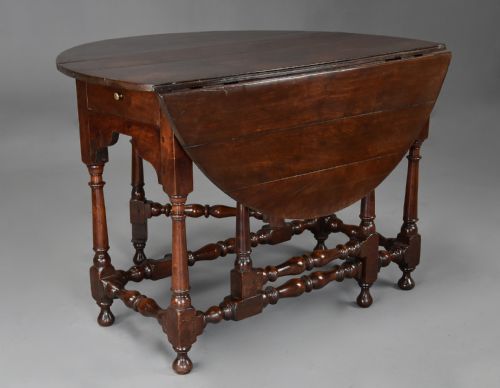
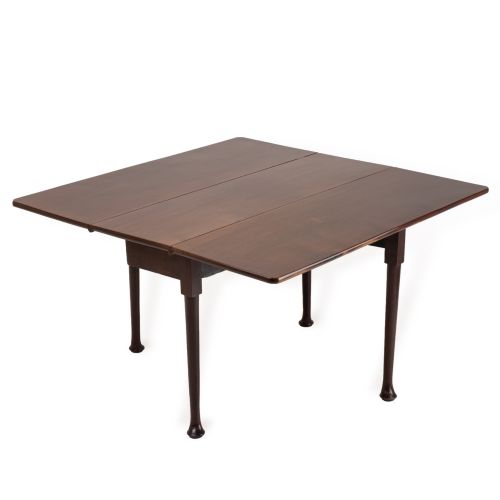
When you search for a georgian walnut drop leaf table, you encounter folding tables spanning the seventeenth to the mid-eighteenth century alongside later revival pieces from the early twentieth century. The selection ranges from small gateleg examples of fine proportions to large dining tables seating multiple people.
The primary forms found here include dining tables, gateleg tables, and sofa tables. Most pieces originate from the eighteenth century or utilise earlier Queen Anne and William and Mary styles, while occasional items show Dutch influences or later revival craftsmanship.
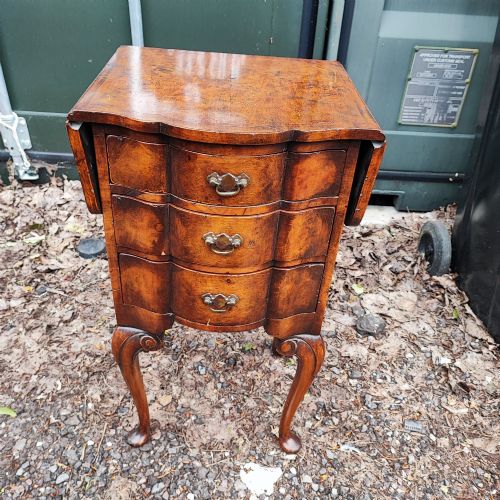
Buyers meet both solid timber constructions and veneered surfaces, often featuring drop leaves or drop flaps supported by swinging legs. The timber displays warm tones ranging from standard walnut to red walnut and burr walnut.
How they were made
Cabinetmakers constructed these tables using solid walnut, red walnut, and burr walnut, frequently incorporating secondary timbers like oak and fruitwood for drawer linings and internal frames. Surfaces often received fine veneers to showcase rich grain patterns.
Joinery techniques relied on traditional framing methods, with hinged leaves supported by folding gate legs or swing brackets. Metalwork details such as brass hinges and drawer pulls completed the construction of functional drop leaf mechanisms.
The listings combine eighteenth-century antiques with early twentieth-century revival pieces, incorporating solid walnut, red walnut, burr walnut, and oak.
What varies in quality
The distinction between tiers rests upon timber selection and surface preservation. Tables featuring highly figured burr walnut or rich red walnut with faded patinas sit at the upper end of the range.
Proportion and structural integrity define the craftsmanship, where smaller tables with unaltered dimensions and original brass hardware command attention. Later revival pieces demonstrate different standards of joinery compared to period eighteenth-century examples.
The Georgian Walnut Drop Leaf Table Glossary
- Gateleg table
- A table with hinged leaves supported by legs that swing outward like gates. This design allows the surface area to expand or contract easily.
- Drop leaf table
- A table featuring a fixed central section and movable flaps on the sides. These leaves drop down when not in use to save space.
- Burr walnut
- Timber taken from a walnut tree growth that produces intricate and swirling grain patterns. Cabinetmakers prize this wood for decorative veneering.
- Red walnut
- A specific variety of walnut timber known for its warm reddish hue. It appears frequently in pieces dating to the eighteenth century.
- Patina
- The surface sheen and colour developed by timber over centuries through age, handling, and polishing. A fine patina indicates genuine period use.
Georgian Walnut Drop Leaf Table: Frequently Asked Questions
How do I identify a period drop leaf table?
Examine the timber species, construction joints, and surface wear patterns. Eighteenth-century pieces typically display traditional hand-cut joinery and aged patination across the walnut surfaces.
Later revival pieces from the twentieth century often reveal different manufacturing methods and cleaner timber uniformity. Comparing the secondary woods inside drawers also helps establish the age of the piece.
What is the difference between a gateleg and a drop leaf table?
A gateleg table utilises swinging legs attached to a pivoting frame to support the extended leaves. This structural support system is specific to the gateleg variety.
Standard drop leaf tables may use swinging brackets, pull-out wooden supports, or simpler folding mechanisms instead of moving legs. Both designs allow the leaves to drop down to reduce the footprint of the furniture.
How do I care for antique walnut furniture?
Keep walnut tables away from direct sunlight and heat sources to prevent the timber and veneers from drying out. Consistent indoor humidity levels protect the structural integrity of the joints.
Apply appropriate natural waxes periodically to nourish the wood and maintain the surface sheen. Avoid using harsh chemical polishes that can strip the historic patina.
Where should I place a drop leaf table in my home?
These tables adapt well to dining rooms, living spaces, and hallways due to their adjustable surface area. With the leaves dropped down, a table fits neatly against a wall as a console or side table.
Opening the leaves provides ample surface space for dining or display purposes when hosting guests. Their versatile proportions suit both spacious rooms and compact interiors.